Home Gardening in Japan: Tips for Small Spaces
July 11, 2026 | Hobbies | Japanese Best
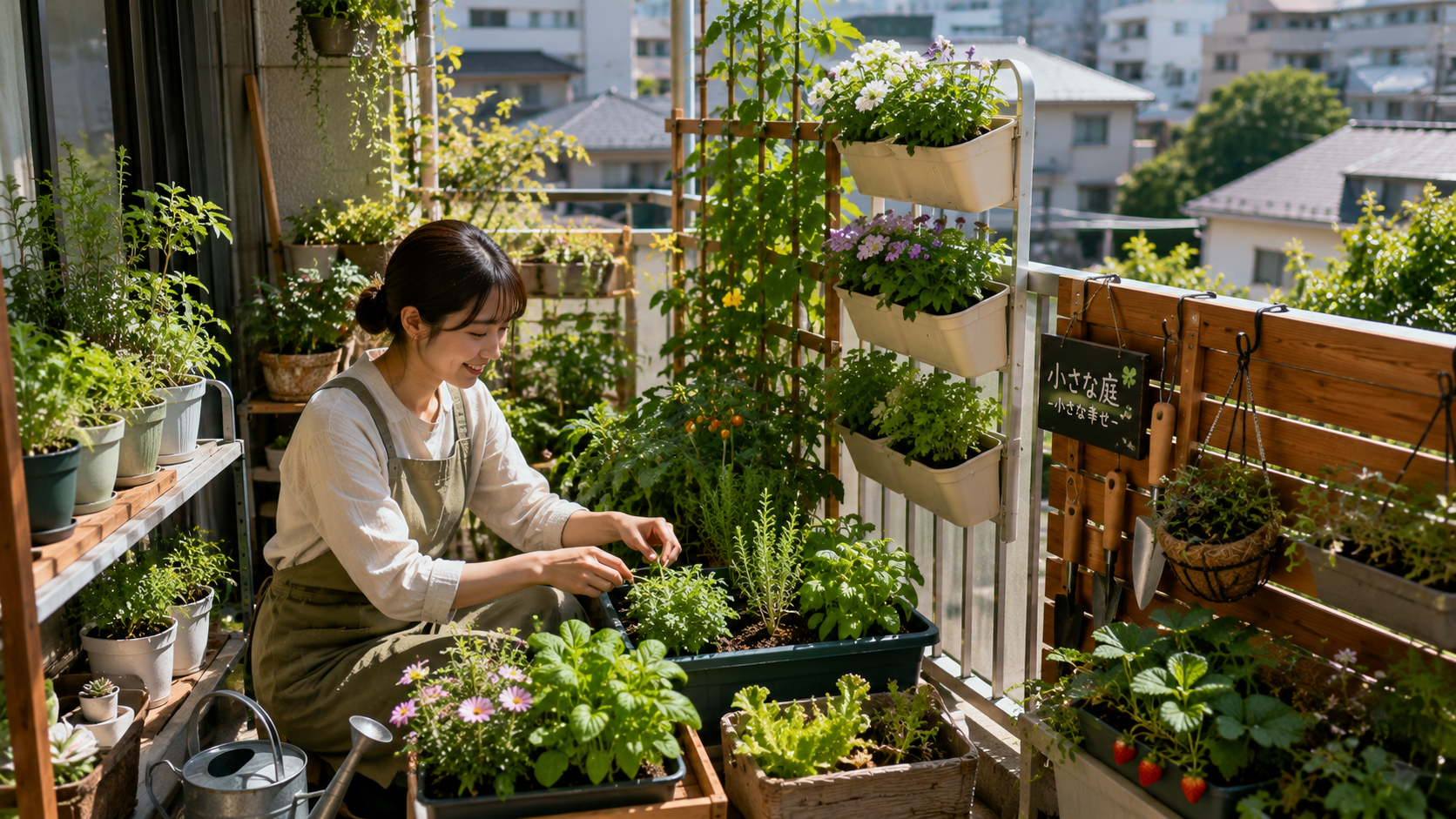
Japan’s relationship with gardening is profound yet remarkably practical. Walk through Tokyo’s residential neighbourhoods, and you’ll discover balconies transformed into miniature green spaces, narrow rooftop gardens bursting with vegetables, and windowsill herb collections that would rival any farmer’s market stall. For a nation where space is precious and nature deeply revered, home gardening has evolved into an art form uniquely suited to urban living—one that balances aesthetic beauty with resourceful efficiency.
Whether you’re living in Japan, planning a move, or simply drawn to Japanese approaches to leisure and self-sufficiency, understanding how Japanese gardeners maximise tiny spaces offers both inspiration and practical wisdom.
Quick Summary
- Japanese home gardening prioritises vertical growth, container planting, and multi-seasonal variety in confined spaces
- The hobby blends Zen philosophy with practical urban living, reflecting deep cultural values around nature
- Miniaturisation techniques—bonsai principles, raised beds, and wall-mounted planters—dominate Japanese home garden design
- Community gardens (shaien) and local gardening clubs foster connection and knowledge-sharing across neighbourhoods
- Essential Japanese gardening tools and supplies are purpose-built for small-space efficiency
🛒 Shop Recommended Products
How Popular Is This Hobby in Japan?
Home gardening ranks among Japan’s most cherished hobbies, especially post-pandemic. According to the Japan Garden Association, approximately 23 million Japanese households actively maintain some form of home garden—from a single potted plant to elaborate balcony arrangements. This surge reflects both a return to mindfulness practices and practical food security concerns.
In Tokyo particularly, community gardens have flourished in recent years. Districts like Setagaya and Meguro host waiting lists for shaien (共有園)—communal plots where residents cultivate vegetables and ornamental plants. The Tokyo Metropolitan Government actively supports these initiatives, recognising their role in urban greening and social cohesion. Prices for a small shaien plot range from ¥3,000 to ¥8,000 annually, making gardening accessible across income levels.
Interestingly, younger Japanese—particularly those aged 25–40—increasingly view gardening as a wellness practice rather than merely a practical necessity. Instagram hashtags like #おうち菜園 (home vegetable garden) generate millions of posts, whilst gardening workshops in shopping malls across Shibuya and Shinjuku regularly sell out.
How Japanese People Do It
Japanese gardeners excel at spatial ingenuity. Rather than horizontal sprawl, they build vertically. Wall-mounted planters, tiered shelving systems, and hanging baskets transform even a 2-metre balcony into a productive growing space. The philosophy draws directly from bonsai principles: constraint breeds creativity and beauty.
Container gardening dominates urban Japanese home gardens. Shallow ceramic pots, recycled wooden crates, and stackable plastic modules allow residents to grow everything from shiso (紫蘇) and mizuna to dwarf tomatoes and edamame. Many gardeners follow the practice of sekisui (積水)—layering soil and compost efficiently to maximise nutrient density in compact spaces.
Seasonality is paramount. Spring brings sakura-inspired ornamental plants and early vegetables; summer focuses on hydrating crops like cucumber and aubergine; autumn introduces leafy greens and chrysanthemums; winter features hardy evergreens and intricate pruning work. This cyclical approach keeps the hobby engaging year-round.
The Japanese concept of yohakuno bi (余白の美)—the beauty of empty space—also applies to home gardens. Rather than overcrowding, Japanese gardeners deliberately create breathing room, allowing each plant to be appreciated individually. This aesthetic restraint distinguishes Japanese approaches from Western maximalist gardening styles.
Community and Culture Around It
Gardening in Japan is rarely solitary. Community gardens, neighbourhood gardening circles, and local garden shows create vibrant ecosystems of shared knowledge. In districts across Osaka, Kyoto, and Yokohama, weekly gardening meetups draw diverse participants—pensioners teaching millennials propagation techniques, office workers swapping seedlings before work.
The annual Japan Garden Show, held in Tokyo’s Roppongi area, attracts over 150,000 visitors. Meanwhile, smaller municipal shows celebrate local gardeners’ achievements, with prizes for best vegetable, most creative container arrangement, and best newcomer gardener.
Social media has transformed this further. Facebook groups dedicated to specific regions—’Tokyo Gardeners’ or ‘Kansai Home Gardening’—function as 24/7 advice networks. When pests strike or mysterious wilting occurs, responses arrive within hours, often with photographs and solutions grounded in Japanese organic practices (無農薬, muyakuyaku).
Perhaps most significantly, gardening clubs serve as intergenerational bridges in increasingly isolated urban neighbourhoods. Elderly residents share decades of expertise, whilst younger members introduce digital tools and seed-swapping apps. This cultural transmission ensures ancient Japanese gardening wisdom—including miyakodori (都鳥) plant pairings and tsukiyomi (月読み, lunar gardening calendars)—remains living practice rather than museum knowledge.
FAQ
Can I garden successfully in a Tokyo apartment with only a small balcony?
Absolutely. Many Tokyo residents cultivate thriving gardens in 1–2 metre balconies using vertical systems, tiered shelving, and shallow containers. Focus on high-yield, compact plants like herbs, microgreens, and dwarf vegetables.
What’s the best season to start gardening in Japan?
Spring (March–May) offers ideal conditions for beginners, with mild temperatures and abundant nursery stock. However, autumn (September–October) is excellent for leafy greens and offers a gentler learning curve.
Do I need special Japanese tools?
Japanese gardening tools—particularly hori (鍬, small hoes) and hasami (剪定鋏, pruning shears)—are exceptionally well-designed for small-space work. Local garden centres stock excellent domestically-made options at reasonable prices.
How do I connect with local gardening communities?
Search municipal government websites for shaien waiting lists, visit neighbourhood garden centres for club information, or join Facebook groups specific to your prefecture or ward.
What vegetables grow best in containers?
Shiso, mizuna, negi (spring onions), edamame, cherry tomatoes, and radishes thrive in containers. Avoid large crops like pumpkins; prioritise high-value, frequently-harvested plants.
Home gardening in Japan embodies a philosophy that Western observers often overlook: constraint creates opportunity. With limited space, Japanese gardeners have developed techniques that transform centimetres into productive, beautiful ecosystems. The hobby connects you to seasonal rhythms, builds community bonds, and provides tangible food security—all within urban environments where space feels impossibly scarce. Whether you’re tending a single windowsill herb pot or managing a shared shaien plot, you’re participating in a centuries-old tradition that continues evolving to meet modern life’s demands. Start small, seek community guidance, and let your garden become not just a hobby, but a mirror reflecting Japan’s elegant relationship with nature itself.
Recommended Japanese Products
The products below are directly relevant to this article and used by Japanese families.
| Product | Brand | Best For | Link |
|---|---|---|---|
| Panasonic Lumix S5II | Panasonic | Video creators and hybrid shooters who want full-frame quality in a compact body | Panasonic Lumix S5II |
| Ricoh GR IIIx | Ricoh | Street photographers and travellers who want large sensor quality in a shirt pocket | Ricoh GR IIIx |
| Zojirushi SM-SHE60AG Stainless Mug | Zojirushi | Daily commuters who want reliable, durable coffee/tea on the go | Zojirushi SM-SHE60AG Stainless Mug |
Panasonic Lumix S5II
Panasonic’s phase-detect-equipped full-frame camera — a video-first powerhouse.
Best for: Video creators and hybrid shooters who want full-frame quality in a compact body
🛒 Panasonic Lumix S5II on Amazon
Ricoh GR IIIx
A cult-favourite street photography camera — APS-C sensor, 40mm f2.8 lens, pocketable.
Best for: Street photographers and travellers who want large sensor quality in a shirt pocket
Zojirushi SM-SHE60AG Stainless Mug
Zojirushi’s most popular commuter mug — slim, spill-proof, and keeps drinks hot for 6 hours.
Best for: Daily commuters who want reliable, durable coffee/tea on the go
🛒 Zojirushi SM-SHE60AG Stainless Mug on Amazon
More From Japanese Best
- What Japanese Families Eat for Dinner
- Cost of Living in Tokyo in 2025: A Real Breakdown
Disclosure: As an Amazon Associate, Japanese Best earns from qualifying purchases. This does not affect our recommendations. We only feature products we genuinely believe are worth your consideration.
Editorial Disclaimer
The views, opinions, and recommendations in this article are the author’s own and reflect personal experience living in Japan. They do not constitute professional, financial, or purchasing advice of any kind.
Product availability, pricing, and specifications are subject to change without notice. Japanese Best makes no warranties — express or implied — regarding the accuracy or completeness of this content, and accepts no liability for any decisions made based on it. Always verify details directly with the retailer or manufacturer before purchasing.
コメント