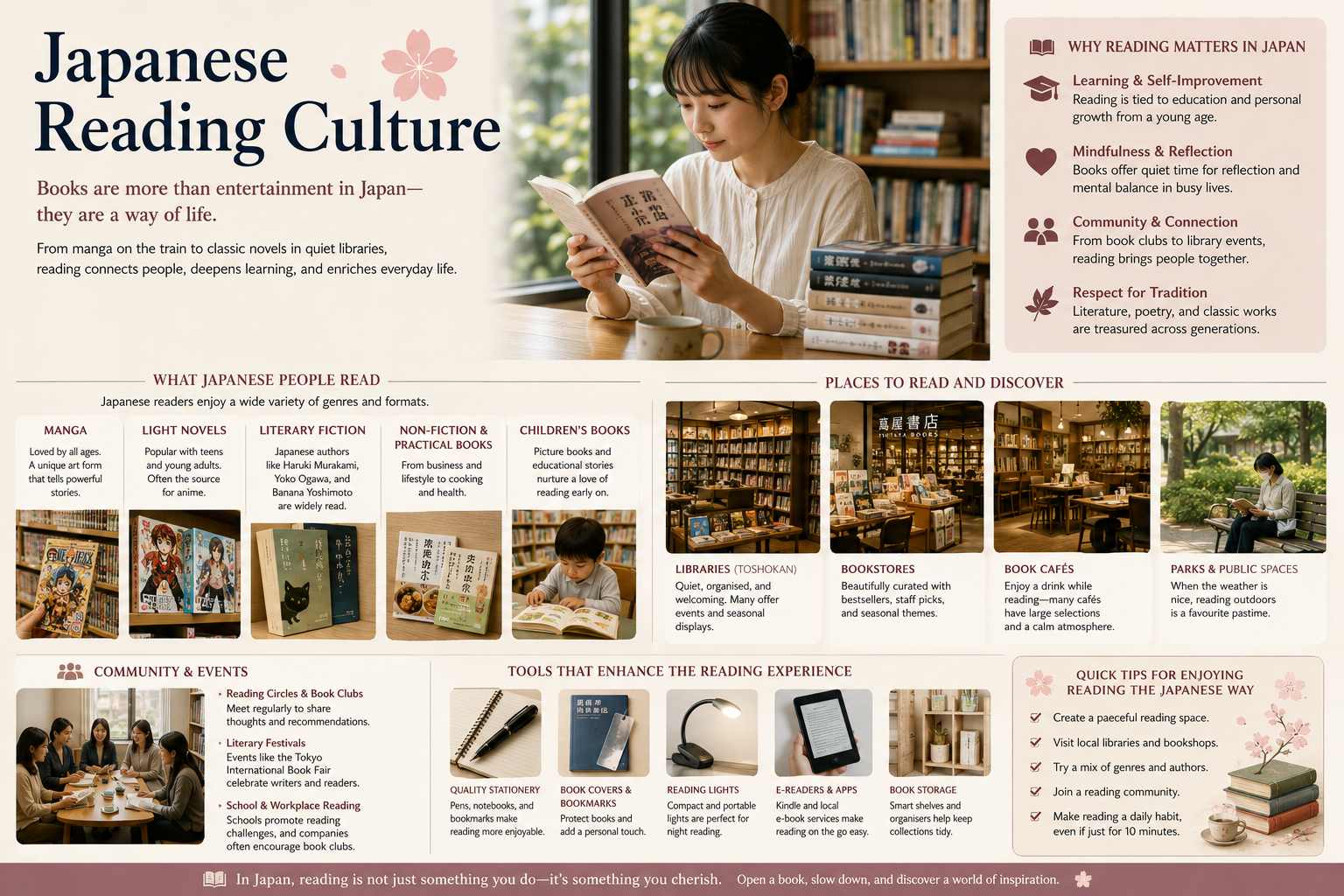
Japanese Reading Culture
July 11, 2026 | Hobbies | Japanese Best
In Japan’s bustling train carriages, quiet parks, and cosy cafés, there exists a cherished cultural practice that has shaped the nation’s identity for centuries: reading. Walk through any neighbourhood in Tokyo, Osaka, or Kyoto, and you’ll spot people absorbed in books—from salarymen scanning manga during their commute to students preparing for entrance exams, from retirees enjoying literary fiction in local libraries to children discovering picture books in their school corridors. Japanese reading culture is far more than a leisure activity; it’s a reflection of the nation’s values around learning, mindfulness, and community connection.
Quick Summary
- Japan has one of the highest literacy rates globally and reading remains deeply embedded in everyday life across all ages
- Japanese readers favour diverse formats: manga, light novels, classic literature, and educational texts coexist in equal measure
- Reading spaces—from libraries to bookshop cafés—are designed as peaceful refuges, often featuring specialised areas and seasonal displays
- Community reading circles, book clubs, and literary festivals create social connection around books
- Japanese stationery and tech accessories enhance the reading experience, making it both functional and aesthetically pleasing
🛒 Shop Recommended Products
How Popular Is This Hobby in Japan?
Reading ranks among Japan’s most beloved pastimes, supported by impressive statistics. According to the Japan Book Publishers Association, approximately 50% of Japanese people read at least one book per month, significantly higher than many Western nations. Tokyo alone hosts over 80 public libraries, with the Tokyo Metropolitan Library attracting over 3 million visitors annually.
The phenomenon extends across generations. Young adults consume light novels (ranobe)—short, illustrated fiction—at remarkable rates, whilst older demographics favour classical literature and essay collections. Manga reading transcends age and gender; it’s estimated that over 2 billion manga volumes are sold in Japan yearly. Book sales in Japan consistently exceed £5 billion annually, reflecting genuine cultural investment rather than casual purchasing.
Walking through Shibuya or Shinjuku, you’ll notice dedicated bookshop chains like Maruzen and Kinokuniya occupying prime real estate across multiple floors. This prominence reflects reading’s status as a genuine cultural cornerstone, not merely a niche hobby.
How Japanese People Do It
Japanese readers approach their hobby with deliberate intentionality. Many embrace “yomigurashi”—the concept of reading woven throughout daily life. Commuters carry lightweight paperbacks or smartphones loaded with e-books on trains, transforming transit time into reading time. This accessibility means the average Japanese person reads during their journey to work, during lunch breaks at company cafés, and during evening relaxation.
The physical experience matters deeply. Japanese readers appreciate quality stationery for note-taking; a Pilot FriXion Clicker 0.5mm allows readers to annotate books or reading journals without permanent marks, keeping notes flexible and clean. Many maintain reading journals—detailed records of books completed, personal reflections, and favourite passages.
Reading spaces are curated carefully. The “kissaten” (traditional coffee house) culture pairs books with carefully prepared beverages; a Zojirushi SM-SHE60AG Stainless Mug keeps tea or coffee at perfect temperature during extended reading sessions, whether at home or in cafés. Japanese homes typically feature dedicated reading corners with proper lighting, comfortable cushions (zabuton), and organised bookshelves displayed as interior design features.
Community and Culture Around It
Reading in Japan flourishes within vibrant communities. Book clubs meet regularly in libraries, community centres, and bookshop spaces throughout major cities. These groups typically discuss classical literature, contemporary fiction, or specific genres like mystery novels. Libraries host weekly children’s story-times, monthly author meet-and-greets, and seasonal reading challenges.
Literary festivals occur year-round across Japan. The Tokyo Books Festival each autumn draws hundreds of thousands, featuring author signings, publishing seminars, and curated displays celebrating both classics and new releases. Smaller cities host their own book fairs, connecting local readers with independent publishers and writers.
Online communities thrive too. Social media platforms buzz with book photography—readers share aesthetically arranged “shelfies,” participation in #本好きさんさんと繋がりたい (connecting with book lovers), and detailed reviews on sites like Bookmeter, Japan’s largest book social network with over 2 million active users.
Bookshop cafés—establishments combining new releases, rare finds, and beverage service—have become cultural gathering spaces. These shops position reading as a social, leisurely activity rather than solitary study, encouraging lingering conversations about literature.
Documenting Your Reading Journey
Many Japanese readers combine photography with their reading hobby, documenting books, reading spaces, and literary moments for personal archives or social sharing. For those serious about capturing high-quality images of their reading collections, bookshop visits, or literary events, the Panasonic Lumix S5II by Panasonic offers exceptional image quality in a compact mirrorless body. Its phase-detect autofocus and video capabilities make documenting reading moments—from bookshop café scenes to library ambience to personal book collection tours—remarkably straightforward, whether you’re creating content or simply preserving memories.
FAQ
Is reading still popular among young Japanese people?
Absolutely. Light novels, manga, and web serials remain hugely popular, particularly among teenagers and young adults. Digital reading platforms have expanded access rather than replaced traditional reading.
How much does a typical Japanese book cost?
Hardcover novels typically cost ¥1,500–¥2,500 (£8–£13); manga volumes average ¥450–¥700 (£2.50–£4). Library borrowing remains free and heavily utilised.
Can visitors participate in reading communities?
Many Tokyo and Osaka libraries offer English-language book clubs; some bookshops host English literature discussions. Online communities like Bookmeter welcome international readers.
What types of literature dominate Japanese reading culture?
Manga and light novels comprise the largest percentage, followed by mystery/detective fiction, classical literature, and self-improvement/business books. The diversity is genuinely remarkable.
Reading in Japan represents far more than consuming words on a page. It embodies a philosophy valuing quiet reflection, lifelong learning, and community connection. Whether you’re exploring Japan’s literary heritage or developing your own reading practice, understanding this cultural cornerstone provides genuine insight into how Japanese people prioritise meaningful leisure time. The availability of thoughtfully designed spaces, quality products, and genuine communities means reading culture continues flourishing in modern Japan.
Recommended Japanese Products
The products below are directly relevant to this article and used by Japanese families.
| Product | Brand | Best For | Link |
|---|---|---|---|
| Panasonic Lumix S5II | Panasonic | Video creators and hybrid shooters who want full-frame quality in a compact body | Panasonic Lumix S5II |
| Pilot FriXion Clicker 0.5mm | Pilot | Students, planners, and anyone who needs flexibility to correct mistakes | Pilot FriXion Clicker 0.5mm |
| Zojirushi SM-SHE60AG Stainless Mug | Zojirushi | Daily commuters who want reliable, durable coffee/tea on the go | Zojirushi SM-SHE60AG Stainless Mug |
Panasonic Lumix S5II
Panasonic’s phase-detect-equipped full-frame camera — a video-first powerhouse.
Best for: Video creators and hybrid shooters who want full-frame quality in a compact body
🛒 Panasonic Lumix S5II on Amazon
Pilot FriXion Clicker 0.5mm
The world’s bestselling erasable pen — writes like a smooth gel but rubs out cleanly with heat.
Best for: Students, planners, and anyone who needs flexibility to correct mistakes
🛒 Pilot FriXion Clicker 0.5mm on Amazon
Zojirushi SM-SHE60AG Stainless Mug
Zojirushi’s most popular commuter mug — slim, spill-proof, and keeps drinks hot for 6 hours.
Best for: Daily commuters who want reliable, durable coffee/tea on the go
🛒 Zojirushi SM-SHE60AG Stainless Mug on Amazon
More From Japanese Best
- What Japanese Families Eat for Dinner
- Cost of Living in Tokyo in 2025: A Real Breakdown
Disclosure: As an Amazon Associate, Japanese Best earns from qualifying purchases. This does not affect our recommendations. We only feature products we genuinely believe are worth your consideration.
Editorial Disclaimer
The views, opinions, and recommendations in this article are the author’s own and reflect personal experience living in Japan. They do not constitute professional, financial, or purchasing advice of any kind.
Product availability, pricing, and specifications are subject to change without notice. Japanese Best makes no warranties — express or implied — regarding the accuracy or completeness of this content, and accepts no liability for any decisions made based on it. Always verify details directly with the retailer or manufacturer before purchasing.
コメント