Japanese Nabe Hot Pot: A Winter Cooking Guide (2026)
June 28, 2026 | Food | Japanese Best
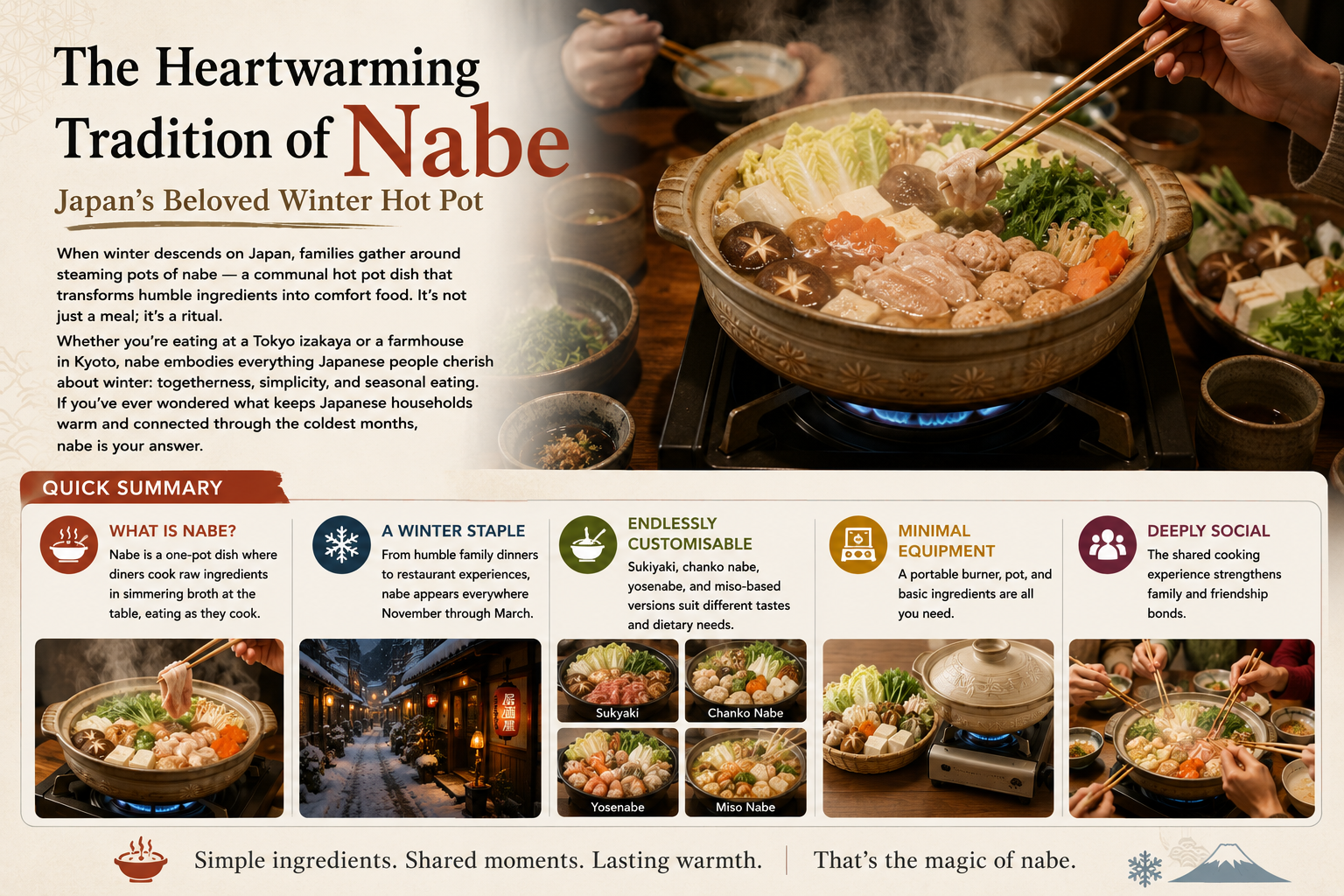
When winter descends on Japan, families gather around steaming pots of nabe — a communal hot pot dish that transforms humble ingredients into comfort food. It’s not just a meal; it’s a ritual. Whether you’re eating at a Tokyo izakaya or a farmhouse in Kyoto, nabe embodies everything Japanese people cherish about winter: togetherness, simplicity, and seasonal eating. If you’ve ever wondered what keeps Japanese households warm and connected through the coldest months, nabe is your answer.
Quick Summary
- Nabe is a one-pot dish where diners cook raw ingredients in simmering broth at the table, eating as they cook
- Winter staple across Japan — from humble family dinners to restaurant experiences, nabe appears everywhere November through March
- Endlessly customisable — sukiyaki, chanko nabe, yosenabe, and miso-based versions suit different tastes and dietary needs
- Minimal equipment required — a portable burner, pot, and basic ingredients are all you need
- Deeply social — the shared cooking experience strengthens family and friendship bonds
🛒 Shop Recommended Products
What Japanese Families Actually Eat
Walk into a Japanese home on a cold evening, and you’ll likely find nabe simmering on the dining table. The most common variety is yosenabe — a mixed seafood and vegetable nabe that requires no special ingredients. Families simmer kombu (kelp) and dashi stock, then add whatever’s in the fridge: shiitake mushrooms, Chinese cabbage (hakusai), carrots, tofu, and seafood like prawns or fish cake.
In winter markets across Japan, you’ll spot pre-packaged nabe sets selling for ¥1,500–¥3,000 ($10–$20 USD), containing precisely portioned vegetables and proteins. Department store food halls in cities like Osaka dedicate entire sections to nabe ingredients in December.
Sukiyaki nabe — thinly sliced beef cooked with vegetables in a sweet soy-based broth — is reserved for special occasions and costs considerably more. Meanwhile, chanko nabe, the hearty broth favoured by sumo wrestlers, features chicken meatballs, vegetables, and generous portions of tofu. Rural families often make miso-based nabe using locally foraged mushrooms and seasonal greens, reflecting their region’s produce.
How It’s Prepared at Home
Nabe preparation is intentionally simple — that’s its genius. Begin by filling a shallow metal pot (an donabe, or earthenware nabe pot, is traditional but any heavy-bottomed pot works) with broth. For dashi, most families use instant dashi powder: one sachet in 1.5 litres of water, or kombu simmered for 10 minutes then removed. Add a splash of soy sauce, mirin, and salt to taste.
Whilst the broth simmers, arrange raw ingredients on plates around the table. Vegetables should be cut into bite-sized pieces — though if you want paper-thin vegetable slices with professional precision, a Benriner BN-1 Japanese mandoline slicer saves enormous time and produces restaurant-quality results.
Diners sit around the pot, adding ingredients as they eat. Leafy vegetables cook in seconds; root vegetables and proteins take 3–5 minutes. Each person uses a small strainer basket or chopsticks to fish out cooked items, dipping them in raw egg or ponzu sauce. Once everything’s eaten, add udon noodles or rice to the remaining broth for a satisfying finish.
Where to Buy the Ingredients
Japanese supermarkets across the UK now stock nabe basics year-round, but winter selections expand dramatically. Look for hakusai (Chinese cabbage), mizuna (feathery greens), enoki and shiitake mushrooms, and tofu. Frozen fish cakes and seafood are readily available.
In Japan itself, neighbourhood shotengai (shopping streets) in areas like Yanaka, Tokyo, or Dotonbori, Osaka, stock everything within walking distance. Convenience stores like FamilyMart sell pre-cut nabe vegetable packs. Online Japanese grocers deliver dashi packets and miso to UK addresses within days.
For proteins, ask your fishmonger for thinly sliced beef (often labelled “sukiyaki beef”) or order chicken meatballs from Japanese food suppliers. A quality Kyocera ceramic frying pan is useful for pre-cooking any proteins — Kyocera’s ceramic coating is a healthier alternative if you’re cooking for health-conscious guests.
Why Japanese People Love This Food
Nabe transcends nutrition; it’s psychology wrapped in steam. Winter in Japan can feel isolating — nabe transforms that isolation into togetherness. Families gather around one pot, literally cooking and eating communally. Conversation flows naturally. Grandparents teach children which vegetables go in first, which cook fastest. It’s intergenerational knowledge transfer disguised as dinner.
Economically, nabe is clever. One pot feeds four to six people for ¥3,000–¥5,000. Seasonal vegetables cost far less in winter than imported alternatives. Japanese families see nabe as thrifty wisdom, not deprivation.
Seasonally, nabe aligns with traditional Japanese food philosophy: eat what the season provides. Winter vegetables — daikon, burdock root, Chinese cabbage — become sweeter in cold months as plants convert starches to sugars for frost protection. Japanese cooks respect this natural sweetness.
Psychologically, nabe offers control and customisation. Unlike restaurant meals, you cook your own food to your exact preference. Someone dislikes mushrooms? Skip them. Someone wants extra tofu? Add it. This autonomy strengthens the meal’s appeal.
Related Products
If you’re cooking nabe regularly, consider investing in reliable basics. A Zojirushi NS-ZCC10 rice cooker ensures perfectly fluffy rice for nabe leftovers, using Neuro Fuzzy logic to adjust cooking based on rice type and quantity. Many Japanese families use the same rice cooker for decades.
FAQ
Q: Can I make nabe without a special pot?
Yes. Any shallow heavy-bottomed pot works. A traditional donabe (earthenware nabe pot) retains heat beautifully and costs ¥2,000–¥8,000, but it’s not essential.
Q: How long does nabe take to cook?
About 20–30 minutes from start to finish, depending on ingredients and appetite.
Q: Is nabe vegetarian?
Absolutely. Use vegetable or mushroom dashi instead of fish-based stock, and load vegetables, tofu, and mushrooms.
Q: What’s the difference between nabe and sukiyaki?
Sukiyaki uses beef and a sweeter broth; nabe is broader and typically lighter. Both are cooked at the table.
Winter nabe remains Japan’s most democratic dinner — it appears in five-star restaurants and student dormitories alike. It requires no technical skill, minimal equipment, and ingredients you can find anywhere. Most importantly, it works. It warms bodies, brings people together, and tastes genuinely delicious. If you’ve never tried making nabe at home, this winter is your invitation to experience why Japanese families have cherished this simple ritual for generations.
Seen in Everyday Life in Tokyo
A Real-Life Note from Japan
What I Often See in Japanese Stores
Is it worth buying Japanese food over cheaper alternatives?
For most use cases, yes — if you plan to use the product daily or for many years. Japanese food tend to have a longer useful lifespan, which often makes the total cost of ownership lower than a cheaper alternative replaced every 2–3 years. That said, always match the product to your actual needs.
How long do Japanese food typically last?
With proper care, quality Japanese food are designed for 10 years or more of daily use. This is not incidental — it reflects what Japanese domestic consumers expect.
Where can I buy authentic Japanese food online?
The safest options are Amazon (from the brand’s official store or well-reviewed sellers), direct brand websites, or authorised international retailers. Avoid unverified marketplace listings for high-value items.
Related Japanese Products
The products below came up naturally in the context of this article. We only recommend items that genuinely connect to the topic.
| Product | Brand | Best For | Amazon |
|---|---|---|---|
| Zojirushi NS-ZCC10 | Zojirushi | Families who want reliable, consistently great rice without spending on IH | Search on Amazon |
| Benriner BN-1 Japanese Mandoline Slicer | Benriner | Home cooks who want professional-speed, paper-thin slicing for salads and garnishes | Search on Amazon |
| Kyocera Ceramic Coated Frying Pan | Kyocera | Health-conscious cooks who avoid PTFE/Teflon coatings | Search on Amazon |
Zojirushi NS-ZCC10
A beloved micom rice cooker with Neuro Fuzzy logic for consistently fluffy rice.
Best for: Families who want reliable, consistently great rice without spending on IH
Benriner BN-1 Japanese Mandoline Slicer
The original Japanese mandoline — every professional kitchen in Japan has one.
Best for: Home cooks who want professional-speed, paper-thin slicing for salads and garnishes
Kyocera Ceramic Coated Frying Pan
Japan’s ceramics giant applies its expertise to cookware — a healthier non-stick alternative.
Best for: Health-conscious cooks who avoid PTFE/Teflon coatings
More From Japanese Best
Disclosure: As an Amazon Associate, Japanese Best earns from qualifying purchases. This does not affect our recommendations. We only feature products we genuinely believe are worth your consideration.
Editorial Disclaimer
The views, opinions, and recommendations in this article are the author’s own and reflect personal experience living in Japan. They do not constitute professional, financial, or purchasing advice of any kind.
Product availability, pricing, and specifications are subject to change without notice. Japanese Best makes no warranties — express or implied — regarding the accuracy or completeness of this content, and accepts no liability for any decisions made based on it. Always verify details directly with the retailer or manufacturer before purchasing.
コメント