Japanese Supermarket Guide: What to Buy and Why (2026)
June 28, 2026 | Food | Japanese Best
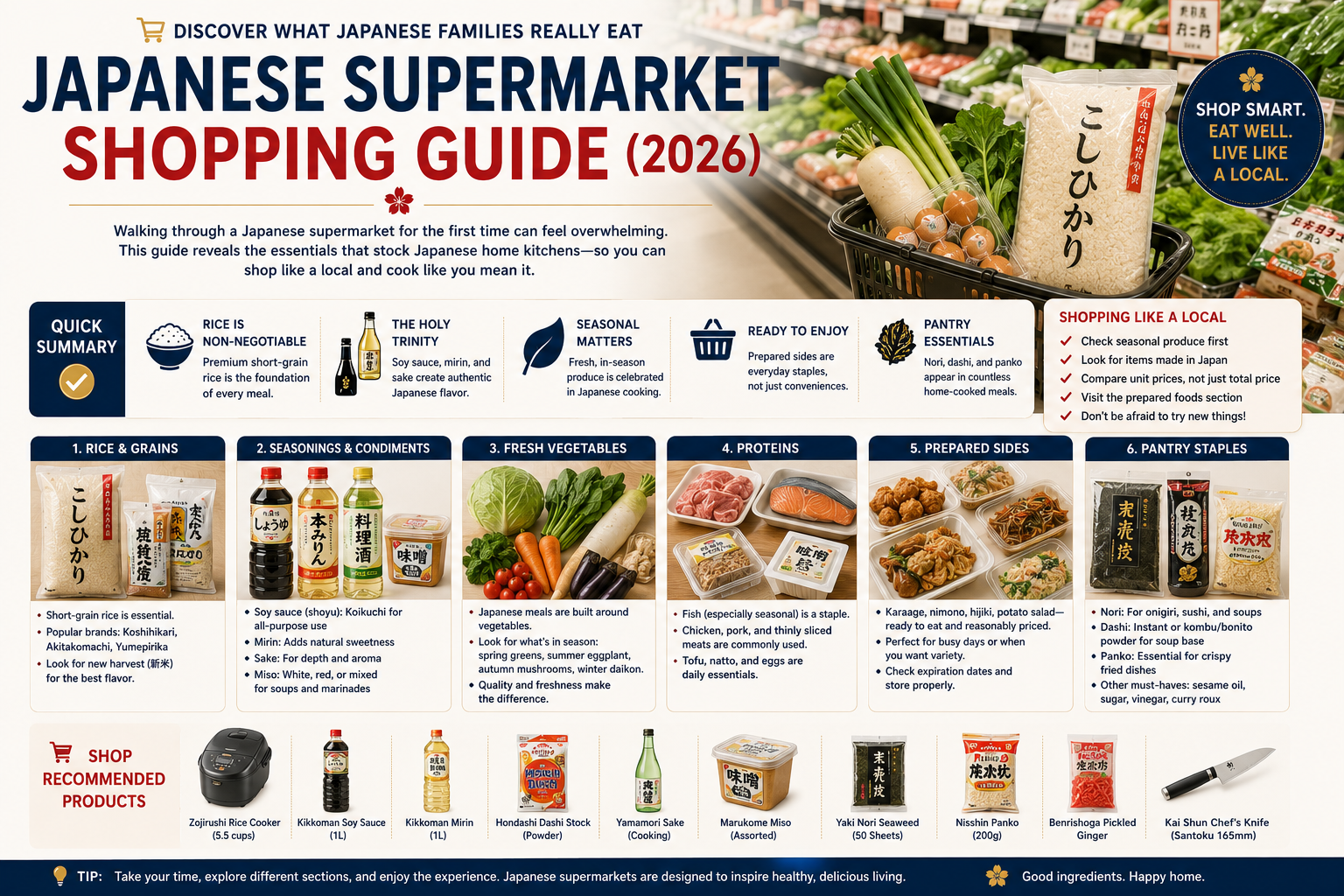
Walking through a Japanese supermarket for the first time can feel overwhelming. Rows of unfamiliar brands, ingredients you’ve never heard of, and signage in kanji create a sensory puzzle. Yet once you understand what to look for—and why Japanese families choose certain foods—the supermarket becomes a window into how Japan actually eats. This guide reveals the essentials that stock Japanese home kitchens, from rice and soy sauce to seasonal vegetables and prepared sides, so you can shop like a local and cook like you mean it. This japanese supermarket guide covers the essentials aisle by aisle.
Quick Summary
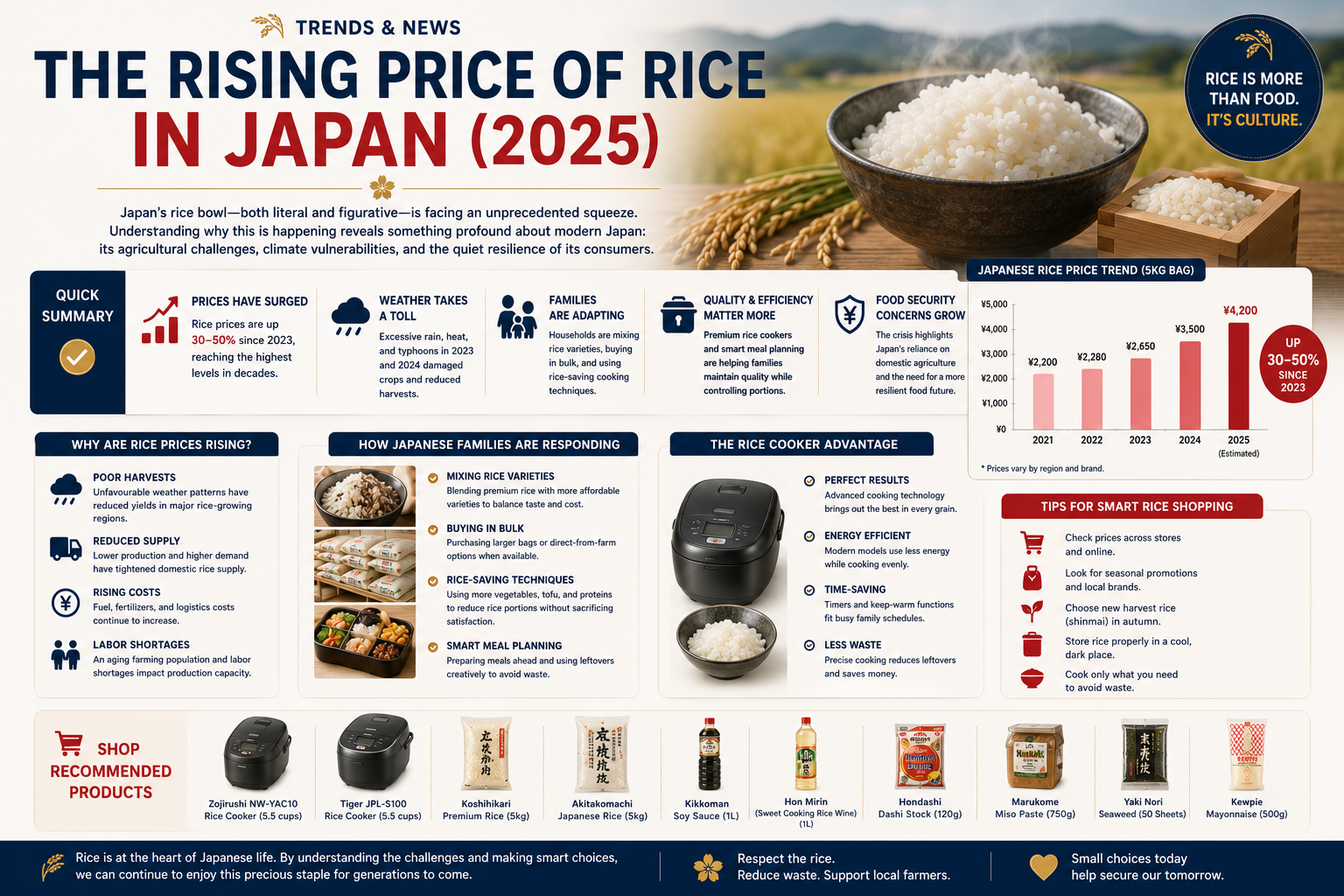
- Rice is non-negotiable: Japanese families buy premium short-grain varieties (Koshihikari, Akitakomachi) and prepare it daily in dedicated rice cookers
- Soy sauce, mirin, and sake form the holy trinity of Japanese seasoning—invest in quality brands from the supermarket’s condiment aisle
- Fresh seasonal vegetables matter more than exotic ingredients; Japanese cooking celebrates what’s in season
- Prepared sides (karaage, nimono, tsukemono) are everyday purchases, not special treats—supermarkets dedicate entire sections to ready-to-eat items
- Nori, dashi stock, and panko are pantry staples that appear in countless home-cooked meals
🛒 Shop Recommended Products
What a Japanese Supermarket Actually Sells
Japanese home cooking isn’t the elaborate sushi or kaiseki you might imagine. It’s humble, seasonal, and built on repetition. A typical family dinner features steamed rice as the foundation, a modest protein (grilled fish, simmered tofu, or breaded pork cutlet), and two or three small vegetable or pickle sides. Miso soup appears almost daily. Supermarkets reflect this reality: the rice section sprawls across entire aisles, whilst specialist sushi ingredients occupy modest corners.
Visit any major chain—Aeon, Ito-Yokado, or Daiei—and you’ll see families buying pre-cooked rice, ready-made bento components, and fresh fish that arrives daily from coastal suppliers. Prices vary wildly by location; Tokyo supermarkets charge 30–50% more than regional cities. Yet the shopping patterns remain consistent. Japanese home cooks prioritise freshness, seasonality, and convenience equally. A housewife in Osaka and one in Hokkaido both check the supermarket weekly for whatever vegetables just came into season, then build meals around them.
How It’s Prepared at Home
Japanese home cooking demands precision but rewards simplicity. Vegetables are sliced uniformly—often paper-thin—to cook evenly and present beautifully. A Benriner mandoline slicer (BN-1) sits in nearly every Japanese kitchen drawer; it’s the professional standard for slicing daikon, cucumber, and carrots into those impossibly thin sheets you see in salads and garnishes.
Rice is cooked fresh daily, almost always in a dedicated rice cooker. The Zojirushi NS-ZCC10 micom rice cooker is a household workhorse—its Neuro Fuzzy logic adjusts cooking time based on rice quantity and moisture, delivering consistently fluffy results without fussy attention. Most families cook enough rice at dinner to serve breakfast the next morning.
Proteins are typically grilled, simmered, or breaded and fried—never heavily sauced. A Kyocera ceramic-coated frying pan offers a healthier non-stick option for preparing tonkatsu (pork cutlets) or gyoza without relying on traditional PTFE coatings. Seasonings are minimal: soy sauce, mirin (sweet cooking wine), sake, and salt do the heavy lifting across most meals.
Where to Buy the Ingredients
Japanese supermarkets organise ingredients logically once you know where to look. The condiment aisle stocks soy sauce (shoyu), mirin, sake, and miso paste—buy established brands like Kikkoman, Marukome, or Hikari. Quality varies significantly; premium versions cost 50–100% more but are worth it for daily cooking. For more on the food culture behind these choices, see Wikipedia’s entry on Japanese cuisine.
The produce section features seasonal vegetables prominently and affordably. In spring, expect fresh bamboo shoots and fuki (butterbur); summer brings aubergine and okra; autumn means mushrooms and kabocha squash; winter features daikon and Chinese cabbage. Prices drop when items peak seasonally.
The prepared foods counter deserves dedicated attention. Supermarkets dedicate entire sections to karaage (fried chicken), grilled fish, simmered vegetables, and pickles—ready-to-eat components that busy families mix and match for weeknight dinners. These aren’t takeaway; they’re central to how Japanese people actually eat at home.
The dry goods aisle stocks nori (seaweed sheets), panko breadcrumbs, and instant dashi packets. The freezer section holds gyoza and edamame. Most supermarkets also operate small fishmongers and butchers within their space, offering superior quality to pre-packaged meat and fish.
Why Japanese People Love This Food
Japanese home cooking philosophy centres on simplicity, seasonality, and honouring ingredient quality. Rather than masking flavours with heavy sauces, cooks let fresh produce and properly selected proteins shine. A perfectly grilled mackerel needs only salt and soy sauce; a cucumber salad is celebrated for its crunch, not drowned in dressing.
Seasonality isn’t romantic nostalgia—it’s practical economics and tradition. Eating what’s abundant and local keeps costs reasonable and ensures peak flavour and nutrition. Japanese supermarkets reinforce this by prominently displaying seasonal items and rotating stock ruthlessly.
Health consciousness runs deep. Meals feature rice and vegetables as the primary components, with protein as a flavouring agent rather than the centrepiece. Portion sizes remain modest. Fermented foods—miso, soy sauce, pickles—appear daily, supporting gut health through tradition rather than trend. This approach has contributed to Japan’s status as one of the world’s healthiest, longest-living populations.
FAQ
What’s the best rice to buy in a supermarket?
Look for Koshihikari or Akitakomachi—premium short-grain varieties from major brands. Avoid anything labelled “blend” or mixed with other grains if you’re cooking traditional Japanese meals.
Can I substitute Western soy sauce?
Avoid it. Japanese supermarket soy sauce differs markedly from Chinese versions in salt content and fermentation. Kikkoman or Marukome are affordable and widely available internationally.
Are supermarket prepared foods reliable?
Completely. Japanese food safety standards are strict, and supermarkets maintain rigorous turnover. Ready-made items are fresher and safer than you’d expect.
How much should I expect to spend?
A week’s groceries for two people in Tokyo costs ¥5,000–8,000 (£25–40); outside major cities, expect 20–30% less. Seasonal vegetables and supermarket brands keep costs reasonable.
Japanese supermarkets aren’t exotic treasure troves—they’re practical spaces where ordinary families source the ingredients for everyday meals built on rice, seasonal vegetables, quality soy sauce, and carefully prepared proteins. Understanding what to buy and why teaches you more about Japanese culture than any cookbook could. Start with the basics: premium rice, good soy sauce, fresh seasonal vegetables, and a reliable way to prepare them. The rest follows naturally.
Seen in Everyday Life in Tokyo
A Real-Life Note from Japan
What I Often See in Japanese Stores

Related Japanese Products
The products below came up naturally in the context of this article. We only recommend items that genuinely connect to the topic.
| Product | Brand | Best For | Amazon |
|---|---|---|---|
| Zojirushi NS-ZCC10 | Zojirushi | Families who want reliable, consistently great rice without spending on IH | Search on Amazon |
| Benriner BN-1 Japanese Mandoline Slicer | Benriner | Home cooks who want professional-speed, paper-thin slicing for salads and garnishes | Search on Amazon |
| Kyocera Ceramic Coated Frying Pan | Kyocera | Health-conscious cooks who avoid PTFE/Teflon coatings | Search on Amazon |
Zojirushi NS-ZCC10
A beloved micom rice cooker with Neuro Fuzzy logic for consistently fluffy rice.
Best for: Families who want reliable, consistently great rice without spending on IH
Benriner BN-1 Japanese Mandoline Slicer
The original Japanese mandoline — every professional kitchen in Japan has one.
Best for: Home cooks who want professional-speed, paper-thin slicing for salads and garnishes
Kyocera Ceramic Coated Frying Pan
Japan’s ceramics giant applies its expertise to cookware — a healthier non-stick alternative.
Best for: Health-conscious cooks who avoid PTFE/Teflon coatings
More From Japanese Best
Disclosure: As an Amazon Associate, Japanese Best earns from qualifying purchases. This does not affect our recommendations. We only feature products we genuinely believe are worth your consideration.
Editorial Disclaimer
The views, opinions, and recommendations in this article are the author’s own and reflect personal experience living in Japan. They do not constitute professional, financial, or purchasing advice of any kind.
Product availability, pricing, and specifications are subject to change without notice. Japanese Best makes no warranties — express or implied — regarding the accuracy or completeness of this content, and accepts no liability for any decisions made based on it. Always verify details directly with the retailer or manufacturer before purchasing.
コメント