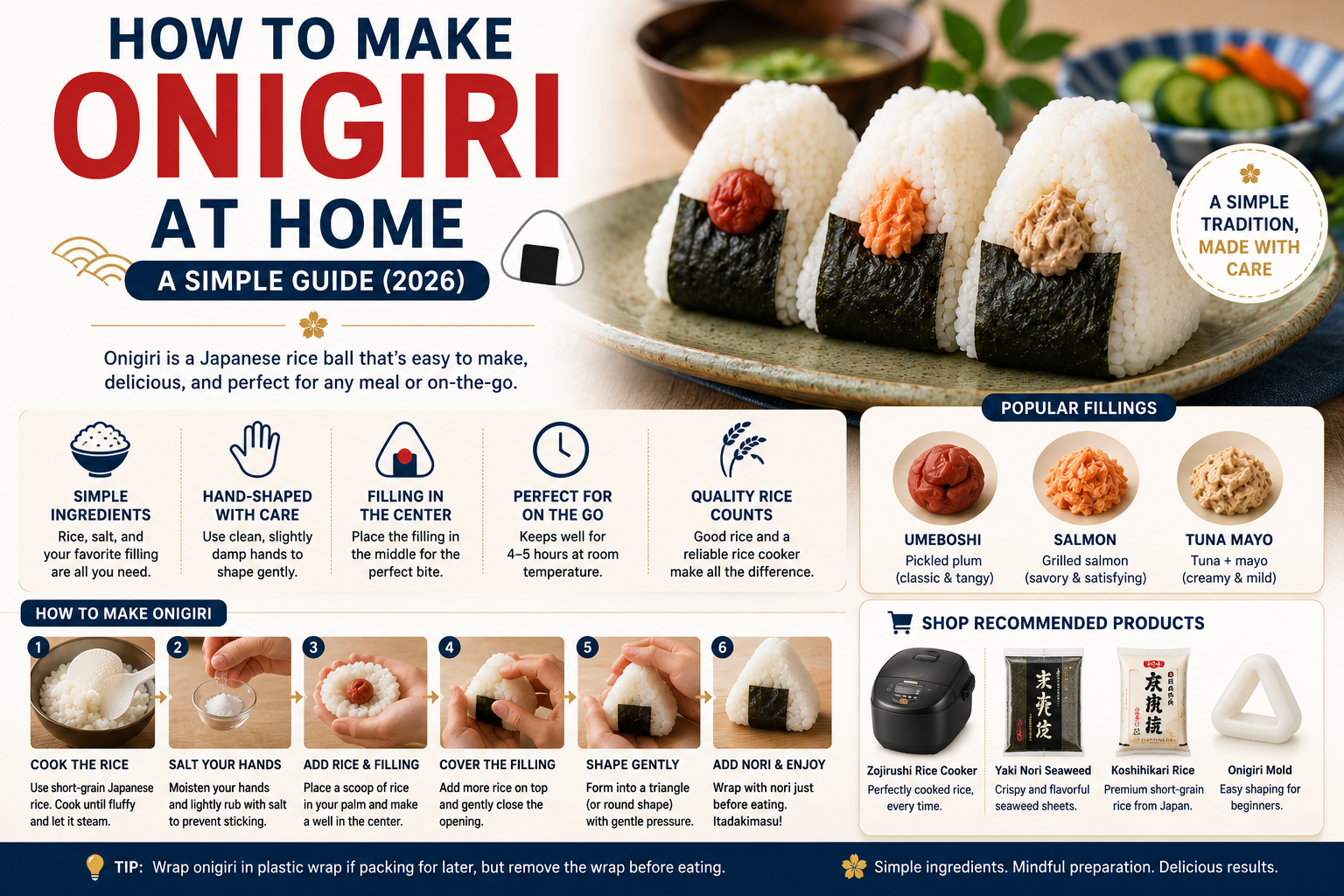
How to Make Onigiri at Home: A Simple Guide (2026)
June 28, 2026 | Food | Japanese Best
Every morning across Japan, millions of people reach for a simple triangle of rice wrapped in seaweed. It’s onigiri—a rice ball so fundamental to Japanese life that it appears in lunch boxes, convenience stores, and family kitchens from Tokyo to rural Hokkaido. Yet despite its simplicity, onigiri represents something deeper: the Japanese philosophy of turning humble ingredients into something nourishing and beautiful. If you’ve ever wondered how to make this iconic dish at home, you’re about to discover that learning how to make onigiri at home is far easier than you might think.
Quick Summary
- Onigiri requires just three basic ingredients: cooked rice, salt, and a filling of your choice (umeboshi, salmon, or tuna mayo are classics)
- The hand-shaping technique takes practice, but anyone can master it with clean, slightly damp hands
- Fillings should be placed in the centre so they’re discovered with each bite—a key detail Japanese home cooks never skip
- Onigiri keeps well for 4–5 hours at room temperature, making it perfect for packed lunches and picnics
- Quality rice makes all the difference; a reliable rice cooker ensures perfectly cooked grains every time
🛒 Shop Recommended Products
What Japanese Families Actually Eat
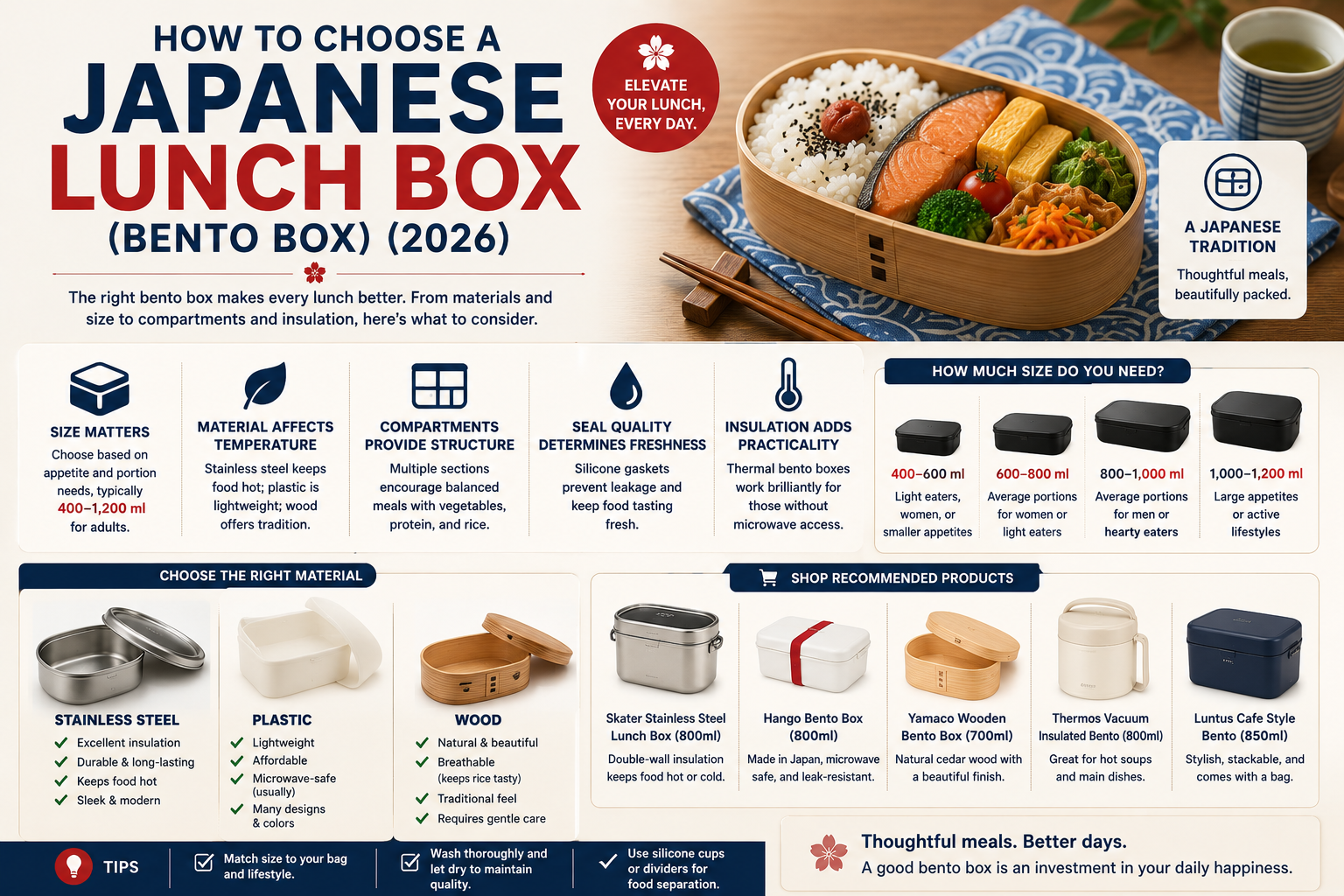
Onigiri isn’t fancy food—it’s everyday food. In Japan, you’ll find it in ekibens (station lunch boxes), school lunch boxes, and on picnic blankets during cherry blossom season. Japanese mothers pack onigiri into their children’s lunch boxes because it’s filling, portable, and beloved by everyone from toddlers to grandparents.
The fillings tell a story about regional tastes and family traditions. In Tokyo, tuna mayo (tuna mixed with Japanese mayonnaise) and salmon remain perennial favourites. Head to Hokkaido, and you’ll find ikura (salmon roe) onigiri, whilst Kyoto families favour umeboshi—a sour pickled plum that aids digestion. Some families add furikake (seasoned seaweed sprinkles), whilst others keep it perfectly plain, letting the quality of the rice shine through.
What makes onigiri so integral to Japanese eating habits is its versatility and respect for restraint. It’s not meant to impress; it’s meant to nourish and satisfy. For generations, Japanese families have understood that the best meals don’t need complicated techniques—just good ingredients and care.
How to Make Onigiri at Home, Step by Step
The beauty of onigiri lies in its simplicity. Start with freshly cooked rice—ideally still warm, as it shapes more easily. A Zojirushi NS-ZCC10 rice cooker uses Neuro Fuzzy logic to produce consistently fluffy rice, removing one variable from the equation and ensuring every batch of onigiri starts with the same quality base.
Fill a small bowl with water and add a pinch of salt—this is your shaping aid. Wet your hands lightly and sprinkle salt into your palm. Grab a handful of warm rice (roughly 150 grams) and cup it in one hand. Use your thumb to create a small indent in the centre, place your chosen filling inside, then gently cup your other hand over the top and shape it into a triangle using gentle, rotating motions. Press firmly enough to hold it together, but not so hard that you crush the grains.
The finished onigiri should be compact but not dense. This takes practice—Japanese mothers develop this skill through years of repetition, but you’ll improve within a few attempts. The key is keeping your hands cool and slightly damp throughout.
Where to Buy the Ingredients
You needn’t search far. Most supermarkets stock sushi rice or short-grain Japanese rice—brands like Koshihikari are reliable and widely available. Nori (seaweed sheets) are sold in every Asian grocery shop and increasingly in mainstream supermarkets across the UK and Europe. For more on the dish’s history, see Wikipedia’s entry on onigiri.
Fillings are where you can be creative. Tinned salmon and tuna are pantry staples; umeboshi (pickled plums) appear in Asian sections or online. If you’re serious about Japanese cooking, Japanese grocery shops—whether online or physical—will stock premium nori and specialty fillings. In Japan itself, prices are modest: a kilogram of decent Koshihikari rice costs around ¥2,000–¥3,000 (£10–£15), whilst nori sheets run ¥300–¥500 (£2–£3) per pack.
Why Japanese People Love This Food
Onigiri embodies core Japanese values: simplicity, portability, and respect for ingredients. There’s no waste—leftover rice becomes tomorrow’s onigiri. There’s no pretension—it’s honest food that tastes good and sustains you through the day.
Japanese children grow up with onigiri in their lunch boxes, creating emotional connections that last into adulthood. Many Japanese people abroad describe onigiri as deeply comforting, a taste of home that transports them instantly. This cultural weight—paired with genuine deliciousness—explains why convenience stores like 7-Eleven and FamilyMart dedicate entire shelves to onigiri varieties.
Beyond nostalgia, onigiri is practical. It’s perfectly portioned, doesn’t require utensils, and stays fresh for hours without refrigeration in mild weather. For a nation that values efficiency and thoughtful design, onigiri is the ultimate expression of these ideals in food form.
FAQ
How long does onigiri keep?
At room temperature, 4–5 hours. Refrigerated, up to 2 days (though texture degrades slightly). Wrap it in nori just before eating to restore crispness.
Can I make onigiri with brown rice?
Yes, though it requires slightly more moisture and won’t hold its shape quite as elegantly as white rice. Many Japanese cooks reserve brown rice for other dishes.
What’s the best filling for beginners?
Umeboshi or plain salt. These require no preparation and let you focus on the shaping technique.
Do I need special equipment?
No. Hands are traditional and most effective. Some plastic onigiri moulds exist, but they produce less satisfying results than hand-shaping.
Making onigiri at home is your invitation into Japanese domestic cooking. It requires no fancy equipment, no intimidating techniques—just good rice, clean hands, and a willingness to repeat the shaping motion until muscle memory takes over. The first batch may look lumpy; by the fifth, you’ll find a rhythm. That’s precisely how Japanese families approach it: not as a performance, but as a quiet, daily practice that nourishes both body and home.
Seen in Everyday Life in Tokyo
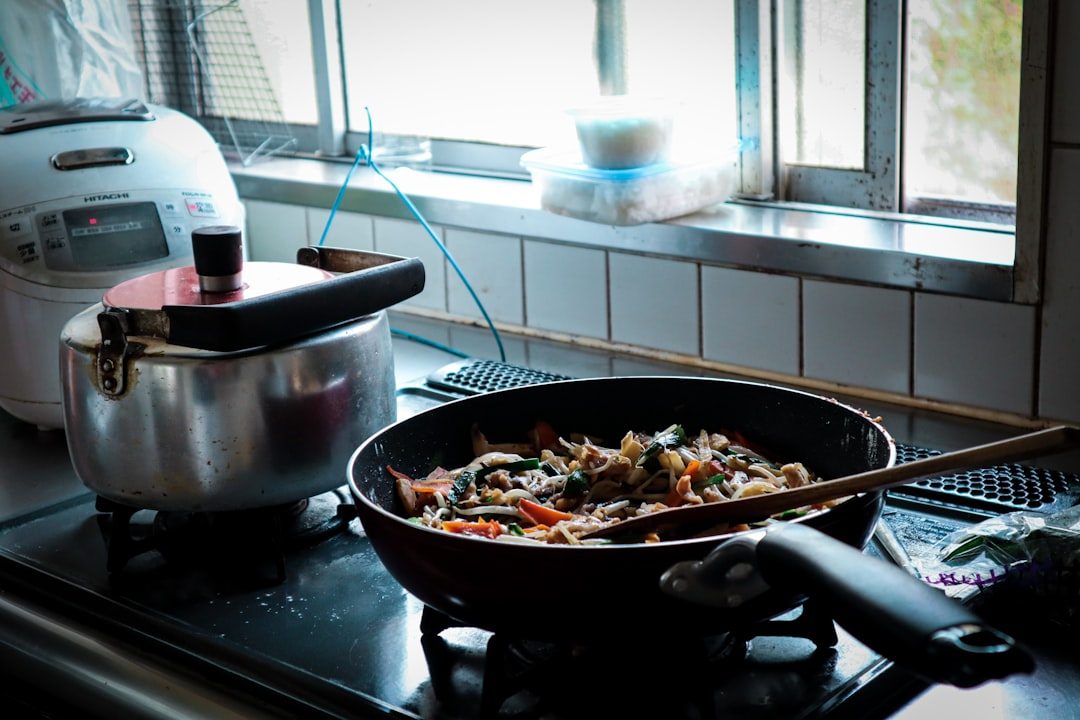
A Real-Life Note from Japan
What I Often See in Japanese Stores
Related Japanese Products
The products below came up naturally in the context of this article. We only recommend items that genuinely connect to the topic.
| Product | Brand | Best For | Amazon |
|---|---|---|---|
| Zojirushi NS-ZCC10 | Zojirushi | Families who want reliable, consistently great rice without spending on IH | Search on Amazon |
| Benriner BN-1 Japanese Mandoline Slicer | Benriner | Home cooks who want professional-speed, paper-thin slicing for salads and garnishes | Search on Amazon |
| Kyocera Ceramic Coated Frying Pan | Kyocera | Health-conscious cooks who avoid PTFE/Teflon coatings | Search on Amazon |
Zojirushi NS-ZCC10
A beloved micom rice cooker with Neuro Fuzzy logic for consistently fluffy rice.
Best for: Families who want reliable, consistently great rice without spending on IH
Benriner BN-1 Japanese Mandoline Slicer
The original Japanese mandoline — every professional kitchen in Japan has one.
Best for: Home cooks who want professional-speed, paper-thin slicing for salads and garnishes
Kyocera Ceramic Coated Frying Pan
Japan’s ceramics giant applies its expertise to cookware — a healthier non-stick alternative.
Best for: Health-conscious cooks who avoid PTFE/Teflon coatings
More From Japanese Best
Disclosure: As an Amazon Associate, Japanese Best earns from qualifying purchases. This does not affect our recommendations. We only feature products we genuinely believe are worth your consideration.
Editorial Disclaimer
The views, opinions, and recommendations in this article are the author’s own and reflect personal experience living in Japan. They do not constitute professional, financial, or purchasing advice of any kind.
Product availability, pricing, and specifications are subject to change without notice. Japanese Best makes no warranties — express or implied — regarding the accuracy or completeness of this content, and accepts no liability for any decisions made based on it. Always verify details directly with the retailer or manufacturer before purchasing.
コメント