Japanese Randoseru School Backpack: A Complete Guide (2026)
June 28, 2026 | Parenting | Japanese Best
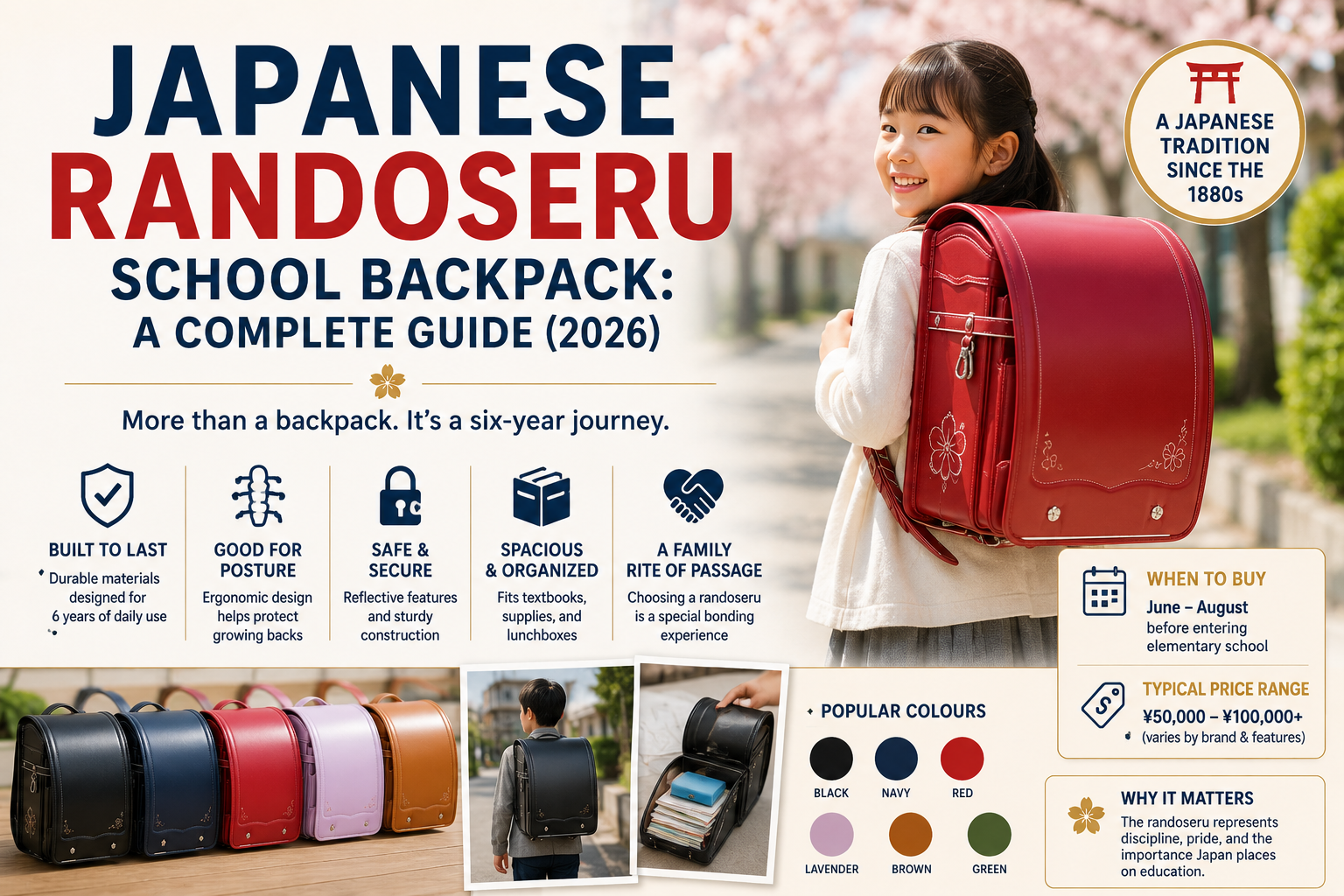
When Japanese children start elementary school, their parents hand them something almost sacred: a randoseru (ランドセル). This isn’t just any backpack. It’s a rite of passage, a six-year commitment, and a symbol of Japanese childhood itself. Unlike the casual rucksacks Western children might toss over their shoulders, the randoseru carries cultural weight, engineering sophistication, and parental expectation. Understanding this single japanese randoseru offers genuine insight into how Japanese families approach education, responsibility, and growing up.
Quick Summary
- A randoseru is a structured, rectangular backpack worn by Japanese primary school children (grades 1–6), typically costing ¥50,000–¥100,000+
- Japanese parents view it as an investment in posture, safety, and durability—not fashion—though colour choices reflect family values
- Children carry textbooks, supplies, and lunch daily; the randoseru’s rigid frame prevents back strain despite heavy loads
- Families purchase randoseru in summer before school begins (June–August); this ritual shapes parent–child bonding
- The randoseru represents discipline, tradition, and the seriousness with which Japan treats primary education
🛒 Shop Recommended Products
How Japanese Randoseru Shopping Works for Parents
Japanese parents treat randoseru shopping with surprising gravity. It’s not an impulse purchase. Most families begin researching in May, visiting department stores and specialist shops across Tokyo, Osaka, and Kyoto throughout the summer. Department stores like Mitsukoshi and Isetan dedicate entire floors to randoseru displays, complete with fitting sessions where staff measure a child’s shoulders and back.
Parents prioritise durability and health over trends. A quality randoseru costs ¥50,000–¥80,000 (roughly £300–£480), and many families spend more. Brands like Seiban, Fiorentina, and Kawada command premium prices because they reinforce the spine with aluminium frames, distribute weight evenly, and survive six years of daily use. Parents reason: better posture now means better health later. They also consider safety features like reflective strips and automatic light-up signals, because Japanese children navigate busy streets independently from age six or seven. For more background, see Wikipedia’s entry on the randoseru.
Colour choice, whilst seemingly aesthetic, carries meaning. Traditional burgundy and black remain most popular—they don’t show dirt and signal earnestness. However, modern families choose navy, cherry red, or even emerald green, reflecting a child’s personality within acceptable bounds. This balance between conformity and individuality mirrors Japanese parenting philosophy broadly.
What Japanese Kids Experience
For a Japanese child, receiving their randoseru is comparable to a Western child’s first day at “big school”—it’s transformative. The backpack becomes part of their identity. Classmates notice whose randoseru is which brand, and whilst bullying over this is rare, there’s an unspoken awareness of quality and care.
Children learn responsibility through their randoseru. They pack it each evening, arrange textbooks in order, and check supplies independently. Parents supervise but rarely pack for them. This early autonomy is deliberate: Japanese educators believe children develop self-reliance when trusted with practical tasks. A six-year-old managing their own backpack is seen as taking their first step toward independence.
The physical experience differs too. The rigid frame keeps books upright and weight centred on broad shoulder straps, distributing pressure across the back rather than concentrating it. Many Japanese children wear their randoseru with excellent posture—partly because the design enforces it. Shoulder height and strap length are adjusted at purchase and reviewed annually, ensuring proper fit as children grow.
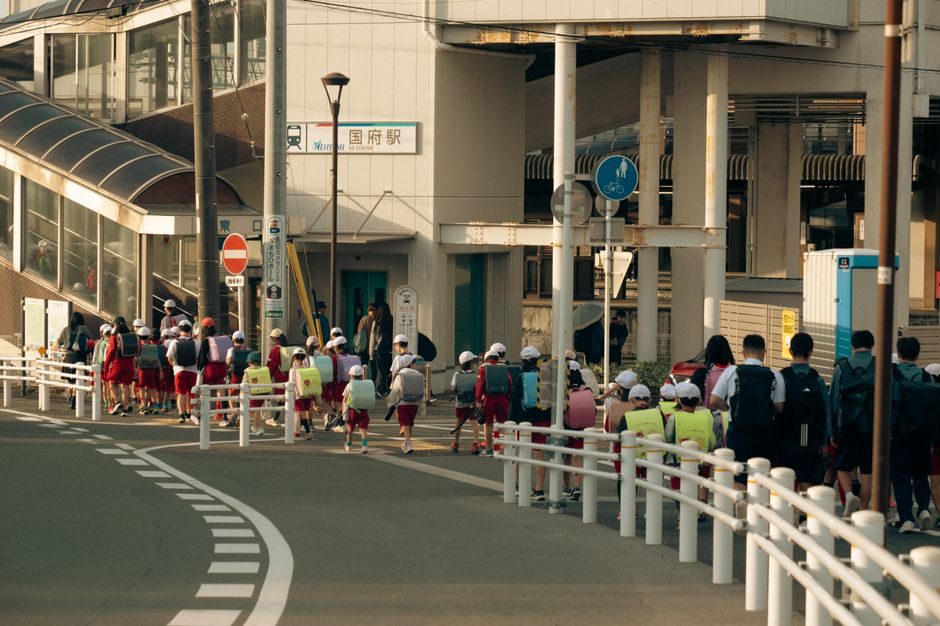
Socially, the randoseru journey home is often when friendships deepen. Children walk together in groups (supervised from a distance by parents), and their randoseru—filled with homework, art projects, and snacks—becomes the backdrop for after-school conversation. It’s a tactile symbol of school identity.
At School vs At Home
At school, the randoseru lives in a designated cubby or locker. Japanese classrooms don’t have individual desks; children sit at shared tables, and their randoseru is stored away during lessons. This keeps the classroom uncluttered and trains children to organise without constant visual reminders.
At home, the randoseru sits prominently in the child’s room or entryway—a visible reminder of their responsibility. Many families have a designated shelf or hook where it’s hung immediately after school. Evening time is when children empty and repack it: reviewing homework sheets, organising tomorrow’s supplies, and practising the routine that will eventually become automatic.
Japanese parents rarely intervene unless something’s forgotten. The philosophy is that natural consequences teach better than lectures. If a child forgets their sports kit, they face mild embarrassment at school and learn to double-check. If they’ve forgotten their pencil case, they borrow from classmates and experience the minor social friction of depending on others. These small failures, within the safe container of primary school, build resilience.
Weekends are different. Many children don’t carry their randoseru to weekend activities—the backpack is specifically for school. This reinforces the boundary between school identity and home identity, another subtle feature of Japanese compartmentalisation.
Real-Life Examples from Tokyo
In central Tokyo, families often shop for randoseru at Ginza’s Mitsukoshi or Shinjuku Isetan in July. A typical scene: a parent and six-year-old child, the child sitting whilst staff measure and adjust straps, the parent asking detailed questions about material durability and warranty. The child watches their future randoseru being customised, understanding this is a significant moment.
One Tokyo parent, Yuki (age 38), described her experience: “We spent three weeks visiting shops. My daughter chose cherry-red, which seemed frivolous to me, but the shop assistant explained that bright colours are safer for traffic. That reframing—seeing her preference through a safety lens—made it feel responsible. She took ownership immediately.”
Another family in Meguro invested in a premium Fiorentina model (¥98,000) because the child had weak shoulders. The orthopaedic design was worth the cost. These are typical conversations: parental investment married to child welfare, not status-seeking.
Many Tokyo schools hold randoseru information sessions in May, where they discuss which models suit their facilities and safety standards. This institutional involvement shows how embedded the randoseru is in Japanese educational culture.
How This Compares to Western Parenting
Western parents typically buy backpacks based on style and price, often replacing them annually or when they wear out. A child might own three or four different bags throughout primary school, chosen with minimal deliberation and sometimes by the child alone.
Japanese parents, by contrast, view the randoseru as a multi-year investment and a teaching tool. The financial commitment signals to the child that school matters. The six-year lifespan (rather than annual replacement) teaches durability and care—your things last if you respect them.
Western backpacks prioritise lightness and modern aesthetics. Randoseru prioritise spinal health and safety, even if they’re heavier. A Western child might customise their bag with pins or patches; a Japanese child learns that their randoseru is already complete and doesn’t need embellishment.
This reflects a broader cultural difference: Western parenting often emphasises self-expression early; Japanese parenting often emphasises fitting into systems first, then expressing individuality within boundaries. The randoseru embodies this philosophy perfectly—it’s standardised, but within that structure, there’s room for personal choice (colour, brand, small accessories).
Related Japanese Products
Japanese stationery culture complements the randoseru experience. Children benefit from reliable writing tools: the Pilot FriXion Clicker 0.5mm, Japan’s bestselling erasable gel pen, lets students correct homework neatly without damaging pages. Similarly, the Zebra Sarasa Clip 0.5mm is beloved by Japanese schoolchildren for its smooth, fast-drying ink—perfect for quick note-taking during lessons.
For lunch, many randoseru users carry a Zojirushi insulated lunch jar, which keeps bento meals hot throughout the day without needing a school microwave. Japanese school culture emphasises eating lunch at your desk, so a reliable, leak-proof container is essential.
FAQ
Q: Why is the randoseru so expensive?
A: Quality construction—aluminium frames, premium leather, reinforced stitching—ensures six years of durability. Japanese parents view it as a health investment, not a fashion item.
Q: Do all Japanese children use the same randoseru?
A: No. Whilst the rectangular shape and six-year durability requirements are standardised, families choose freely from a wide range of colours, brands, and small accessories within that structure.
Seen in Everyday Life in Tokyo
A Real-Life Note from Japan
What I Often See in Japanese Stores
Related Japanese Products
The products below came up naturally in the context of this article. We only recommend items that genuinely connect to the topic.
| Product | Brand | Best For | Amazon |
|---|---|---|---|
| Pilot FriXion Clicker 0.5mm | Pilot | Students, planners, and anyone who needs flexibility to correct mistakes | Search on Amazon |
| Zebra Sarasa Clip 0.5mm | Zebra | Students and office workers who write quickly and need fast-drying ink | Search on Amazon |
| Zojirushi Stainless Lunch Jar (Bento Box) | Zojirushi | Office workers and students who want hot lunches without needing a microwave | Search on Amazon |
Pilot FriXion Clicker 0.5mm
The world’s bestselling erasable pen — writes like a smooth gel but rubs out cleanly with heat.
Best for: Students, planners, and anyone who needs flexibility to correct mistakes
Zebra Sarasa Clip 0.5mm
Japan’s favourite everyday gel pen — fast-drying, smooth, and available in gorgeous colours.
Best for: Students and office workers who write quickly and need fast-drying ink
Zojirushi Stainless Lunch Jar (Bento Box)
Japan’s most reliable insulated bento jar — keeps lunch hot for hours without a microwave.
Best for: Office workers and students who want hot lunches without needing a microwave
More From Japanese Best
Disclosure: As an Amazon Associate, Japanese Best earns from qualifying purchases. This does not affect our recommendations. We only feature products we genuinely believe are worth your consideration.
Editorial Disclaimer
The views, opinions, and recommendations in this article are the author’s own and reflect personal experience living in Japan. They do not constitute professional, financial, or purchasing advice of any kind.
Product availability, pricing, and specifications are subject to change without notice. Japanese Best makes no warranties — express or implied — regarding the accuracy or completeness of this content, and accepts no liability for any decisions made based on it. Always verify details directly with the retailer or manufacturer before purchasing.

コメント