Why Rice Prices Are Rising in Japan in 2025
June 28, 2026 | Trends & News | Japanese Best
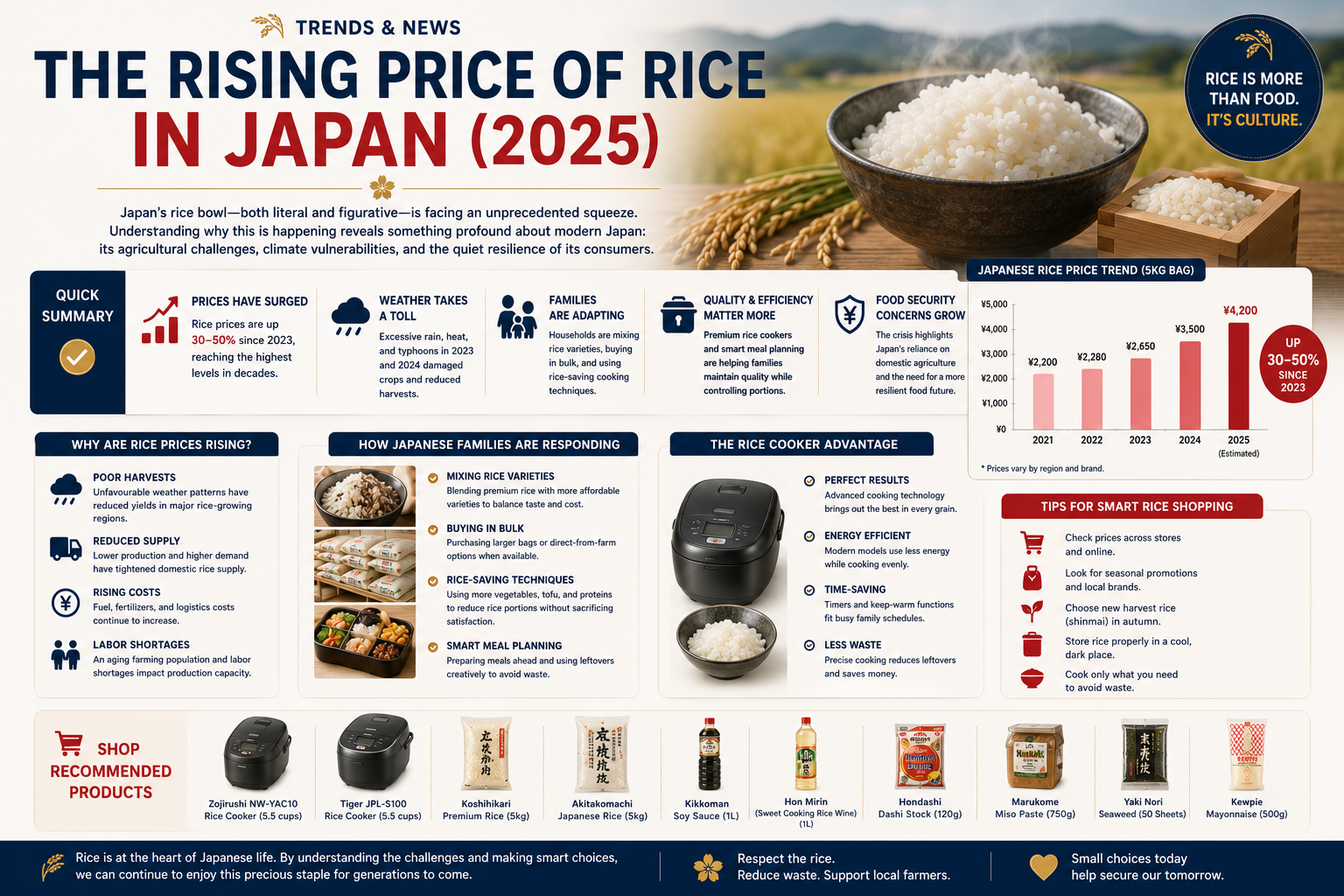
Japan’s rice bowl—both literal and figurative—is facing an unprecedented squeeze. In 2025, prices for domestic Japanese rice have climbed to their highest levels in decades, with some varieties jumping 30–50% compared to just two years ago. For a nation where rice isn’t merely a staple but a cultural cornerstone, this shift is reshaping how millions of Japanese families shop, cook, and think about their daily meals. Understanding why this is happening reveals something profound about modern Japan: its agricultural challenges, climate vulnerabilities, and the quiet resilience of its consumers. Here’s why rice prices in Japan climbed so fast, and what happens next.
Quick Summary
- Rice prices in Japan have surged 30–50% since 2023, driven by poor harvests and reduced domestic supply
- Unfavourable weather, including excessive rain and typhoons, damaged crops across major rice-growing prefectures in 2023 and 2024
- Japanese families are adjusting by mixing rice varieties, buying in bulk, and exploring rice-saving cooking techniques
- Premium rice cookers and careful meal planning have become more popular as households seek efficiency and quality
- The crisis highlights Japan’s dependency on domestic agriculture and growing concerns about food security
🛒 Shop Recommended Products
The Background: Why Rice Prices in Japan Are Rising
Japan’s rice market operates under strict domestic regulations. Unlike many nations, Japan heavily protects its rice farmers through import tariffs—foreign rice is taxed at roughly 778% to shield local producers. This means Japanese consumers pay premium prices, but they’ve traditionally accepted this trade-off, valuing domestic quality and food security. For background on the industry itself, see Wikipedia’s entry on rice production in Japan.
That social contract is now being tested. The culprit: two consecutive years of harvest failures. In 2023, excessive rain and typhoons battered Niigata, Akita, and Yamagata—three of Japan’s “Big Three” rice-producing prefectures. Yields plummeted by 15–25% below normal levels. The 2024 harvest offered little relief, with drought in summer followed by early autumn storms. Combined, these weather events have depleted Japan’s rice reserves to their lowest point since records began in 1967.
The Japan Agricultural News Agency reported that national rice stocks fell below 1 million tonnes in early 2024—a critical threshold. Historically, Japan maintained reserves of 2–3 million tonnes as a buffer. Without this cushion, even modest demand fluctuations send prices upward. Wholesale prices for standard varieties like Koshihikari now exceed ¥3,500 per 60-kilogramme bag—nearly double the 2020 average of ¥1,800.
How Japanese Families Are Responding
Japanese consumers are remarkably pragmatic. Rather than panic-buying, families have shifted their purchasing strategies in subtle but meaningful ways.
In Tokyo and Osaka supermarkets, shoppers increasingly purchase “rice blends”—mixtures of premium Koshihikari with cheaper domestic varieties or even bulgur and barley. These blends cost 20–30% less whilst maintaining acceptable taste and nutrition. Home economics teachers report students learning to stretch rice further by mixing in other grains, echoing techniques their grandparents used during post-war austerity.
Bulk buying has surged at warehouse clubs like Costco Japan and local agricultural cooperatives. Families who once bought 5-kilogramme bags monthly now purchase 20–30 kilogramme sacks quarterly, accepting storage challenges for modest savings. Freezer and storage room sales have ticked upward as households rearrange their kitchens to accommodate larger rice supplies.
At the dinner table, the changes are quieter. Recipes incorporating less rice—donburi bowls topped with vegetables and protein, rice porridge stretched with broth—have returned to popularity after decades of decline. Cooking shows and food blogs have become unexpectedly influential in teaching efficiency rather than indulgence.
Popular Products and Services During the Crisis
The rice price surge has created unexpected demand for products that maximise rice quality and stretch supplies further.
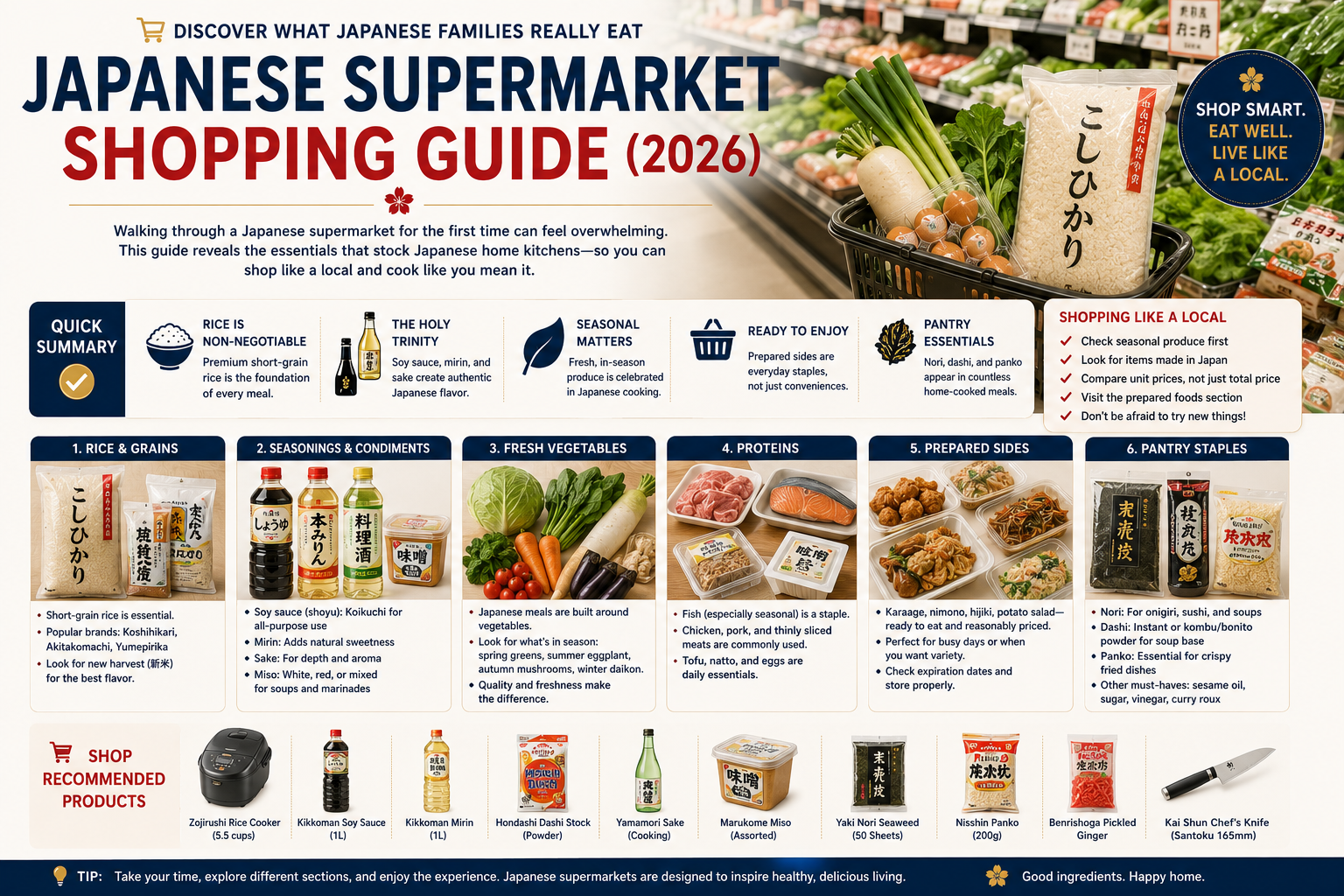
Premium rice cookers have become bestsellers. The Zojirushi NS-ZCC10 uses Neuro Fuzzy logic to extract maximum flavour and texture from rice, making every grain count—families report that superior cooking can offset quality compromises when blending rice varieties. Retailers report waiting lists for high-end IH (induction heating) models that cost ¥30,000–¥50,000.
Rice delivery subscription services have proliferated across Japan. Companies like Okome no Furusato (literally “Rice’s Hometown”) now offer monthly delivery of surplus stock from local producers at slightly discounted rates. These services build direct farmer-to-consumer relationships, bypassing wholesale markups.
For families exploring vegetable-forward meals, the Benriner BN-1 Japanese mandoline slicer has become a kitchen essential—paper-thin vegetable slices make lighter meals feel more substantial without requiring extra rice.
Additionally, efficient cookware matters more when budgets tighten. The Kyocera Ceramic Coated Frying Pan distributes heat evenly and uses less oil, allowing families to prepare healthier, more economical side dishes that complement smaller rice portions.
What This Tells Us About Japan
This crisis reveals Japan’s hidden vulnerability: food security. Despite being a wealthy, technologically advanced nation, Japan produces only 60% of its own calories and is heavily dependent on domestic rice reserves. Climate volatility—increasingly common with shifting weather patterns—directly threatens this delicate balance.
It also demonstrates Japanese cultural resilience. Rather than abandoning rice consumption or demanding government intervention alone, families adapt, innovate, and embrace modest sacrifice. The response mirrors Japan’s post-war ethos: making do, improving efficiency, and finding dignity in restraint. This isn’t deprivation; it’s pragmatism wrapped in pride.
Furthermore, the crisis is forcing a national conversation about agriculture’s future. Young farmers are gaining recognition and support. Prefectural governments are investing in drought-resistant rice varieties and improved irrigation. The government has announced plans to build strategic reserves back to 1.5 million tonnes by 2027. Rice, it seems, matters too much to be left to market forces alone.
FAQ
Why doesn’t Japan import cheaper foreign rice?
Tariffs make imported rice prohibitively expensive. Politically, dismantling protections would devastate rural communities. Culturally, Japanese consumers prefer domestic rice’s taste and perceived safety.
Will prices drop soon?
Unlikely before 2026. Harvests depend on weather; reserves take years to rebuild. Expect gradual decline as reserves stabilise.
Are there health concerns about rice shortages?
No. Japan isn’t facing actual shortage—supplies exist, but at higher prices. Families adjust intake and composition rather than go hungry.
Is this permanent?
Not necessarily. Improved agricultural practices and climate adaptation could prevent recurrence, though vulnerability will persist.
Japan’s rice price surge of 2025 is, in many ways, a test. It tests whether a wealthy nation can weather agricultural disruption with grace. So far, Japan is passing. Families are adapting, innovators are stepping forward, and policymakers are listening. The bowl may cost more to fill, but it remains central to the Japanese table—and to Japanese life itself.
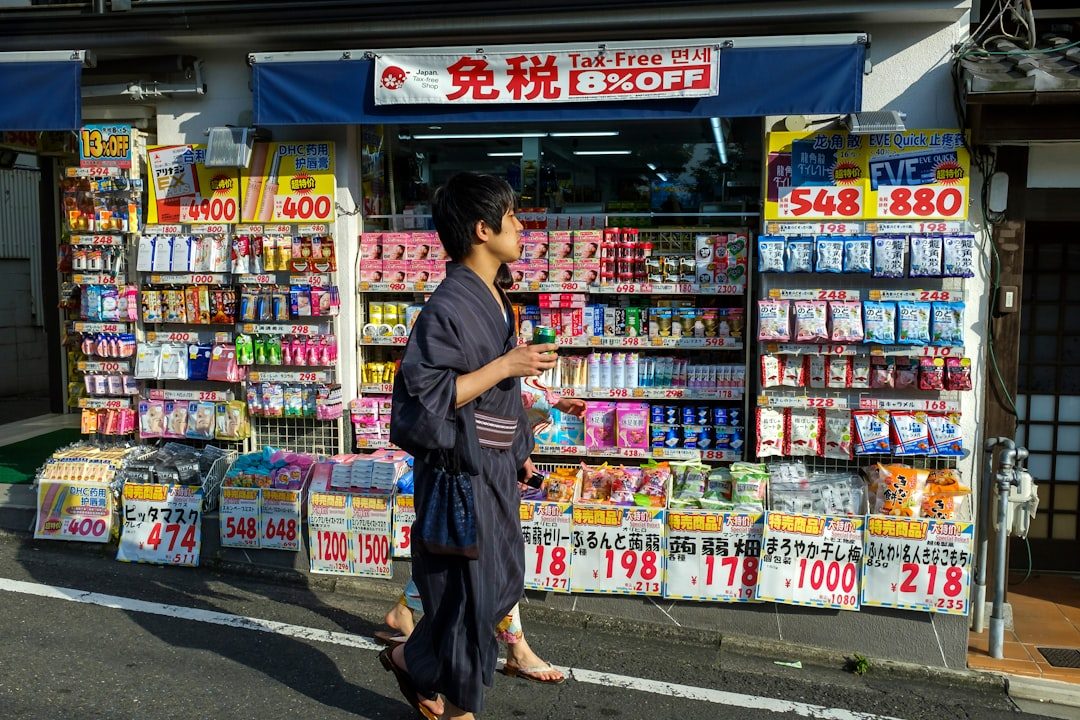
Seen in Everyday Life in Tokyo
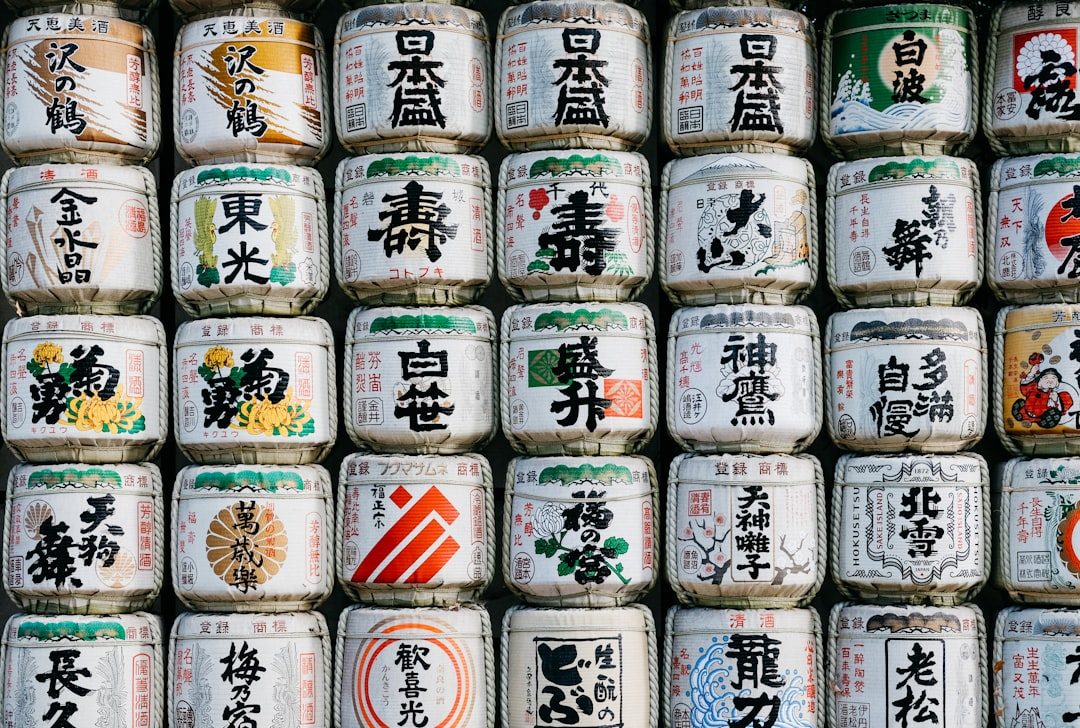
A Real-Life Note from Japan
What I Often See in Japanese Stores
Related Japanese Products
The products below came up naturally in the context of this article. We only recommend items that genuinely connect to the topic.
| Product | Brand | Best For | Amazon |
|---|---|---|---|
| Zojirushi NS-ZCC10 | Zojirushi | Families who want reliable, consistently great rice without spending on IH | Search on Amazon |
| Benriner BN-1 Japanese Mandoline Slicer | Benriner | Home cooks who want professional-speed, paper-thin slicing for salads and garnishes | Search on Amazon |
| Kyocera Ceramic Coated Frying Pan | Kyocera | Health-conscious cooks who avoid PTFE/Teflon coatings | Search on Amazon |
Zojirushi NS-ZCC10
A beloved micom rice cooker with Neuro Fuzzy logic for consistently fluffy rice.
Best for: Families who want reliable, consistently great rice without spending on IH
Benriner BN-1 Japanese Mandoline Slicer
The original Japanese mandoline — every professional kitchen in Japan has one.
Best for: Home cooks who want professional-speed, paper-thin slicing for salads and garnishes
Kyocera Ceramic Coated Frying Pan
Japan’s ceramics giant applies its expertise to cookware — a healthier non-stick alternative.
Best for: Health-conscious cooks who avoid PTFE/Teflon coatings
More From Japanese Best
Disclosure: As an Amazon Associate, Japanese Best earns from qualifying purchases. This does not affect our recommendations. We only feature products we genuinely believe are worth your consideration.
Editorial Disclaimer
The views, opinions, and recommendations in this article are the author’s own and reflect personal experience living in Japan. They do not constitute professional, financial, or purchasing advice of any kind.
Product availability, pricing, and specifications are subject to change without notice. Japanese Best makes no warranties — express or implied — regarding the accuracy or completeness of this content, and accepts no liability for any decisions made based on it. Always verify details directly with the retailer or manufacturer before purchasing.

コメント