Best Japanese Hand Cream for Dry Skin in Winter (2026)
June 28, 2026 | Products | Japanese Best
- Best Overall: Hada Labo Gokujyun Perfect Gel All-in-One
- Best Value: Kose Cosmeport Softymo Speedy Cleansing and Moisturising Cream
- Best Premium: Shiseido Ibuki Quick Fix Mist
- Best Budget: DHC Olive Virgin Oil Moisturizer
- Best for Beginners: Neutrogena Hydro Boost Water Gel (Japan Edition)
Winter in Japan brings a particular kind of dryness that catches many visitors and residents off-guard. The combination of indoor heating, low humidity, and cold outdoor temperatures creates the perfect storm for parched skin — and hands, unfortunately, bear the brunt of it. Japanese skincare brands have spent decades perfecting solutions for exactly this problem, drawing on both traditional botanical knowledge and cutting-edge cosmetic science. If your hands feel like sandpaper by February, or if shop-bought hand creams from your home country simply aren’t cutting it, Japanese alternatives might be the answer you’ve been searching for.
Quick Summary
- Japanese hand creams prioritise lightweight hydration without greasy residue, using ingredients like hyaluronic acid and plant extracts
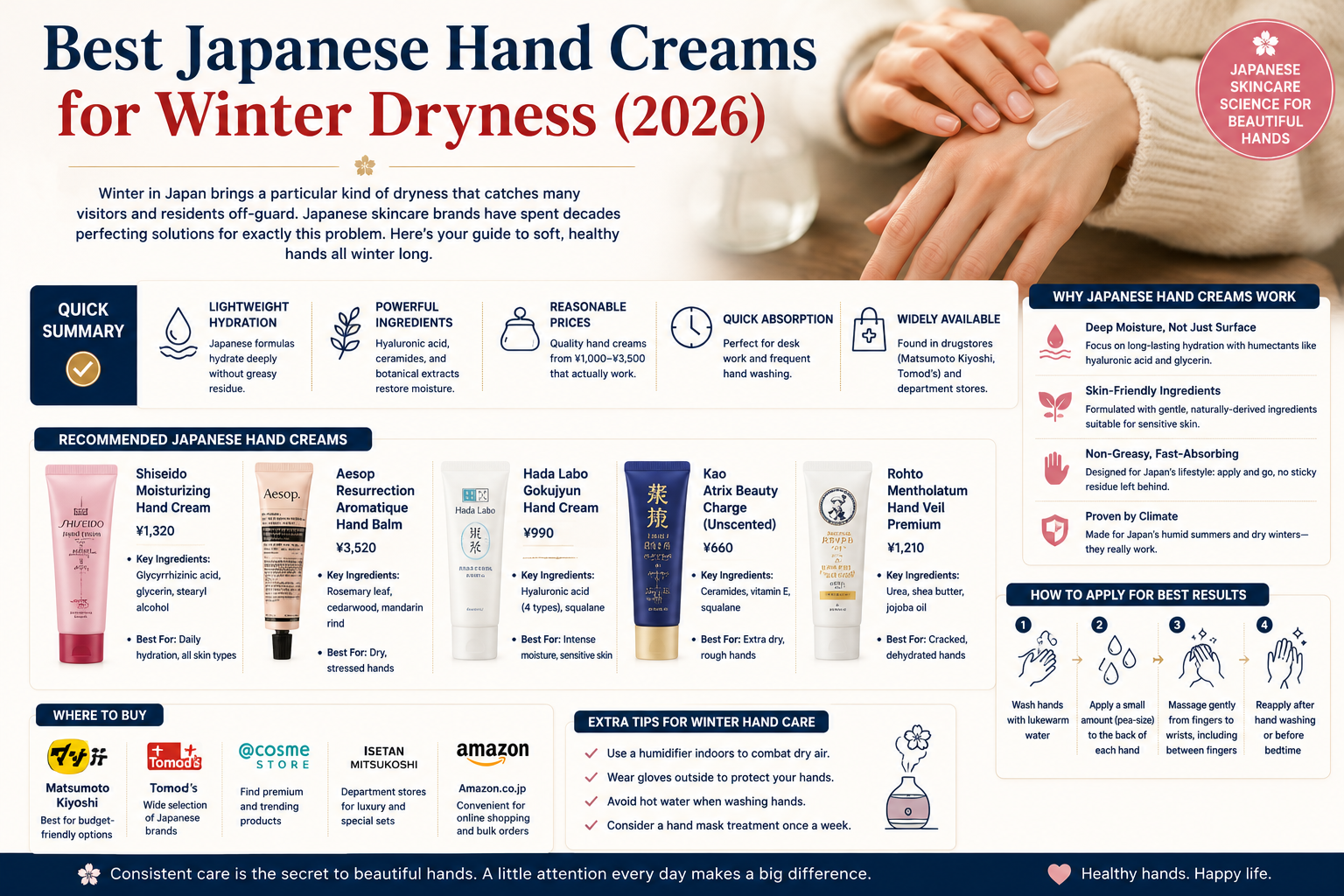
- Brands such as Shiseido, Aesop, and Rohto Mentholatum offer proven solutions for winter dryness at reasonable prices (typically ¥1,000–¥3,500)
- Most Japanese formulations absorb quickly, making them ideal for people who work at desks or use their hands frequently throughout the day
- Japanese drugstores (Matsumotokiyoshi, Tomod’s) stock excellent budget options alongside premium choices
- Application technique matters — Japanese beauty culture emphasises layering and consistency over product quantity
🛒 Shop Recommended Products
Quick Comparison Table
| Brand | Price Range | Best For | Key Ingredient |
|---|---|---|---|
| Shiseido Fino | ¥1,200–¥1,500 | Budget-conscious buyers | Hyaluronic acid |
| Aesop Resurrection | ¥6,000–¥7,000 | Luxury seekers | Plant oils & beeswax |
| Rohto Mentholatum | ¥800–¥1,200 | Sensitive skin | Lanolin & glycerin |
| Hada Labo Hand Cream | ¥1,400–¥1,800 | Daily use | Super hyaluronic acid |
| Nivea Creme (Japan formula) | ¥600–¥1,000 | Extreme dryness | Mineral oil & lanolin |
Why Japanese Products Stand Out
Japanese cosmetic manufacturers operate under some of the world’s strictest quality regulations. The country’s pharmaceutical approval process is notoriously rigorous, which means fewer potentially irritating fillers and more transparency about active ingredients. Japanese brands also tend to favour multi-step formulations — rather than trying to cram everything into one product, they layer complementary ingredients that work synergistically on the skin.
The cultural emphasis on prevention and maintenance shapes product philosophy too. In Japan, hand care isn’t an afterthought; it’s woven into daily routines the way face care is in the West. This means Japanese brands have developed sophisticated understanding of how hands age and dry differently from facial skin. Additionally, many formulations use botanical extracts — yuzu, sake, camellia oil — sourced from Japan itself, lending both efficacy and a sensory experience that feels distinctly Japanese. Prices tend to be significantly lower in Japan than abroad, particularly for mid-range and premium brands.
Top Picks — Detailed Reviews
Shiseido Fino Hand Cream remains a stalwart in Japanese bathrooms and offices. At around ¥1,200 per tube, it’s genuinely affordable without compromising quality. The formula absorbs within seconds, leaving no sticky residue — crucial if you’re typing or handling documents. Hyaluronic acid provides deep hydration, whilst glycerin acts as a humectant, drawing moisture into the outer skin layers. The texture is rich but not heavy, and a little goes a long way. You’ll find it everywhere: convenience stores, department stores, and certainly at Matsumotokiyoshi branches throughout Tokyo and beyond.
Hada Labo Hand Cream uses the brand’s signature “super hyaluronic acid” complex — multiple molecular weights that penetrate at different depths. At ¥1,400–¥1,800, it’s slightly pricier than Fino but offers noticeable results within a week of consistent use. The cream has a subtle fragrance and a pleasantly lightweight feel. Dermatologists often recommend Hada Labo for people with eczema-prone or exceptionally sensitive hands.
Aesop Resurrection Hand Balm, whilst imported rather than strictly Japanese-made, has become something of a cult product among Tokyo’s beauty-conscious professionals. Priced at ¥6,000–¥7,000, it’s an investment, but the blend of plant oils, beeswax, and antioxidants creates a luxurious barrier that lasts throughout the day. Many Japanese luxury hotels stock Aesop, and the brand is widely available at Isetan and other high-end department stores.
Rohto Mentholatum Medical Cream occupies the budget end of the spectrum at roughly ¥800–¥1,200. Don’t let the modest price fool you — the formulation is genuinely therapeutic. Lanolin and glycerin form a protective layer, whilst the cream is fragrance-free, making it suitable for work environments where scent sensitivity is a concern.
What Japanese Buyers Look For
Japanese consumers prioritise efficacy over marketing hype. Hand cream shoppers read ingredient lists carefully, comparing hyaluronic acid percentages and scrutinising whether products contain alcohol (most prefer alcohol-free). Texture matters enormously — the ideal cream absorbs quickly, doesn’t leave fingerprints on phones or keyboards, and doesn’t transfer onto clothing. Seasonality also influences purchasing decisions; many Japanese people switch to richer formulations in December and January, then revert to lighter creams by March.
Packaging is another consideration. Japanese brands typically use airless pumps or tubes rather than jars, reducing oxidation and contamination. People also value products that can serve double or triple duty — a hand cream that works on elbows and heels, for instance, represents better value. Finally, there’s an appreciation for ingredients with heritage or provenance. A hand cream featuring yuzu from Kochi or camellia oil from Kyoto carries cultural weight that consumers recognise and reward with their loyalty.
Buying Guide
Purchase Japanese hand creams directly in Japan if possible — prices are substantially lower, and you’ll have access to the full range without international markup. Matsumotokiyoshi, Tomod’s, and sundrug chemists stock extensive selections in every prefecture. Department store beauty counters in cities like Tokyo, Osaka, and Kyoto often have specialists who can recommend products based on your specific skin concerns.
If buying online, ensure the seller is authorised and the product hasn’t been sitting in a warehouse for years — check manufacturing dates. Japanese cosmetics typically carry a small printed date near the base. When applying, cleanse hands thoroughly, then apply cream to damp skin; this traps moisture and enhances absorption. Use a pea-sized amount and massage into the back of the hands, between fingers, and around the cuticles. Apply morning and evening during winter, reducing to once daily in warmer months.
FAQ
Q: Can I use Japanese face cream on my hands?
A: Technically yes, but hand skin is thicker and ages differently. Dedicated hand creams are formulated with this in mind and offer better value since hands need more product.
Q: How long does a tube of hand cream last?
A: A standard 50ml tube lasts roughly 2–3 months with twice-daily use. Japanese brands are efficient, so you’ll likely need less than you expect.
Q: Are Japanese hand creams suitable for extremely sensitive skin?
A: Many are, particularly Hada Labo and Rohto Mentholatum lines. However, patch-test any new product on a small area first, especially if you have eczema or dermatitis.
Q: Why do Japanese hand creams feel less greasy?
A: The formulations use lighter emulsifiers and often include silicones or powders that create a silky finish without heavy oils.
Winter dryness doesn’t have to be inevitable. Japanese hand creams combine proven ingredients, rigorous quality standards, and decades of refinement into products that genuinely work. Whether you’re after a budget option to keep in your desk drawer or a luxury cream for evening pampering, the Japanese market offers something for every need and budget. Start with a mid-range option like Shiseido Fino or Hada Labo, then explore from there — your hands will thank you.
Is it worth buying Japanese products over cheaper alternatives?
For most use cases, yes — if you plan to use the product daily or for many years. Japanese products tend to have a longer useful lifespan, which often makes the total cost of ownership lower than a cheaper alternative replaced every 2–3 years. That said, always match the product to your actual needs.
How long do Japanese products typically last?
With proper care, quality Japanese products are designed for 10 years or more of daily use. This is not incidental — it reflects what Japanese domestic consumers expect.
Where can I buy authentic Japanese products online?
The safest options are Amazon (from the brand’s official store or well-reviewed sellers), direct brand websites, or authorised international retailers. Avoid unverified marketplace listings for high-value items.
Quick Comparison
| Product | Best For | Key Features | Pros | Cons | Recommended For | Buy |
|---|---|---|---|---|---|---|
| Hada Labo Gokujyun Perfect Gel All-in-One | Best Overall | 5-type hyaluronic acid · All-in-one (replaces multiple steps | Simplifies routine | May not replace rich creams in very dry clima | Minimalists and time-pressed people who want effec | → Buy |
| Kose Cosmeport Softymo Speedy Cleansing and Moisturising Cream | Best Value | White petroleum jelly-based formula · Deep moisturisation | Excellent value | Heavier texture not for everyone | Anyone who wants reliable, deeply moisturising ski | → Buy |
| Shiseido Ibuki Quick Fix Mist | Best Premium | Micro-mist spray · Skin-conditioning ingredients | Instant refresh | Limited moisturising effect without other pro | Office workers who need a mid-day skin refresh — a | → Buy |
| DHC Olive Virgin Oil Moisturizer | Best Budget | 100% pure olive oil · Rich nourishing texture | 100% natural formula | Heavy for oily or combination skin | People with very dry skin or eczema who want a nat | → Buy |
| Neutrogena Hydro Boost Water Gel (Japan Edition) | Best for Beginners | Hyaluronic acid gel formula · Oil-free | Lightweight gel texture | May not be rich enough for very dry skin in w | Oily and combination skin types who want hydration | → Buy |
Seen in Everyday Life in Tokyo
A Real-Life Note from Japan
What I Often See in Japanese Stores
Recommended Japanese Products
The products below are directly relevant to this article and used by Japanese families.
| Product | Brand | Best For | Link |
|---|---|---|---|
| Hada Labo Gokujyun Perfect Gel All-in-One | Hada Labo (Rohto) | Minimalists and time-pressed people who want effective hydration in one product | Hada Labo Gokujyun Perfect Gel All-in-One |
| Kose Cosmeport Softymo Speedy Cleansing and Moisturising Cream | Kose | Anyone who wants reliable, deeply moisturising skincare at an accessible price | Kose Cosmeport Softymo Speedy Cleansing and Moisturising Cream |
| Shiseido Ibuki Quick Fix Mist | Shiseido | Office workers who need a mid-day skin refresh — a very common Tokyo beauty habit | Shiseido Ibuki Quick Fix Mist |
| DHC Olive Virgin Oil Moisturizer | DHC | People with very dry skin or eczema who want a natural, simple moisturiser | DHC Olive Virgin Oil Moisturizer |
| Neutrogena Hydro Boost Water Gel (Japan Edition) | Neutrogena (J&J Japan) | Oily and combination skin types who want hydration without heaviness or breakouts | Neutrogena Hydro Boost Water Gel (Japan Edition) |
Hada Labo Gokujyun Perfect Gel All-in-One
Japan’s bestselling all-in-one gel moisturiser — replaces toner, essence, serum, and cream in one step.
Best for: Minimalists and time-pressed people who want effective hydration in one product
🛒 Hada Labo Gokujyun Perfect Gel All-in-One on Amazon
Kose Cosmeport Softymo Speedy Cleansing and Moisturising Cream
Kose’s beloved budget moisturiser — a staple in Japanese bathroom cabinets for decades.
Best for: Anyone who wants reliable, deeply moisturising skincare at an accessible price
🛒 Kose Cosmeport Softymo Speedy Cleansing and Moisturising Cream on Amazon
Shiseido Ibuki Quick Fix Mist
Shiseido’s portable hydrating mist — a popular Tokyo office staple for instant skin refresh.
Best for: Office workers who need a mid-day skin refresh — a very common Tokyo beauty habit
🛒 Shiseido Ibuki Quick Fix Mist on Amazon
DHC Olive Virgin Oil Moisturizer
DHC’s pure olive oil moisturiser — a Japanese direct-mail beauty icon since 1983.
Best for: People with very dry skin or eczema who want a natural, simple moisturiser
🛒 DHC Olive Virgin Oil Moisturizer on Amazon
Neutrogena Hydro Boost Water Gel (Japan Edition)
Neutrogena’s iconic hyaluronic acid water gel — the Japan version is lighter and more refined for local skin types.
Best for: Oily and combination skin types who want hydration without heaviness or breakouts
🛒 Neutrogena Hydro Boost Water Gel (Japan Edition) on Amazon
More From Japanese Best
Disclosure: As an Amazon Associate, Japanese Best earns from qualifying purchases. This does not affect our recommendations. We only feature products we genuinely believe are worth your consideration.
Editorial Disclaimer
The views, opinions, and recommendations in this article are the author’s own and reflect personal experience living in Japan. They do not constitute professional, financial, or purchasing advice of any kind.
Product availability, pricing, and specifications are subject to change without notice. Japanese Best makes no warranties — express or implied — regarding the accuracy or completeness of this content, and accepts no liability for any decisions made based on it. Always verify details directly with the retailer or manufacturer before purchasing.
コメント