Best Japanese Umbrellas (2026)
July 09, 2026 | Products | Japanese Best
Japan’s umbrella culture runs deeper than most visitors realise. In Tokyo, Osaka, and Kyoto, you’ll notice businesspeople carrying elegant compact umbrellas and elderly residents wielding traditional long umbrellas with genuine craftsmanship. Rain isn’t merely weather—it’s an opportunity to showcase quality and aesthetic refinement. Japanese umbrella makers have perfected their craft across centuries, blending functionality with design principles rooted in minimalism and durability. Whether you’re seeking protection from monsoon rains or a beautiful everyday accessory, Japanese umbrellas represent some of the world’s finest rain gear. This guide explores what makes them special and introduces the best options available in 2026.
Quick Summary
- Japanese umbrellas combine traditional craftsmanship with modern engineering for exceptional durability
- Expect prices ranging from ¥2,000 to ¥50,000+ depending on materials and brand heritage
- Key features include lightweight construction, wind-resistant designs, and aesthetic appeal
- Both compact and full-size models excel at their respective purposes
- Japanese brands prioritise functionality and longevity over disposable convenience
Quick Comparison Table
How These Picks Were Compared
When comparing Japanese Umbrellas, the factors that actually matter are:
- Wind resistance
- Weight/foldability
- Materials/durability
- Price
- Size (compact vs full)
| Brand | Type | Price Range | Best For |
|---|---|---|---|
| Wpc. | Compact/Fashion | ¥3,000–¥8,000 | Everyday carry, style |
| Senz° | Wind-Resistant | ¥6,000–¥12,000 | Stormy weather, durability |
| Sungo | Traditional | ¥8,000–¥30,000 | Craftsmanship lovers |
| Waterfront | Compact | ¥2,500–¥6,000 | Budget-conscious shoppers |
| Fulton | Premium | ¥12,000–¥40,000 | Executive professionals |
Why Japanese Umbrellas Stand Out
Japanese umbrella manufacturers distinguish themselves through meticulous attention to detail and material selection. Many brands source fabrics from traditional textile mills across Japan—particularly in regions like Kurume and Yuki, renowned for weaving excellence. The craftsmanship philosophy emphasises longevity; a quality Japanese umbrella should last five to ten years with proper care, contrasting sharply with disposable alternatives.
Construction methods reflect this commitment. Hand-stitched seams, reinforced ribs, and ergonomic handles result from generations of refinement. Japanese designers also prioritise weight distribution, understanding that an umbrella you carry must feel effortless. The aesthetic sensibility—informed by wabi-sabi principles—celebrates understated elegance: subtle colours, clean lines, and functional beauty rather than flashy decoration. This combination of durability, thoughtful engineering, and design integrity explains why Japanese umbrellas command respect globally.
Top Picks — Detailed Reviews
Wpc. Compact Umbrellas
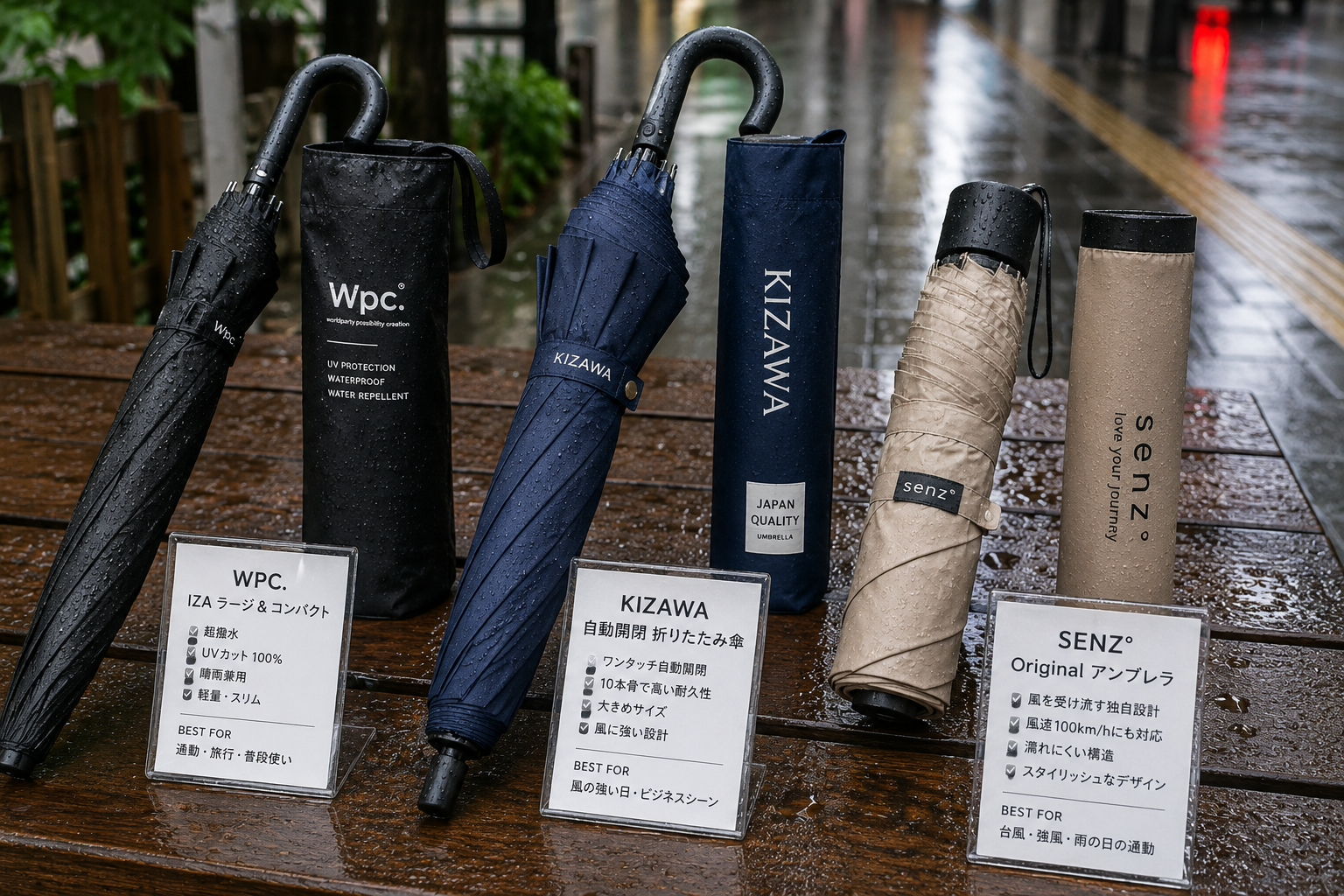
Wpc. Represents contemporary Japanese design accessible to everyday consumers. Founded in 2008, this Tokyo-based brand specialises in compact umbrellas that fit standard handbags without compromise. Their polymeric canopy material resists UV damage and dries quickly—essential in humid Japanese summers. The Wpc. Compact Umbrella exemplifies functional minimalism: lightweight at roughly 150 grams, available in sophisticated neutrals and seasonal pastels, with reliable automatic open/close mechanisms. Prices hover around ¥4,000–¥6,000, making them excellent value. Many Japanese office workers keep one in their desk permanently.
Senz° Storm Umbrellas
Senz° umbrellas originate from Dutch engineering adapted for Japanese manufacturing standards. Their distinctive asymmetrical design isn’t merely aesthetic—it aerodynamically resists inversion during strong winds. The Senz° Storm Umbrella features a reinforced frame and high-quality polyester canopy, tested to withstand typhoon-force gusts. This makes them indispensable during Japan’s rainy season (tsuyu) and autumn storms. At ¥8,000–¥10,000, they represent premium investment pieces. Tokyo train commuters frequently choose Senz° precisely because Japan’s unpredictable weather demands reliability.
Sungo Traditional Umbrella
For those valuing heritage, Sungo offers handcrafted umbrellas rooted in Edo-period techniques. The Sungo Traditional Umbrella features wooden handles, traditional washi paper treatments, and individually hand-tied construction. These aren’t mass-produced; each umbrella reflects individual artisan expertise. Prices range from ¥15,000–¥45,000 depending on materials and complexity. Available in Kyoto’s historic Higashiyama district and select Tokyo boutiques, they represent genuine Japanese cultural artifacts—gifts that appreciate emotionally over decades rather than depreciate.
Waterfront Lightweight Compact
Waterfront dominates Japan’s convenience store umbrella market with accessible pricing and reliable construction. The Waterfront Lightweight Compact balances budget consciousness with genuine durability, costing ¥2,500–¥4,500. Their ultra-compact models measure just 25 centimetres folded, perfect for pocket carry. Despite affordability, Waterfront maintains strict quality control; seams are reinforced and materials tested for UV resistance. Keeping multiple umbrellas across homes, offices, and vehicles is a common practice—not as disposable items, but as reliable standby protection.
Fulton Premium Umbrella
For executive settings, Fulton delivers sophisticated British-Japanese collaboration. The Fulton Premium Umbrella features hand-finished wooden handles, premium canopy materials, and elegant simplicity appropriate for business settings. At ¥18,000–¥35,000, they’re investment purchases favoured by Tokyo’s corporate professionals. Fulton umbrellas appear regularly in business districts around Marunouchi and Ginza, where aesthetic refinement and durability matter equally.
Buying Guide
Choose your style: Compact models suit urban commuters and daily carry, whilst full-size umbrellas provide superior coverage for serious weather. Consider your lifestyle honestly.
Assess budget: Entry-level quality begins around ¥2,500. Mid-range excellence exists between ¥5,000–¥10,000. Premium handcrafted pieces exceed ¥15,000.
Prioritise materials: Polyester and nylon offer durability and quick-drying properties. Natural silk provides elegance but requires careful maintenance. Washi paper conveys tradition but demands protective storage.
Test mechanisms: Automatic open/close systems should feel smooth and responsive. Manual models require deliberate operation—some prefer this simplicity.
Research durability: Check rib construction, seam quality, and handle materials. Japanese brands publish detailed specifications; read them.
Consider seasonality: Acquire rain umbrellas before June’s tsuyu season and autumn typhoons. Sun umbrellas suit May through September.
FAQ
How long do quality Japanese umbrellas last?
Five to ten years minimum with proper care. Some handcrafted models function for decades.
Are Japanese umbrellas expensive?
Not universally. Quality options exist from ¥2,500. Premium pieces cost more but represent genuine investment value.
Where can I buy Japanese umbrellas overseas?
Major Japanese department stores offer international shipping. Specialist online retailers stock established brands.
Do compact umbrellas work in heavy rain?
Yes, modern compact designs use efficient canopy angles and materials. They’re genuinely functional, not merely convenient.
What makes Japanese umbrellas different?
Craftsmanship philosophy prioritises longevity, material quality, and balanced design rather than fashion trends.
Is it worth buying Japanese Umbrellas over cheaper alternatives?
For most use cases, yes — if you plan to use the product daily or for many years. Japanese Umbrellas tend to have a longer useful lifespan, which often makes the total cost of ownership lower than a cheaper alternative replaced every 2–3 years. That said, always match the product to your actual needs.
How long do Japanese Umbrellas typically last?
With proper care, quality Japanese Umbrellas are designed for 10 years or more of daily use. This is not incidental — it reflects what Japanese domestic consumers expect.
Where can I buy authentic Japanese Umbrellas online?
The safest options are Amazon (from the brand’s official store or well-reviewed sellers), direct brand websites, or authorised international retailers. Avoid unverified marketplace listings for high-value items.
More From Japanese Best
Disclosure: As an Amazon Associate, Japanese Best earns from qualifying purchases. This does not affect our recommendations. We only feature products we genuinely believe are worth your consideration.
Editorial Disclaimer
This article does not constitute professional, financial, or purchasing advice of any kind.
Product availability, pricing, and specifications are subject to change without notice. Japanese Best makes no warranties — express or implied — regarding the accuracy or completeness of this content, and accepts no liability for any decisions made based on it. Always verify details directly with the retailer or manufacturer before purchasing.
コメント