Zojirushi Rice Cooker Models: Which to Buy on Any Budget (2026)
June 28, 2026 | Products | Japanese Best
- Best Overall: Zojirushi NS-ZCC10
- Best Value: Zojirushi NP-HCC10XH
For generations, Japanese families have gathered around the humble rice cooker—not merely as an appliance, but as a trusted kitchen companion. There’s something uniquely Japanese about entrusting this daily staple to a machine engineered with meticulous precision. Zojirushi, one of Japan’s most respected kitchen brands, has perfected this art since 1918. Whether you’re a student in Tokyo, a family in Osaka, or an expat discovering Japanese cooking for the first time, understanding Zojirushi’s budget-friendly options can transform how you prepare meals.
Quick Summary
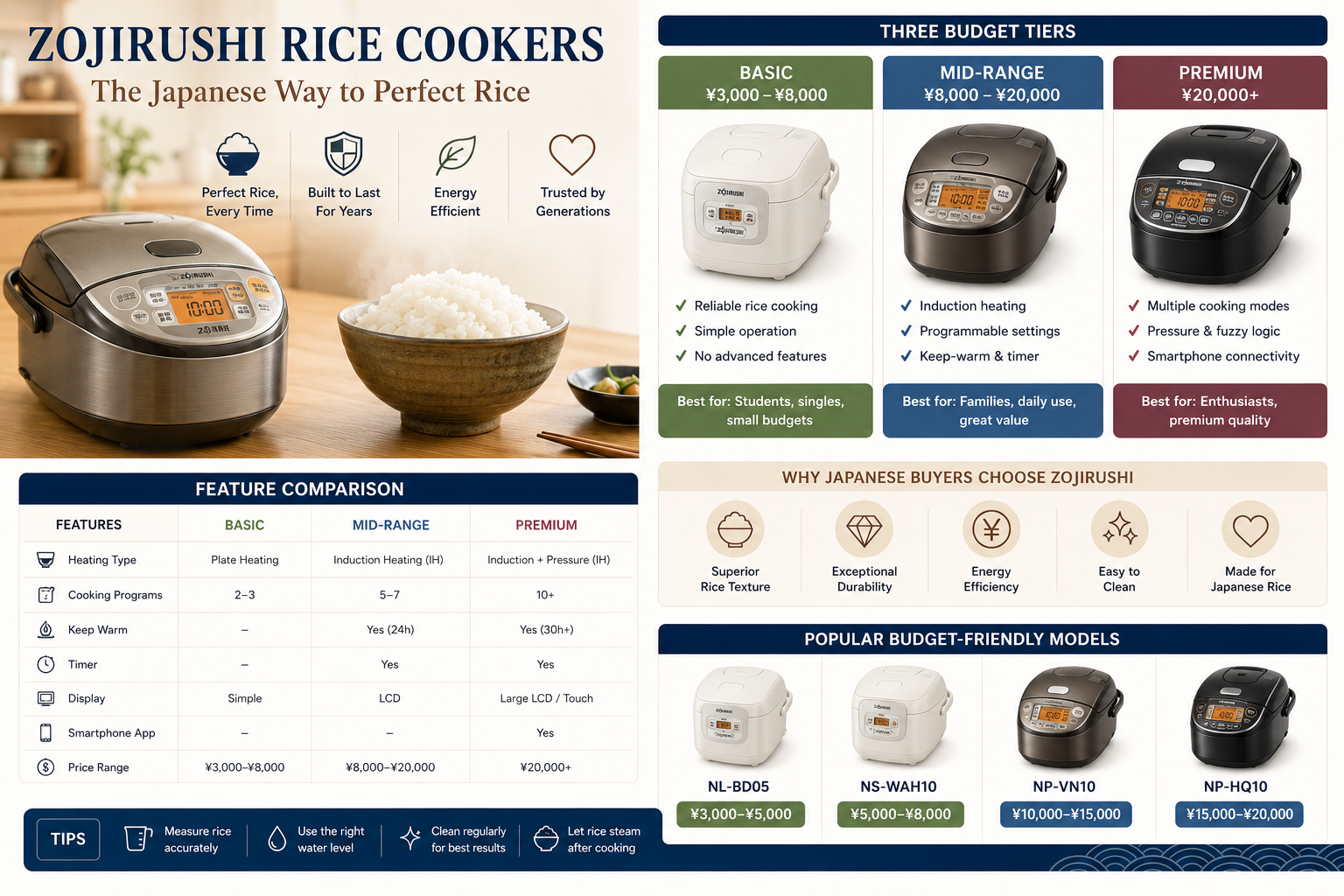
- Zojirushi offers rice cookers across three distinct budget tiers: basic models (¥3,000–¥8,000), mid-range (¥8,000–¥20,000), and premium (¥20,000+)
- Budget models cook rice reliably but lack advanced features like fuzzy logic and keep-warm functions
- Mid-range cookers include induction heating and programmable settings, ideal for most households
- Premium models feature multiple cooking modes, pressure settings, and smartphone connectivity
- Japanese buyers prioritise durability, rice texture quality, and energy efficiency over flashy features
🛒 Shop Recommended Products
Zojirushi Rice Cooker Comparison Table
| Model | Price (¥) | Capacity | Key Features | Best For |
|---|---|---|---|---|
| NS-RUC10 | ¥4,500 | 5.5 cups | Basic, keeps warm | Students, small households |
| NS-TSC10 | ¥12,000 | 5.5 cups | Timer, fuzzy logic | Families, everyday use |
| NS-YLH10 | ¥18,000 | 5.5 cups | Induction heating, multiple grains | Health-conscious cooks |
| NS-ZCC10 | ¥28,000 | 5.5 cups | Pressure + induction, 100 menus | Serious rice enthusiasts |
Why Japanese Products Stand Out
Japanese kitchen appliances aren’t designed to impress on Instagram—they’re engineered to perform flawlessly for decades. Zojirushi embodies this philosophy through uncompromising attention to detail. The brand employs “fuzzy logic” technology, a pioneering innovation developed in Japan that adjusts cooking temperature and time based on real-time moisture detection. This isn’t marketing jargon; it’s genuine engineering that ensures consistently fluffy rice regardless of rice variety or water hardness.
Japanese manufacturers also prioritise sustainability and longevity. Rather than replacing their rice cooker every few years, Japanese households often keep theirs for 15–20 years. This durability mindset influences how Zojirushi designs every component, from stainless steel inner vessels to replaceable heating elements. The brand’s Tokyo headquarters even offer repair services for decades-old models, reflecting a deeply embedded cultural value around product stewardship. This approach costs more upfront but delivers genuine value over time.
Top Picks — Detailed Reviews
Budget Champion: NS-RUC10 (¥4,500)
The NS-RUC10 represents Zojirushi’s entry point—stripped of extras but built to last. Its simple one-touch operation appeals to students in university dormitories and professionals in compact Tokyo apartments where counter space is precious. The 5.5-cup capacity (roughly 1 litre of cooked rice) suits 2–3 people. You won’t find programmable timers or induction heating here, just straightforward heating and a keep-warm function. Japanese families often purchase this model as a second cooker for holiday homes or rural properties. The non-stick inner pan is replaceable, extending the cooker’s lifetime indefinitely.
Everyday Workhorse: NS-TSC10 (¥12,000)
This mid-range model strikes the balance most Japanese households actually want. The fuzzy logic system learns your water preferences and adjusts automatically—crucial in regions like Kyoto where mineral-rich water affects cooking. A delay timer allows you to set rice to cook whilst you commute, a genuine convenience in Japan’s time-conscious culture. The 5.5-cup capacity serves a typical family of four comfortably. Energy consumption drops significantly compared to budget models through improved insulation. Many Japanese homeowners replace their old cookers with this model specifically, viewing it as a sensible upgrade without unnecessary complexity.
Health-Focused: NS-YLH10 (¥18,000)
Induction heating technology distinguishes this model—coils beneath the vessel distribute heat more evenly, producing marginally fluffier rice. More importantly, the NS-YLH10 includes specialised settings for brown rice, mixed grains, and even baking bread. This appeals to health-conscious Japanese consumers increasingly interested in genmai (brown rice) and whole grain cooking. The stainless steel outer casing looks refined in modern kitchens popular in places like Shibuya and Minato-ku. Fuzzy logic combines with multiple grain sensors, making it virtually foolproof regardless of what you’re cooking.
Premium Powerhouse: NS-ZCC10 (¥28,000)
This is the rice cooker Japanese food enthusiasts buy after careful consideration. Pressure-cooking technology combined with induction heating reaches temperatures above 100°C, unlocking deeper rice flavour through Maillard reactions (the same browning process used in professional cooking). One hundred pre-programmed menus cater to different rice types from Koshihikari to Akitakomachi, each with regional water profiles programmed in. A smartphone app lets you monitor cooking remotely. Premium restaurants across Japan use professional Zojirushi models; this consumer version brings near-commercial capability home.
What Japanese Buyers Look For
Japanese consumers don’t evaluate rice cookers through marketing claims—they rely on detailed reviews in consumer publications like Kakaku.com and real user feedback. The conversation centres on three priorities: texture consistency (how each grain remains distinct), energy efficiency (monthly electricity costs matter in Tokyo’s expensive households), and repairability (whether replacement parts exist and whether the brand supports older models).
Japanese buyers also consider vessel materials meticulously. Copper-infused inner pans conduct heat more evenly; platinum-coated surfaces resist sticking without potentially harmful non-stick chemicals. These details reveal themselves only through careful product comparison. Price sensitivity exists, but not in the way Western markets expect—Japanese shoppers happily pay more for a model they’ll use for twenty years than save money on something they’ll replace in five.
Buying Guide
For renters and students: Choose the NS-RUC10. Its compact footprint and low price mean zero regret if you relocate (common for university students rotating between Tokyo campuses and home). Replacement pans cost just ¥1,500.
For families establishing permanent homes: Invest in the NS-TSC10. The fuzzy logic justifies the ¥12,000 price through ten years of perfect rice. The timer function genuinely saves time during busy weeknight cooking.
For those with dietary priorities: The NS-YLH10 opens possibilities beyond white rice. If you’re exploring brown rice, quinoa blends, or artisanal rice varieties from Niigata, the multiple grain sensors become invaluable.
For serious home cooks: The NS-ZCC10 transforms rice from a side dish into a star. If you appreciate regional rice differences the way food enthusiasts appreciate wine, this model justifies its premium cost.
FAQ
Q: Will a Zojirushi cooker work outside Japan?
A: Yes, but voltage varies. Japanese models run on 100V; overseas variants exist. Check specifications before purchasing.
Q: How long do Zojirushi rice cookers typically last?
A: 15–20 years with normal use. Replacement inner pans and heating elements extend life further.
Q: Is the price difference between models worth it?
A: This depends on use frequency. Daily rice eaters should invest in mid-range or premium. Occasional users find budget models sufficient.
Q: Can you cook other foods in a Zojirushi?
A: Yes, premium models include soup, risotto, and bread settings. Budget models cook rice exclusively.
Q: Where do Japanese people typically buy rice cookers?
A: Department stores like Mitsukoshi, electronics retailers like Bic Camera and Yodobashi, and online through Amazon.jp and Rakuten.
Choosing a Zojirushi rice cooker ultimately reflects your relationship with rice itself. Japanese culture treats rice not as a commodity but as nourishment deserving proper technique. Whether you select a ¥4,500 workhorse or a ¥28,000 precision instrument, you’re investing in daily ritual—the quiet, reliable moment when perfectly cooked rice becomes ready for your meal.
Is it worth buying Japanese products over cheaper alternatives?
For most use cases, yes — if you plan to use the product daily or for many years. Japanese products tend to have a longer useful lifespan, which often makes the total cost of ownership lower than a cheaper alternative replaced every 2–3 years. That said, always match the product to your actual needs.
How long do Japanese products typically last?
With proper care, quality Japanese products are designed for 10 years or more of daily use. This is not incidental — it reflects what Japanese domestic consumers expect.
Where can I buy authentic Japanese products online?
The safest options are Amazon (from the brand’s official store or well-reviewed sellers), direct brand websites, or authorised international retailers. Avoid unverified marketplace listings for high-value items.
Quick Comparison
| Product | Best For | Key Features | Pros | Cons | Recommended For | Buy |
|---|---|---|---|---|---|---|
| Zojirushi NS-ZCC10 | Best Overall | Neuro Fuzzy logic technology · Multiple cooking menus | Consistent results | Not induction heating | Families who want reliable, consistently great ric | → Buy |
| Zojirushi NP-HCC10XH | Best Value | Induction heating · Neuro Fuzzy logic | Even heat distribution | Higher price point | Rice lovers who want noticeably better texture and | → Buy |
Seen in Everyday Life in Tokyo
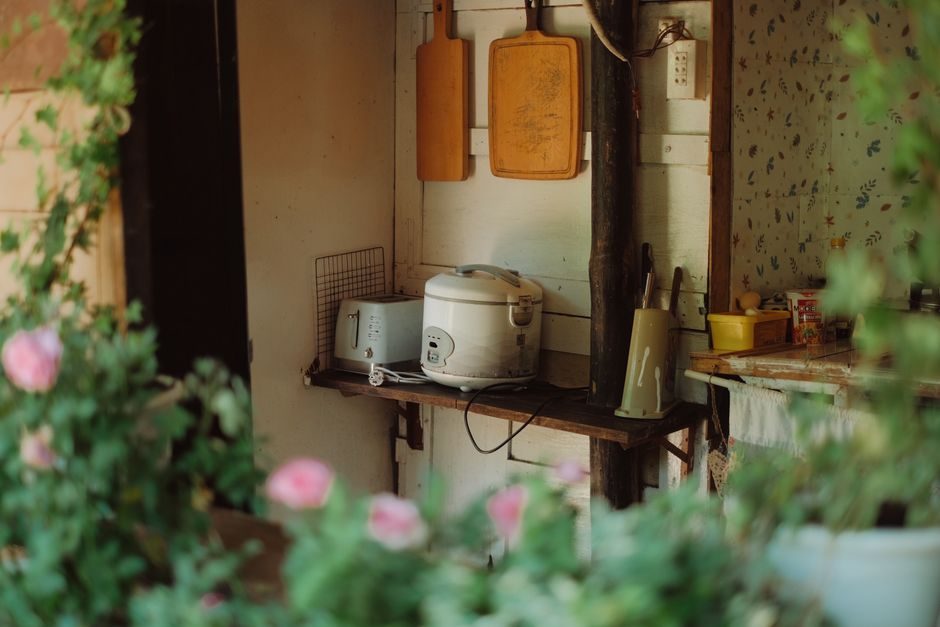
A Real-Life Note from Japan
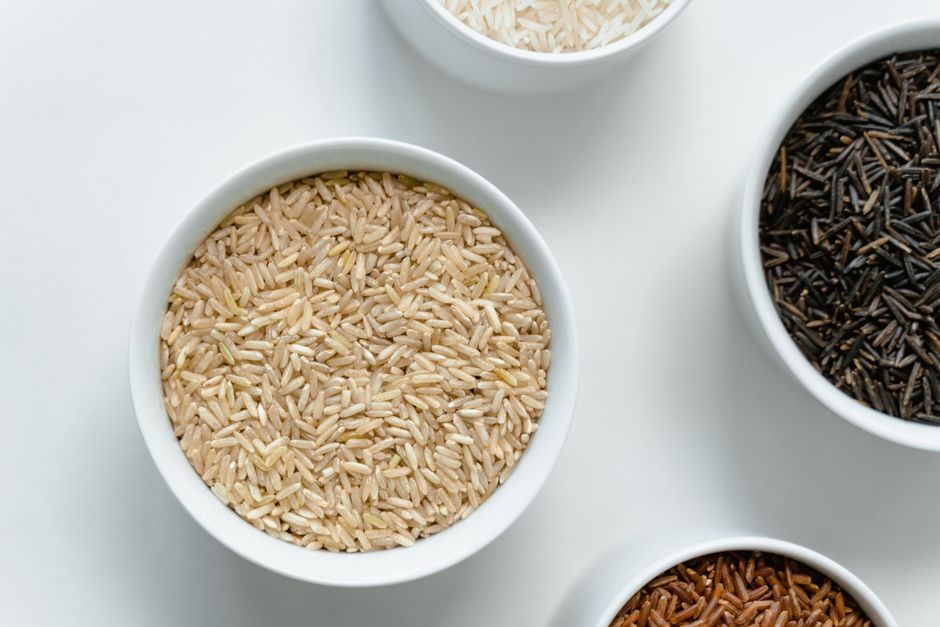
What I Often See in Japanese Stores
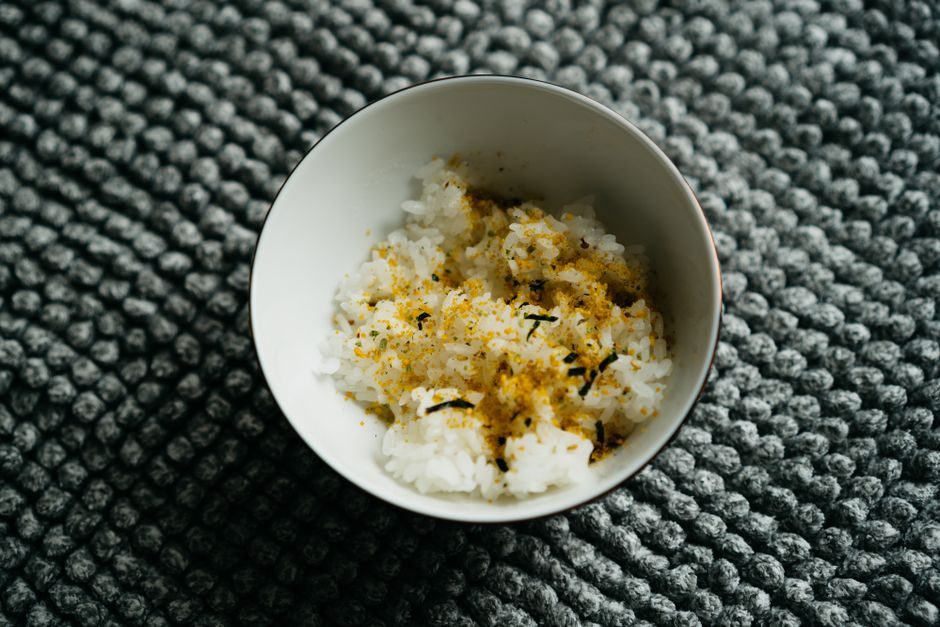
Recommended Japanese Products
The products below are directly relevant to this article and used by Japanese families.
| Product | Brand | Best For | Link |
|---|---|---|---|
| Zojirushi NS-ZCC10 | Zojirushi | Families who want reliable, consistently great rice without spending on IH | Zojirushi NS-ZCC10 |
| Zojirushi NP-HCC10XH | Zojirushi | Rice lovers who want noticeably better texture and are willing to invest more | Zojirushi NP-HCC10XH |
Zojirushi NS-ZCC10
A beloved micom rice cooker with Neuro Fuzzy logic for consistently fluffy rice.
Best for: Families who want reliable, consistently great rice without spending on IH
🛒 Zojirushi NS-ZCC10 on Amazon
Zojirushi NP-HCC10XH
Step up to induction heating for more even heat distribution and superior rice texture.
Best for: Rice lovers who want noticeably better texture and are willing to invest more
🛒 Zojirushi NP-HCC10XH on Amazon
More From Japanese Best
Disclosure: As an Amazon Associate, Japanese Best earns from qualifying purchases. This does not affect our recommendations. We only feature products we genuinely believe are worth your consideration.
Editorial Disclaimer
The views, opinions, and recommendations in this article are the author’s own and reflect personal experience living in Japan. They do not constitute professional, financial, or purchasing advice of any kind.
Product availability, pricing, and specifications are subject to change without notice. Japanese Best makes no warranties — express or implied — regarding the accuracy or completeness of this content, and accepts no liability for any decisions made based on it. Always verify details directly with the retailer or manufacturer before purchasing.

コメント