Nitori vs IKEA Japan: Which Is Better for Your Home?
July 11, 2026 | Shopping | Japanese Best
When you’re furnishing a new flat in Japan or simply want to refresh your living space, two names dominate the high street and online shopping scene: Nitori and IKEA. Both are beloved by students, young professionals, and families across Japan, yet they cater to quite different shopping philosophies. Understanding which suits your needs—and your budget—can transform how you set up your home. Whether you’re a temporary resident, a returning visitor, or planning your first furniture purchase in Japan, this guide cuts through the hype and helps you decide.
Quick Summary
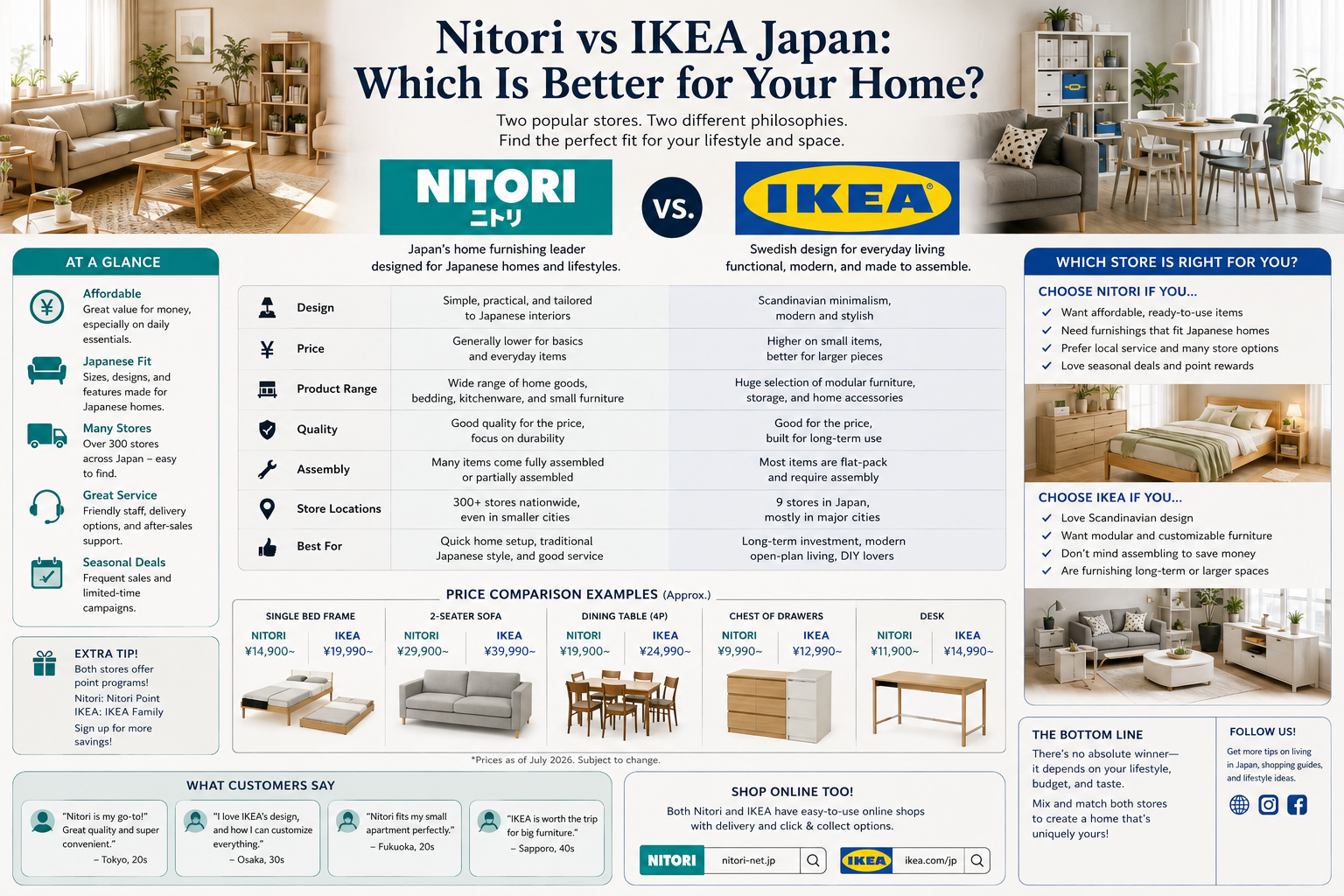
- Nitori excels at affordable Japanese-designed pieces, seasonal sales, and customer service tailored to Japanese preferences
- IKEA offers Scandinavian minimalism, self-assembly flat-pack options, and a larger range of modular furniture
- Price comparison: Nitori often undercuts IKEA on basics; IKEA wins on statement pieces and bulk purchases
- Location matters: Nitori has over 300 stores nationwide; IKEA has 9 locations, mostly in major cities
- Best for: Nitori suits quick home setup and traditional Japanese aesthetics; IKEA suits long-term investment and modern, open-plan living
🛒 Shop Recommended Products
What You’ll Find Inside
Nitori, officially known as Nitori Co., Ltd., is Japan’s largest home furnishing retailer with roots dating back to 1967. The chain operates 330+ stores across Japan and has expanded internationally, but the Tokyo flagship on Meiji-dori and regional megastores remain shopping destinations in themselves. When you walk into Nitori, you’re entering a carefully curated world of Japanese practicality: futons that fold into compact storage, space-saving shelving for Tokyo’s notoriously small flats, and seasonal collections timed to Japanese living patterns.
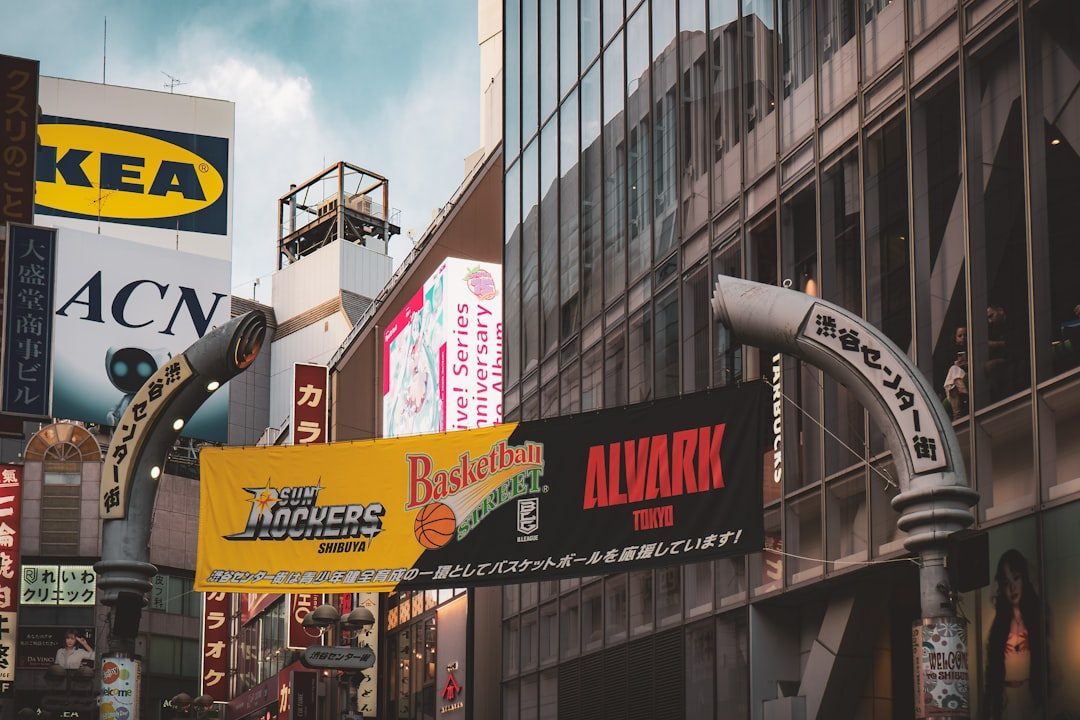
IKEA’s nine Japanese locations—with the largest in Shinjuku, Chiba, and Kanagawa—bring a distinctly Nordic sensibility to Japanese home design. The layout follows IKEA’s global blueprint: you navigate a one-directional path through room settings, showrooms, and the warehouse before reaching the self-checkout tills. The product range leans heavily on flat-pack assembly, modular systems, and Scandinavian restraint. For many expats and design-conscious Japanese shoppers, IKEA represents a departure from traditional Japanese interiors.
Best Things to Buy
At Nitori, prioritise storage solutions. Japanese homes are notoriously compact, and Nitori’s built-in wardrobes, under-bed drawers, and wall-mounted shelving are engineered for millimetre-perfect fit. Bedding is exceptional—their cooling summer futons (aitake futon) and winter quilts are bestsellers. Lighting is another Nitori strength; they offer affordable LEDs with warm colour temperatures suited to Japanese tastes. Sofas, particularly their fabric sectionals, offer good value and come in colours that match Japanese décor trends.
At IKEA, furniture systems dominate. The KALLAX shelving, BILLY bookcases, and MALM bedroom ranges are workhorses for anyone building a cohesive look. Kitchen accessories and textiles are outstanding value—tea towels, chopping boards, and utensil organisers at 300–500 yen beat Nitori’s equivalents. IKEA’s return policy (90 days, full refund) and assembly support services also justify slightly higher initial costs. Curtains, rugs, and decorative items punch above their weight in design.
Prices and Value
Nitori’s single bed frames start around 8,000–15,000 yen; IKEA’s equivalent MALM beds range from 9,990–18,990 yen. For a basic sofa, Nitori sits at 25,000–45,000 yen, whilst IKEA’s KIVIK or KARLSTAD ranges are 29,990–79,900 yen. Nitori wins on budget basics and rapid turnover—their biannual seasonal sales (January and July) offer 40–60% discounts on clearance items.
IKEA’s value proposition emerges when buying in bulk. A complete kitchen re-stock (utensils, storage, textiles) costs less at IKEA. Delivery charges also differ: Nitori’s nationwide network means many purchases qualify for free or 500-yen delivery; IKEA charges 5,000–10,000 yen depending on distance and item size.
For everyday essentials, Nitori edges ahead. For long-term investment pieces and design coherence, IKEA offers better total value.
Tips for Getting the Most Out of It
Shop Nitori during January and July sales—inventory clears fast, and discounts are genuine. Visit early morning (stores open at 10 a.m.) to avoid crowds. Sign up for their loyalty card (free) to receive members-only flyers and 1% cashback. Nitori’s online store (nitori.co.jp) allows you to reserve items for in-store collection, useful if you’re hunting specific colours.
Visit IKEA on weekday mornings to navigate without chaos. Bring a tape measure and notebook—item numbers matter, especially for self-assembly furniture. Use IKEA’s Swedish Restaurant to refuel (the meatballs and cinnamon buns are genuinely good value). Their click-and-collect service (¥3,500 minimum order) means you can browse online and skip the warehouse entirely. Download the IKEA app to spot product locations in real time.
Both stores offer assembly services—Nitori’s is built into delivery (typically 3,000–5,000 yen), whilst IKEA charges separately (2,000–8,000 yen depending on complexity).
Best Things to Buy from Japan Beyond Furniture
When you’re setting up your home in Japan, think beyond furniture. Japanese stationery and skincare are world-class. If you’re organising your new space or settling into a study, the Pilot FriXion Clicker 0.5mm by Pilot is the world’s bestselling erasable pen—writes like a smooth gel but rubs out cleanly with heat. Perfect for planners marking furniture layouts or students managing a new routine in Japan.
For your bedroom or bathroom, Japanese skincare is legendary. The Hada Labo Gokujyun Hyaluronic Acid Lotion by Hada Labo (Rohto) is Japan’s bestselling toner, layering up to 5 types of hyaluronic acid for intense hydration—ideal after long flights or dry winters in Japan.
Finally, if you’re a daily commuter or travelling between Nitori and IKEA stores, the Zojirushi SM-SHE60AG Stainless Mug by Zojirushi is the perfect companion. Zojirushi’s most popular commuter mug is slim, spill-proof, and keeps drinks hot for 6 hours—essential for anyone carrying hot tea between shopping destinations.
FAQ
Can I shop Nitori and IKEA online without visiting stores?
Both offer comprehensive online shopping with delivery nationwide. Nitori’s site is faster for local dispatch; IKEA requires minimum orders (¥3,500) but offers competitive postage.
Which store has better customer service?
Nitori staff are trained in Japanese hospitality (omotenashi) and speak Japanese primarily. IKEA staff are multilingual in major locations (Shinjuku, Odaiba) but service is more self-directed.
Are IKEA and Nitori prices in yen fixed, or do sales differ by location?
Prices are nationally fixed. Sales vary by season but apply chain-wide.
Can I return furniture if it doesn’t fit my space?
Nitori: 8 days from purchase (original packaging required). IKEA: 90 days with receipt. IKEA’s policy is more generous.
Which is better for small Tokyo flats?
Nitori. Their storage solutions are purpose-built for Japanese compact living.
The verdict? Choose Nitori if you’re settling into Japan short-term, value practicality, and want rapid home setup on a tight budget. Choose IKEA if you’re committing long-term, prefer Scandinavian design aesthetics, and plan to mix and match modular pieces. Many expats and Japanese locals use both—Nitori for space-saving essentials, IKEA for statement living-room pieces. Visit both, compare specific items you need, and remember: the best furniture is the one that fits your life in Japan, not Instagram’s version of it.
Seen in Everyday Life in Tokyo
A Real-Life Note from Japan

What I Often See in Japanese Stores

Recommended Japanese Products
The products below are directly relevant to this article and used by Japanese families.
| Product | Brand | Best For | Link |
|---|---|---|---|
| Pilot FriXion Clicker 0.5mm | Pilot | Students, planners, and anyone who needs flexibility to correct mistakes | Pilot FriXion Clicker 0.5mm |
| Hada Labo Gokujyun Hyaluronic Acid Lotion | Hada Labo (Rohto) | Anyone who wants deep, lasting hydration without irritants | Hada Labo Gokujyun Hyaluronic Acid Lotion |
| Zojirushi SM-SHE60AG Stainless Mug | Zojirushi | Daily commuters who want reliable, durable coffee/tea on the go | Zojirushi SM-SHE60AG Stainless Mug |
Pilot FriXion Clicker 0.5mm
The world’s bestselling erasable pen — writes like a smooth gel but rubs out cleanly with heat.
Best for: Students, planners, and anyone who needs flexibility to correct mistakes
🛒 Pilot FriXion Clicker 0.5mm on Amazon
Hada Labo Gokujyun Hyaluronic Acid Lotion
Japan’s bestselling toner — layers up to 5 types of hyaluronic acid for intense hydration.
Best for: Anyone who wants deep, lasting hydration without irritants
🛒 Hada Labo Gokujyun Hyaluronic Acid Lotion on Amazon
Zojirushi SM-SHE60AG Stainless Mug
Zojirushi’s most popular commuter mug — slim, spill-proof, and keeps drinks hot for 6 hours.
Best for: Daily commuters who want reliable, durable coffee/tea on the go
🛒 Zojirushi SM-SHE60AG Stainless Mug on Amazon
More From Japanese Best
- Cost of Living in Tokyo in 2025: A Real Breakdown
- Best Japanese Rice Cookers
Disclosure: As an Amazon Associate, Japanese Best earns from qualifying purchases. This does not affect our recommendations. We only feature products we genuinely believe are worth your consideration.
Editorial Disclaimer
The views, opinions, and recommendations in this article are the author’s own and reflect personal experience living in Japan. They do not constitute professional, financial, or purchasing advice of any kind.
Product availability, pricing, and specifications are subject to change without notice. Japanese Best makes no warranties — express or implied — regarding the accuracy or completeness of this content, and accepts no liability for any decisions made based on it. Always verify details directly with the retailer or manufacturer before purchasing.
コメント