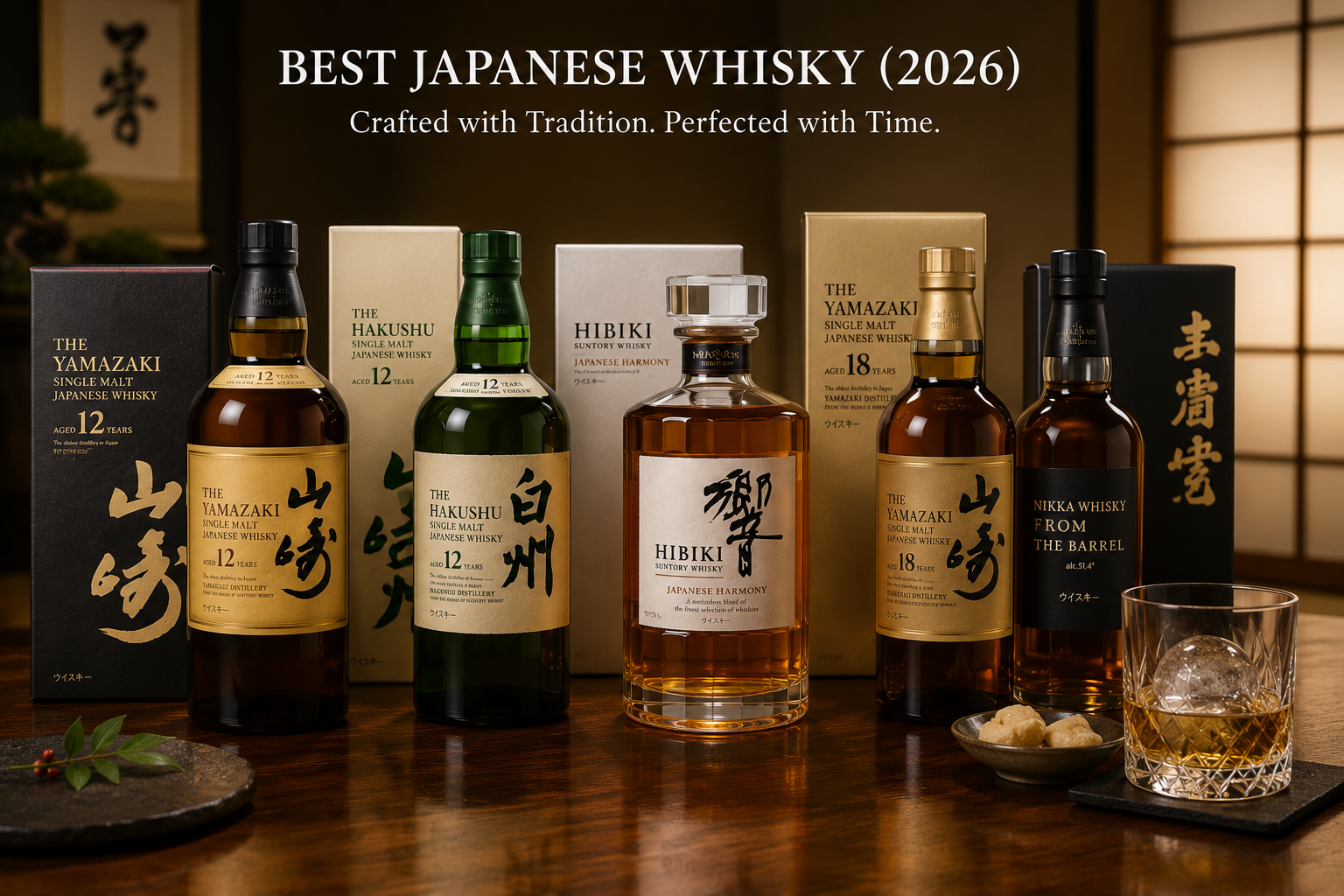
Best Japanese Whisky (2026)
July 09, 2026 | Products | Japanese Best
Japan’s whisky renaissance has transformed it from a curious imitator into the world’s most celebrated whisky producer. What began in the 1920s at Yamazaki distillery has evolved into a sophisticated industry that rivals Scotland itself. Today, Japanese whisky commands premium prices at international auctions, with bottles regularly fetching thousands of pounds. This isn’t luck—it’s the result of meticulous craftsmanship, obsessive attention to detail, and a cultural philosophy that treats whisky-making as an art form worthy of decades of perfection.
Quick Summary
- Japanese whisky combines Scottish distilling traditions with Japanese precision and purity
- Yamazaki, Hakushu, and Hibiki represent the gold standard of Japanese whisky production
- Japanese distillers prioritise balance, subtlety, and seasonal influence in flavour profiles
- Prices range from £40 for entry-level bottles to £500+ for rare releases
- Japanese whisky culture emphasises mindful enjoyment and proper serving techniques
Quick Comparison Table
How These Picks Were Compared
When comparing Japanese Whisky, the factors that actually matter are:
- Flavour profile (peated/sweet/smooth)
- Age statement
- Price
- Mixability vs neat
- Availability
| Brand | Distillery | Style | Price Range (GBP) | Best For |
|---|---|---|---|---|
| Yamazaki | Yamazaki, Kyoto | Rich, fruity | £45–£150 | First-time drinkers |
| Hakushu | Shizuoka | Light, herbaceous | £50–£160 | Sipping neat |
| Hibiki | Multiple (Suntory blend) | Harmonious, smooth | £55–£200 | Special occasions |
| Nikka From The Barrel | Hokkaido/Honshu | Bold, spicy | £35–£70 | Cocktails & mixing |
| Miyagikyo | Sendai | Delicate, fruity | £60–£180 | Whisky connoisseurs |
Why Japanese Whisky Stand Out
Japanese whisky production reflects the nation’s broader philosophy of monozukuri—the art of making things with utmost care. Japanese distillers don’t simply copy Scottish methods; they’ve adapted them with Japanese sensibilities: obsessive quality control, seasonal awareness, and an aesthetic appreciation for subtlety over boldness.
The water used in Japanese whisky is exceptionally pure, filtered through volcanic rock and mountain terrain. Yamazaki distillery, nestled in the mountains outside Osaka, benefits from the Yodo River’s pristine waters. Japanese coopers also craft their own barrels, often using mizunara (Japanese oak), which imparts delicate sandalwood and incense notes unavailable elsewhere.
This commitment extends to every detail. Distillers taste samples daily, adjusting fermentation temperatures by fractions of a degree. In Japan, whisky isn’t viewed as a product to move quickly—it’s a legacy project. Many Japanese whisky enthusiasts wait 15–20 years for a bottle to mature perfectly, and that patience shows in the final result.
Top Picks — Detailed Reviews
Yamazaki 12 Year Old
The Yamazaki distillery sits in the foothills near Kyoto, chosen by founder Shinjiro Torii for its ideal climate and water quality. The Yamazaki 12 Year Old is the distillery’s entry point, yet it’s remarkably sophisticated. Notes of dried fruit, honey, and subtle oak create a warming, balanced dram. At around £45–£60, it’s an excellent introduction to Japanese whisky’s character—approachable yet refined, never harsh. This is the whisky that convinced international drinkers Japan was serious about the craft.
Hakushu Distiller’s Reserve
Hakushu distillery sits 700 metres above sea level in the Japanese Alps, and that elevation shows in the whisky’s crisp, mineral character. The Hakushu Distiller’s Reserve offers green tea and grass notes alongside subtle fruit—utterly unique and contemplative. At £50–£70, it’s perfect for those seeking something different from traditional Scottish profiles. Japanese whisky enthusiasts often debate whether Hakushu or Yamazaki better represents the nation’s whisky identity; Hakushu’s answer is: we’re our own thing entirely.
Hibiki Harmony
Hibiki represents the art of blending, combining whiskies from Yamazaki, Hakushu, and Nikka’s Miyagikyo distillery into a harmonious whole. Suntory, a large spirits producer, created Hibiki to embody Japanese aesthetics—balance, subtlety, and quiet beauty. The bottle itself, with 24 facets representing the hours of the day, is a design icon. At £55–£90, Hibiki Harmony (the entry-level expression) delivers floral notes, candied orange, and a silk-like texture that exemplifies Japanese whisky’s philosophy of refinement.
Nikka From The Barrel
For those seeking a bolder Japanese option, Nikka From The Barrel bridges tradition and innovation. This blend combines malt and grain whiskies from Nikka’s Hokkaido and Honshu facilities, bottled without chill filtration at 51.4% ABV. It’s spicier and more robust than typical Japanese whisky, yet maintains elegance. At £35–£50, it’s remarkably affordable for its quality and works beautifully in cocktails or neat with a water drop. Japanese whisky drinkers often keep a bottle of Nikka From The Barrel for everyday enjoyment, reserving rarer bottles for special occasions.
Miyagikyo Single Malt
Nikka’s Miyagikyo distillery, located in Sendai, produces delicate, fruity whiskies often overshadowed by Yamazaki’s fame. The Miyagikyo Single Malt (typically the 15-year or non-age-statement releases) showcases orchard fruits, honey, and a gentle spice. At £60–£100, it represents excellent value for a serious single malt. Japanese whisky connoisseurs often cite Miyagikyo as underrated—it deserves wider recognition for its finesse and complexity.
Buying Guide
For Beginners: Start with Nikka From The Barrel or Yamazaki 12 Year Old. Both are readily available, reasonably priced, and represent their distilleries’ core philosophies without overwhelming complexity.
For Enthusiasts: Explore Hakushu’s various ages, single cask releases from Miyagikyo, or Hibiki’s premium expressions. Japanese whisky’s diversity shines when you compare distillery styles side-by-side.
For Collectors: Japanese whisky’s rarity and appreciation potential make bottles like Yamazaki 25 or Hibiki 30 serious investments. Prices have risen 200–300% in five years, though scarcity should be your only motivation—drink what you love first.
Where to Buy: Major supermarkets in Japan (Aeon, Isetan) stock standard releases at competitive prices. Specialist retailers in Tokyo (Ginza Tanaka, Sake-no-Yoshida) offer rare bottlings. International shipping exists but isn’t cheap; consider purchasing whilst in Japan if possible.
Budget Guidance: Entry-level (£30–£60): Nikka From The Barrel, Yamazaki 12, Hakushu Distiller’s Reserve. Mid-range (£60–£150): Yamazaki 18, Hibiki Harmony Premium, Miyagikyo 15. Premium (£150+): Yamazaki 25, Hibiki 30, limited distillery releases.
FAQ
Q: Is Japanese whisky better than Scottish whisky?
A: Neither is objectively “better”—they’re philosophically different. Scottish whisky emphasises regional character (terroir); Japanese whisky prioritises precision and balance. Try both and decide which resonates with you.
Q: Why is Japanese whisky so expensive?
A: Limited production, decades-long ageing, international demand outstripping supply, and auction-driven speculation on rare bottlings all push prices up. Entry-level expressions remain reasonably priced; it’s the aged and limited releases that command premiums.
Is it worth buying Japanese Whisky over cheaper alternatives?
For most use cases, yes — if you plan to use the product daily or for many years. Japanese Whisky tend to have a longer useful lifespan, which often makes the total cost of ownership lower than a cheaper alternative replaced every 2–3 years. That said, always match the product to your actual needs.
How long do Japanese Whisky typically last?
With proper care, quality Japanese Whisky are designed for 10 years or more of daily use. This is not incidental — it reflects what Japanese domestic consumers expect.
Where can I buy authentic Japanese Whisky online?
The safest options are Amazon (from the brand’s official store or well-reviewed sellers), direct brand websites, or authorised international retailers. Avoid unverified marketplace listings for high-value items.
More From Japanese Best
Disclosure: As an Amazon Associate, Japanese Best earns from qualifying purchases. This does not affect our recommendations. We only feature products we genuinely believe are worth your consideration.
Editorial Disclaimer
This article does not constitute professional, financial, or purchasing advice of any kind.
Product availability, pricing, and specifications are subject to change without notice. Japanese Best makes no warranties — express or implied — regarding the accuracy or completeness of this content, and accepts no liability for any decisions made based on it. Always verify details directly with the retailer or manufacturer before purchasing.
コメント