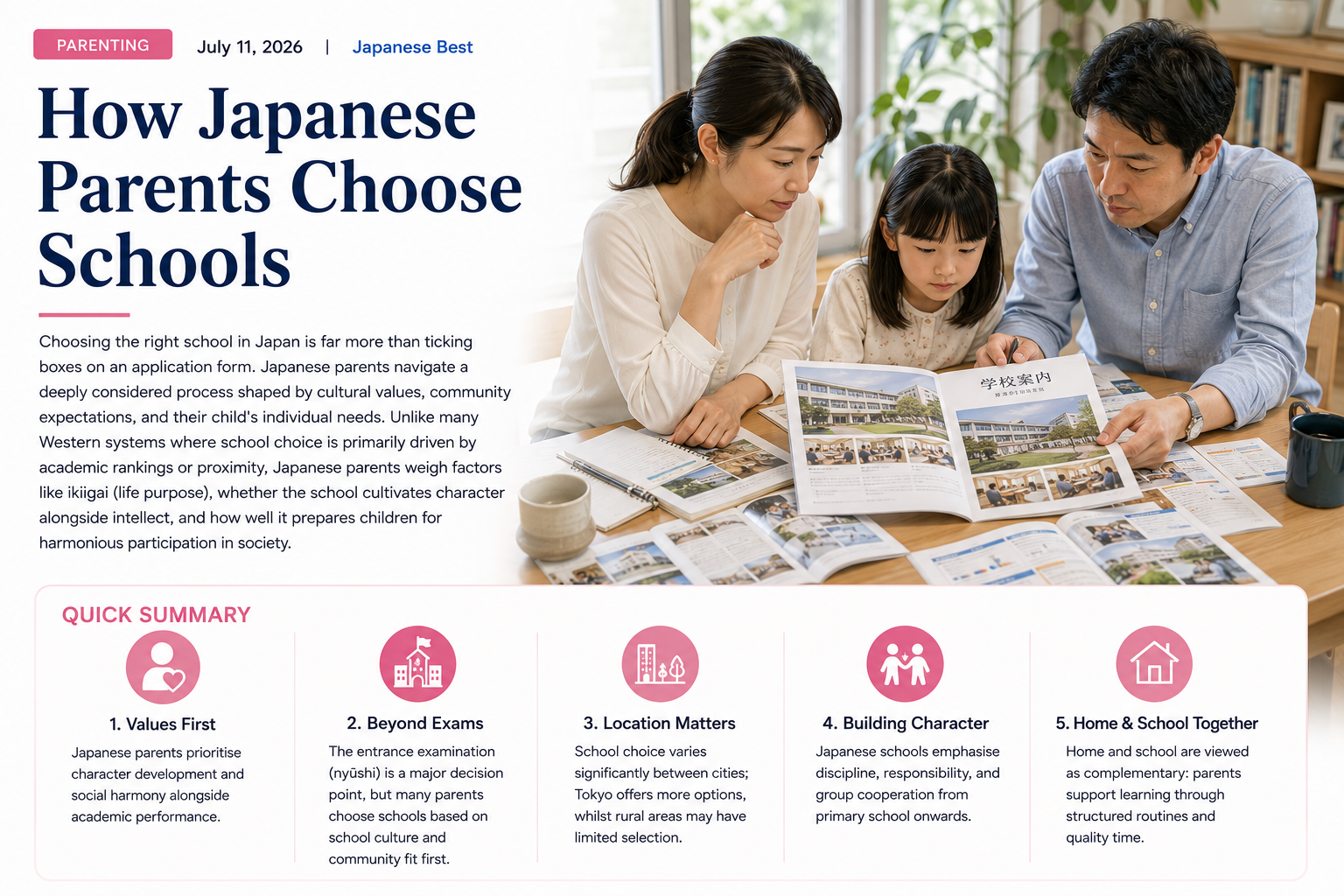
How Japanese Parents Choose Schools
July 11, 2026 | Parenting | Japanese Best
Choosing the right school in Japan is far more than ticking boxes on an application form. Japanese parents navigate a deeply considered process shaped by cultural values, community expectations, and their child’s individual needs. Unlike many Western systems where school choice is primarily driven by academic rankings or proximity, Japanese parents weigh factors like ikiigai (life purpose), whether the school cultivates character alongside intellect, and how well it prepares children for harmonious participation in society. This article explores how Japanese parents make these pivotal decisions and what sets their approach apart.
Quick Summary
- Japanese parents prioritise character development and social harmony alongside academic performance
- The entrance examination (nyūshi) is a major decision point, but many parents choose schools based on school culture and community fit first
- School choice varies significantly between cities; Tokyo offers more options, whilst rural areas may have limited selection
- Japanese schools emphasise discipline, responsibility, and group cooperation from primary school onwards
- Home and school are viewed as complementary: parents support learning through structured routines and quality time
🛒 Shop Recommended Products
How Japanese Parents Approach This
In Japan, school selection begins years before a child enters the classroom. Many parents start researching kindergartens when their child is just two or three years old, attending open days and consulting with other parents in their neighbourhood (chonaikai, or community association). The process is methodical and community-driven.
For primary school, most families choose their local neighbourhood school, which is standard practice. However, as children progress to secondary education, entrance examinations become critical. The nyūshi exams determine placement into top-tier middle and high schools, and families begin private tutoring (juku) as early as Year 4. Parents review past exam papers, attend school information sessions, and seek advice from teachers and tutoring centres. Cost matters significantly—tuition fees range from ¥5,000–¥40,000 annually for state schools, but elite private schools can exceed ¥1.5 million per year. Parents also consider commute times carefully; a journey of over 90 minutes is common but not ideal in Tokyo.
What Japanese Kids Experience
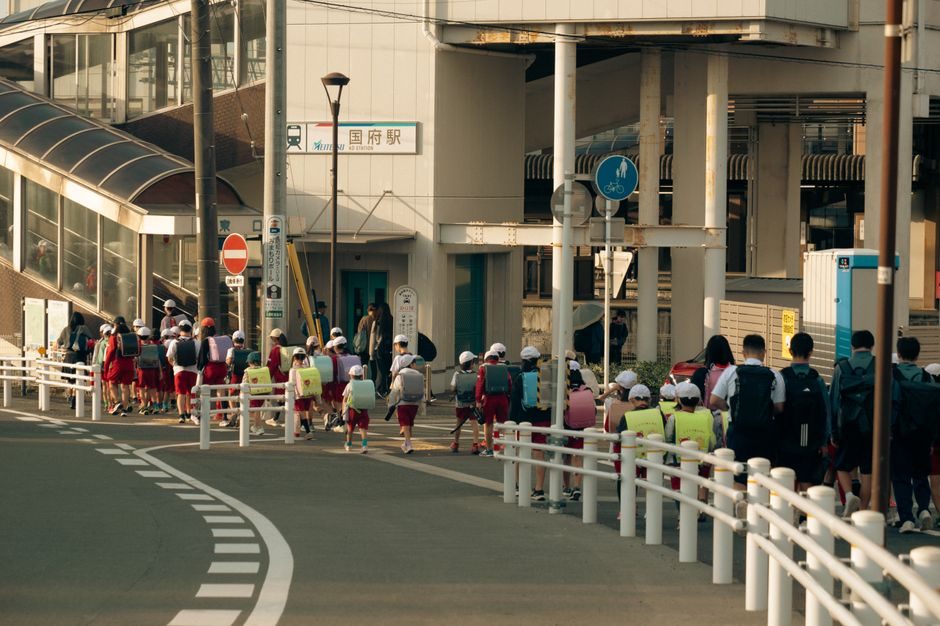
Japanese schooling emphasises collective responsibility and moral education (tokusoku) from day one. Children learn discipline through daily responsibilities: cleaning classrooms, managing school lunch distribution, and maintaining order. Teachers focus intensely on character building—cooperation, respect for rules, and sensitivity to others’ feelings matter as much as test scores.
Academics are rigorous. Students follow a standardised national curriculum, and mathematics, Japanese language, and science dominate the timetable. However, art, music, and physical education receive equal weight culturally. Club activities (bukatsu) after school—whether kendo, calligraphy, or orchestra—are considered vital for developing perseverance and social bonds. Students typically spend four to five hours daily on homework, supported by juku classes two to four times weekly. The school year runs April to March, with three main terms and significant summer and winter breaks filled with structured assignments.
At School vs At Home
The division of labour between school and home is explicit in Japan. Schools take full responsibility for moral education and social development; parents focus on academic support and maintaining home routines. Successful families establish consistent schedules: children wake at 6:30 a.m., eat a substantial breakfast, review homework at a dedicated desk, and retire by 9:30 p.m. Parents rarely question teacher decisions and attend regular parent–teacher meetings (hogo-sha kaigi) without fail.
Studying at home is ritualised. Many families use the MUJI A5 Kraft Notebook (6mm ruled), which encourages clean, organised note-taking—a cornerstone of Japanese study methods. Handwriting practice is sacred; children often keep separate kanji study books and refine their penmanship throughout their education. The quality of tools matters; families invest in reliable stationery like the Pilot FriXion Clicker 0.5mm for correcting practice work without smudging, or the Zebra Sarasa Clip 0.5mm for fast, clean writing during exam preparation.
Real-Life Examples from Tokyo
In Tokyo, school choice reflects neighbourhood status and ambition. Families in Minato and Chiyoda wards compete fiercely for entrance into prestigious private schools like Keio Shonan-Fujisawa or Waseda Jitsugyo. Parents spend ¥300,000–¥500,000 annually on juku fees alone. In contrast, families in outer wards like Adachi typically choose local schools, viewing community integration as more valuable than prestige.
A typical Tokyo family might spend three years preparing for middle school entrance exams. The child attends juku from Year 5, takes practice exams every month, and by Year 6 studies six evenings weekly. Parents coordinate with teachers, track progress meticulously, and adjust study plans seasonally. The spring results (nyūshi kekka) determine not just school placement but often shape family identity and future university prospects.
How This Compares to Western Parenting
Western parents typically prioritise school choice around academic performance and child happiness, often with considerable parental involvement in daily school life. Japanese parents, by contrast, view school selection as a long-term investment in the child’s ability to function within social structures. Western systems encourage questioning authority and individual expression; Japanese systems reward obedience and group harmony.
Whilst Western parents often seek out schools matching their child’s learning style, Japanese parents expect their child to adapt to the school’s demands. Both approaches have merit: the Japanese model builds resilience and social competence; the Western approach fosters creativity and autonomy. However, the Japanese system’s reliance on high-stakes exams creates significant stress—a recognised concern among educators and parents alike.
FAQ
Do Japanese parents have a say in their child’s school?
Yes, but within limits. Parents cannot generally choose primary schools, but advocate for their child’s placement based on documented needs. At secondary level, competitive entrance exams give parents agency but demand significant preparation.
How important is school reputation in Japan?
Very. School prestige influences university admission prospects and early career opportunities. However, this varies by region—Tokyo prioritises status more than rural areas.
Are there alternative schools in Japan?
Yes, though uncommon. International schools, Montessori programmes, and progressive private schools exist but serve fewer than 5% of students nationally.
Understanding how Japanese parents choose schools reveals a society that values long-term preparation, collective benefit, and structured progression. Whether you’re planning a move to Japan, interested in Japanese parenting methods, or simply curious about educational philosophy, the Japanese approach offers valuable lessons about investment in children’s futures and the relationship between home, school, and community.
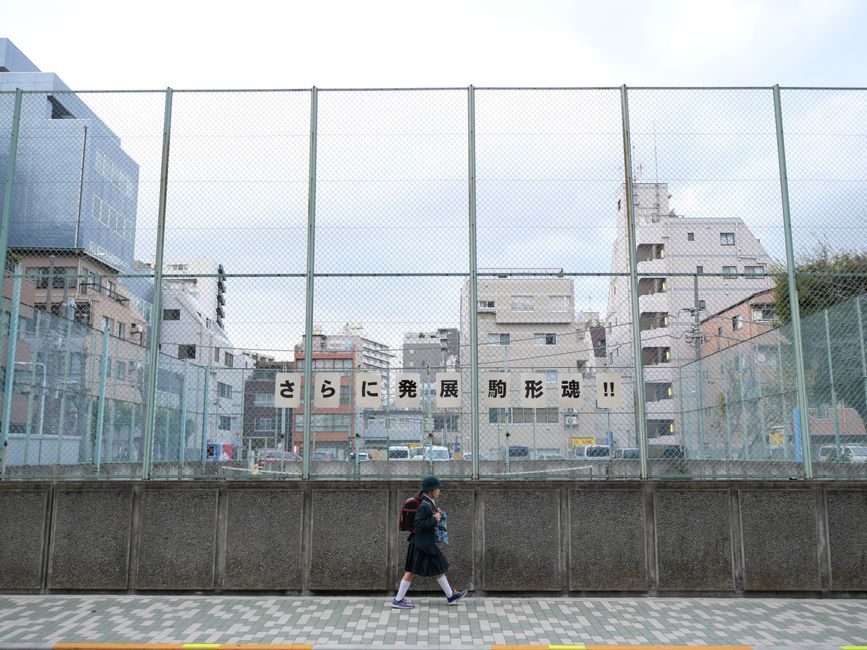
Seen in Everyday Life in Tokyo
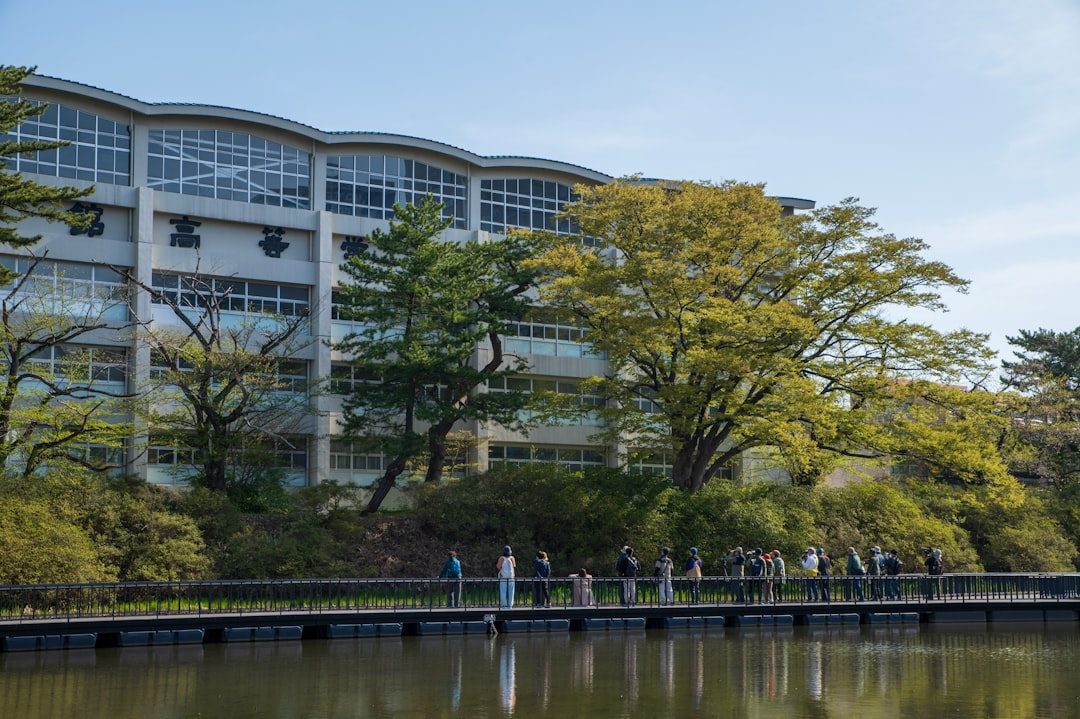
A Real-Life Note from Japan
What I Often See in Japanese Stores
Recommended Japanese Products
The products below are directly relevant to this article and used by Japanese families.
| Product | Brand | Best For | Link |
|---|---|---|---|
| Pilot FriXion Clicker 0.5mm | Pilot | Students, planners, and anyone who needs flexibility to correct mistakes | Pilot FriXion Clicker 0.5mm |
| Zebra Sarasa Clip 0.5mm | Zebra | Students and office workers who write quickly and need fast-drying ink | Zebra Sarasa Clip 0.5mm |
| MUJI A5 Kraft Notebook (6mm ruled) | MUJI | Minimalists, daily journal writers, and people who dislike visual clutter | MUJI A5 Kraft Notebook (6mm ruled) |
Pilot FriXion Clicker 0.5mm
The world’s bestselling erasable pen — writes like a smooth gel but rubs out cleanly with heat.
Best for: Students, planners, and anyone who needs flexibility to correct mistakes
🛒 Pilot FriXion Clicker 0.5mm on Amazon
Zebra Sarasa Clip 0.5mm
Japan’s favourite everyday gel pen — fast-drying, smooth, and available in gorgeous colours.
Best for: Students and office workers who write quickly and need fast-drying ink
🛒 Zebra Sarasa Clip 0.5mm on Amazon
MUJI A5 Kraft Notebook (6mm ruled)
Minimal, functional, and beloved — MUJI’s cream-paper notebook is a Japanese everyday essential.
Best for: Minimalists, daily journal writers, and people who dislike visual clutter
🛒 MUJI A5 Kraft Notebook (6mm ruled) on Amazon
More From Japanese Best
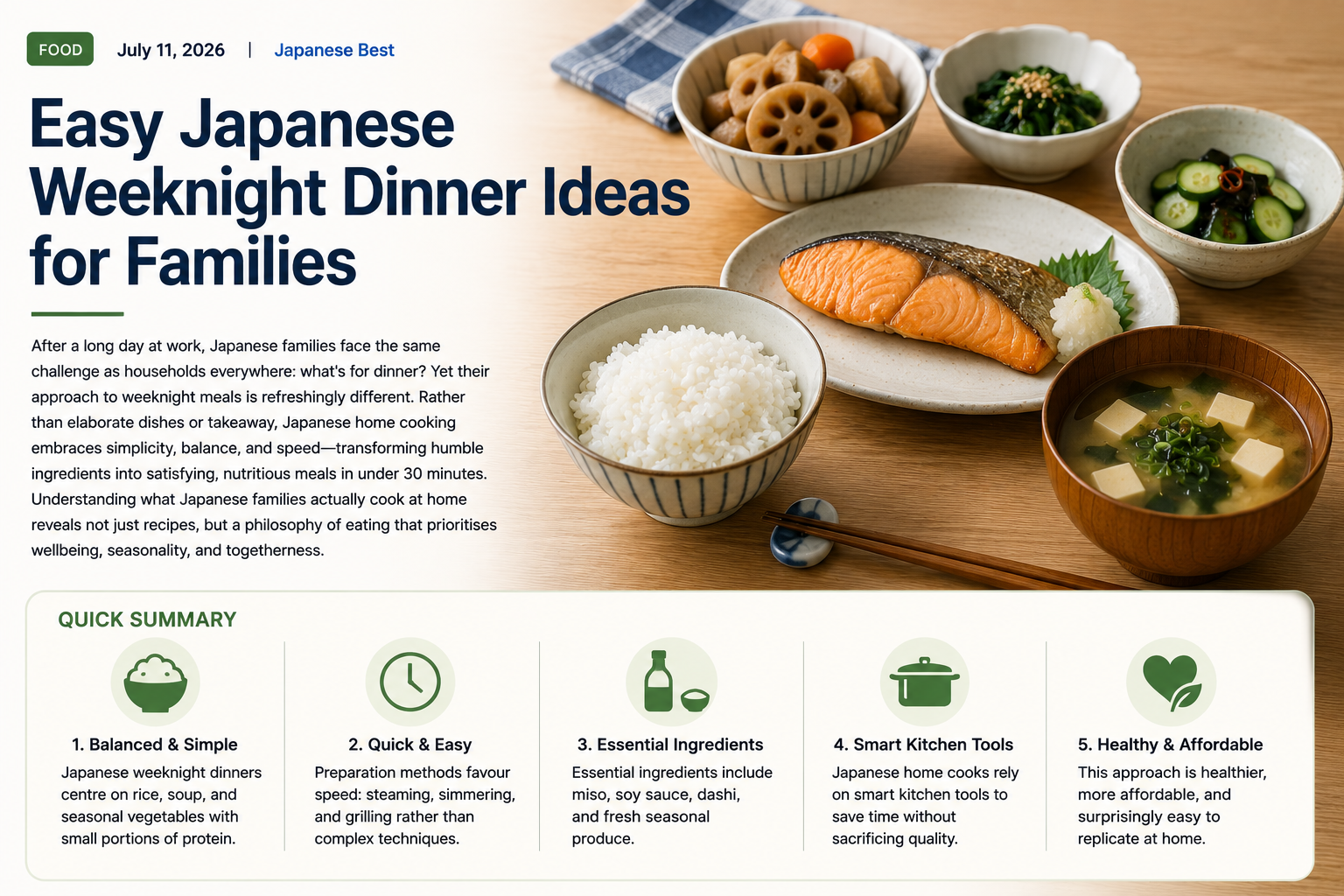
- What Japanese Families Eat for Dinner
- What to Buy at Daiso: A Practical Guide
Disclosure: As an Amazon Associate, Japanese Best earns from qualifying purchases. This does not affect our recommendations. We only feature products we genuinely believe are worth your consideration.
Editorial Disclaimer
The views, opinions, and recommendations in this article are the author’s own and reflect personal experience living in Japan. They do not constitute professional, financial, or purchasing advice of any kind.
Product availability, pricing, and specifications are subject to change without notice. Japanese Best makes no warranties — express or implied — regarding the accuracy or completeness of this content, and accepts no liability for any decisions made based on it. Always verify details directly with the retailer or manufacturer before purchasing.
コメント