Popular Hobbies Among Japanese Children (2026)
June 28, 2026 | Parenting | Japanese Best
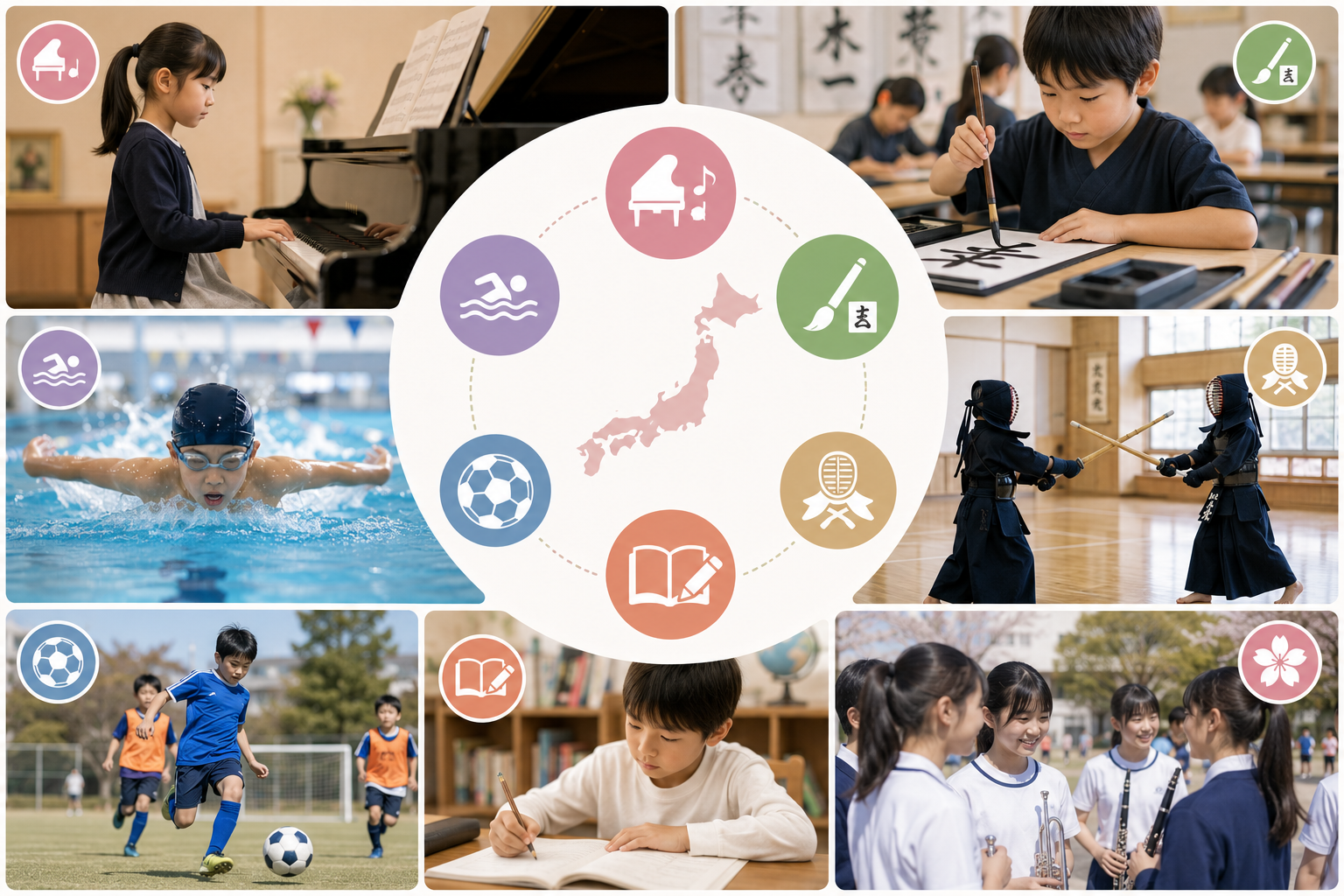
Japanese children grow up in a distinctly different recreational landscape from their Western counterparts. While a child in London might spend Saturday afternoon at a football match, their peer in Tokyo might be attending calligraphy lessons or perfecting their piano technique. The hobbies Japanese children pursue aren’t simply pastimes—they reflect deeper cultural values around discipline, mastery, and balanced development that shape parenting philosophy across the country.
Quick Summary
- Structured activities dominate: Piano, calligraphy, swimming, and martial arts are the most popular hobbies among Japanese children aged 5–15
- Balance is essential: Japanese parents typically encourage both academic pursuits and artistic or sporting activities
- School clubs matter: Many hobbies continue through school-based clubs (bukatsu) rather than private lessons alone
- Quality over quantity: Children often specialise deeply in one or two activities rather than juggling many
- Cultural transmission: Hobbies like shodo (calligraphy) and kendo keep traditional Japanese arts alive in younger generations
🛒 Shop Recommended Products
How Japanese Parents Approach This
Japanese parenting philosophy centres on cultivating well-rounded, disciplined individuals. Parents view hobbies not as mere entertainment but as vehicles for teaching perseverance, respect, and self-improvement—concepts encapsulated in the word ikigai (a sense of purpose).
Most Japanese parents enrol children in structured lessons by age four or five. Piano lessons are among the most common; approximately 35% of Japanese children take piano at some point. Swimming comes second, valued for fitness and water safety in a nation surrounded by water. Martial arts like judo and karate appeal to parents seeking to instil both physical strength and mental discipline.
The investment is significant. A monthly piano lesson costs between ¥8,000–¥12,000 (£45–£68), with additional practice expected at home. Rather than seeing this as expensive, many Japanese families view it as essential to their child’s development. The philosophy isn’t about creating prodigies—it’s about teaching commitment and the joy of incremental improvement.
What Japanese Kids Experience
For a typical Japanese child, hobbies are woven into daily life with remarkable consistency. A seven-year-old might attend swimming classes twice weekly, practise calligraphy on weekends, and participate in a school sports club. The schedule is busy, but structured leisure is considered normal and beneficial.
Japanese children experience hobbies differently than the play-based approach common in Western countries. There’s less emphasis on unstructured fun and more on deliberate practice. A child learning traditional Japanese dance (nihon buyo) will spend months perfecting a single gesture. This isn’t seen as tedious—it’s recognised as the path to mastery.
The social element matters too. Hobbies often create tight-knit communities. A child in a kendo club develops relationships with teammates that extend beyond the dojo. These friendships, built through shared discipline and mutual respect, become formative experiences. Many Japanese adults credit their childhood hobbies with teaching them lessons that shaped their entire approach to work and relationships.
At School vs At Home
School life in Japan includes an extensive club system called bukatsu. After regular classes end at 3 p.m., most children join at least one club—often two or three. These are free, school-run programmes covering everything from basketball to calligraphy to the tea ceremony. Clubs meet three to five times weekly and are taken seriously; missing practice without good reason is considered disrespectful.
At home, children pursue individual hobbies through private lessons or independent practice. A child might attend a swimming lesson on Tuesday evening, then continue training at their school’s swimming club. The overlap between school and home hobbies creates reinforcement and deepens skill development.
This dual approach also manages costs. The school clubs are free, which means families with limited budgets can still ensure their children access structured activities. Wealthier families add private lessons; less affluent families rely more heavily on bukatsu.
Real-Life Examples from Tokyo
In central Tokyo, it’s common to see children carrying instrument cases on their way home from school. A typical Saturday in a middle-class household might include a 9 a.m. piano lesson in Shibuya, followed by calligraphy practice at home, then attendance at a swimming club meet. By evening, the child has engaged in three distinct hobbies—all considered normal weekend activity.
One Tokyo mother, Yuki, describes her ten-year-old daughter’s schedule: Monday and Thursday swimming club at school, Wednesday piano lessons (¥10,000 monthly), Saturday calligraphy class in Minato ward (¥6,000 monthly), and Sunday judo training. “It sounds like a lot,” Yuki explains, “but these aren’t optional extras. We believe they’re part of raising a responsible, skilled person.”
The financial commitment reflects broader priorities. Japanese families spend approximately ¥200,000–¥300,000 annually (£1,100–£1,650) on children’s hobbies and lessons—a substantial sum that most households budget for carefully.
How This Compares to Western Parenting
The differences are striking. Western parents often prioritise a child’s choice and enjoyment; if a child dislikes piano, parents might stop lessons without extensive persuasion. Japanese parents typically expect children to continue for several years, believing that early frustration precedes mastery.
Western childhood often emphasises breadth—trying many activities to discover preferences. Japanese childhood emphasises depth—becoming genuinely skilled at one or two pursuits. A British child might play football for a season then switch to drama; a Japanese child is more likely to commit to one sport throughout primary and secondary school.
Moreover, Western hobbies often lean toward unstructured play and self-directed creativity. Japanese hobbies favour instruction-based learning and refinement of established techniques. There’s less emphasis on “expressing yourself” through art and more on learning the proper way to execute a brushstroke in calligraphy.
Neither approach is superior—they reflect different cultural values around childhood, discipline, and personal development.
Related Products
Japanese children serious about their studies benefit from quality stationery. The Pilot FriXion Clicker erasable pen is beloved by Japanese students because it writes like a premium gel pen but erases cleanly with heat—perfect for homework and practice that requires correction. The Zebra Sarasa Clip gel pen is Japan’s most popular everyday pen, known for fast-drying ink that suits students who write quickly during club activities or lessons.
For children attending multiple activities, the Zojirushi Stainless Lunch Jar keeps meals hot for hours—ideal for children eating between school and after-school clubs without access to microwaves.
FAQ
What age do Japanese children typically start hobbies?
Most begin between ages four and six. Swimming and music lessons are popular starting points.
Are hobbies mandatory in Japan?
Not legally, but cultural expectations mean most children participate in at least one structured activity. School clubs are expected.
How many hobbies does an average Japanese child have?
Typically two to four concurrent hobbies, with one being a school club and one or two private lessons.
Do Japanese children have free time?
Yes, but considerably less than Western peers. Weekends often include scheduled activities, though some unstructured play time remains.
Understanding Japanese children’s hobbies offers insights into how Japanese society values discipline, mastery, and personal development from an early age. These aren’t merely ways to keep children occupied—they’re fundamental to how Japanese culture reproduces itself across generations, passing down everything from martial arts philosophy to traditional calligraphy techniques. For parents abroad curious about Japanese parenting methods, the hobby system reveals a philosophy that sees childhood as a time for building skills, character, and resilience through patient, structured commitment.
Seen in Everyday Life in Tokyo
A Real-Life Note from Japan
What I Often See in Japanese Stores
Is it worth buying Japanese parenting over cheaper alternatives?
For most use cases, yes — if you plan to use the product daily or for many years. Japanese parenting tend to have a longer useful lifespan, which often makes the total cost of ownership lower than a cheaper alternative replaced every 2–3 years. That said, always match the product to your actual needs.
How long do Japanese parenting typically last?
With proper care, quality Japanese parenting are designed for 10 years or more of daily use. This is not incidental — it reflects what Japanese domestic consumers expect.
Where can I buy authentic Japanese parenting online?
The safest options are Amazon (from the brand’s official store or well-reviewed sellers), direct brand websites, or authorised international retailers. Avoid unverified marketplace listings for high-value items.
Related Japanese Products
The products below came up naturally in the context of this article. We only recommend items that genuinely connect to the topic.
| Product | Brand | Best For | Amazon |
|---|---|---|---|
| Pilot FriXion Clicker 0.5mm | Pilot | Students, planners, and anyone who needs flexibility to correct mistakes | Search on Amazon |
| Zebra Sarasa Clip 0.5mm | Zebra | Students and office workers who write quickly and need fast-drying ink | Search on Amazon |
| Zojirushi Stainless Lunch Jar (Bento Box) | Zojirushi | Office workers and students who want hot lunches without needing a microwave | Search on Amazon |
Pilot FriXion Clicker 0.5mm
The world’s bestselling erasable pen — writes like a smooth gel but rubs out cleanly with heat.
Best for: Students, planners, and anyone who needs flexibility to correct mistakes
Zebra Sarasa Clip 0.5mm
Japan’s favourite everyday gel pen — fast-drying, smooth, and available in gorgeous colours.
Best for: Students and office workers who write quickly and need fast-drying ink
Zojirushi Stainless Lunch Jar (Bento Box)
Japan’s most reliable insulated bento jar — keeps lunch hot for hours without a microwave.
Best for: Office workers and students who want hot lunches without needing a microwave
More From Japanese Best
Disclosure: As an Amazon Associate, Japanese Best earns from qualifying purchases. This does not affect our recommendations. We only feature products we genuinely believe are worth your consideration.
Editorial Disclaimer
The views, opinions, and recommendations in this article are the author’s own and reflect personal experience living in Japan. They do not constitute professional, financial, or purchasing advice of any kind.
Product availability, pricing, and specifications are subject to change without notice. Japanese Best makes no warranties — express or implied — regarding the accuracy or completeness of this content, and accepts no liability for any decisions made based on it. Always verify details directly with the retailer or manufacturer before purchasing.
コメント