How to Prepare for a Japanese School Field Trip (2026)
June 28, 2026 | Parenting | Japanese Best
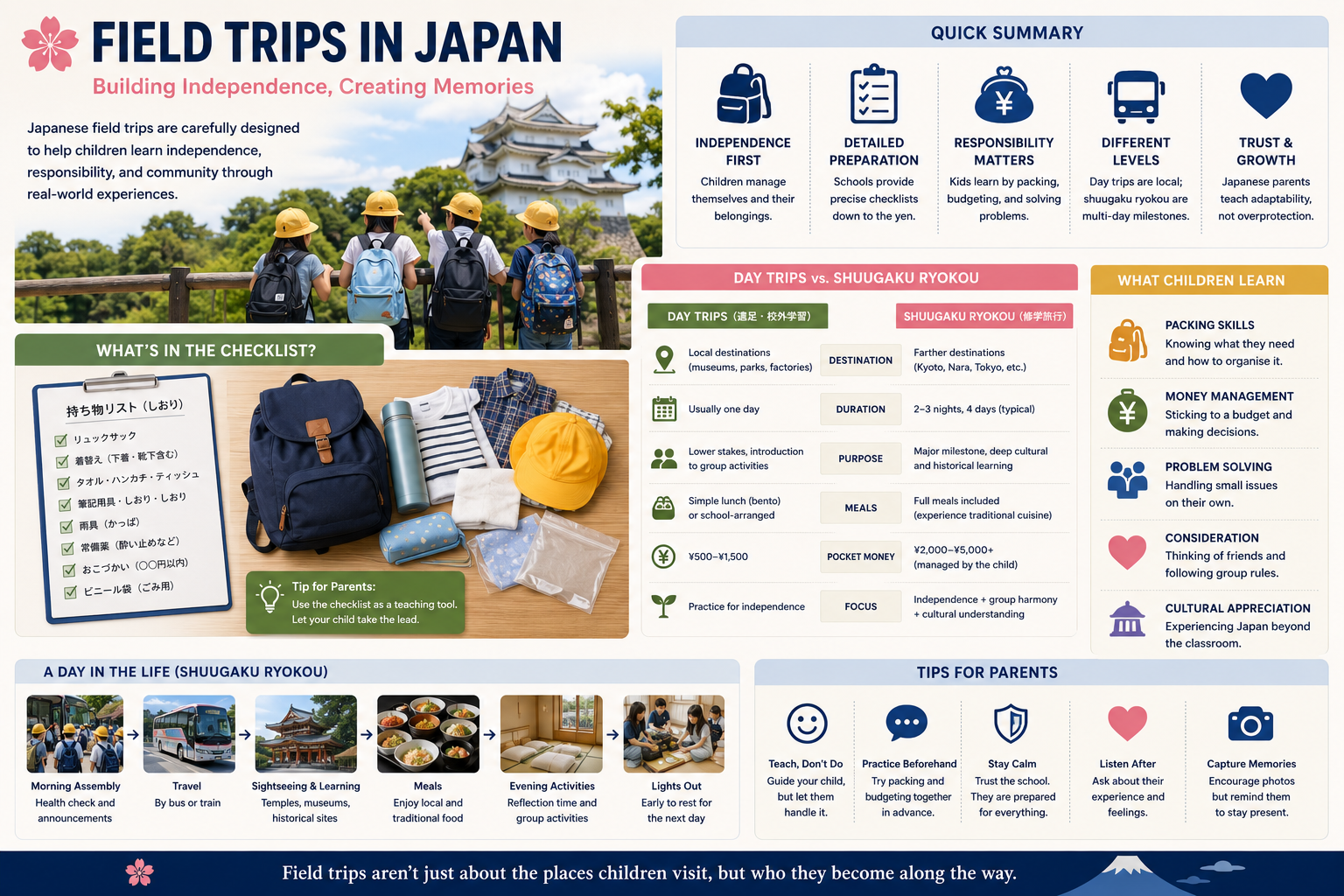
Field trips in Japan are far more than a day away from school. They’re a carefully orchestrated learning experience that reflects deeper values about independence, responsibility, and community. Whether your child attends a Tokyo international school or a rural prefectural elementary, preparation for a shuugaku ryokou (修学旅行) or day excursion involves a very specific mindset—one that empowers children while maintaining structured expectations. Understanding what Japanese schools expect can help parents support their children meaningfully, whether they’re raising third-graders heading to a local museum or teenagers travelling to Kyoto for a week-long journey.
Quick Summary
- Japanese field trips prioritise student independence and self-organisation; parents prepare children mentally and practically, not protectively
- Schools provide detailed checklists in gakudayori (学だより—school newsletters) specifying everything from socks to spending money, down to the yen
- Children learn responsibility by packing their own bags, managing pocket money, and handling minor problems without parental intervention
- Expectations differ between day trips (local, lower-stakes) and shuugaku ryokou (multi-day residential trips), which are major milestones
- Western parents often over-prepare; Japanese parents emphasise teaching children to adapt and problem-solve on the day
🛒 Shop Recommended Products
How Japanese Parents Approach This
Japanese parenting philosophy views field trip preparation as an opportunity to build jiritsushin (自立心)—a sense of independence and self-reliance. Parents don’t pack the bag for their child; they oversee the child packing it themselves. This distinction matters enormously. A parent might sit with a Year 4 student and go through the checklist together, but the child decides where each item goes and is responsible if something is forgotten.
Communication begins weeks in advance. Schools send gakudayori (school newsletters) detailing everything: departure time to the minute, what to wear, what to bring, what not to bring, dietary restrictions to note, and often a suggested spending limit—perhaps ¥2,000–¥3,000 for a day trip. Parents also attend a pre-trip guidance meeting where teachers explain the learning objectives, the itinerary, and behavioural expectations. The tone is collaborative but clear: the school is in charge, and children must follow instructions without parental rescue.
What Japanese Kids Experience
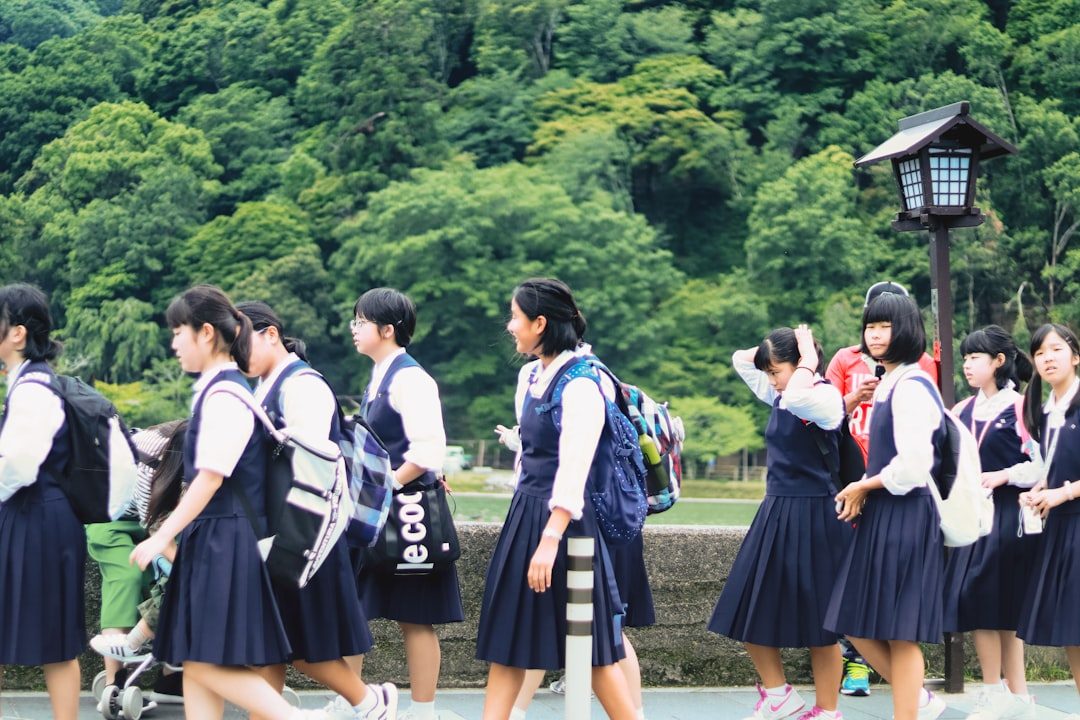
A typical Japanese field trip feels more regimented than many Western equivalents, but this structure serves a purpose. Children travel in assigned groups, often with a specific teacher responsible for a cohort of 15–20 students. At each stop—whether it’s a history museum in Tokyo, a traditional craft workshop, or a historical temple in Nara—students work through worksheets or observation tasks. They’re not passive tourists; they’re actively engaging with learning objectives.
Lunch is a communal affair. Students eat together, often in designated areas, and are expected to finish what they bring and clean up afterwards. For overnight trips, children sleep in dormitory-style rooms, sometimes four to a room, and participate in group activities like evening assemblies and shared meals. Bathroom times, bedtimes, and wake-up times are scheduled. This might sound rigid, but Japanese schools believe such structure teaches children how to live alongside others respectfully and how to adapt to unfamiliar routines.
Pocket money is modest and purposeful. A Year 5 student on a day trip might receive ¥1,500; a Year 6 on a three-day shuugaku ryokou might receive ¥5,000–¥8,000. Children are expected to budget this themselves—deciding whether to buy a souvenir, snacks, or save it. Teachers don’t manage this; children do, learning real consequences if they overspend early on.
At School vs At Home
The preparation phase reveals how differently Japanese schools and homes operate. At school, emphasis falls on collective responsibility and following procedures precisely. Children learn their assigned groups, their teacher’s expectations, and the daily schedule. They might practise marching in lines or sitting properly on a coach. At home, the emphasis is subtly different: parents ask reflective questions rather than give instructions. “What will you need for three days away?” or “How will you remember to pack your toothbrush?”
This builds metacognition—the ability to think about thinking. A parent might remind a child that previous trips required sturdy shoes, but won’t specify which shoes to pack. If a child forgets socks, that’s a learning opportunity, not a catastrophe. Most Japanese parents won’t drive to school with forgotten items; doing so would undermine the lesson.
Home preparation also includes practical skills. Can your child fold clothes neatly? Brush teeth independently? Use a public toilet away from home? Manage minor discomfort (a blister, slight homesickness) without panicking? These aren’t things to teach the night before; they’re woven into daily life beforehand.
Real-Life Examples from Tokyo
In Tokyo’s Minato Ward, a typical Year 3 trip to the National Museum of Nature and Science in Ueno involves a 40-minute train journey and a packed lunch. The school sends a detailed letter specifying: navy or black trousers, school uniform top, comfortable shoes (not trainers), a small rucksack (not a large backpack), and a handkerchief and small towel—handdryers aren’t always available in Japanese public toilets. Parents help children practise the train route beforehand; many schools expect children to navigate public transport independently, even in Year 3. A child might practise getting on at their local station, finding a seat, and getting off at Ueno Station with a parent, then do it alone on the actual trip.
For a Year 6 shuugaku ryokou, common destinations include Kyoto, Hiroshima, or Nagasaki—three to five days exploring historical sites. Schools in central Tokyo often choose Kyoto, where students visit temples, stay in simple dormitories, and spend structured time learning about traditional culture. A Chiyoda Ward school might spend two nights at a ryokan (traditional inn) costing the school approximately ¥8,000–¥12,000 per child; families contribute ¥15,000–¥25,000 depending on the school. This trip is treated as a rite of passage—children come home noticeably more confident.
How This Compares to Western Parenting
Western parents, particularly those from North America and parts of Europe, often approach field trip preparation differently. The instinct is protective: detailed packing lists are created by parents, extra snacks are included “just in case,” and contact is maintained throughout the day via mobile phones. There’s often anxiety about the child managing without parental support, and schools sometimes encourage it by requesting emergency contact availability throughout the trip.
Japanese schools assume children will manage because they must. Mobile phones are rarely permitted on school trips. If a child gets a blister, they handle it (or ask a teacher). If they’re hungry, they eat what they brought—they don’t text a parent to request something different. This isn’t neglect; it’s trust built intentionally through years of gradually increasing responsibility.
Western parents often see field trips as school’s responsibility; Japanese parents see them as shared responsibility for building character. A Japanese parent might feel that over-protecting a child on a field trip would be failing as a parent. This cultural difference sometimes creates friction when Japanese and Western parenting styles intersect in international schools in Japan.
Practical Tools for Success
To support your child effectively, keep materials simple and reliable. If your child writes observation notes or worksheets during the trip, tools like the Zebra Sarasa Clip 0.5mm are popular among Japanese students—fast-drying ink means notes won’t smudge in bags, and the smooth writing experience suits careful observation work. For children who like flexibility (perhaps rewriting notes neatly later), the Pilot FriXion Clicker 0.5mm offers erasability without the mess of pencils.
For overnight trips, a reliable lunch container makes a difference. If children carry lunch from home on the second day (sometimes required), a Zojirushi Stainless Lunch Jar keeps food at safe temperatures for hours without a microwave—essential in Japanese schools where microwaves aren’t typically available for student use.
FAQ
Q: Should I contact the school if my child forgets something?
A: Not for a day trip. Teachers will help your child problem-solve. For overnight trips, contact the school only if it’s genuinely essential (like medication). This teaches resilience.
**Q
Seen in Everyday Life in Tokyo
A Real-Life Note from Japan
What I Often See in Japanese Stores
Is it worth buying Japanese parenting over cheaper alternatives?
For most use cases, yes — if you plan to use the product daily or for many years. Japanese parenting tend to have a longer useful lifespan, which often makes the total cost of ownership lower than a cheaper alternative replaced every 2–3 years. That said, always match the product to your actual needs.
How long do Japanese parenting typically last?
With proper care, quality Japanese parenting are designed for 10 years or more of daily use. This is not incidental — it reflects what Japanese domestic consumers expect.
Where can I buy authentic Japanese parenting online?
The safest options are Amazon (from the brand’s official store or well-reviewed sellers), direct brand websites, or authorised international retailers. Avoid unverified marketplace listings for high-value items.
Related Japanese Products
The products below came up naturally in the context of this article. We only recommend items that genuinely connect to the topic.
| Product | Brand | Best For | Amazon |
|---|---|---|---|
| Pilot FriXion Clicker 0.5mm | Pilot | Students, planners, and anyone who needs flexibility to correct mistakes | Search on Amazon |
| Zebra Sarasa Clip 0.5mm | Zebra | Students and office workers who write quickly and need fast-drying ink | Search on Amazon |
| Zojirushi Stainless Lunch Jar (Bento Box) | Zojirushi | Office workers and students who want hot lunches without needing a microwave | Search on Amazon |
Pilot FriXion Clicker 0.5mm
The world’s bestselling erasable pen — writes like a smooth gel but rubs out cleanly with heat.
Best for: Students, planners, and anyone who needs flexibility to correct mistakes
Zebra Sarasa Clip 0.5mm
Japan’s favourite everyday gel pen — fast-drying, smooth, and available in gorgeous colours.
Best for: Students and office workers who write quickly and need fast-drying ink
Zojirushi Stainless Lunch Jar (Bento Box)
Japan’s most reliable insulated bento jar — keeps lunch hot for hours without a microwave.
Best for: Office workers and students who want hot lunches without needing a microwave
More From Japanese Best
Disclosure: As an Amazon Associate, Japanese Best earns from qualifying purchases. This does not affect our recommendations. We only feature products we genuinely believe are worth your consideration.
Editorial Disclaimer
The views, opinions, and recommendations in this article are the author’s own and reflect personal experience living in Japan. They do not constitute professional, financial, or purchasing advice of any kind.
Product availability, pricing, and specifications are subject to change without notice. Japanese Best makes no warranties — express or implied — regarding the accuracy or completeness of this content, and accepts no liability for any decisions made based on it. Always verify details directly with the retailer or manufacturer before purchasing.

コメント