Tokyo With Kids: A Complete Family Travel Guide (2026)
June 28, 2026 | Travel Japan | Japanese Best
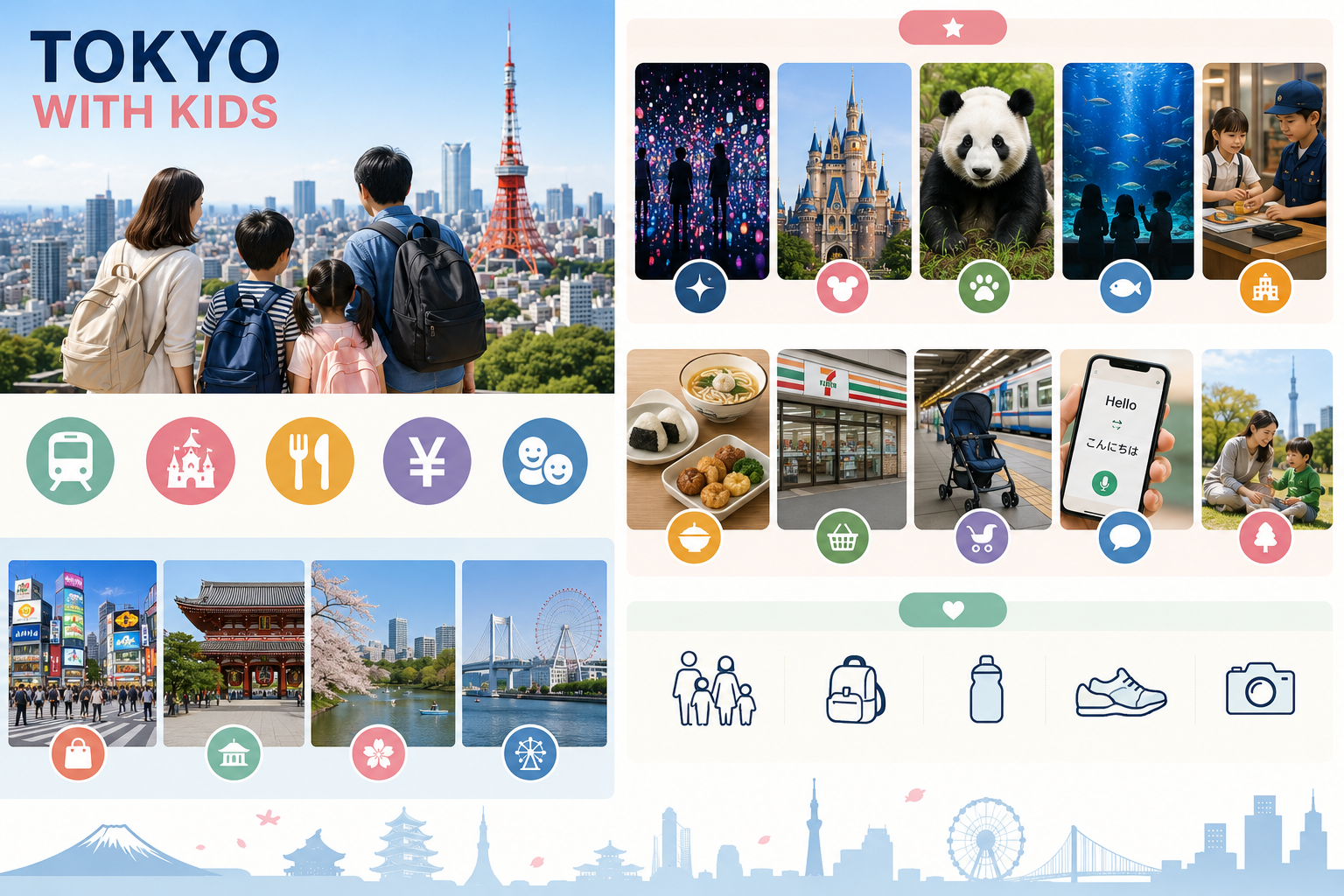
Tokyo sprawls across 2,194 square kilometres with electric energy, cutting-edge technology, and hidden pockets of tradition that captivate both adults and children alike. Families visiting Japan’s capital often worry about language barriers, crowded trains, and whether young children can genuinely enjoy the experience. The truth is wonderfully different: Tokyo is exceptionally family-friendly, with thoughtfully designed attractions, safe public spaces, and a culture that genuinely welcomes children. This guide distils practical wisdom for parents planning a Tokyo adventure with kids of any age.
Quick Summary
- Tokyo’s trains, buses, and taxis are safe, clean, and navigable even with pushchairs and young children
- Major attractions like teamLab Borderless, Tokyo Disneyland, and the Ueno Zoo offer world-class experiences specifically designed for families
- Japanese restaurants naturally accommodate children, and convenience stores stock safe, high-quality snacks and meals
- Budget roughly ¥8,000–¥12,000 per day per family for mid-range accommodation, attractions, and meals
- English signage and translation apps make getting around manageable, though learning a few key phrases enriches the experience
🛒 Shop Recommended Products
What to Expect
Tokyo moves fast, but not aggressively. You’ll notice immediately that Japanese society treats public spaces with respect—trains run precisely on schedule, and even the busiest stations feel orderly. Children are welcomed in restaurants, shops, and on public transport. Department stores feature enormous children’s sections with quality clothing and toys. Hotels and ryokans (traditional inns) often provide yukata (casual kimono) in children’s sizes, and many have family baths rather than individual rooms.
One reality check: summer humidity reaches 30°C with oppressive moisture, whilst winter (December–February) is dry and cold. Spring (late March–April) and autumn (October–November) offer ideal temperatures and stunning scenery. Expect to navigate crowds during cherry blossom season and Golden Week (late April/early May). Japan’s toilet culture is advanced—most public facilities have child-sized seats and hand-dryers, a relief for parents managing young children.
Practical Tips
Pack light. Tokyo’s excellent public transport makes wheeling heavy luggage tedious. Coin lockers at train stations (¥400–¥700 for small lockers) store belongings whilst you explore. Suica or Pasmo IC cards (purchasable at any station for ¥2,000, with ¥1,500 usable credit) work across trains, buses, and convenience stores—invaluable for families managing multiple journeys daily.
Bring a small notebook and pen for communication. A Pilot FriXion Clicker 0.5mm erasable pen is ideal for sketching locations or writing notes that you can adjust on the fly. Many parents also find Google Translate’s camera function essential for deciphering menus and signage. Pocket WiFi rental (around ¥1,500 daily) keeps everyone connected. Prepare children for long journeys by downloading shows or games—bullet trains (shinkansen) allow 2.5 hours to Tokyo from Kyoto, ideal for screen time.
Where to Go and What to Do
teamLab Borderless (Odaiba) remains Tokyo’s standout family attraction. Children lose themselves in immersive digital art installations where they control butterflies with hand movements and walk through flower gardens that respond to touch. Entry costs ¥3,200 for adults, ¥1,000 for children (4–15). Arrive early to beat crowds.
Tokyo Disneyland and DisneySea (Chiba, 30 minutes by train) deliver world-class experiences. DisneySea uniquely features a “Mysterious Island” themed to Jules Verne, whilst Disneyland offers classic attractions. Tickets run ¥8,900–¥10,900 depending on the season. FastPass systems (¥2,000–¥3,000 per attraction) reduce waiting time.
Ueno Zoo houses giant pandas, snow monkeys, and endangered species across 54 hectares. Entry is ¥600 for adults, ¥free for children under 12. The adjacent Ueno Park combines museums, temples, and beautiful walking paths—perfect for half-day exploration.
Tsukiji Outer Market lets children experience Tokyo’s food culture firsthand. Stalls serve fresh sushi, grilled seafood, and tamagoyaki (sweet egg omelette). Kids find the sensory experience—sizzling grills, friendly vendors, colourful ingredients—utterly engaging.
Harajuku and Takeshita Street fascinate older children with youth fashion and quirky pop-culture shops. The nearby Meiji Shrine offers peaceful forest walks and traditional Japanese aesthetics—a valuable cultural counterpoint to Tokyo’s neon excess.
Budget and Planning
Budget roughly ¥8,000–¥12,000 daily per family (two adults, two children) for mid-range travel. Accommodation ranges from ¥6,000–¥15,000 per night for family rooms in capsule hotels, business hotels, or ryokans. Youth hostels and Airbnb flats offer budget alternatives.
Meals cost ¥1,500–¥3,000 per person daily. Convenience stores (Lawson, FamilyMart, 7-Eleven) serve quality bento boxes, onigiri (rice balls), and fresh fruit at ¥500–¥1,200. Family restaurants like Gusto and Jonathan’s provide affordable set menus. Michelin-starred sushi might run ¥5,000–¥15,000 per person, but delicious ramen costs ¥800–¥1,200.
For packed lunches during busy sightseeing days, a Zojirushi insulated lunch jar keeps meals hot for hours without microwave access—particularly useful when exploring parks or museums where dining options are limited or pricey.
Attractions vary: museums typically cost ¥500–¥1,500, whilst theme parks run ¥3,000–¥10,900. Train passes (Suica/Pasmo) cost ¥2,000 upfront but eliminate daily ticket purchases.
FAQ
Is tap water safe for children? Absolutely. Tokyo’s tap water exceeds international safety standards.
Do I need to speak Japanese? No, but learning “arigatou gozaimasu” (thank you very much) and “sumimasen” (excuse me) enriches interactions and delights locals.
Are pushchairs practical? Yes. Trains have designated spaces, and most attractions accommodate them—though staircases remain common in older buildings.
What about allergies? Always carry written allergy information in Japanese. Convenience stores provide detailed ingredient lists.
Best time to visit with kids? October–November and March–April offer comfortable weather and fewer crowds than summer or New Year holidays.
Tokyo rewards families with curiosity and flexibility. Children quickly adapt to efficient public transport, exciting food discoveries, and the strange magic of a city where ancient temples sit beside neon arcades. The experience teaches young travellers that the world is navigable, that different doesn’t mean difficult, and that genuine hospitality transcends language. Plan thoughtfully, pack light, embrace the unexpected moments—those unplanned detours often become the most treasured memories of any family journey.
Seen in Everyday Life in Tokyo
A Real-Life Note from Japan
What I Often See in Japanese Stores
Is it worth buying Japanese travel japan over cheaper alternatives?
For most use cases, yes — if you plan to use the product daily or for many years. Japanese travel japan tend to have a longer useful lifespan, which often makes the total cost of ownership lower than a cheaper alternative replaced every 2–3 years. That said, always match the product to your actual needs.
How long do Japanese travel japan typically last?
With proper care, quality Japanese travel japan are designed for 10 years or more of daily use. This is not incidental — it reflects what Japanese domestic consumers expect.
Where can I buy authentic Japanese travel japan online?
The safest options are Amazon (from the brand’s official store or well-reviewed sellers), direct brand websites, or authorised international retailers. Avoid unverified marketplace listings for high-value items.
Related Japanese Products
The products below came up naturally in the context of this article. We only recommend items that genuinely connect to the topic.
| Product | Brand | Best For | Amazon |
|---|---|---|---|
| Pilot FriXion Clicker 0.5mm | Pilot | Students, planners, and anyone who needs flexibility to correct mistakes | Search on Amazon |
| Zebra Sarasa Clip 0.5mm | Zebra | Students and office workers who write quickly and need fast-drying ink | Search on Amazon |
| Zojirushi Stainless Lunch Jar (Bento Box) | Zojirushi | Office workers and students who want hot lunches without needing a microwave | Search on Amazon |
Pilot FriXion Clicker 0.5mm
The world’s bestselling erasable pen — writes like a smooth gel but rubs out cleanly with heat.
Best for: Students, planners, and anyone who needs flexibility to correct mistakes
Zebra Sarasa Clip 0.5mm
Japan’s favourite everyday gel pen — fast-drying, smooth, and available in gorgeous colours.
Best for: Students and office workers who write quickly and need fast-drying ink
Zojirushi Stainless Lunch Jar (Bento Box)
Japan’s most reliable insulated bento jar — keeps lunch hot for hours without a microwave.
Best for: Office workers and students who want hot lunches without needing a microwave
More From Japanese Best
Disclosure: As an Amazon Associate, Japanese Best earns from qualifying purchases. This does not affect our recommendations. We only feature products we genuinely believe are worth your consideration.
Editorial Disclaimer
The views, opinions, and recommendations in this article are the author’s own and reflect personal experience living in Japan. They do not constitute professional, financial, or purchasing advice of any kind.
Product availability, pricing, and specifications are subject to change without notice. Japanese Best makes no warranties — express or implied — regarding the accuracy or completeness of this content, and accepts no liability for any decisions made based on it. Always verify details directly with the retailer or manufacturer before purchasing.
コメント