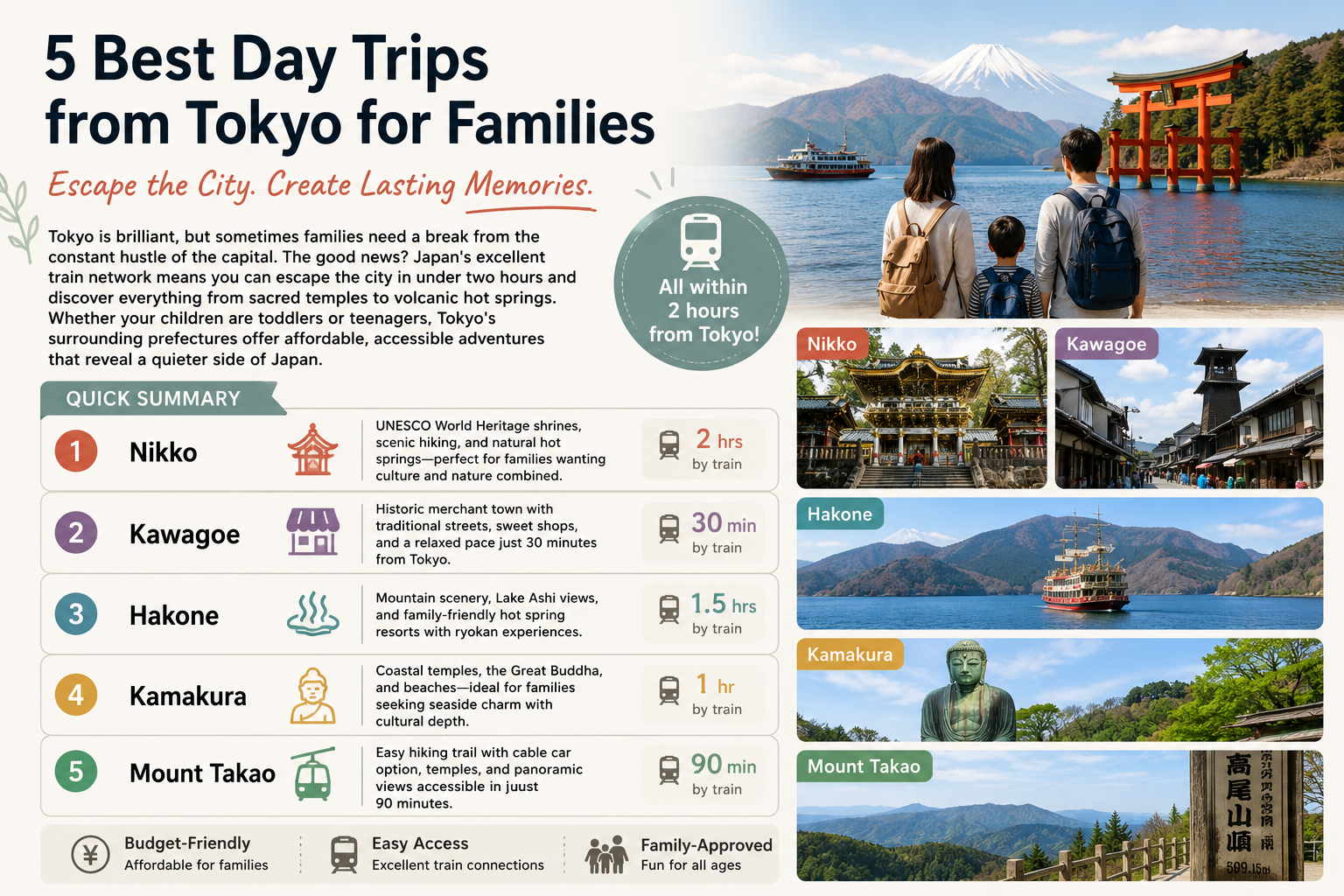
Best Day Trips from Tokyo for Families (2026)
June 28, 2026 | Travel Japan | Japanese Best
Tokyo is brilliant, but sometimes families need a break from the constant hustle of the capital. The good news? Japan’s excellent train network means you can escape the city in under two hours and discover everything from sacred temples to volcanic hot springs. Whether your children are toddlers or teenagers, Tokyo’s surrounding prefectures offer affordable, accessible adventures that reveal a quieter side of Japan. This guide explores the best day trips that won’t exhaust your budget or your patience.
Quick Summary
- Nikko: UNESCO World Heritage shrines, scenic hiking, and natural hot springs—perfect for families wanting culture and nature combined
- Kawagoe: Historic merchant town with traditional streets, sweet shops, and a relaxed pace just 30 minutes from Tokyo
- Hakone: Mountain scenery, Lake Ashi views, and family-friendly hot spring resorts with ryokan experiences
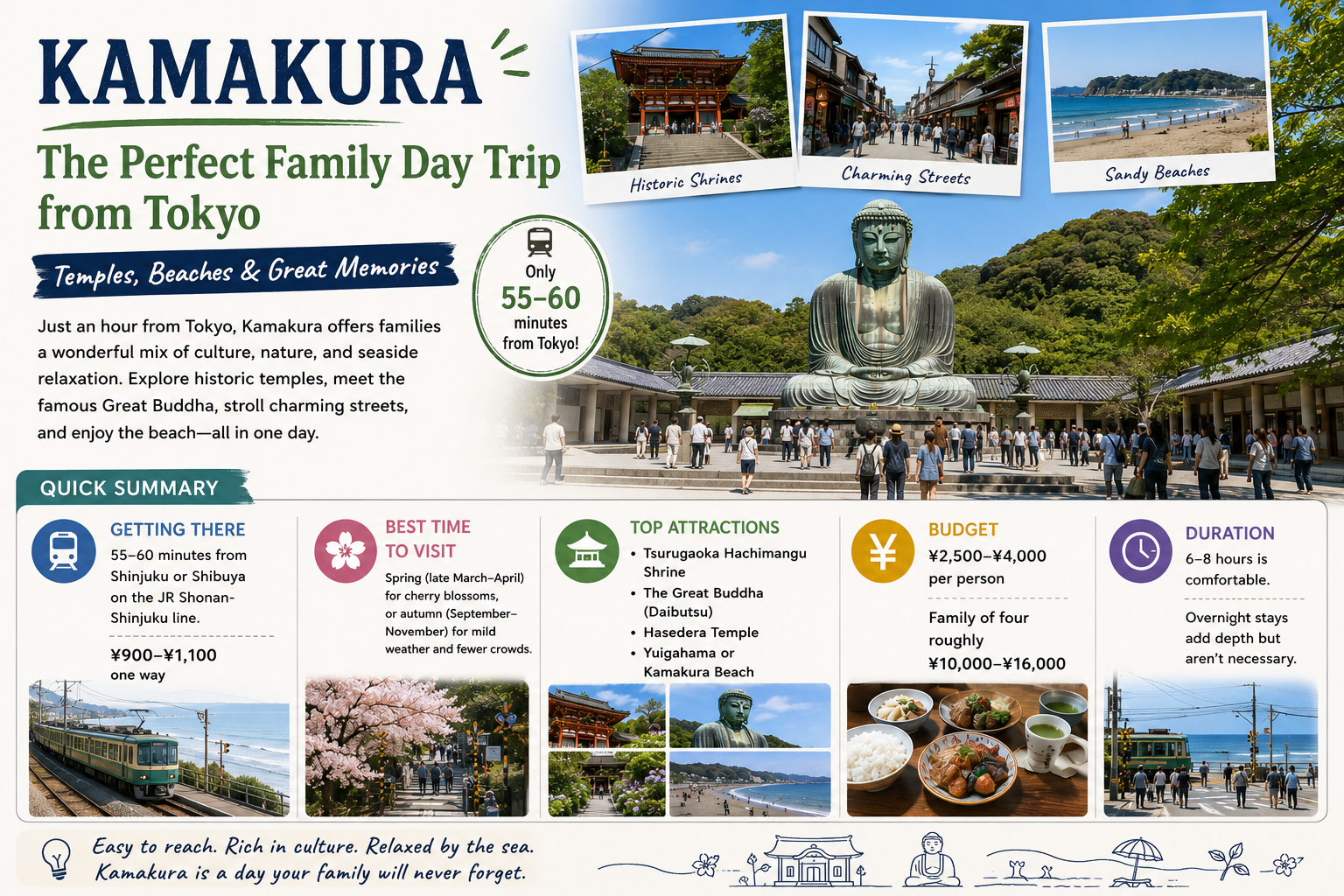
- Kamakura: Coastal temples, the Great Buddha, and beaches—ideal for families seeking seaside charm with cultural depth
- Mount Takao: Easy hiking trail with cable car option, temples, and panoramic views accessible in just 90 minutes
🛒 Shop Recommended Products
What to Expect
Japanese day trips prioritise efficiency and cleanliness. Train stations are immaculately maintained, with clear English signage and helpful staff. Most destinations offer family-friendly facilities: nappy-changing rooms are standard in department stores and train stations, and restaurants typically accommodate children without fuss. The culture emphasises respect for shared spaces, so you’ll notice quiet conduct on trains and orderly queues everywhere.
Seasonality matters significantly. Spring brings cherry blossoms (late March to early April), summer offers festivals and swimming, autumn delivers stunning foliage (October–November), and winter provides fewer crowds but requires warmer clothing. Food portions are often generous, and many restaurants offer children’s meals. Expect to walk considerably—comfortable shoes are essential. Most attractions charge modest entry fees (typically ¥500–¥1,500 per adult), and public transport is exceptionally affordable thanks to rail passes and family discounts.
Practical Tips
Pack strategically. A lightweight day pack, portable phone charger, and weather-appropriate clothing are essentials. Keep a reusable water bottle handy—Japan’s tap water is safe everywhere, and many stations have refill stations. For train journeys, consider the Sony WH-1000XM5 headphones if your children enjoy films or music; the exceptional noise cancellation creates a peaceful environment during longer commutes.
Purchase a Suica or Pasmo card at Tokyo Station—these rechargeable cards work on all regional trains and buses, eliminating queuing at ticket machines. Download Google Maps and Hyperdia apps for seamless navigation. Arrive early at popular destinations to beat crowds; most temples and attractions are quieter before 10 a.m. Bring snacks for younger children, though Japanese convenience stores (ubiquitous and excellent) stock nutritious options. A Zojirushi SM-SHE60 stainless mug keeps hot tea or coffee warm during morning journeys—beloved by Japanese commuters for its reliability and compact design.
Where to Go / What to Do
Nikko (2 hours from Tokyo) combines culture, nature, and spirituality beautifully. The Toshogu Shrine, dedicated to Tokugawa Ieyasu, features ornate architecture and peaceful grounds where children can feed tame squirrels. The nearby Lake Chuzenji offers boat cruises, and walking trails suit various fitness levels. Entry to Toshogu is ¥1,300 for adults, ¥450 for children.
Kawagoe (30 minutes by train) charms families with its Edo-period merchant district. The main street, Kasatsu, features traditional wooden buildings housing cafés, sweet shops, and small museums. Children love the candy shops (okashi-yokocho), which sell handmade sweets. The bell tower (Toki no Kane) is free to view, and the Hikawa Shrine offers peaceful grounds. Admission to nearby museums ranges from ¥300–¥600.
Hakone suits families seeking mountain scenery and hot spring culture. The open-air sculpture museum is world-class, cable cars and ropeway journeys thrill children, and Lake Ashi’s views of Mount Fuji are unforgettable. Many ryokan (traditional inns) offer family baths without requiring overnight stays. Cable car tickets cost around ¥1,000–¥1,500 return.
Kamakura (one hour) delivers coastal charm and spiritual depth. The Great Buddha (Daibutsu) is iconic; you can explore inside. The beaches are clean and supervised during summer, and numerous temples offer shaded walking paths. Entry to the Buddha costs ¥300; beach access is free.
Mount Takao (90 minutes) offers accessible hiking. The cable car ascends 599 metres, and multiple summit trails suit different abilities. Clear days reveal Mount Fuji. Cable car return tickets are approximately ¥950 per adult.
Budget and Planning
A family of four can comfortably day trip from Tokyo for ¥8,000–¥15,000 (£45–£85), depending on destination and activities. Allocate roughly ¥2,000–¥3,000 per person for transport (using regional passes), ¥3,000–¥5,000 for attractions, and ¥2,000–¥4,000 for meals. Lunch sets (teishoku) at casual restaurants typically cost ¥1,000–¥1,500 per person and include rice, soup, and pickles.
Book accommodation near major stations for easiest access; hotels near Tokyo Station or Shinjuku provide excellent train connections. Plan journeys using Hyperdia’s English interface—it calculates exact fares and identifies the fastest routes. Most destinations are busiest on weekends; weekday trips are less crowded and equally enjoyable.
FAQ
Are English menus available? Most popular destinations offer English menus or picture-based options. Google Lens helps translate handwritten menus.
Can young children manage the train journeys? Absolutely. Japanese trains are smooth, clean, and entertaining. Children under 12 travel free on some lines.
What if weather turns bad? All destinations have indoor alternatives—museums, shopping complexes, and indoor hot spring facilities ensure enjoyable experiences regardless.
Is it safe for families? Japan consistently ranks among the world’s safest countries. Families feel secure travelling independently on public transport.
Tokyo’s surrounding regions offer families authentic Japan without requiring lengthy journeys or exhausting itineraries. Each destination reveals different aspects of Japanese culture—whether spiritual temples, traditional architecture, natural beauty, or coastal charm. The excellent infrastructure, affordable costs, and family-friendly atmosphere make day trips accessible and rewarding. Pack thoughtfully, arrive early, and allow time for spontaneous discoveries. These excursions transform a Tokyo holiday from a city-focused experience into a genuine exploration of Japan’s diverse character.
Seen in Everyday Life in Tokyo
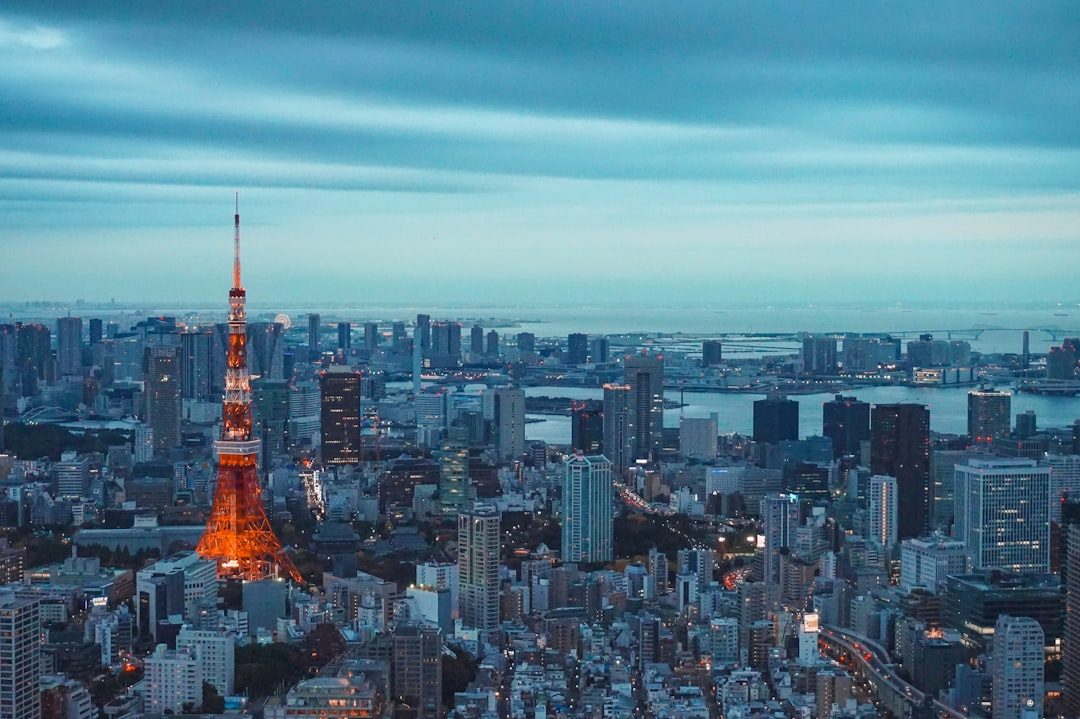
A Real-Life Note from Japan
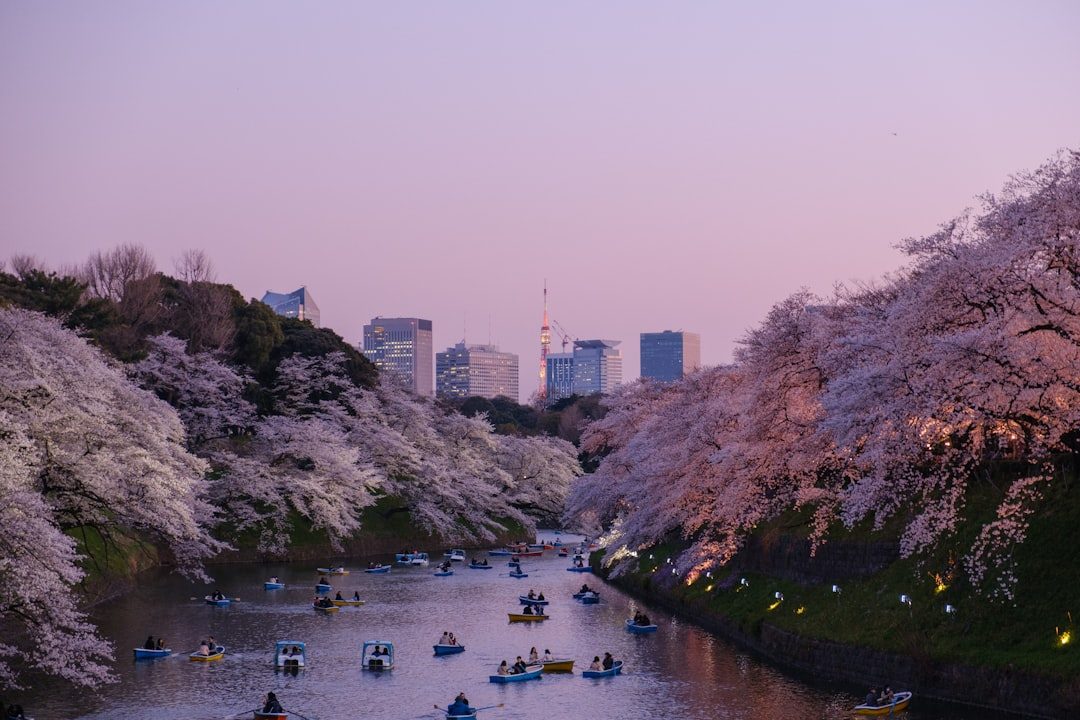
What I Often See in Japanese Stores
Is it worth buying Japanese travel japan over cheaper alternatives?
For most use cases, yes — if you plan to use the product daily or for many years. Japanese travel japan tend to have a longer useful lifespan, which often makes the total cost of ownership lower than a cheaper alternative replaced every 2–3 years. That said, always match the product to your actual needs.
How long do Japanese travel japan typically last?
With proper care, quality Japanese travel japan are designed for 10 years or more of daily use. This is not incidental — it reflects what Japanese domestic consumers expect.
Where can I buy authentic Japanese travel japan online?
The safest options are Amazon (from the brand’s official store or well-reviewed sellers), direct brand websites, or authorised international retailers. Avoid unverified marketplace listings for high-value items.
Related Japanese Products
The products below came up naturally in the context of this article. We only recommend items that genuinely connect to the topic.
| Product | Brand | Best For | Amazon |
|---|---|---|---|
| Zojirushi SM-SHE60AG Stainless Mug | Zojirushi | Daily commuters who want reliable, durable coffee/tea on the go | Search on Amazon |
| Sony WH-1000XM5 | Sony | Frequent travellers, remote workers, and audiophiles who want the best ANC | Search on Amazon |
Zojirushi SM-SHE60AG Stainless Mug
Zojirushi’s most popular commuter mug — slim, spill-proof, and keeps drinks hot for 6 hours.
Best for: Daily commuters who want reliable, durable coffee/tea on the go
Sony WH-1000XM5
Sony’s flagship ANC headphones — industry-leading noise cancellation and exceptional sound.
Best for: Frequent travellers, remote workers, and audiophiles who want the best ANC
More From Japanese Best
Disclosure: As an Amazon Associate, Japanese Best earns from qualifying purchases. This does not affect our recommendations. We only feature products we genuinely believe are worth your consideration.
Editorial Disclaimer
The views, opinions, and recommendations in this article are the author’s own and reflect personal experience living in Japan. They do not constitute professional, financial, or purchasing advice of any kind.
Product availability, pricing, and specifications are subject to change without notice. Japanese Best makes no warranties — express or implied — regarding the accuracy or completeness of this content, and accepts no liability for any decisions made based on it. Always verify details directly with the retailer or manufacturer before purchasing.
コメント