Easy Japanese Weeknight Dinner Ideas for Families
July 11, 2026 | Food | Japanese Best
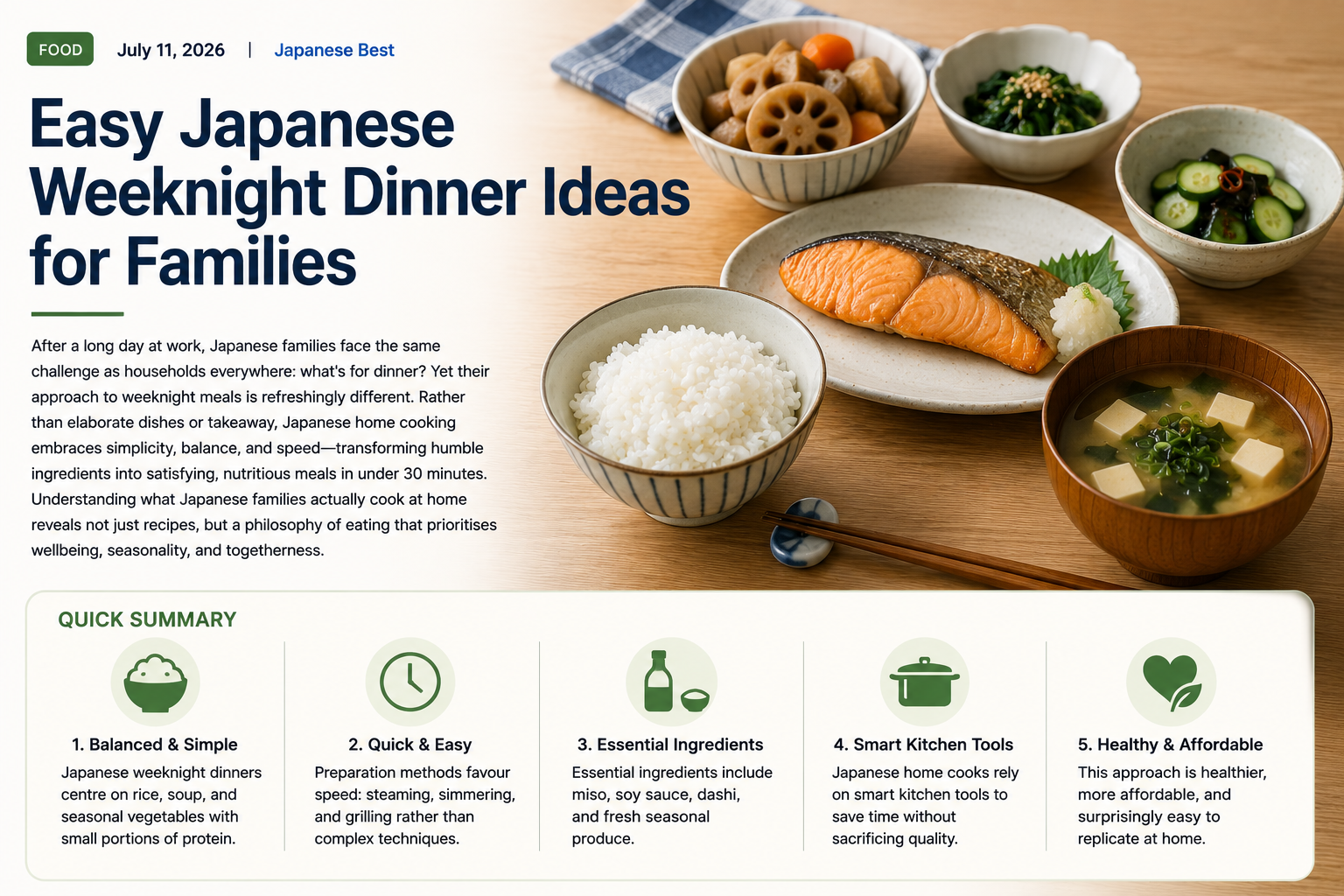
After a long day at work, Japanese families face the same challenge as households everywhere: what’s for dinner? Yet their approach to weeknight meals is refreshingly different. Rather than elaborate dishes or takeaway, Japanese home cooking embraces simplicity, balance, and speed—transforming humble ingredients into satisfying, nutritious meals in under 30 minutes. Understanding what Japanese families actually cook at home reveals not just recipes, but a philosophy of eating that prioritises wellbeing, seasonality, and togetherness.
Quick Summary
- Japanese weeknight dinners centre on rice, soup, and seasonal vegetables with small portions of protein
- Preparation methods favour speed: steaming, simmering, and grilling rather than complex techniques
- Essential ingredients include miso, soy sauce, dashi, and fresh seasonal produce
- Japanese home cooks rely on smart kitchen tools to save time without sacrificing quality
- This approach is healthier, more affordable, and surprisingly easy to replicate at home
🛒 Shop Recommended Products
What Japanese Families Actually Eat
Walk into any Japanese home around 18:00, and you’ll find a similar spread on the dinner table. The foundation is always gohan—steamed white or brown rice—served in individual bowls. Alongside sits a small bowl of miso soup, typically made with tofu, seaweed, and seasonal vegetables. The main dish might be yakizakana (grilled fish), tori no teriyaki (glazed chicken), or nasu no miso itame (aubergine sautéed in miso). A side vegetable dish—perhaps horenso no ohitashi (spinach in dashi) or daikon no nimono (simmered radish)—rounds out the meal.
Portion sizes are modest. Protein is measured in small quantities, vegetables dominate the plate, and nothing is wasted. In Tokyo and Osaka, many families still follow traditional meal structures learnt from their parents. Even convenience foods—like bentos from Lawson or FamilyMart—mirror this balanced format. This isn’t about deprivation; it’s about satisfaction through restraint and quality.
How It’s Prepared at Home
Japanese home cooks are masters of efficiency. Most weeknight dinners come together in 20–30 minutes using just three or four core techniques.
Steaming is fundamental. A pot of water with a simple bamboo steamer basket cooks vegetables and fish gently without fuss. Simmering (nimono) involves slow cooking vegetables in light dashi broth with soy sauce and mirin—building flavour without heat. Grilling (yakimono), whether over charcoal or on a stovetop grill, is reserved for fish and vegetables, lending smoky depth with minimal effort.
The secret weapon in any Japanese kitchen is the rice cooker. A quality model like the Zojirushi NS-ZCC10 uses Neuro Fuzzy logic to deliver consistently perfect rice every single time—no guesswork, no burnt bottoms—freeing the cook to focus on side dishes whilst dinner cooks itself.
For knife work, Japanese cooks invest in one superb blade. A Shun Classic 8-inch Chef’s Knife transforms vegetable prep from chore to pleasure, slicing through daikon and cucumber with effortless precision. Finally, for garnishes and paper-thin vegetable slices that add visual elegance, the Benriner BN-1 Japanese Mandoline Slicer is the professional standard found in every Japanese kitchen, delivering uniform slices in seconds.
Where to Buy the Ingredients
You don’t need to live in Japan to source authentic ingredients. Japanese supermarkets in most major cities stock fresh tofu, miso paste, and seasonings. Online, shops like Nabezo and Yutaka deliver authentic products to the UK within days. For budget-conscious cooks, regular supermarkets now stock miso and soy sauce in the Asian aisle.
Fresh produce is crucial. Seasonal vegetables—spring brassicas, summer aubergine, autumn daikon, winter spinach—cost roughly £1–3 per item at farmers’ markets or supermarkets. Fish, whether whole or filleted, should be bought from a fishmonger if possible. Tinned dashi and instant miso soup packets (around £0.80 each) are lifesavers for busy evenings without sacrificing authenticity.
Why Japanese People Love This Food
Japanese weeknight dinners reflect deeper values. Itadakimasu—the phrase spoken before eating—acknowledges gratitude for the meal’s origins. This mindfulness extends to cooking itself; the ritual of preparing dinner is seen as meditative, not a burden.
Health is paramount. A traditional Japanese diet is associated with longevity, particularly in regions like Okinawa where home-cooked meals remain the norm. Portions are sized for satiation, not excess. Vegetables outnumber protein three-to-one, and sodium comes from flavourful ingredients like miso and dashi rather than processed additives.
Seasonality matters too. Eating shun—ingredients at their peak—connects families to the natural calendar. Spring bamboo shoots taste different from summer ones; autumn chestnuts carry memories. This connection makes even simple meals feel special.
FAQ
Can I make Japanese weeknight dinners without special equipment?
Absolutely. A regular pot, wooden spoon, and sharp knife are sufficient. However, quality tools make the work faster and more enjoyable.
How long do these meals actually take?
Most take 25–35 minutes, including prep and cooking. Once you’re familiar with the techniques, you’ll work faster.
Is Japanese food expensive?
No. Rice, seasonal vegetables, and modest portions of fish or chicken are affordable. Japanese home cooking is budget-friendly.
What if I can’t find miso or dashi?
Both are now widely available online. Alternatively, vegetable broth and soy sauce can approximate dashi’s umami in a pinch.
Recommended Japanese Products
The products below are directly relevant to this article and used by Japanese families.
| Product | Brand | Best For | Link |
|---|---|---|---|
| Zojirushi NS-ZCC10 | Zojirushi | Families who want reliable, consistently great rice without spending on IH | Zojirushi NS-ZCC10 |
| Shun Classic 8-inch Chef’s Knife | Shun | Home cooks who want a premium everyday chef’s knife with stunning aesthetics | Shun Classic 8-inch Chef’s Knife |
| Benriner BN-1 Japanese Mandoline Slicer | Benriner | Home cooks who want professional-speed, paper-thin slicing for salads and garnishes | Benriner BN-1 Japanese Mandoline Slicer |
Zojirushi NS-ZCC10
A beloved micom rice cooker with Neuro Fuzzy logic for consistently fluffy rice.
Best for: Families who want reliable, consistently great rice without spending on IH
🛒 Zojirushi NS-ZCC10 on Amazon
Shun Classic 8-inch Chef’s Knife
An iconic Japanese knife that marries traditional craftsmanship with a Western-style blade.
Best for: Home cooks who want a premium everyday chef’s knife with stunning aesthetics
🛒 Shun Classic 8-inch Chef’s Knife on Amazon
Benriner BN-1 Japanese Mandoline Slicer
The original Japanese mandoline — every professional kitchen in Japan has one.
Best for: Home cooks who want professional-speed, paper-thin slicing for salads and garnishes
🛒 Benriner BN-1 Japanese Mandoline Slicer on Amazon
More From Japanese Best
- What Japanese Families Eat for Dinner
- Cost of Living in Tokyo in 2025: A Real Breakdown
Disclosure: As an Amazon Associate, Japanese Best earns from qualifying purchases. This does not affect our recommendations. We only feature products we genuinely believe are worth your consideration.
Editorial Disclaimer
The views, opinions, and recommendations in this article are the author’s own and reflect personal experience living in Japan. They do not constitute professional, financial, or purchasing advice of any kind.
Product availability, pricing, and specifications are subject to change without notice. Japanese Best makes no warranties — express or implied — regarding the accuracy or completeness of this content, and accepts no liability for any decisions made based on it. Always verify details directly with the retailer or manufacturer before purchasing.

コメント