Japanese Osechi New Year Food Guide (2026)
June 28, 2026 | Family Life | Japanese Best
Every January 1st, millions of Japanese families gather around low tables laden with lacquered boxes filled with precisely arranged foods. These aren’t random dishes—each item carries centuries of meaning, from whole dried fish symbolising prosperity to bright orange roe representing fertility. Osechi (お正月), the traditional New Year feast, offers overseas readers a genuine window into how Japanese families celebrate and what they actually value during their most important holiday. Understanding osechi reveals something deeper about Japanese culture: the careful attention to detail, respect for tradition, and the belief that food itself can carry wishes into the new year. This japanese osechi guide walks through what’s actually in the boxes and why families keep buying them every December.
Quick Summary
- Osechi is a multi-tiered lacquered box meal eaten on New Year’s Day, with each dish symbolising blessings like longevity, prosperity, and good harvests
- Most Japanese families now buy pre-made osechi from department stores rather than making it from scratch, though some prepare select items at home
- Typical contents include kuromame (black beans), kazunoko (herring roe), datemaki (sweet egg roll), and various root vegetables—each with specific symbolic meanings
- Regional variations exist across Japan, with Tokyo-style osechi differing noticeably from Kyoto or Osaka traditions
- The meal is traditionally eaten on January 1st only, paired with ozoni (clear soup) and consumed without cooking that day
🛒 Shop Recommended Products
The Basics: What Most Japanese Osechi Boxes Contain
Osechi comes in a distinctive stackable lacquered box called a jubako, typically containing three to five tiers. Each level holds different categories: one tier for sweet items, another for vinegared vegetables, another for grilled and simmered dishes. A complete set can cost anywhere from ¥5,000 to ¥50,000+ depending on ingredients and source—department store versions like those from Isetan or Mitsukoshi occupy the luxury end, whilst supermarket alternatives from chains like Aeon offer accessible options for around ¥8,000–¥15,000. For more on the symbolism behind each dish, see this overview of osechi-ryōri.
The symbolic foods are non-negotiable. Black beans (kuromame) promise health and hard work. Herring roe (kazunoko) represents fertility and abundance. Datemaki—a sweet egg roll rolled around fish paste—symbolises growth in knowledge. Burdock root (gobo) ensures stability, whilst shrimp (ebi) promises long life due to their curved backs resembling elderly people. Most families now purchase complete osechi ready-made, ordering in November or December from department stores, supermarkets, or specialised osechi restaurants. Home preparation, once universal, is now largely reserved for specific items like kuromame or datemaki that families want made their particular way.
A Typical Week Before New Year
The two weeks before January 1st transform Japanese households into preparation zones. Families deep-clean their homes (a ritual called shogatsu junbi, or “New Year preparation”), believing the cleansing welcomes good fortune. Shopping accelerates in late December—supermarkets overflow with osechi ingredients, decorative items like pine and bamboo branches (kadomatsu), and special New Year greeting cards.
By December 28th, most families have placed their osechi orders or purchased pre-made versions from department stores. This deadline reflects a cultural belief that preparations should be complete before year’s end. Some households still make at least one component themselves. A Tokyo mother might spend an afternoon making kuromame by hand, slowly simmering black beans with sugar and soy sauce to achieve the perfect glossy finish—a process that takes hours but feels more authentic than store-bought versions.
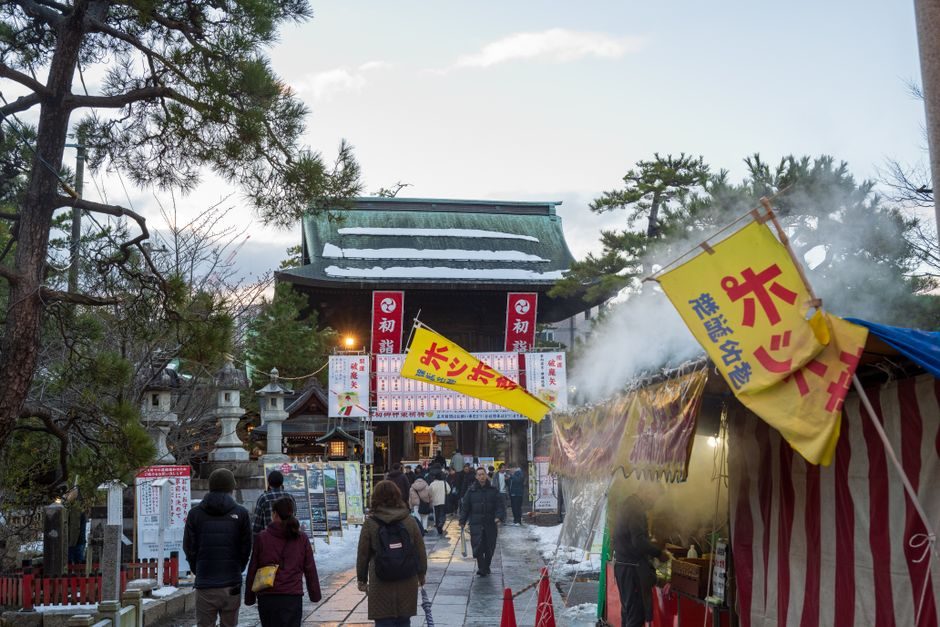
December 31st sees the final rush. Families arrange decorations, prepare simple foods that don’t require New Year’s Day cooking, and gather mochi (rice cakes) for January 1st. Many visit local shrines for hatsumode (first shrine visit), which now typically happens on January 1st–3rd rather than strictly on New Year’s Eve.
What This Looks Like in a Real Tokyo Home
Imagine a family in Shibuya on the morning of January 1st. The low dining table (kotatsukan) is set with the jubako osechi box, lacquered chopsticks reserved only for this meal, and small ceramic cups for amazake (sweet rice drink). Grandmother opens the three-tier box she ordered from Isetan, revealing each compartment with ceremony—this is not casual eating but a ritualistic greeting to the new year.
The family’s eldest member samples the kuromame first, followed by younger family members in age order. Conversation is minimal and respectful. A small bowl of ozoni (clear soup containing mochi, vegetables, and often fish cake) accompanies each person. The meal lasts perhaps an hour, and absolutely no cooking happens in the kitchen—the belief is that using fire or water on New Year’s Day invites bad fortune. Leftovers from the osechi typically last through January 2nd and 3rd, gradually eaten alongside normal meals.
Interestingly, younger family members increasingly view osechi as obligatory rather than exciting. Many Tokyo millennials eat osechi to honour parents, but increasingly supplement with convenience food or casual eating throughout January. The ritual persists more from respect for tradition than personal preference.
How It Differs From Other Countries
Western Christmas dinners centre on a single large shared dish—roasted turkey or ham dominating the table. Osechi, by contrast, emphasises variety, symbolism, and careful portion control. Each item is small, tasted rather than consumed in large quantities, and every dish carries explicit meaning. A British Christmas cracker is entertainingly random; an osechi ingredient is never accidental.
The visual presentation differs too. Whilst Western holiday meals favour abundance and overflow, osechi celebrates minimalism and precision—foods carefully arranged in geometric patterns, colours balanced for aesthetic harmony. The Japanese approach asks: what does this food mean? What blessing does it carry? The Western approach often asks: does this taste good and is there enough?
Osechi also differs in its timing and exclusivity. Christmas dinner might happen multiple times during December; osechi ideally happens once, on January 1st only, reinforcing its special status. Most other cultures have flexible holiday meals, but osechi is remarkably standardised—every Japanese family, regardless of region or income, eats essentially the same items.
Related Products for Osechi Preparation
If any family member wants to prepare osechi components themselves, certain tools matter. A Benriner BN-1 Japanese mandoline slicer makes creating paper-thin vegetable garnishes—essential for the presentation-focused elements of osechi—remarkably efficient. The original Japanese design means professional results at home. Similarly, a Kyocera ceramic coated frying pan proves invaluable when preparing datemaki or other simmered egg dishes without damaging the delicate texture.
For families who prepare fresh rice to serve alongside osechi, a Zojirushi NS-ZCC10 micom rice cooker ensures perfectly fluffy rice without effort—its Neuro Fuzzy logic adapts to different rice types and moisture levels, making it reliable through decades of use.
FAQ
Can you make osechi at home?
Yes, though it’s increasingly uncommon. Most families buy complete boxes, but making kuromame, datemaki, or nimono (simmered vegetables) at home is absolutely acceptable and often more meaningful.
What if you’re not Japanese—can you celebrate osechi?
Entirely possible. Many international residents in Japan participate. Understanding the symbolism enriches the experience considerably.
Is osechi expensive?
Not necessarily. Department store versions run ¥20,000+, but supermarket osechi costs ¥8,000–¥12,000. Budget options exist at every price point.
Do Japanese families eat osechi every January 1st?
Most do, though participation is gradually declining among younger generations who view it as obligatory tradition rather than genuine pleasure.
Osechi ultimately reveals how Japanese culture encodes values into everyday rituals. It’s not merely food—it’s a conversation between family members, between present and past, between hope and tradition. For overseas readers, witnessing a Japanese family open their osechi box on January 1st offers authentic insight into what Japanese people actually believe matters most as they enter a new year.
Seen in Everyday Life in Tokyo
A Real-Life Note from Japan
What I Often See in Japanese Stores
Related Japanese Products
The products below came up naturally in the context of this article. We only recommend items that genuinely connect to the topic.
| Product | Brand | Best For | Amazon |
|---|---|---|---|
| Zojirushi NS-ZCC10 | Zojirushi | Families who want reliable, consistently great rice without spending on IH | Search on Amazon |
| Benriner BN-1 Japanese Mandoline Slicer | Benriner | Home cooks who want professional-speed, paper-thin slicing for salads and garnishes | Search on Amazon |
| Kyocera Ceramic Coated Frying Pan | Kyocera | Health-conscious cooks who avoid PTFE/Teflon coatings | Search on Amazon |
Zojirushi NS-ZCC10
A beloved micom rice cooker with Neuro Fuzzy logic for consistently fluffy rice.
Best for: Families who want reliable, consistently great rice without spending on IH
Benriner BN-1 Japanese Mandoline Slicer
The original Japanese mandoline — every professional kitchen in Japan has one.
Best for: Home cooks who want professional-speed, paper-thin slicing for salads and garnishes
Kyocera Ceramic Coated Frying Pan
Japan’s ceramics giant applies its expertise to cookware — a healthier non-stick alternative.
Best for: Health-conscious cooks who avoid PTFE/Teflon coatings
More From Japanese Best
Disclosure: As an Amazon Associate, Japanese Best earns from qualifying purchases. This does not affect our recommendations. We only feature products we genuinely believe are worth your consideration.
Editorial Disclaimer
The views, opinions, and recommendations in this article are the author’s own and reflect personal experience living in Japan. They do not constitute professional, financial, or purchasing advice of any kind.
Product availability, pricing, and specifications are subject to change without notice. Japanese Best makes no warranties — express or implied — regarding the accuracy or completeness of this content, and accepts no liability for any decisions made based on it. Always verify details directly with the retailer or manufacturer before purchasing.
コメント