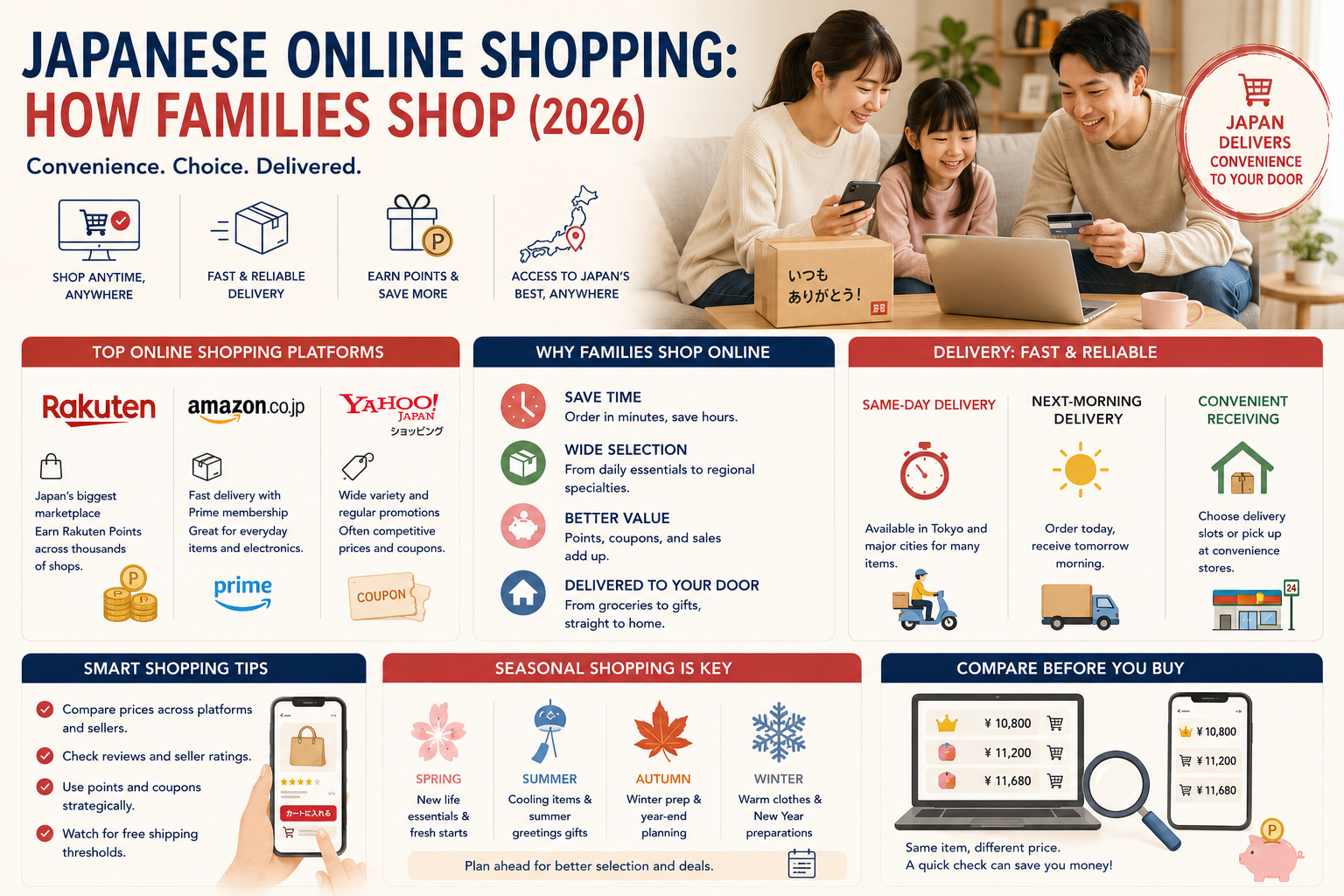
Japanese Online Shopping: How Families Shop (2026)
June 28, 2026 | Shopping | Japanese Best
Japanese families have mastered the art of convenience—and nowhere is this more evident than in how they shop online. From Rakuten’s sprawling marketplace to Amazon Japan’s next-day delivery in Tokyo, Japanese e-commerce has become woven into daily life in ways that might surprise Western shoppers. Online shopping here isn’t just about saving time; it’s about access to regional specialities, seasonal goods, and everyday essentials that physical shops might not stock. For travellers and expats curious about how Japan actually works, understanding Japanese online shopping reveals something deeper: a culture that values efficiency, quality, and the ability to get almost anything delivered to your door within hours.
Quick Summary
- Rakuten dominates the Japanese market with millions of sellers and rewards points that rival cashback schemes
- Amazon Japan offers competitive pricing and Prime membership benefits, particularly strong in Tokyo and major cities
- Local delivery can arrive same-day or next-morning in urban areas, making online shopping genuinely practical for daily needs
- Japanese families use seasonal shopping extensively—buying winter clothing in autumn, specific ingredients for festivals
- Price comparison is essential; the same item can vary significantly across platforms and sellers
What You’ll Find Inside Japanese Online Shops
Japanese e-commerce platforms stock everything from kitchen knives and bedding to regional sweets and specialist hobby items. Rakuten houses over 100,000 merchants, meaning you’ll find obscure tea varieties from Shizuoka, handmade pottery from Takayama, and limited-edition goods unavailable elsewhere. Amazon Japan focuses on faster logistics and everyday items—groceries, toiletries, electronics—particularly within the greater Tokyo area where same-day delivery (当日配送) is genuinely available.
Yahoo! Shopping, another major player, offers particularly good deals during seasonal sales. What distinguishes Japanese platforms is the merchant rating system; families scrutinise seller feedback obsessively, checking response times, shipping speed, and whether items arrive exactly as described. Department store websites like Mitsukoshi and Isetan have online divisions too, blending luxury goods with traditional service. You’ll also encounter niche sites like Nitori for furniture or Uniqlo’s direct site for basics. The variety isn’t just wider—it’s deeper, with multiple versions of seemingly simple items like rice cookers or soy sauce.
Best Things to Buy
Japanese families typically purchase seasonal clothing online, as retailers release autumn collections in August and winter stock by September. Kitchen equipment ranks highly; Japanese cookware like quality nabe pots, rice cookers with advanced settings, and knives appeal to both locals and expats. Specialty foods—matcha powder from Uji, miso from Nagano, or regional senbei crackers—are surprisingly affordable online and arrive fresh.
Electronics represent another major category. Japanese retailers often stock models unavailable in Western markets, especially cameras, portable air purifiers (人気商品 during summer), and small appliances. Seasonal items sell exceptionally well: humidifiers and heaters in winter, cooling pads and mosquito repellent in summer. Many families also buy seasonal decorations, gifts for holidays like Obon or Oseibo (year-end gift-giving), and children’s school supplies—uniforms, indoor shoes, stationery—typically before April when the school year begins. Beauty and skincare products move rapidly too; Japanese brands often run flash sales online.
Prices and Value
Expect to pay roughly 10–20% less online compared to physical shops for many items. A quality Japanese rice cooker might cost ¥8,000–¥15,000 on Rakuten versus ¥12,000–¥18,000 in a department store. Grocery items show even starker savings during sales; seasonal produce and specialty foods drop significantly during promotional periods. Rakuten points add real value—members earn 1% back on purchases and often receive bonus points during “Rakuten Super Sales” (楽天スーパーセール) held quarterly. These points are redeemable across the entire ecosystem, effectively functioning as cashback.
Shipping costs vary considerably. Most platforms offer free shipping above ¥3,000–¥5,000 thresholds, and within Tokyo, Amazon Prime members pay nothing on eligible items. However, regional shipping to rural areas or islands can add ¥500–¥2,000. Rakuten and Yahoo! Shopping occasionally offer free shipping vouchers during promotional events. The real financial advantage comes from avoiding impulse purchases in physical shops and timing major purchases around seasonal sales—most platforms offer 50–70% discounts during clearance events.
Tips for Getting the Most Out of It
Time your shopping strategically. Major sales occur during Golden Week (late April), summer clearance (July–August), and the year-end period (November–December). Rakuten’s Super Sale, Amazon’s Prime Day equivalent, and seasonal department store sales offer substantial savings.
Use browser translation tools if reading product descriptions feels overwhelming. Japanese product pages include detailed specifications; take time to understand sizing, colours available, and merchant policies.
Check seller ratings carefully. A product’s price matters less than reliable delivery. Read recent reviews in Japanese if possible—look for mentions of packaging quality and delivery speed (配送が速い).
Join loyalty programmes. Rakuten membership is free and worthwhile; Amazon Prime Japan costs ¥600 monthly or ¥5,900 annually, justified if you order weekly.
Stack promotions. Use credit card bonuses alongside platform points. Many Japanese credit cards offer 5–10% cashback on specific retailers during certain periods.
Understand return policies. Most platforms offer 30-day returns, but policies vary by merchant. Always check before purchasing.
Related Japanese Shopping Culture
Understanding Japanese online shopping connects to broader cultural values. The meticulous product descriptions reflect omotenashi (hospitality)—merchants anticipate every question. Seasonal shopping aligns with Japan’s deep connection to nature and tradition. The emphasis on seller ratings shows how much Japanese consumers value trust and reliability.
Japanese online shopping ultimately reflects how modern Japan balances convenience with quality. It’s efficient without sacrificing care, vast without becoming overwhelming, and deeply embedded in how families actually live. Whether you’re searching for a specific tea, timing a furniture purchase, or simply curious about Japanese consumer culture, these platforms offer genuine insight into everyday life in Japan—one order at a time.
Seen in Everyday Life in Tokyo
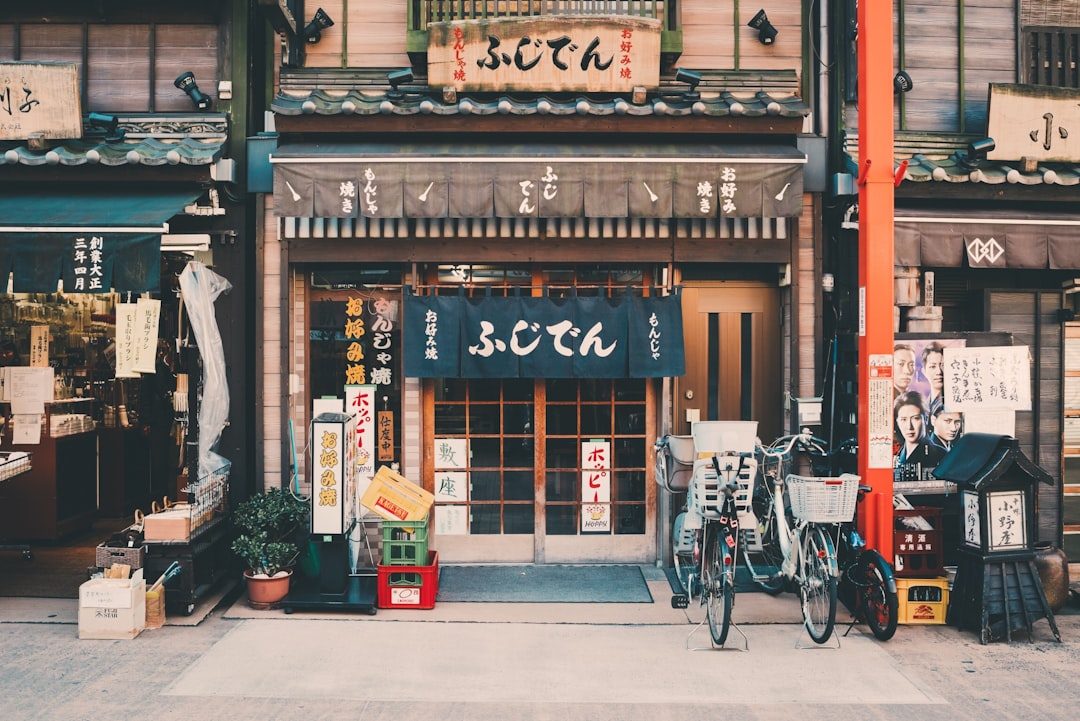
A Real-Life Note from Japan

What I Often See in Japanese Stores

Shop Japanese Products
If you’re inspired by what Japanese families use in this area, you can find a wide range of authentic Japanese products on Amazon:
Shop Related Japanese Products on Amazon
More From Japanese Best
Disclosure: As an Amazon Associate, Japanese Best earns from qualifying purchases. This does not affect our recommendations. We only feature products we genuinely believe are worth your consideration.
Editorial Disclaimer
The views, opinions, and recommendations in this article are the author’s own and reflect personal experience living in Japan. They do not constitute professional, financial, or purchasing advice of any kind.
Product availability, pricing, and specifications are subject to change without notice. Japanese Best makes no warranties — express or implied — regarding the accuracy or completeness of this content, and accepts no liability for any decisions made based on it. Always verify details directly with the retailer or manufacturer before purchasing.
Frequently Asked Questions
Is it worth buying Japanese shopping over cheaper alternatives?
For most use cases, yes — if you plan to use the product daily or for many years. Japanese shopping tend to have a longer useful lifespan, which often makes the total cost of ownership lower than a cheaper alternative replaced every 2–3 years. That said, always match the product to your actual needs.
How long do Japanese shopping typically last?
With proper care, quality Japanese shopping are designed for 10 years or more of daily use. This is not incidental — it reflects what Japanese domestic consumers expect.
Where can I buy authentic Japanese shopping online?
The safest options are Amazon (from the brand’s official store or well-reviewed sellers), direct brand websites, or authorised international retailers. Avoid unverified marketplace listings for high-value items.

コメント