How to Choose a Japanese Frying Pan (2026)
Published on June 13, 2026 | Japanese Best
Introduction
Japanese cookware come in a dizzying range of options — and if you’ve ever felt overwhelmed scrolling through Amazon, this guide is for you. We’ll walk through exactly what to look for, what to ignore, and how Japanese buyers think about these purchases.
A Note from Tokyo: In my experience shopping at places like Yodobashi Camera and Loft in Tokyo, Japanese cookware are not a luxury purchase — they’re the everyday baseline. Japanese households simply expect this level of quality, which means manufacturers have no room to cut corners.
Key Factors to Consider When Choosing Japanese Cookware
Not all cookware are equal — and the differences matter more in daily use than in spec sheets.
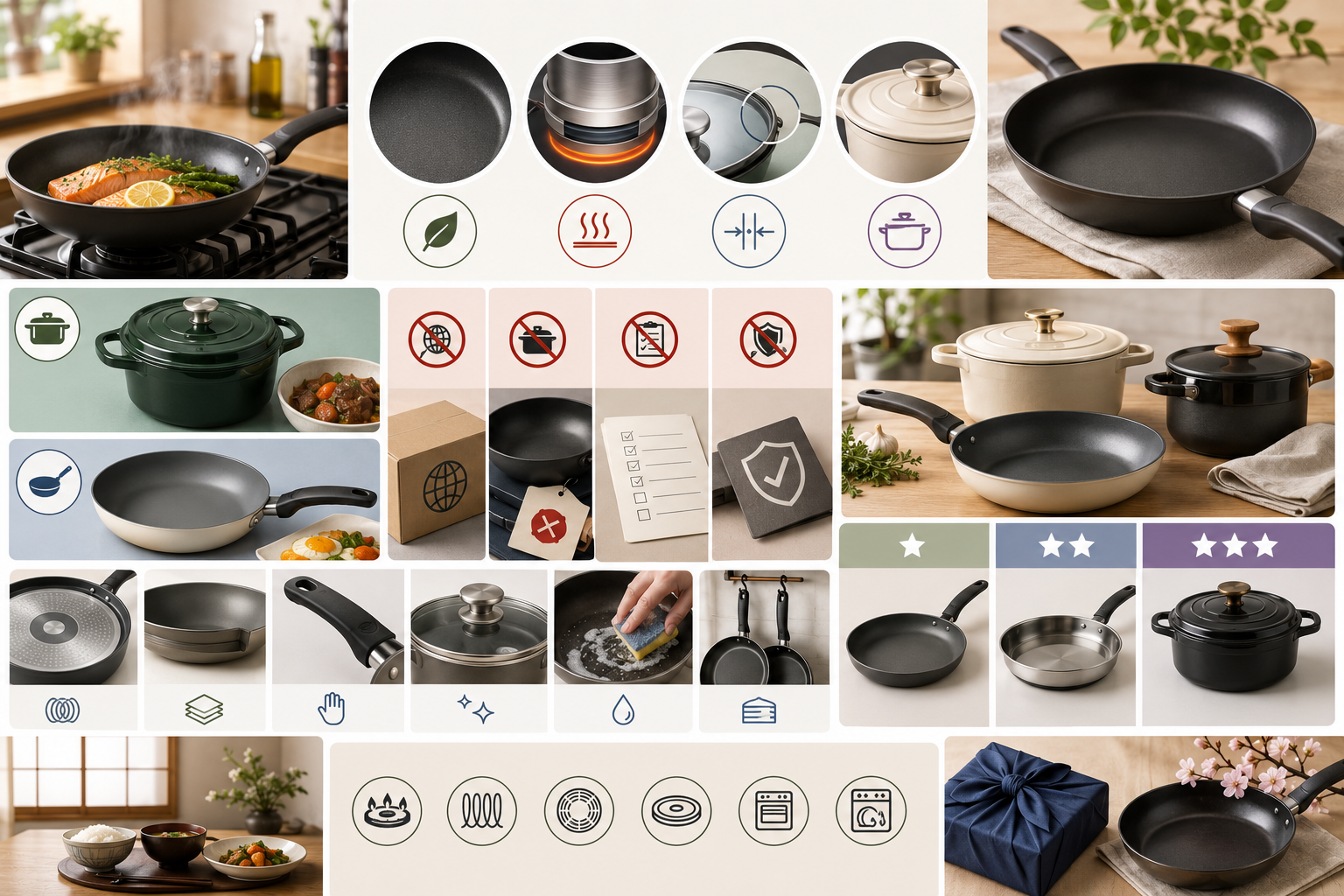
1. Ceramic non-stick coating
Ceramic non-stick coating (PTFE-free) — this is a genuine differentiator among Japanese cookware. Pay attention to this spec when comparing options.
2. Even heat distribution
Even heat distribution — this is a genuine differentiator among Japanese cookware. Pay attention to this spec when comparing options.
3. 0.01mm precision-machined lid seal
0.01mm precision-machined lid seal — this is a genuine differentiator among Japanese cookware. Pay attention to this spec when comparing options.
4. Enamel-coated cast iron
Enamel-coated cast iron — this is a genuine differentiator among Japanese cookware. Pay attention to this spec when comparing options.
Types of Japanese Cookware Explained
- Cast Iron / Enamel Pot: Suited for specific use cases — check which products in our best list fall into this category.
- Ceramic Non-Stick Frying Pan: Suited for specific use cases — check which products in our best list fall into this category.
Understanding the type you need is the most important first step. Many buyers regret choosing the wrong type even when the product itself is excellent.
What to Avoid
- Unverified grey-market imports: Some sellers ship Japanese-market products not certified for international voltage. Always check compatibility.
- Counterfeit products: Major Japanese brands are frequently counterfeited online. Buy from authorised sellers or directly from the brand.
- Specs that don’t match your use case: A feature-heavy cookware is only valuable if you’ll use those features.
- Ignoring the warranty: Check whether the seller offers an international warranty — especially important for electronics.
Price Range Guide
Japanese cookware generally fall into three tiers:
- Entry-level: Good quality and reliability, fewer advanced features. Ideal if you’re new to Japanese cookware and want to try before committing to a premium model.
- Mid-range: The sweet spot for most buyers — enough features to notice the Japanese quality advantage without the premium-tier price.
- Premium: The best materials, advanced technology, and typically longer product lifespan. Worth it for daily heavy users.
We do not publish specific prices as they change frequently. Please check current Amazon pricing for up-to-date figures.
Recommended Starting Points
If you’re buying your first Japanese cookware, the Kyocera Ceramic Coated Frying Pan is a solid first choice. It’s trusted by Japanese consumers and represents the core Japanese quality advantage without requiring specialist knowledge to use.
The Japanese Perspective: What Buyers Here Actually Think
Japanese consumers approach products purchases with a depth of research and long-term mindset that differs from typical Western buying behaviour.
How Products Are Used in Japanese Daily Life
In Japan, products are considered essential household tools, not impulse buys. Families research extensively across Amazon.co.jp, Kakaku.com, and Rakuten before purchasing, and expect their chosen product to perform reliably for 10 years or more.
The concept of mottainai (もったいない — a deep reluctance to waste) shapes buying habits: Japanese consumers would rather spend more once and keep it than replace a cheaper item every few years.
What Japanese Reviews Consistently Mention
Based on patterns visible across Japanese consumer review platforms:
Most praised attributes:
– 耐久性 (taikyusei) — durability well beyond the advertised lifespan
– 使いやすさ (tsukaiやすさ) — intuitive daily use without consulting a manual
– お手入れのしやすさ — easy to clean and maintain in like-new condition
– コストパフォーマンス — total value over the product’s full lifespan
Common concerns in Japanese reviews:
– Premium models have a higher initial price (though most reviewers conclude it is justified)
– Instruction materials on some models may be Japanese-only; check before purchasing
– Verify voltage compatibility for products designed for Japan’s 100V electrical system
Why Japanese brand Resonate With Japanese Consumers
These brands have maintained consistent domestic approval ratings in Japan for years. Japanese users often describe them not as premium options but simply as the right choice for people who care about quality.
Products that rank highly in Japan’s domestic market have passed through a quality filter that few global products can match — Japanese consumers leave detailed negative reviews for underperforming products, so sustained high ratings mean something.
What This Means for International Buyers
For overseas buyers, the key insight is: buy once, buy right. The brands featured here are available internationally on Amazon. Buying through legitimate channels ensures the same product quality Japanese consumers rely on every day.
Many Japanese reviewers also note that products from these brands make excellent gifts — they are recognisable quality products that recipients immediately understand and appreciate.
Frequently Asked Questions
Are Japanese Cookware worth the higher price?
For many buyers, yes. Japanese Cookware are generally built to last significantly longer than budget alternatives, and the better-designed ones are noticeably more pleasant to use daily. That said, not every Japanese product justifies a premium — use this guide to identify which ones do.
Can I buy Japanese Cookware outside Japan?
Yes — many Japanese brands sell internationally through Amazon and authorised retailers. Check that the voltage is compatible with your country and that international warranty coverage is included.
What Japanese brands are most trusted for Cookware?
Brand trust varies by category, but consistent names include: Vermicular, Kyocera. All have strong domestic reputations built over decades.
Are these products available on Amazon?
Most of the products in this guide are available on Amazon in the US, UK, and select other markets. We’ve included direct Amazon search links for each product.
How do I maintain Japanese Cookware?
Japanese Cookware are generally low-maintenance, but following the manufacturer’s care instructions consistently will significantly extend their lifespan. Hand-washing and proper storage are common recommendations.
Summary
Choosing the right Japanese cookware comes down to understanding your own priorities and being honest about how you’ll use it day-to-day.
The products recommended in this guide are tried and trusted in Japan — the most demanding consumer market in the world.
Last updated: June 2026
As an Amazon Associate, we may earn from qualifying purchases. This does not affect our recommendations.
Disclosure: As an Amazon Associate, Japanese Best earns from qualifying purchases. This does not affect our recommendations. We only feature products we genuinely believe are worth your consideration.
Editorial Disclaimer
The views, opinions, and recommendations in this article are the author’s own and reflect personal experience living in Japan. They do not constitute professional, financial, or purchasing advice of any kind.
Product availability, pricing, and specifications are subject to change without notice. Japanese Best makes no warranties — express or implied — regarding the accuracy or completeness of this content, and accepts no liability for any decisions made based on it. Always verify details directly with the retailer or manufacturer before purchasing.
コメント