Best Japanese Instant Noodles (2026)
July 09, 2026 | Food | Japanese Best
Instant noodles are woven into Japanese daily life in a way many outsiders don’t quite grasp. It’s not just a quick meal; it’s a cultural touchstone that reflects Japan’s approach to convenience, flavour, and craftsmanship. Whether you’re a student cramming for exams in Tokyo, an office worker in Osaka grabbing lunch, or someone exploring Japanese Instant Noodles culture from abroad, instant noodles represent something distinctly Japanese: the ability to deliver authentic, satisfying taste in minutes.
This guide explores the best Japanese instant noodles available today and explains what makes them different from the mass-produced alternatives you might find elsewhere.
Quick Summary
- Japanese instant noodles prioritise broth quality, noodle texture, and authentic regional flavours over cost-cutting
- Maruchan and Nissin dominate the market, but premium brands like Myojo and Toyo offer superior taste experiences
- Ramen styles vary significantly: tonkotsu (pork bone), shoyu (soy), miso, and shio (salt) each require different broth formulations
- Quality Japanese instant noodles cost ¥250–¥800 per pack—higher than budget alternatives but with noticeably better results
- Buying direct from Japan or Japanese online retailers ensures freshness and authentic product selection
Quick Comparison Table
How We Compared These Options
Choosing between Japanese Instant Noodles options comes down to a handful of concrete factors:
- Broth type
- Spice level
- Cook time
- Price
- Authenticity/regional style
| Brand | Style | Broth Type | Price (¥) | Best For |
|---|---|---|---|---|
| Maruchan Akatombo | Ramen | Tonkotsu | 250 | Budget-conscious daily eating |
| Nissin Cup Noodles | Instant | Mixed | 300 | Convenience and nostalgia |
| Myojo Chukazanmai | Premium | Shoyu | 450 | Rich, restaurant-quality flavour |
| Toyo Suutonbo | Ramen | Miso | 380 | Authentic regional taste |
| Maruchan Seimen | Fresh | Tonkotsu | 600 | Superior noodle texture |
Why Japanese Instant Noodles Stand Out
Japanese instant noodles differ fundamentally from Western versions because they’re engineered by people who eat ramen regularly—not as novelty, but as common item cuisine. Japanese manufacturers invest heavily in broth authenticity, using bone extracts, seafood powders, and spice blends that mirror what you’d find in a proper ramen restaurant.
The noodle itself matters enormously. Japanese producers adjust hydration levels, wheat protein content, and cooking times to achieve the ideal “al dente” texture within 3–5 minutes. Many Western instant noodles aim for softer, mushier results; Japanese versions aim for bite and structure.
Additionally, Japanese brands frequently rotate limited editions reflecting regional ramen traditions. You’ll find tonkotsu from Fukuoka, miso from Hokkaido, and shoyu from Tokyo—each formulated to honour local recipes. This cultural specificity elevates instant noodles from mere convenience food to a window into Japan’s diverse food landscape. The packaging, too, typically includes detailed preparation instructions and ingredient sourcing information, reflecting Japan’s consumer-first philosophy.
Top Picks — Detailed Reviews
Maruchan Akatombo (Red Rabbit)
Maruchan Akatombo is the everyman’s instant ramen—affordable, reliable, and genuinely tasty. The tonkotsu broth achieves surprising depth through a blend of pork bone extract, garlic, and ginger that unfolds gradually as you eat. At around ¥250 per pack, it’s the most accessible entry point for those new to quality Japanese instant noodles. The noodles cook in exactly 3 minutes and maintain a firm, springy texture. Japanese students and office workers have relied on this for decades, and for good reason. It’s not fancy, but it’s honest food.
Nissin Cup Noodles
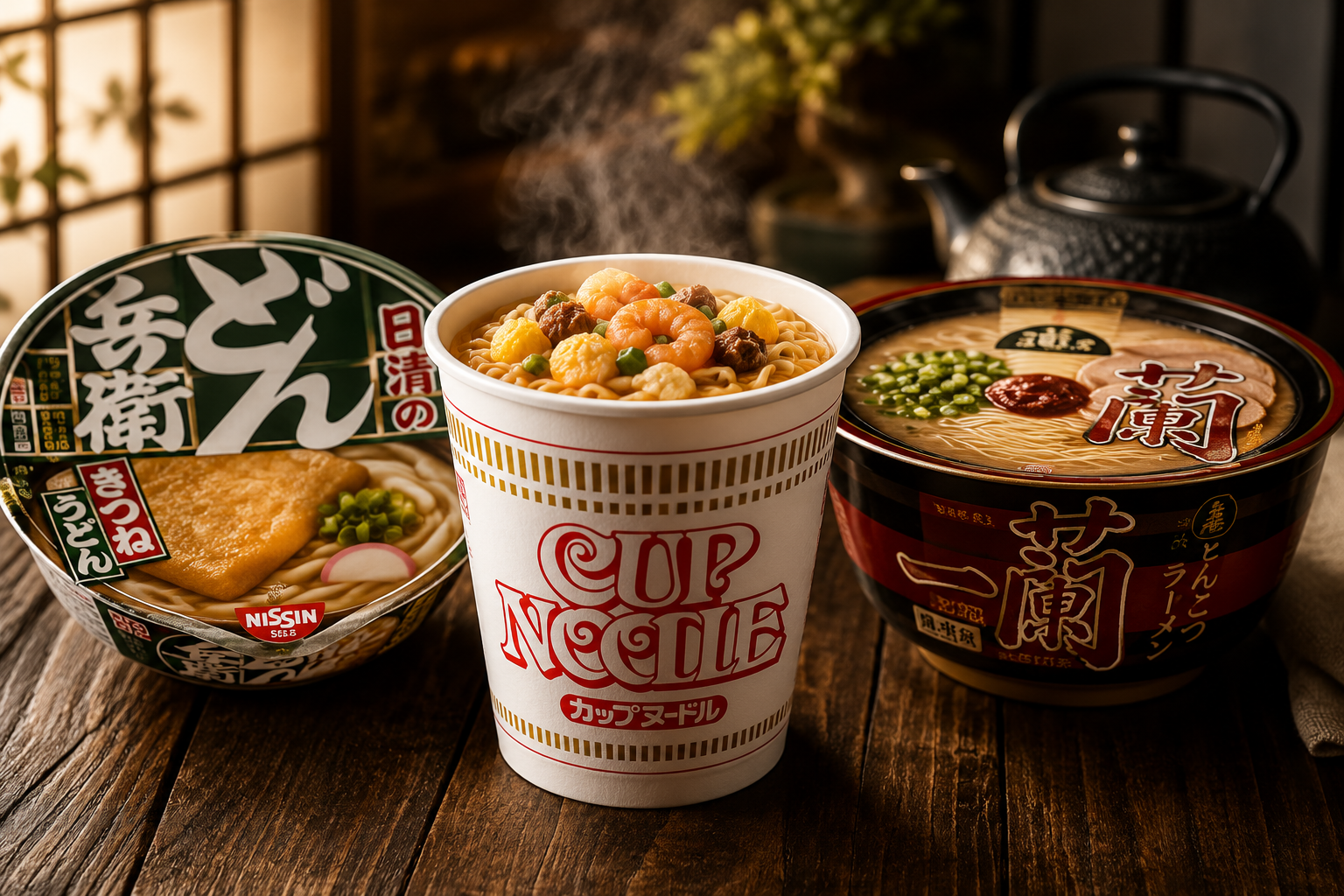
Nissin Cup Noodles occupies a unique place in global food culture—it’s simultaneously nostalgic and ubiquitous. The original seafood-based broth remains perfectly balanced, neither too rich nor too bland, and the sealed container format means you can prepare a decent meal anywhere with hot water. At roughly ¥300, it’s convenience pricing that hasn’t exploited quality. Modern iterations include vegetable pieces and soft noodles that rehydrate properly. For travellers or office workers needing a meal without cleanup, this remains very competitive. The brand’s Tokyo origins and continuous innovation since 1971 reflect Nissin’s commitment to staying relevant.
Myojo Chukazanmai Premium
Myojo Chukazanmai represents the step up to premium instant ramen. The shoyu (soy) broth combines multiple umami sources—bonito, kombu seaweed, and aged soy—creating complexity you’d normally expect only from restaurant broths. At ¥450–¥550 per pack, it costs roughly double a standard option, but the difference is immediately apparent. The noodles have a slightly wavy structure that traps broth more effectively, and the overall eating experience feels closer to actual ramen restaurant dining. Japanese home cooks often keep Myojo Chukazanmai on hand for quick meals that don’t feel like compromises.
Toyo Suutonbo Miso
Toyo Suutonbo delivers miso ramen—traditionally associated with Hokkaido’s rich, hearty tradition—in instant form without losing essential character. The miso paste is blended with sesame and a hint of chilli, creating warmth and complexity that pairs beautifully with the included menma (bamboo shoots) and nori. At around ¥380, it sits in the mid-premium range. The broth develops fuller flavour if you use slightly hotter water and allow a 4-minute steep rather than the minimum 3 minutes. Japanese miso ramen enthusiasts appreciate how Toyo respects the original Hokkaido formula whilst adapting it for home convenience.
Maruchan Seimen Fresh Noodles
Maruchan Seimen represents the premium segment: refrigerated, fresh noodles rather than dried or fried. The texture is noticeably superior—less brittle, more yielding, with a subtle wheat aroma that dried noodles simply cannot match. At ¥600–¥800 per serving, these cost significantly more, but they’re genuinely different products. The tonkotsu broth is also fresher, without the preservatives required for shelf-stable versions. Japanese supermarkets stock these in refrigerated sections, often near fresh vegetables and tofu. If you’re willing to invest slightly more and prioritise eating quality, Maruchan Seimen delivers.
Buying Guide
When purchasing Japanese instant noodles, prioritise freshness by checking manufacturing dates. Products are typically dated in Japanese format (YYYYMMDD), and fresh stock is preferable to items approaching expiry. Most instant noodles remain shelf-stable for 6–12 months, but flavour compounds can fade over time.
Consider your preferred ramen style before buying in bulk. Tonkotsu suits hearty appetites; shoyu works for lunch breaks; miso pairs well with cold weather eating. Many Japanese shoppers buy variety packs to experiment across styles rather than committing to single flavours.
Storage matters too. Keep instant noodles in cool, dry spaces away from direct sunlight—humidity can soften noodles and degrade flavour compounds. Japanese kitchens typically dedicate a shelf to instant ramen, organised by type and purchase date.
If buying online, prioritise Japanese retailers or established international sellers with high turnover. This ensures you’re receiving current stock rather than ageing inventory. Expect shipping costs to vary significantly depending on package weight and destination.
FAQ
Are Japanese instant noodles healthier than other brands?
Not inherently. Japanese instant noodles contain similar sodium and calorie levels to Western equivalents. However, many premium Japanese brands use fewer additives and more recognisable ingredients, which some consider preferable.
How long do instant noodles keep before expiry?
Typically 6–8 months from the printed date, thanks to the dehydration and frying process. Store in a cool, dry place away from direct sunlight.
Can I make Japanese instant noodles healthier at home?
Yes — adding fresh vegetables, an egg, or extra protein, and using only half the seasoning packet, meaningfully improves the nutritional balance without sacrificing the flavour that makes them enjoyable.
Is it worth buying Japanese Instant Noodles over cheaper alternatives?
For most use cases, yes — if you plan to use the product daily or for many years. Japanese Instant Noodles tend to have a longer useful lifespan, which often makes the total cost of ownership lower than a cheaper alternative replaced every 2–3 years. That said, always match the product to your actual needs.
How long do Japanese Instant Noodles typically last?
With proper care, quality Japanese Instant Noodles are designed for 10 years or more of daily use. This is not incidental — it reflects what Japanese domestic consumers expect.
Where can I buy authentic Japanese Instant Noodles online?
The safest options are Amazon (from the brand’s official store or well-reviewed sellers), direct brand websites, or authorised international retailers. Avoid unverified marketplace listings for high-value items.
More From Japanese Best
Disclosure: As an Amazon Associate, Japanese Best earns from qualifying purchases. This does not affect our recommendations. We only feature products we genuinely believe are worth your consideration.
Editorial Disclaimer
This article does not constitute professional, financial, or purchasing advice of any kind.
Product availability, pricing, and specifications are subject to change without notice. Japanese Best makes no warranties — express or implied — regarding the accuracy or completeness of this content, and accepts no liability for any decisions made based on it. Always verify details directly with the retailer or manufacturer before purchasing.
コメント