Best Japanese Kitchen Scales (2026)
Published on June 13, 2026 | Japanese Best
Disclosure: As an Amazon Associate, Japanese Best earns from qualifying purchases. This does not affect our recommendations. We only feature products we genuinely believe are worth your consideration.
Introduction
Walk into any large electronics retailer in Tokyo — Yodobashi, Bic Camera, or Yamada — and you’ll find entire floors dedicated to kitchen tools. The competition is fierce and the standards are sky-high. This guide cuts through the noise to show you what Japanese consumers actually choose.
Quick Comparison
| Product | Brand | Best For | Key Technology | Buy |
|---|---|---|---|---|
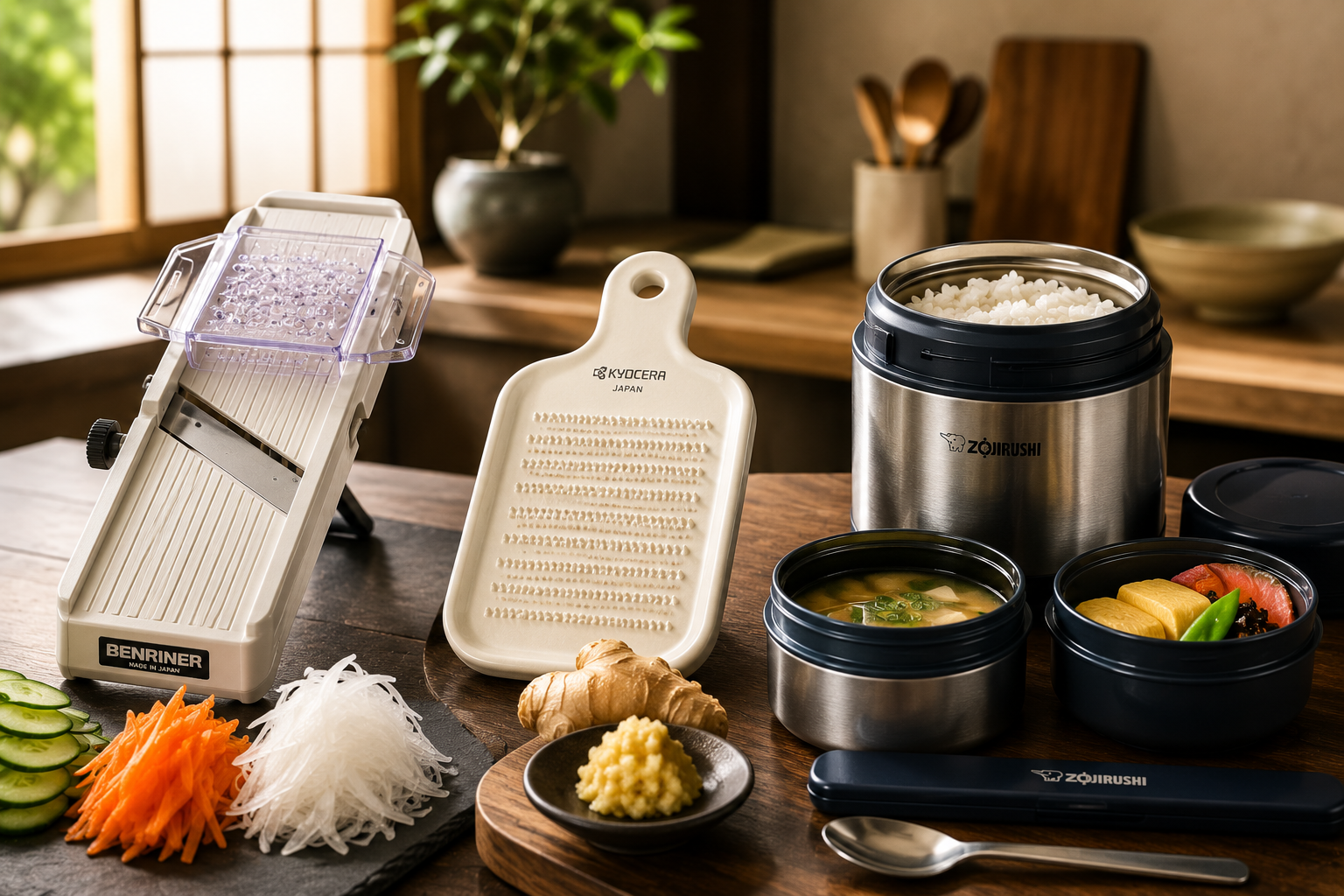
| Benriner BN-1 Japanese Mandoline Slicer | Benriner | Home cooks who want professional-speed, paper-thin slicing f | High-carbon stainless steel blade | Check Price |
| Kyocera Ceramic Fine Grater | Kyocera | Japanese cooking enthusiasts who use fresh ginger, daikon, a | Precision-formed ceramic grating surface | Check Price |
| Zojirushi Stainless Lunch Jar (Bento Box) | Zojirushi | Office workers and students who want hot lunches without nee | Vacuum insulation | Check Price |
Why Japanese Kitchen Tools Are Worth It
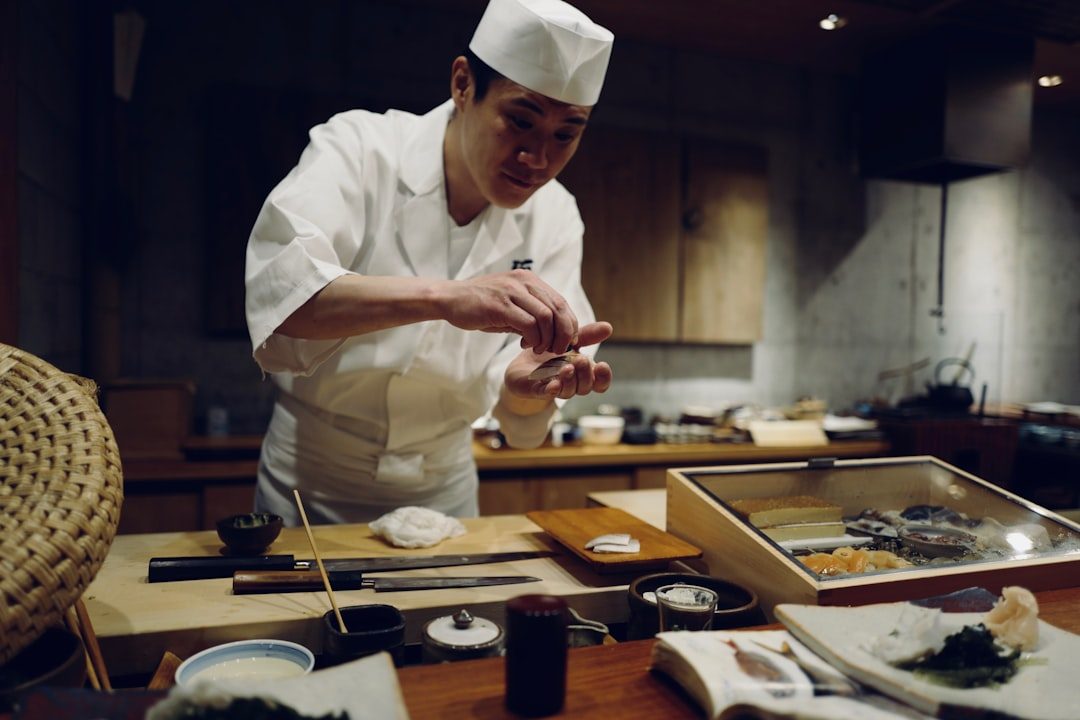
Japanese manufacturers have been refining kitchen tools for decades in response to some of the most demanding consumers in the world.
Japanese households are known for returning products that don’t meet expectations — which means only truly excellent designs survive the domestic market.
A few things consistently set Japanese kitchen tools apart:
- Attention to the smallest details: Features that seem minor — like a lid that seals perfectly or a button that clicks with satisfying precision — are the result of genuine engineering investment.
- Longevity: Many Japanese households use the same appliance or product for 10–15 years. Products are designed for that kind of use.
- Quiet quality: Japanese brands rarely shout about their products. The quality speaks through daily use, not through marketing.
- Continuous improvement (Kaizen): Each product generation makes small, meaningful improvements rather than chasing trendy features.
Living in Tokyo, I’ve seen these products in real kitchens, real bags, and real daily routines — and the difference is noticeable.
Our Top Picks — Detailed Reviews
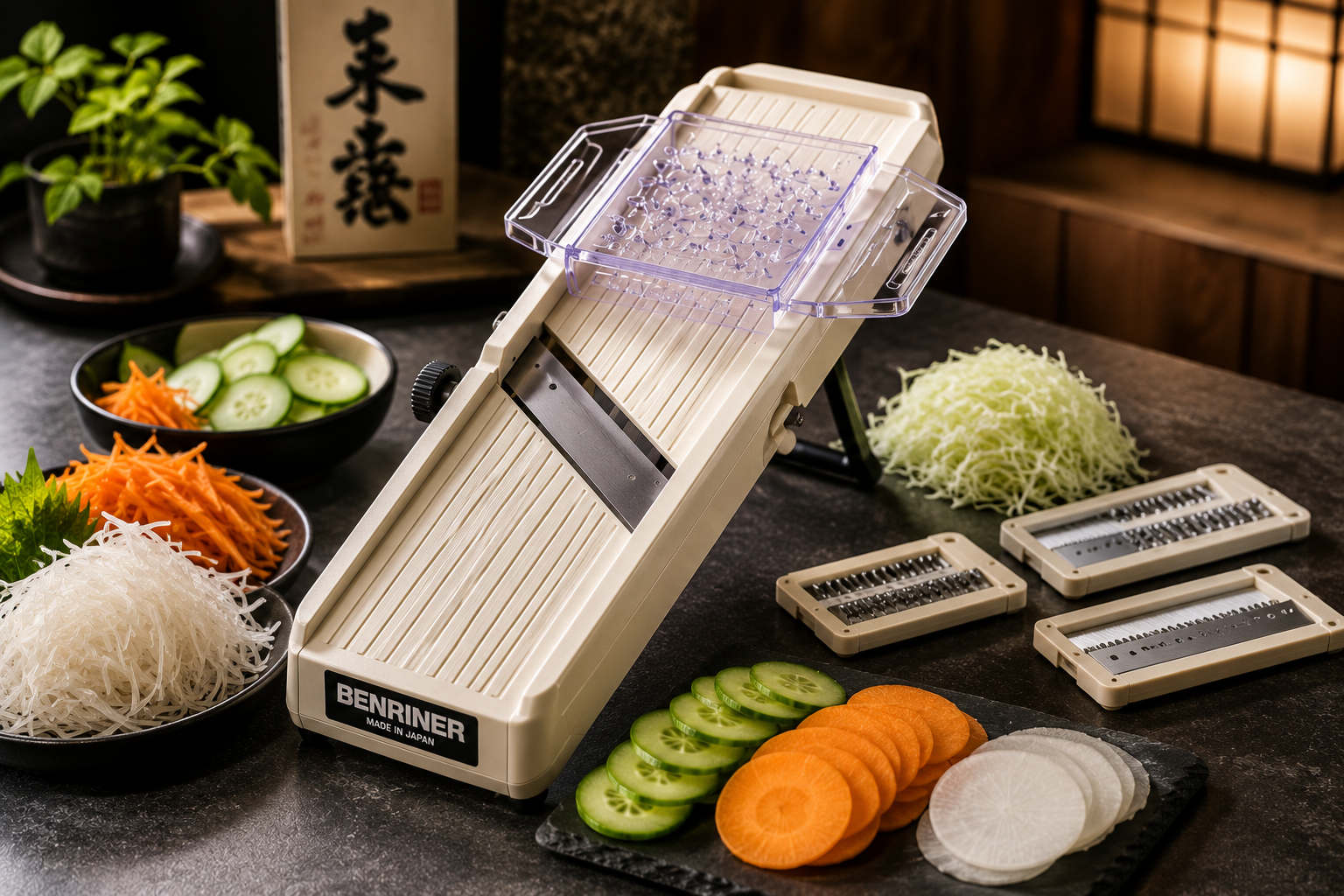
1. Benriner BN-1 Japanese Mandoline Slicer — The original Japanese mandoline
Brand: Benriner | Category: Mandoline Slicer | Made in: Japan
The original Japanese mandoline — every professional kitchen in Japan has one.
Key Features:
– Stainless steel blade
– Adjustable thickness dial
– Safety guard included
– Compact foldable design
– Made in Japan
Best For: Home cooks who want professional-speed, paper-thin slicing for salads and garnishes
Technology: High-carbon stainless steel blade
- ✅ Razor sharp
- ✅ Easy adjustment
- ✅ Compact storage
-
✅ Professional results
-
⚠️ Blade is dangerously sharp without guard
- ⚠️ Plastic body
Benriner is the gold standard for mandoline slicers in Japanese home and professional cooking
No verified Japanese review summary is available at this stage. Check current Amazon listings for up-to-date buyer feedback.
2. Kyocera Ceramic Fine Grater — Kyocera’s ceramic grater delivers microplane-fine results without a metal taste.
Brand: Kyocera | Category: Ceramic Grater | Made in: Japan
Kyocera’s ceramic grater delivers microplane-fine results without a metal taste.
Key Features:
– Ceramic grating surface
– No metal reactivity
– Dishwasher safe
– Compact size
– Ideal for ginger and garlic
Best For: Japanese cooking enthusiasts who use fresh ginger, daikon, and wasabi regularly
Technology: Precision-formed ceramic grating surface
- ✅ No metallic taste
- ✅ Very fine results
-
✅ Easy to clean
-
⚠️ Ceramic can chip if dropped
Oroshigane (graters) are essential in Japanese cooking for condiments
No verified Japanese review summary is available at this stage. Check current Amazon listings for up-to-date buyer feedback.
3. Zojirushi Stainless Lunch Jar (Bento Box) — Japan’s most reliable insulated bento jar
Brand: Zojirushi | Category: Insulated Lunch Jar | Made in: Japan
Japan’s most reliable insulated bento jar — keeps lunch hot for hours without a microwave.
Key Features:
– Vacuum-insulated outer container
– Multiple inner containers
– Spoon included
– Stainless interior
– Wide variety of sizes
Best For: Office workers and students who want hot lunches without needing a microwave
Technology: Vacuum insulation
- ✅ Keeps food hot for 5+ hours
- ✅ Multiple compartments
-
✅ Spill-proof
-
⚠️ Bulkier than flat bento boxes
- ⚠️ Higher price than regular lunch boxes
Insulated bento jars are a cornerstone of Japanese lunch culture
No verified Japanese review summary is available at this stage. Check current Amazon listings for up-to-date buyer feedback.
What Japanese Buyers Look For
Japanese consumers approach purchasing kitchen tools differently from many Western buyers.
Here are the patterns I’ve observed in Tokyo households and through Japanese consumer reports:
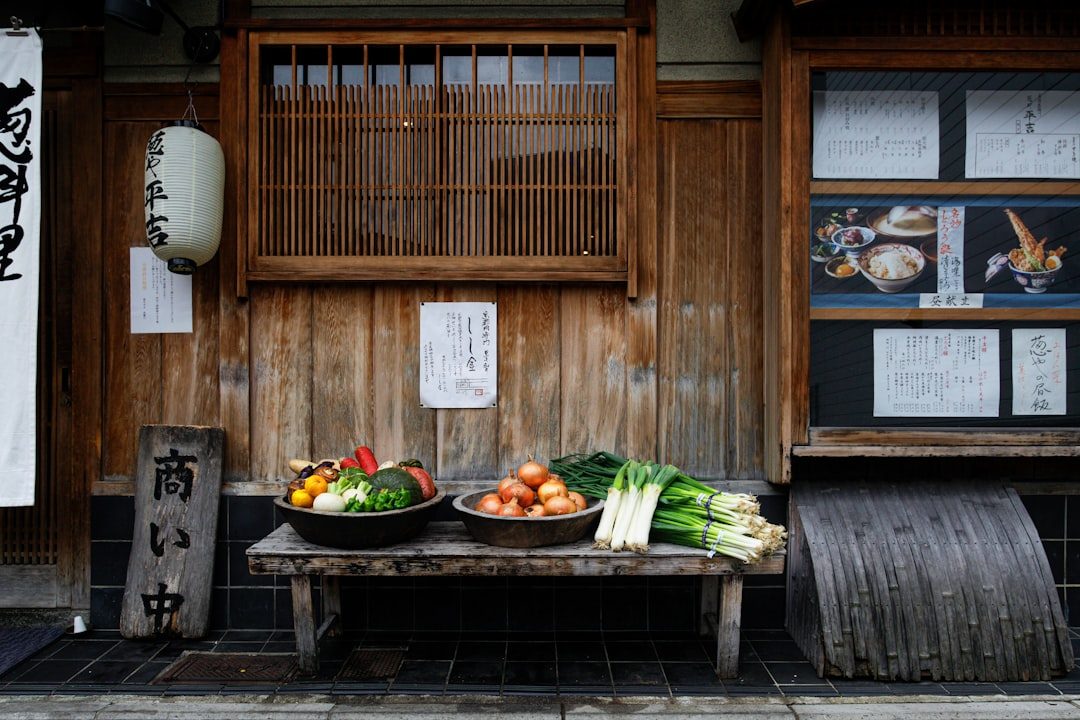
Durability over initial cost: Japanese buyers frequently choose a more expensive option upfront if it means the product will last 10 years rather than 3. The concept of mono no aware — appreciation for enduring things — extends to everyday objects.
Brand trust built over generations: Brands like Benriner, Zojirushi, Kyocera have earned trust through decades of consistent quality. Japanese buyers are often loyal to a single brand and purchase the next generation without comparison shopping.
Quiet, functional design: Flashy aesthetics are less important than clean lines and intuitive use. Products that look modest but function flawlessly are valued.
After-sales support: In Japan, manufacturers offer repair services for many products — not just replacement. This shapes buying decisions toward brands with strong domestic service networks.
Japanese buyers often praise products in this category for their durability and ease of use. For the most current buyer sentiment, we recommend checking Amazon reviews filtered to verified purchases.
How to Choose: Key Factors
1. Define Your Primary Use Case
Before looking at specs, decide what you’ll primarily use this for. A kitchen tools that’s perfect for one use case may be overkill — or underpowered — for another.
2. Consider Your Budget Range
Japanese kitchen tools span a wide price range. Higher price generally means better materials and longer lifespan, but the best-value option often sits in the mid-range.
3. Check Compatibility
Some Japanese products are designed for 100V Japanese electrical systems. Confirm the product supports 120V (North America) or 220–240V (Europe, UK, Australia) before purchasing.
4. Read the Warranty Terms
International purchases may not qualify for the domestic Japanese warranty. Many brands offer international warranties through authorised retailers.
5. Think Long-Term
Japanese consumers typically buy kitchen tools expecting 10+ years of use. If you’re comparing a Japanese option to a cheaper alternative, factor in likely replacement cost.
[INTERNAL_LINK: how-to-choose-japanese-kitchen-tools]
Frequently Asked Questions
Are Japanese Kitchen Tools worth the higher price?
For many buyers, yes. Japanese Kitchen Tools are generally built to last significantly longer than budget alternatives, and the better-designed ones are noticeably more pleasant to use daily. That said, not every Japanese product justifies a premium — use this guide to identify which ones do.
Can I buy Japanese Kitchen Tools outside Japan?
Yes — many Japanese brands sell internationally through Amazon and authorised retailers. Check that the voltage is compatible with your country and that international warranty coverage is included.
What Japanese brands are most trusted for Kitchen Tools?
Brand trust varies by category, but consistent names include: Benriner, Zojirushi, Kyocera. All have strong domestic reputations built over decades.
Are these products available on Amazon?
Most of the products in this guide are available on Amazon in the US, UK, and select other markets. We’ve included direct Amazon search links for each product.
Final Verdict
The best Japanese kitchen tools combine engineering precision, long-term durability, and a quiet attention to detail that makes daily use genuinely enjoyable. Our top pick is the Benriner BN-1 Japanese Mandoline Slicer for its home cooks who want professional-speed, paper-thin slicing for salads and garnishes.
Whatever you choose from this list, you’re getting a product that has survived Japan’s demanding domestic market — which is one of the strongest quality filters in the world.
Have questions or want to share your experience? Leave a comment below.
Last updated: June 2026
Related Guides
As an Amazon Associate, we may earn from qualifying purchases. This does not affect our recommendations.
Editorial Disclaimer
The views, opinions, and recommendations in this article are the author’s own and reflect personal experience living in Japan. They do not constitute professional, financial, or purchasing advice of any kind.
Product availability, pricing, and specifications are subject to change without notice. Japanese Best makes no warranties — express or implied — regarding the accuracy or completeness of this content, and accepts no liability for any decisions made based on it. Always verify details directly with the retailer or manufacturer before purchasing.
コメント