Hiking Culture in Japan: A Beginner’s Guide (2026)
June 28, 2026 | Hobbies | Japanese Best
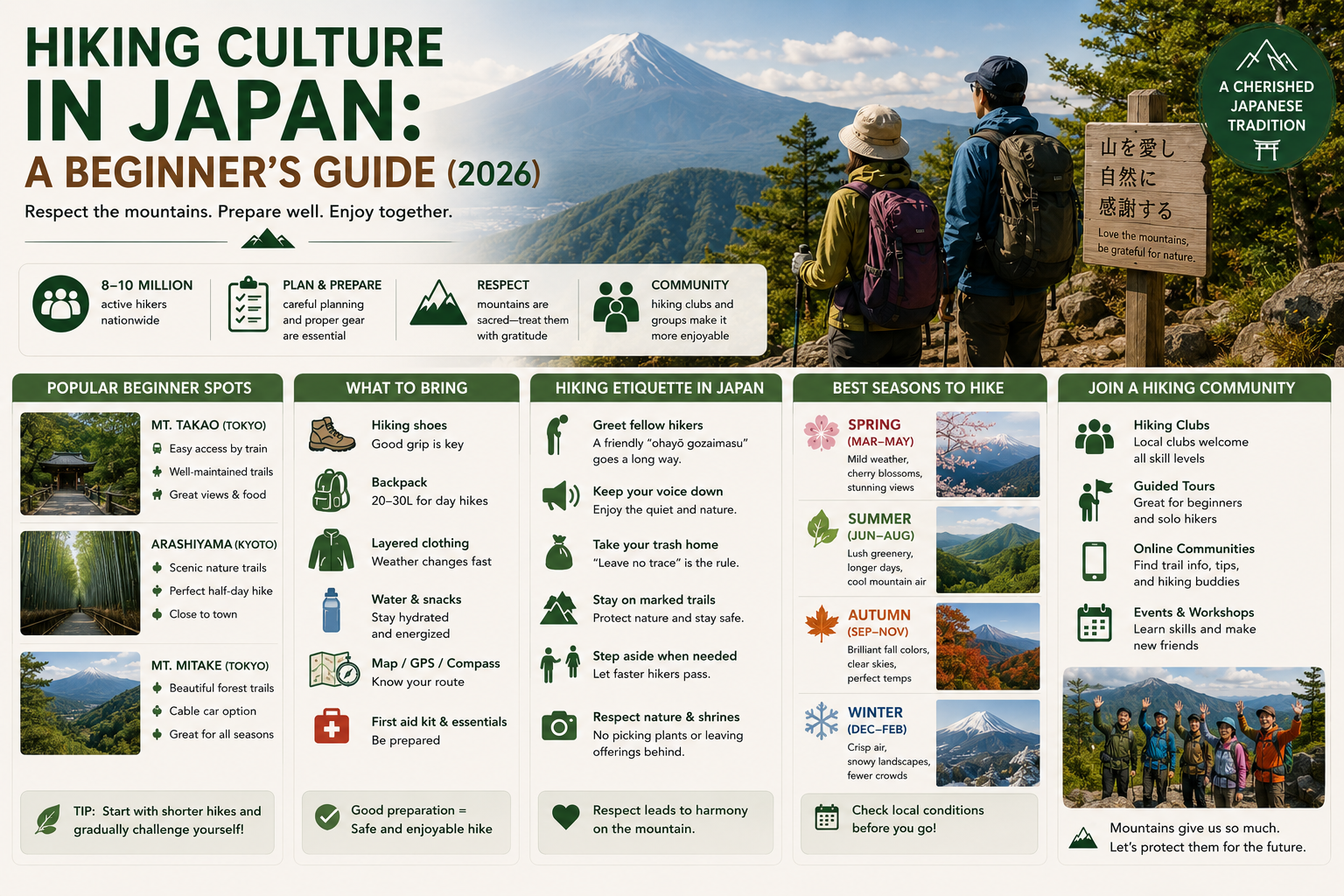
Japan’s mountains have inspired poets, painters, and pilgrims for centuries. Today, hiking—or yama-noborI (山登り)—remains one of the nation’s most cherished pastimes, drawing millions outdoors each year. Whether you’re curious about Japanese leisure culture or considering exploring Japan’s stunning peaks yourself, understanding how locals approach this hobby reveals something essential about Japanese life: the deep reverence for nature, meticulous preparation, and genuine community spirit that define the experience.
Quick Summary
- Hiking is extraordinarily popular in Japan, with an estimated 8–10 million active participants nationwide
- Japanese hikers prioritise careful planning, proper gear, and seasonal timing rather than spontaneous adventure
- The culture emphasises respect for mountains as sacred spaces and awareness of fellow climbers
- Popular beginner destinations include Mt. Takao near Tokyo and Arashiyama trails near Kyoto
- Hiking clubs and guided groups provide accessible entry points for newcomers to the hobby
How Popular Is This Hobby in Japan?
Hiking enjoys remarkable popularity across Japanese society. Recent surveys suggest between 8 and 10 million Japanese people hike regularly, spanning all ages and fitness levels. This isn’t a niche pursuit—it’s woven into the fabric of weekend leisure culture.
Several factors explain this enthusiasm. Japan’s geography provides exceptional access: roughly 73% of the country is mountainous, meaning most people live within reasonable distance of hiking terrain. Additionally, Japanese culture has long celebrated mountains as sacred places. This spiritual dimension, rooted in Shinto and Buddhist traditions, elevates hiking beyond mere exercise into something more contemplative.
Seasonal awareness also drives participation. Autumn foliage hiking (momiji-gari) and spring cherry blossom treks draw particularly large crowds. During peak season weekends, popular trails near major cities can feel surprisingly crowded—something worth knowing if you prefer solitude.
How Japanese People Do It
Japanese hikers approach the hobby with characteristic thoroughness. Unlike some Western hiking cultures that celebrate spontaneity, Japanese mountaineers plan meticulously. Most consult detailed guidebooks, check weather forecasts multiple days ahead, and often join organised groups or clubs.
Gear selection reflects this careful philosophy. Japanese hikers favour lightweight but durable equipment, with brands like Montbell (a Japanese company) dominating outdoor shops. You’ll notice hikers wearing proper mountain boots, not trainers—this isn’t viewed as optional. Many carry detailed topographic maps and wear visible safety gear, even on well-marked trails.
Trail etiquette matters significantly. Hikers greet one another with cheerful “Ganbaatte kudasai!” (頑張ってください—roughly “do your best!”), fostering genuine camaraderie. Most importantly, Japanese culture teaches absolute respect for natural environments. Hikers leave nothing behind and take nothing but photographs.
Popular beginner-friendly destinations include Mt. Takao (599 metres) near Tokyo, reachable by train and featuring eight marked trails with varying difficulty levels. Near Kyoto, the Arashiyama and Fushimi Inari areas offer accessible options amongst stunning cultural landscapes.
Community and Culture Around It
The social dimension of Japanese hiking cannot be overstated. Hiking clubs (yama-kai) exist throughout Japan, from casual local groups to nationwide organisations. These clubs typically charge modest membership fees (¥1,000–3,000 annually) and organise regular outings, training sessions, and educational workshops.
This community approach makes hiking genuinely accessible. Beginners join established groups, learn proper techniques from experienced members, and develop friendships around shared passion. Many clubs specifically welcome newcomers and adapt itineraries accordingly.
There’s also a spiritual element worth understanding. Mountains in Japan are often considered sacred, and hiking incorporates this reverence naturally. Hikers typically pause at mountain shrines, maintain quiet respect for the environment, and view the activity as rejuvenating rather than merely athletic.
Moreover, hiking connects to other Japanese traditions—particularly tea culture and photography. Many hikers pack traditional sweets or tea to enjoy at summits, blending outdoor activity with cultural practice. Photography clubs frequently overlap with hiking communities, both celebrating Japan’s seasonal beauty.
Related Japanese Products
If you do decide to explore Japanese hiking culture yourself, several excellent Japanese outdoor brands deserve attention. Montbell, established in Osaka in 1975, produces outstanding lightweight gear specifically designed for Japanese mountain conditions. Their alpine clothing and compact tents represent genuine innovation rather than marketing excess.
Additionally, Japanese convenience stores—ubiquitous even near mountain trailheads—sell excellent energy foods and refreshments at reasonable prices. Onigiri (rice balls), dried plums, and speciality hiking snacks from regional producers often appear in hiking social media posts, suggesting they’ve become somewhat cultural markers within the hobby.
Frequently Asked Questions
What’s the best season for hiking in Japan?
Autumn (September–November) offers ideal weather and spectacular foliage. Spring (April–May) brings pleasant temperatures and wildflowers. Summer suits experienced hikers tackling Alpine peaks, whilst winter requires specialist skills and gear.
Do I need to speak Japanese to join a hiking club?
Many clubs in major cities welcome international members. Some Tokyo and Kyoto clubs specifically organise English-language hikes. Starting with beginner-friendly mountains near urban areas provides comfortable entry.
How much does hiking cost in Japan?
Most hiking is completely free. Occasional donations at mountain shrines (¥100–500) and modest club fees (if joining organised groups) represent the primary expenses.
Are mountains in Japan crowded?
Popular trails near Tokyo and Kyoto attract significant crowds, particularly weekends and peak seasons. More remote mountains remain pleasantly quiet, though they require greater experience and preparation.
Japanese hiking culture offers something genuinely distinctive: a hobby that combines physical engagement with spiritual respect, meticulous planning with genuine community warmth, and individual achievement with collective consideration. Whether you’re exploring this passion from overseas or planning to experience it firsthand in Japan, understanding these cultural dimensions enriches the experience immeasurably. The mountains themselves become not just destinations but gateways to understanding how Japanese society values nature, preparation, and shared human connection.
Seen in Everyday Life in Tokyo
A Real-Life Note from Japan
What I Often See in Japanese Stores
Is it worth buying Japanese hobbies over cheaper alternatives?
For most use cases, yes — if you plan to use the product daily or for many years. Japanese hobbies tend to have a longer useful lifespan, which often makes the total cost of ownership lower than a cheaper alternative replaced every 2–3 years. That said, always match the product to your actual needs.
How long do Japanese hobbies typically last?
With proper care, quality Japanese hobbies are designed for 10 years or more of daily use. This is not incidental — it reflects what Japanese domestic consumers expect.
Where can I buy authentic Japanese hobbies online?
The safest options are Amazon (from the brand’s official store or well-reviewed sellers), direct brand websites, or authorised international retailers. Avoid unverified marketplace listings for high-value items.
Shop Japanese Products
If you’re inspired by what Japanese families use in this area, you can find a wide range of authentic Japanese products on Amazon:
Shop Related Japanese Products on Amazon
More From Japanese Best
Disclosure: As an Amazon Associate, Japanese Best earns from qualifying purchases. This does not affect our recommendations. We only feature products we genuinely believe are worth your consideration.
Editorial Disclaimer
The views, opinions, and recommendations in this article are the author’s own and reflect personal experience living in Japan. They do not constitute professional, financial, or purchasing advice of any kind.
Product availability, pricing, and specifications are subject to change without notice. Japanese Best makes no warranties — express or implied — regarding the accuracy or completeness of this content, and accepts no liability for any decisions made based on it. Always verify details directly with the retailer or manufacturer before purchasing.


コメント