How to Make Miso Soup the Japanese Way
July 11, 2026 | Food | Japanese Best
Every morning across Japan, from Tokyo apartment kitchens to rural farmhouses in Kyoto, millions of families begin their day the same way: with a steaming bowl of miso soup. It’s humble, nourishing, and deeply connected to Japanese identity. Yet many people outside Japan believe miso soup is complicated to make or requires exotic ingredients. The truth? Once you understand the Japanese approach, you’ll realise it’s one of the easiest and most rewarding dishes to master at home.
Quick Summary
- Miso soup consists of three core elements: dashi (broth), miso paste, and toppings — nothing more
- Traditional preparation takes 10–15 minutes using just four or five basic ingredients
- The key to authentic flavour lies in quality dashi, not expensive additions
- Miso soup is eaten daily in Japanese homes as breakfast or a light dinner accompaniment
- Essential Japanese kitchen tools transform soup-making from routine to effortless
🛒 Shop Recommended Products
What Japanese Families Actually Eat
In Japan, miso soup isn’t a special-occasion dish — it’s everyday sustenance. Walk into a typical Japanese home during breakfast, and you’ll find a small bowl alongside rice, grilled fish, pickles, and nori (seaweed). The bowl is modest, usually holding just 200ml of liquid. Japanese nutritionists recommend miso soup because fermented miso offers probiotics and umami depth without heavy cream or stock.
Regional variations exist throughout Japan. In Hokkaido, families add root vegetables and hearty seafood. Kyoto households favour delicate broths with seasonal vegetables. Tokyo residents typically keep it minimal — perhaps just tofu and wakame seaweed. The beauty lies in its flexibility: miso soup reflects your pantry and the season.
Interestingly, most Japanese families don’t make dashi from scratch daily. Instead, they use instant dashi packets (dashi no moto), which are inexpensive and reliable. This isn’t considered cheating — it’s simply pragmatic living. Working parents, students, and elderly people alike rely on these convenient sachets, which cost around 100–200 yen for a week’s supply.
How It’s Prepared at Home
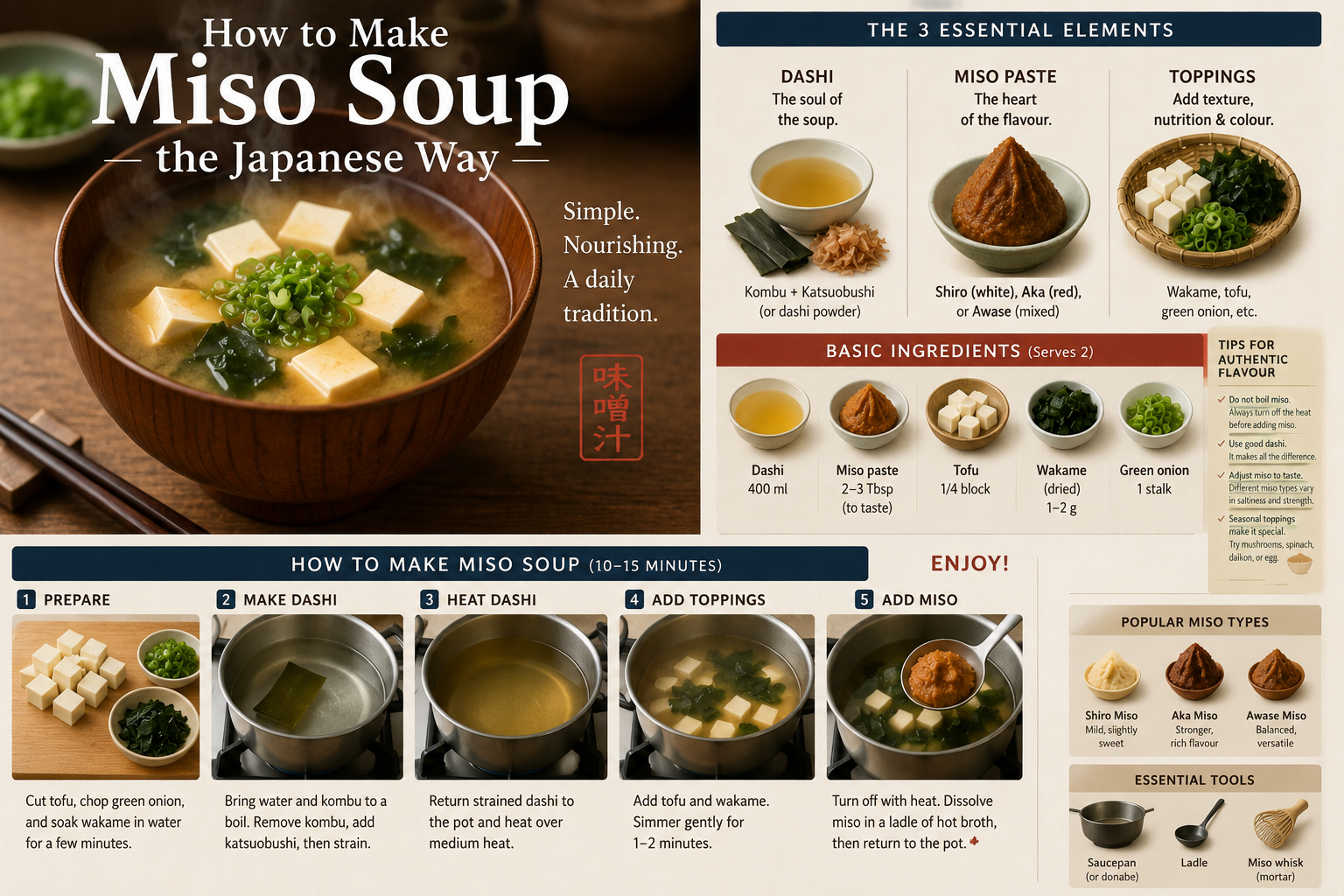
Japanese miso soup preparation follows a logical sequence that keeps everything simple. First, bring water to a gentle boil — about 400ml per serving. Add instant dashi or a piece of kombu (kelp) and a few dried shiitake mushrooms if you have time. Let this simmer for two minutes, allowing flavour to develop.
Next comes the critical step: dissolving miso. Never boil miso directly, as heat destroys its beneficial enzymes and delicate flavour. Instead, ladle a small amount of hot broth into a separate bowl, dissolve your miso paste (about one tablespoon per serving) until smooth, then pour the mixture back into the pot. Stir gently.
Add pre-cooked toppings: silken tofu cut into cubes, wakame seaweed (which rehydrates in seconds), spring onions, or mushrooms. If using a Shun Classic 8-inch Chef’s Knife, you’ll appreciate how effortlessly it glides through soft tofu — the blade’s precision prevents the delicate texture from tearing.
Pour into bowls immediately and serve. The entire process, from cold water to table, takes about ten minutes. Japanese home cooks rarely measure ingredients precisely; they develop an intuitive feel for proportions based on family preferences and available ingredients.
Where to Buy the Ingredients
Quality miso soup begins with quality miso paste and dashi. In Japan, local supermarkets stock dozens of miso varieties. Red miso (akamiso) offers deeper, earthier flavour; white miso (shiromiso) tastes sweeter and milder. Most Japanese households keep at least two types on hand.
Outside Japan, Japanese grocers and online retailers now stock authentic miso and dashi packets affordably. Look for brands like Hikari, Marukome, or Hanamaruki — these are the same brands used in Japanese kitchens. A tub of quality miso costs £4–7 and lasts several months. Dashi packets are even cheaper: around £3 for a box of 10 sachets.
For toppings, frozen tofu works perfectly if fresh isn’t available, and dried wakame seaweed is shelf-stable for months. Spring onions and mushrooms are available at any supermarket. The beauty of miso soup is that it adapts to what your local shops stock.
Why Japanese People Love This Food
Miso soup represents more than nutrition — it embodies Japanese philosophy about food. The Japanese concept of ichigo ichie (one time, one meeting) applies to meals: each bowl of miso soup is unique, shaped by available ingredients and the season. Eating it daily grounds people in this present-moment awareness.
Nutritionally, miso contains living cultures that support digestion. Japanese people have consumed fermented miso for over 1,300 years, and modern research confirms that regular consumption supports gut health. The combination of dashi’s umami with miso’s saltiness creates satisfaction whilst remaining light and non-heavy.
Additionally, miso soup is economical. A bowl costs less than 50 pence to produce at home, making it accessible across all income levels. In Japan, this accessibility is crucial — miso soup is a genuinely egalitarian food, eaten by everyone from university students in Tokyo dorms to elderly people in rural villages.
Making Miso Soup Part of Your Kitchen Routine
To make miso soup preparation truly effortless, invest in tools that Japanese home cooks rely on. A Zojirushi NS-ZCC10 rice cooker ensures perfectly fluffy rice every morning — the traditional rice-and-miso-soup breakfast becomes genuinely convenient when rice cooks automatically while you prepare soup.
For preparing toppings with professional speed, a Benriner BN-1 Japanese Mandoline Slicer transforms vegetable preparation from tedious to meditative. Paper-thin mushroom slices, carrot ribbons, or cucumber garnishes take seconds — the same tool every Japanese professional kitchen uses.
These investments transform miso soup from occasional effort into daily pleasure. Once your workspace is organised with proper tools, you’ll find yourself making soup instinctively, the way Japanese families do.
FAQ
Can I make miso soup without dashi?
Technically yes, but the flavour will be noticeably flat. Dashi provides umami depth that salt alone cannot replace. Instant dashi packets are inexpensive and worth the addition.
How long does miso paste last?
Unopened tubs last 18 months; opened containers keep refrigerated for six months to a year. Miso is remarkably shelf-stable due to its salt content.
Is miso soup suitable for vegetarians?
Most miso paste is vegetarian, but check the label — some brands include dashi made from fish stock. Instant dashi packets vary similarly, so read ingredients carefully.
Can I freeze miso soup?
Yes, but freeze only the broth, never the miso portion — freezing damages miso’s enzymes. Thaw and add fresh miso when reheating.
What’s the difference between red and white miso?
Red miso is aged longer, creating deeper umami and saltier flavour; white miso is younger, sweeter, and milder. Blending both creates balanced complexity.
Recommended Japanese Products
The products below are directly relevant to this article and used by Japanese families.
| Product | Brand | Best For | Link |
|---|---|---|---|
| Zojirushi NS-ZCC10 | Zojirushi | Families who want reliable, consistently great rice without spending on IH | Zojirushi NS-ZCC10 |
| Shun Classic 8-inch Chef’s Knife | Shun | Home cooks who want a premium everyday chef’s knife with stunning aesthetics | Shun Classic 8-inch Chef’s Knife |
| Benriner BN-1 Japanese Mandoline Slicer | Benriner | Home cooks who want professional-speed, paper-thin slicing for salads and garnishes | Benriner BN-1 Japanese Mandoline Slicer |
Zojirushi NS-ZCC10
A beloved micom rice cooker with Neuro Fuzzy logic for consistently fluffy rice.
Best for: Families who want reliable, consistently great rice without spending on IH
🛒 Zojirushi NS-ZCC10 on Amazon
Shun Classic 8-inch Chef’s Knife
An iconic Japanese knife that marries traditional craftsmanship with a Western-style blade.
Best for: Home cooks who want a premium everyday chef’s knife with stunning aesthetics
🛒 Shun Classic 8-inch Chef’s Knife on Amazon
Benriner BN-1 Japanese Mandoline Slicer
The original Japanese mandoline — every professional kitchen in Japan has one.
Best for: Home cooks who want professional-speed, paper-thin slicing for salads and garnishes
🛒 Benriner BN-1 Japanese Mandoline Slicer on Amazon
More From Japanese Best
- What Japanese Families Eat for Dinner
- Cost of Living in Tokyo in 2025: A Real Breakdown
Disclosure: As an Amazon Associate, Japanese Best earns from qualifying purchases. This does not affect our recommendations. We only feature products we genuinely believe are worth your consideration.
Editorial Disclaimer
The views, opinions, and recommendations in this article are the author’s own and reflect personal experience living in Japan. They do not constitute professional, financial, or purchasing advice of any kind.
Product availability, pricing, and specifications are subject to change without notice. Japanese Best makes no warranties — express or implied — regarding the accuracy or completeness of this content, and accepts no liability for any decisions made based on it. Always verify details directly with the retailer or manufacturer before purchasing.


コメント