Tokyo Sento: A Guide to Public Bathing Culture
July 11, 2026 | Tokyo Life | Japanese Best
On a crisp autumn evening in Asakusa, salarymen in dark suits loosen their ties and shuffle into a narrow wooden building with a faded blue noren curtain. Inside, they shed their exhaustion along with their clothes, emerging moments later pink-cheeked and smiling. This is the Tokyo sento—a public bathhouse that has been keeping the city’s residents clean, connected, and calm for over a century. While modern apartments often come with private baths, the sento remains a cherished escape from urban density, a place where Tokyo’s social fabric quietly strengthens, one steaming bucket at a time.
Quick Summary
- Tokyo sento are affordable public bathhouses (typically ¥470–¥750) offering clean, communal bathing and a genuine slice of local life
- Traditional sento follow strict etiquette: wash thoroughly before entering the bath, keep noise low, and respect gender-separated areas
- Over 2,600 sento once existed in Tokyo; today roughly 450 remain, concentrated in older neighbourhoods like Asakusa, Ueno, and Yanaka
- Locals appreciate sento for relaxation, community connection, and relief from cramped apartment living
- Visitors and new residents should arrive early, bring a small towel, and embrace the unwritten social codes gracefully
🛒 Shop Recommended Products
What You’ll Actually Find and Experience
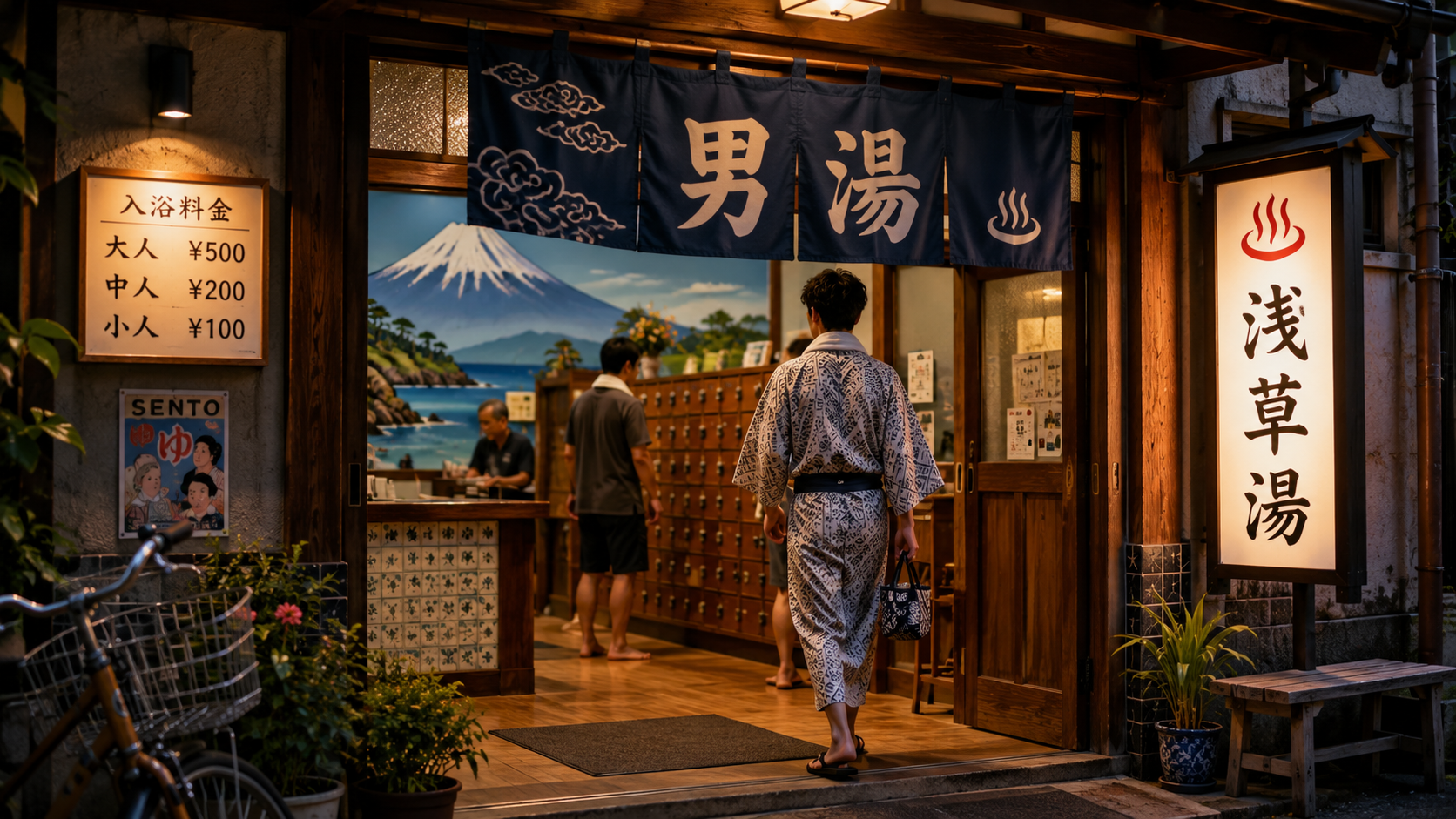
Walking into a Tokyo sento feels like stepping back into mid-twentieth-century Japan. The entrance (genkan) opens into a small lobby where you pay a cashier sitting behind a worn wooden counter. Walls are often decorated with painted tiles depicting Mount Fuji or rural landscapes. You’ll undress in gender-separated changing rooms, place your clothes in a small basket, and carry only a small towel and toiletries.
The bathing area is divided into two zones: the washing area with individual taps, low stools, and buckets, and the communal bath itself. The bath water—always kept at a scalding 40–43°C—is shared by everyone. Don’t panic; the sento’s strict washing protocol ensures cleanliness. You sit on your stool, use the tap to rinse thoroughly (hair, face, entire body), and only then enter the bath. The communal soak is the reward: hot water, silence, and often a view of hand-painted tiles or small windows framing the Tokyo skyline. Some sento have rotenburo (outdoor baths) or specialty baths infused with herbs or minerals, though these are increasingly rare in central Tokyo.
The Details: Prices, Hours, Practical Information
Entry to a standard Tokyo sento costs between ¥470 and ¥750 per person, with children under six often free and slightly reduced rates for pensioners. Hours typically run 15:00 to 23:00, though some open earlier and a few operate until midnight. Most close one or two days weekly, often Tuesday or Wednesday. Peak times are 18:00 to 21:00, when locals return from work; early morning bathing is rare in Tokyo sento culture.
Payment is cash only at most locations. A few accept IC cards (Suica/Pasmo), but don’t assume. Lockers are free; towels you provide yourself. If you’ve forgotten one, small towel sets sell for ¥100–¥300. Toiletries are not provided, so bring shampoo, conditioner, and body soap (though a growing number of sento now stock basic dispensers). Mobile phones should be switched to silent; photography is strictly prohibited in bathing areas. The atmosphere remains peaceful precisely because people respect these unspoken rules.
What Locals Think About It
Ask a 60-year-old Tokyoite about their sento, and nostalgia floods in. Older generations remember childhood visits, neighbourhood friendships formed in changing rooms, and a time when most homes lacked private baths. Today’s sento-goers are a mix: elderly regulars seeking affordable relaxation and community, young people rediscovering tradition, and families living in small apartments where a deep soak matters. Many locals describe the sento as a mental reset button—a place where the noise and pressure of Tokyo dissolves the moment you slip beneath the surface.
Residents of sento-rich neighbourhoods like Kuramae, Asakusa, and Shinbashi consider them neighbourhood anchors. The sento functions as a gathering point, where conversations spark naturally and the neighbourhood feels cohesive. There’s genuine concern among locals that fewer sento remain each year. Rising property costs, the prevalence of private baths, and an ageing customer base threaten dozens annually. Yet whenever a sento closes, the neighbourhood mourns it publicly.
Tips for Visitors and New Residents
First visit? Arrive between 16:00 and 18:00 to avoid the rush and have time to observe others and adjust. Wear flip-flops or shower sandals; the floors are clean but communal. Bring a small towel (no larger than 30×60 cm); large towels are considered disruptive in the changing room. Wash methodically and thoroughly—this isn’t negotiable—then slip quietly into the bath. Keep conversation hushed; sento are contemplative spaces, not social clubs.
If you’re a new resident planning to visit regularly, introduce yourself to the cashier. Locals often appreciate friendliness and your genuine interest in their culture. Many sento now advertise via their own websites or local community boards, so check before visiting; some operate seasonally or close unexpectedly for maintenance.
When returning from work or study, bring hot drinks in a Zojirushi SM-SHE60AG Stainless Mug, which keeps tea or coffee hot for hours during your commute to the sento. Many commuters treat the sento visit as a transition ritual between work and home, and the reliable insulation of the Zojirushi means your beverage waits perfectly warm when you emerge.
For those planning to visit regularly, keep a small notebook with Pilot FriXion Clicker 0.5mm pens to jot down sento locations and opening hours—the erasable ink means you can update your notes without mess as you discover new favourite spots across Tokyo’s neighbourhoods.
If you’re travelling between sento locations across the city, noise-cancelling headphones like the Sony WH-1000XM5 make long train journeys quieter and more pleasant, allowing you to relax before your soak.
Popular Tokyo Sento to Visit
Oedo Onsen Monogatari (Ariake) isn’t a traditional sento but a modern recreation of Edo-era bathing culture with eight themed baths, saunas, and restaurants. Entry costs around ¥2,800. Jakotsu-yu (Kuramae) is a genuine, working sento operating since 1923 with a traditional layout and mineral-rich water. Entry is ¥650. Kamata-yu (Kamata) is a neighbourhood favourite with rotenburo views and costs ¥550. Azuki-yu (Asakusa) sits near Sensoji Temple and charges ¥550 for access to its distinctive red-tiled roof interior.
FAQ
Is the water hygienic? Absolutely. Tokyo sento meet strict municipal health codes. Water is filtered and treated daily. The emphasis on pre-bath washing ensures water quality.
Can I bring children? Yes. Children under six bathe free; aged 6–12 pay reduced rates. Mothers often bring young sons; fathers bring daughters until roughly age five. Beyond that, same-gender bathing is standard.
What if I’m modest or uncomfortable? Understand that sento culture treats nudity functionally, not sexually. However, if you’re genuinely uncomfortable, consider timing your visit to quieter hours or exploring hotel onsen instead, which sometimes offer more privacy.
Are tattoos permitted? Many traditional sento ban visible tattoos due to yakuza associations. Always ask before entering. Larger, newer sento (like Oedo Onsen) tend to be more relaxed.
How long should I stay? Most people spend 20–40 minutes total: 10–15 minutes washing, 15–20 minutes soaking. There’s no time limit, but lingering excessively isn’t considered polite.
Every visit to a Tokyo sento is a small rebellion against modern convenience. You choose slowness, community, and tradition over the private efficiency of your apartment bath. In doing so, you join thousands of Tokyoites who understand that some things—connection, ritual, the simple warmth of water shared with strangers—can’t be rushed or privatised. The sento endures because it meets a human need that modern life constantly threatens to erase: the need to pause, to soak, and to belong.
Recommended Japanese Products
The products below are directly relevant to this article and used by Japanese families.
| Product | Brand | Best For | Link |
|---|---|---|---|
| Zojirushi SM-SHE60AG Stainless Mug | Zojirushi | Daily commuters who want reliable, durable coffee/tea on the go | Zojirushi SM-SHE60AG Stainless Mug |
| Pilot FriXion Clicker 0.5mm | Pilot | Students, planners, and anyone who needs flexibility to correct mistakes | Pilot FriXion Clicker 0.5mm |
| Sony WH-1000XM5 | Sony | Frequent travellers, remote workers, and audiophiles who want the best ANC | Sony WH-1000XM5 |
Zojirushi SM-SHE60AG Stainless Mug
Zojirushi’s most popular commuter mug — slim, spill-proof, and keeps drinks hot for 6 hours.
Best for: Daily commuters who want reliable, durable coffee/tea on the go
🛒 Zojirushi SM-SHE60AG Stainless Mug on Amazon
Pilot FriXion Clicker 0.5mm
The world’s bestselling erasable pen — writes like a smooth gel but rubs out cleanly with heat.
Best for: Students, planners, and anyone who needs flexibility to correct mistakes
🛒 Pilot FriXion Clicker 0.5mm on Amazon
Sony WH-1000XM5
Sony’s flagship ANC headphones — industry-leading noise cancellation and exceptional sound.
Best for: Frequent travellers, remote workers, and audiophiles who want the best ANC
More From Japanese Best
- What Japanese Families Eat for Dinner
- What to Buy at Daiso: A Practical Guide
Disclosure: As an Amazon Associate, Japanese Best earns from qualifying purchases. This does not affect our recommendations. We only feature products we genuinely believe are worth your consideration.
Editorial Disclaimer
The views, opinions, and recommendations in this article are the author’s own and reflect personal experience living in Japan. They do not constitute professional, financial, or purchasing advice of any kind.
Product availability, pricing, and specifications are subject to change without notice. Japanese Best makes no warranties — express or implied — regarding the accuracy or completeness of this content, and accepts no liability for any decisions made based on it. Always verify details directly with the retailer or manufacturer before purchasing.
コメント