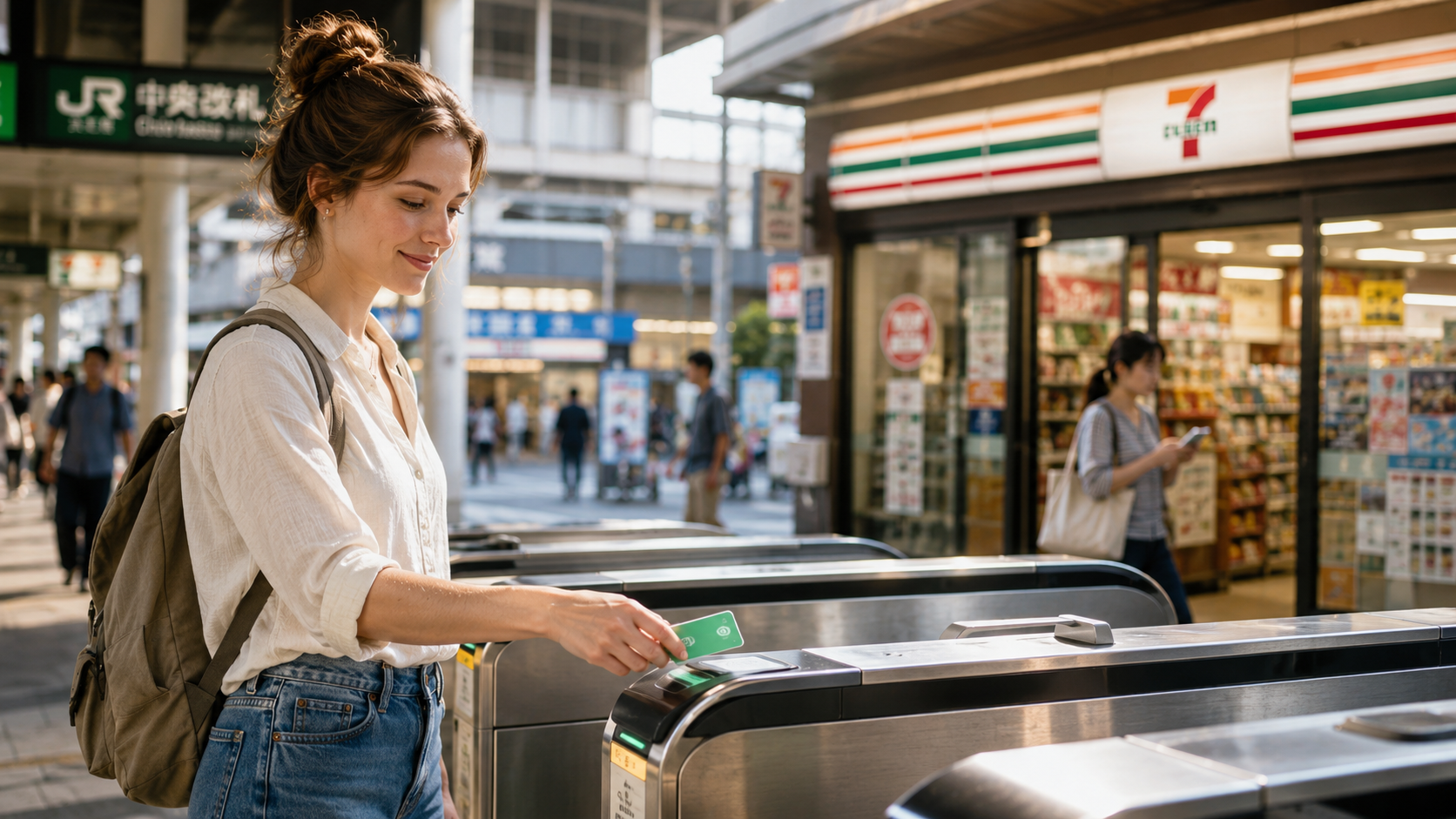
Japan IC Card Guide: How to Go Cashless
July 11, 2026 | Trends & News | Japanese Best
Japan’s relationship with cash is transforming faster than ever. Walk through Tokyo, Osaka, or even smaller cities like Kanazawa, and you’ll notice something striking: fewer people carrying coins and notes. Instead, they’re tapping their phones, cards, or wearables at convenience stores, train stations, restaurants, and vending machines. The shift towards IC cards and digital payments isn’t simply a trend—it’s reshaping how Japanese families manage money, budget their daily lives, and even think about spending itself.
This matters because Japan has historically been one of the world’s most cash-dependent societies. Yet in just five years, cashless payments have leapt from niche to mainstream. Understanding this change reveals something profound about modern Japan: a nation balancing tradition with technology, efficiency with personal touch, and security with accessibility. For anyone living in Japan, planning to move there, or simply curious about Japanese life, knowing how to navigate IC cards and cashless systems isn’t optional anymore—it’s essential.
- Quick Summary
- The Background: How Japan Got Here
- How Japanese Families Are Responding
- What Products and Services Are Popular Because of This
- What This Tells Us About Japan
- Popular IC Card Systems Explained
- Life Quality Improvements from Going Cashless
- Organisation and Record-Keeping
- Regional Differences
- FAQ
- Recommended Japanese Products
- More From Japanese Best
Quick Summary
- IC cards dominate daily life: Suica, Pasmo, and regional cards work across trains, buses, shops, and vending machines nationwide
- Convenience stores lead adoption: 7-Eleven, Lawson, and FamilyMart now accept contactless payments from over 30 different systems
- Younger families embrace digital wallets: Smartphone apps like PayPay, LINE Pay, and Rakuten Pay are fastest-growing, especially among under-40s
- Regional variations persist: Rural areas remain cash-focused, whilst Tokyo and Osaka lead the cashless revolution
- Security and habit drive change: Both cybersecurity improvements and Covid-19 accelerated the shift away from cash handling
🛒 Shop Recommended Products
The Background: How Japan Got Here
Japan’s cash culture ran deep. For decades, carrying a wallet thick with notes was normal; paying by card at a small ramen shop was unusual, almost rude. But several forces converged to change this. The 2020 Tokyo Olympics accelerated digital infrastructure spending. The pandemic made contactless payments seem safer and more hygienic. Most importantly, Japan’s ageing population and labour shortages meant businesses needed faster checkout systems.
IC card technology itself isn’t new in Japan—Suica launched on the JR East network in 2001. But its reach has exploded. Today, Suica works on over 3,600 stations nationwide, plus thousands of retailers. Regional systems like Pasmo (Tokyo Metro), Icoca (Kansai), and Kitaca (Hokkaido) operate similarly. The genius of these cards: one tap does everything. Board a train, buy coffee, pay parking fees—no fiddling with change, no missed trains.
How Japanese Families Are Responding
Adoption breaks sharply along generational lines. Tokyo families with children under 30 have almost entirely shifted to cashless. Parents use Suica or smartphone wallets for commuting; they teach children to use student Suica cards. Even pocket money increasingly comes as digital transfers rather than coins.
Middle-aged professionals (40–60) show mixed behaviour. They maintain cash habits but grudgingly accept contactless cards at work and major retailers. Rural and older populations (60+) remain heavily cash-dependent, though even rural convenience stores now offer contactless terminals.
A striking behaviour has emerged: families now budget digitally. Apps linked to PayPay or LINE Pay show real-time spending, which helps parents monitor teenagers’ purchases. Some households report spending more consciously because digital transactions feel “real” in a way cash doesn’t.
What Products and Services Are Popular Because of This
The cashless shift has spawned entirely new product categories. Portable phone chargers and power banks fly off shelves because smartphones now hold financial identity. Slim, minimalist wallets designed to hold just a phone and one backup card have become fashion statements in Tokyo.
Convenience stores have redesigned checkout areas to prioritize speed. Self-checkout kiosks with IC card readers now appear in major Lawson and FamilyMart outlets. Some stores offer loyalty programmes exclusively via app—you literally cannot get the discount without digital enrollment.
Vending machines have evolved too. Modern machines accept Suica, PayPay, and Alipay (for Chinese tourists), plus traditional coins. This redundancy reflects Japan’s pragmatic approach: technology upgrades without abandoning older users.
What This Tells Us About Japan
The cashless shift reveals Japan’s approach to modernisation: inclusive, not disruptive. Rather than forcing change, businesses offer multiple payment methods simultaneously. An 80-year-old can still pay cash at Yoshinoya; a 25-year-old can tap their phone. This flexibility is distinctly Japanese—respecting tradition whilst embracing efficiency.
It also shows how seriously Japan takes health and cleanliness. Post-pandemic, avoiding cash feels important for infection control. Contactless payment systems now advertise hygiene benefits alongside convenience. This links to broader Japanese consumer values around wellness and home care—the same values that drive purchases of premium skincare like the Hada Labo Gokujyun Hyaluronic Acid Lotion by Hada Labo (Rohto), which layers up to five types of hyaluronic acid for intense hydration without irritants. Japanese families invest similarly in both digital health (cashless systems) and personal health (skincare routines).
The shift also reflects Japan’s control-focused society. Digital payments create data trails governments and businesses can monitor—something many Japanese accept as reasonable given low crime rates and trusted institutions. Privacy concerns that might alarm Western consumers rarely surface in Japan.
Popular IC Card Systems Explained
Suica and Pasmo remain the gold standard. Suica, operated by JR East, works nationwide on trains and at over 600,000 retailers. Pasmo, operated by Tokyo Metro and private railways, offers similar reach in the Kanto region. Both cards cost roughly ¥2,000 (including ¥1,500 stored value).
Regional cards dominate their territories: Icoca in Kansai (Kyoto, Osaka), Kitaca in Hokkaido, Toica in Nagoya. Visitors can use these interchangeably on most trains nationwide, a feature added in 2013.
Smartphone wallets are fastest-growing. PayPay (owned by SoftBank) leads with 50+ million users, offering cashback and promotions. LINE Pay integrates with the ubiquitous LINE messaging app. Rakuten Pay ties into the Rakuten shopping ecosystem, appealing to frequent online shoppers.
Life Quality Improvements from Going Cashless
Japanese families report unexpected benefits. Morning routines feel less stressful—no counting coins or worrying about having the right change. Parents report teenagers spend more thoughtfully when transactions appear instantly in an app. Small businesses save time on till reconciliation; some Tokyo restaurants have cut checkout time by 40% since adding contactless terminals.
Air quality in homes and shops has improved subtly too. Less cash circulation means fewer surfaces harbouring germs, which resonates with Japanese health consciousness. Families concerned about allergens, pollen, and indoor air quality—especially in dense urban areas—have invested in advanced air purification alongside digital payment adoption. The Panasonic F-VXR70 nanoe X Air Purifier by Panasonic represents this convergence: cutting-edge Japanese technology addressing both modern efficiency (cashless payments) and health (nanoe X technology targets viruses and allergens).
Organisation and Record-Keeping
Digital payments have transformed how Japanese families organise finances. Apps automatically categorise spending—groceries, transport, dining—making monthly budgets transparent. Many parents use this data to teach children about money management, a practice especially common in Tokyo schools.
Students planning university entrance exams benefit from clearer spending visibility too. With the Pilot FriXion Clicker 0.5mm by Pilot, the world’s bestselling erasable pen that writes smoothly yet rubs out cleanly with heat, students can now plan budgets and study schedules flexibly. The erasable design mirrors how Japanese education values revision and improvement—philosophies equally embedded in cashless systems, which allow transaction reversals and corrections in ways physical cash cannot.
Regional Differences
Tokyo leads adoption, with over 85% of transactions in major business districts now cashless. Osaka and Kyoto follow closely. Rural Hokkaido or Shikoku islands show slower uptake; some mountain villages still rely entirely on cash. This isn’t resistance—it’s practical. Where shops are sparse and foot traffic minimal, retailers haven’t invested in terminals.
Interestingly, even conservative rural Japan is changing. JA (agricultural cooperative) stores in Nagano and Yamagata now accept PayPay, targeting younger farmers returning to rural areas.
FAQ
Do I need a Japanese bank account to use IC cards?
No. Tourists can purchase prepaid Suica or Pasmo cards at any train station without identification. Simply add cash to the card and tap to pay. Smartphone wallets require more verification but still don’t mandate a bank account if you register with a credit card.
Which payment system works everywhere in Japan?
Suica works most universally. However, no single system covers everything—always carry a backup payment method. Older restaurants and rural shops may accept only cash.
Can I reload IC cards from my phone?
Yes. Suica and Pasmo have associated apps allowing remote reloading at convenient stores or via phone. Minimum reload is typically ¥1,000.
Are cashless payments in Japan secure?
Very. Fraud rates are negligible compared to Western countries. Most cards require PIN entry for amounts over ¥20,000, and apps employ biometric security. Japan’s payment infrastructure is among the world’s safest.
What happens if I lose an IC card?
Report it immediately to the card issuer (JR East for Suica, for example). Remaining balance can typically be recovered or transferred within 30 days. Always register your card online if possible—it allows balance protection.
Recommended Japanese Products
The products below are directly relevant to this article and used by Japanese families.
| Product | Brand | Best For | Link |
|---|---|---|---|
| Hada Labo Gokujyun Hyaluronic Acid Lotion | Hada Labo (Rohto) | Anyone who wants deep, lasting hydration without irritants | Hada Labo Gokujyun Hyaluronic Acid Lotion |
| Panasonic F-VXR70 nanoe X Air Purifier | Panasonic | Families concerned about allergens, pollen, and indoor air quality in Japanese cities | Panasonic F-VXR70 nanoe X Air Purifier |
| Pilot FriXion Clicker 0.5mm | Pilot | Students, planners, and anyone who needs flexibility to correct mistakes | Pilot FriXion Clicker 0.5mm |
Hada Labo Gokujyun Hyaluronic Acid Lotion
Japan’s bestselling toner — layers up to 5 types of hyaluronic acid for intense hydration.
Best for: Anyone who wants deep, lasting hydration without irritants
🛒 Hada Labo Gokujyun Hyaluronic Acid Lotion on Amazon
Panasonic F-VXR70 nanoe X Air Purifier
Panasonic’s top-of-line air purifier with nanoe X technology targets viruses and allergens.
Best for: Families concerned about allergens, pollen, and indoor air quality in Japanese cities
🛒 Panasonic F-VXR70 nanoe X Air Purifier on Amazon
Pilot FriXion Clicker 0.5mm
The world’s bestselling erasable pen — writes like a smooth gel but rubs out cleanly with heat.
Best for: Students, planners, and anyone who needs flexibility to correct mistakes
🛒 Pilot FriXion Clicker 0.5mm on Amazon
More From Japanese Best
- What Japanese Families Eat for Dinner
- What to Buy at Daiso: A Practical Guide
Disclosure: As an Amazon Associate, Japanese Best earns from qualifying purchases. This does not affect our recommendations. We only feature products we genuinely believe are worth your consideration.
Editorial Disclaimer
The views, opinions, and recommendations in this article are the author’s own and reflect personal experience living in Japan. They do not constitute professional, financial, or purchasing advice of any kind.
Product availability, pricing, and specifications are subject to change without notice. Japanese Best makes no warranties — express or implied — regarding the accuracy or completeness of this content, and accepts no liability for any decisions made based on it. Always verify details directly with the retailer or manufacturer before purchasing.
コメント