Last checked: October 3, 2026 | Live in Japan | Japanese Best
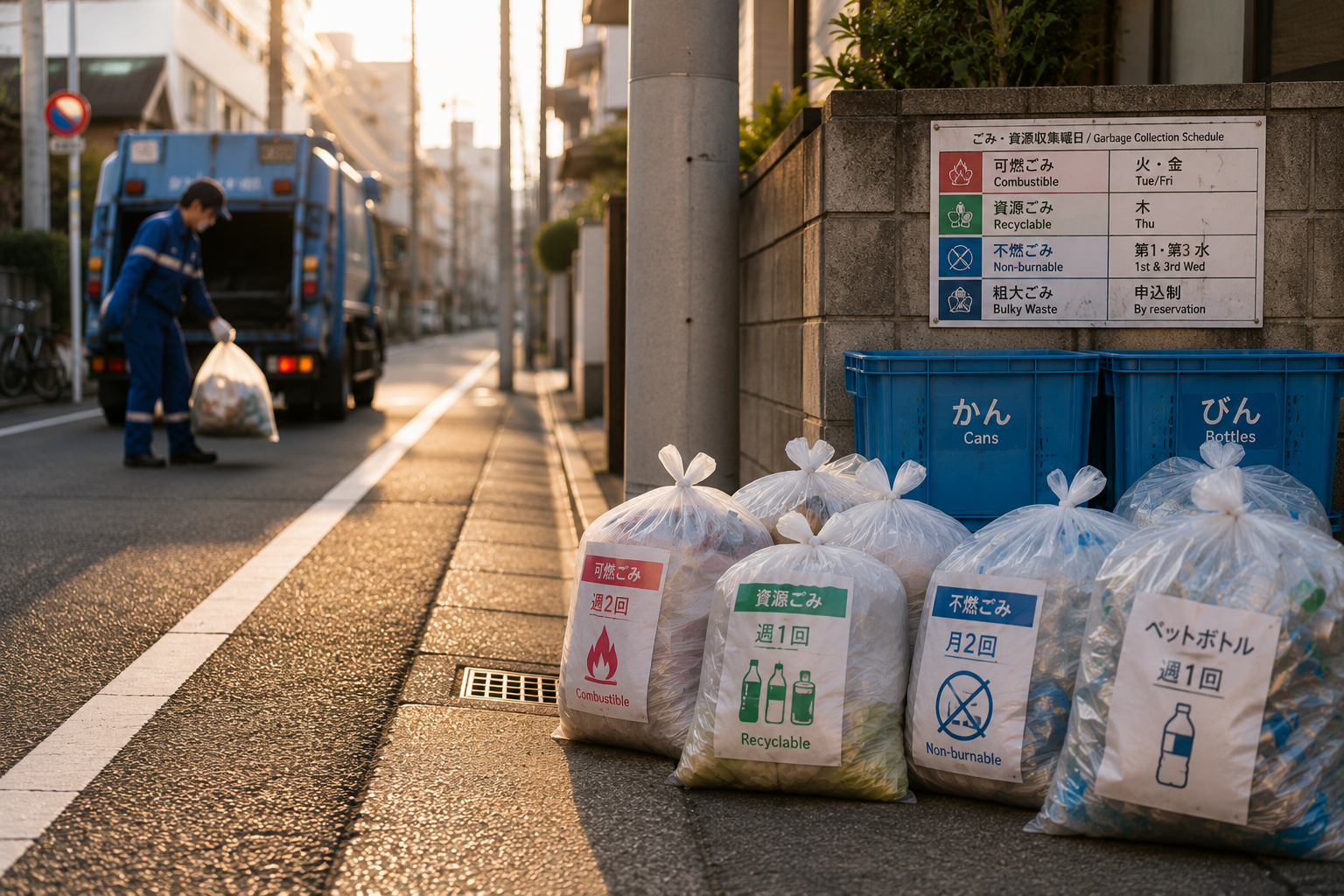
There is no single “Tokyo rubbish rule”. Each of the 23 wards sets its own categories, collection frequencies and rules for plastic. This page compares four wards side by side using their official pages: Shinjuku, Shibuya, Setagaya and Minato. It then shows what to look up for your own address. The differences are real. The same plastic food tray goes out as a recyclable in Minato and Shinjuku, but as burnable rubbish in Setagaya.
Four wards compared
| Shinjuku | Shibuya | Setagaya | Minato | |
|---|---|---|---|---|
| Burnable waste | Twice a week | Twice a week | Twice a week | Twice a week |
| Non-burnable waste (metal, glass, ceramics) | Twice a month | Once a month | Twice a month | Twice a month (weekly in busy commercial areas and Odaiba) |
| Plastic | “Resource plastic” (packaging and plastic products) collected weekly on the recyclables day, since April 2024 | Collected as a recyclable since July 2022; plastic that cannot be cleaned goes in burnable waste | Plastic items go in burnable waste (listed under burnable on the ward’s page) | “Resource plastic” (packaging and plastic products) collected weekly |
| PET bottles, cans, glass bottles, paper | Recyclables, weekly | Recyclables, weekly | PET bottles twice a month; paper, glass bottles and cans on the area’s recyclables day (each collected by a separate truck) | Recyclables (paper, bottles, cans, PET), weekly |
| Put out by | 8:00 a.m. | 8:00 a.m. (7:30 in some busy areas) | 8:00 a.m. | 8:00 a.m. (7:30 in some busy and special areas) |
| Other rules noted | — | Non-burnable items roughly under 30 cm | Up to three 45-litre bags per collection | Collection days may differ in some large apartment buildings |
What the table shows: burnable waste is collected twice a week in all four wards. Non-burnable collection ranges from once a month (Shibuya) to weekly in parts of Minato, and plastic handling falls into three different systems. If you move between wards, relearn the plastic rule first.
Bulky waste: Shinjuku as a worked example
- Apply to the Shinjuku bulky-waste reception centre, online (24 hours) or by phone on 03-5304-8080 (Monday–Saturday, 8:00–19:00).
- Buy fee stickers (有料粗大ごみ処理券) at convenience stores in the ward that display the sticker-seller sign, including 7-Eleven, FamilyMart, Lawson, Ministop and Daily Yamazaki, and at some other shops.
- Attach the sticker and put the item out on the date given.
| Item (Shinjuku, fees revised from October 1, 2023) | Fee |
|---|---|
| Microwave oven | ¥900 |
| Box-type furniture, longest + second-longest side ≤ 135 cm | ¥400 |
| Same, ≤ 180 cm | ¥900 |
| Same, ≤ 270 cm | ¥1,300 |
Other wards run their own reception centres and fee lists. Check your ward’s list rather than assuming Shinjuku’s fees.
The national rule: four appliances do not go in bulky waste
Under the Home Appliance Recycling Act (in force since April 2001), air conditioners, TVs, refrigerators/freezers and washing machines/clothes dryers are taken back by retailers and recycled by manufacturers. The person disposing of one pays collection and recycling fees. This applies in every ward.
What to look up for your own address
- Your collection days: each ward publishes a list by town and block (chōme). Shibuya’s, for example, lists the burnable, non-burnable and recyclables days for every area.
- Where plastic goes: recyclable “resource plastic”, a recyclable after rinsing, or burnable. Check this in your ward’s sorting guide.
- Bulky-waste reception: your ward’s phone number, online form and fee list.
- Building rules: large apartment buildings may have their own collection days (Minato notes this explicitly).
Sources
- Shinjuku City: collection days · plastic rule change (April 2024) · bulky-waste fees · sticker sellers
- Shibuya City: rubbish and recycling · collection days by area · plastic change from July 2022 (PDF)
- Setagaya City: how to put out rubbish · recyclables · PET bottles
- Minato City: resource plastic · collection frequency FAQ
- Ministry of the Environment — Overview of the Home Appliance Recycling Act
Related: Tokyo rent by ward and move-in costs
Comments