Last checked: October 3, 2026 | Live in Japan | Japanese Best
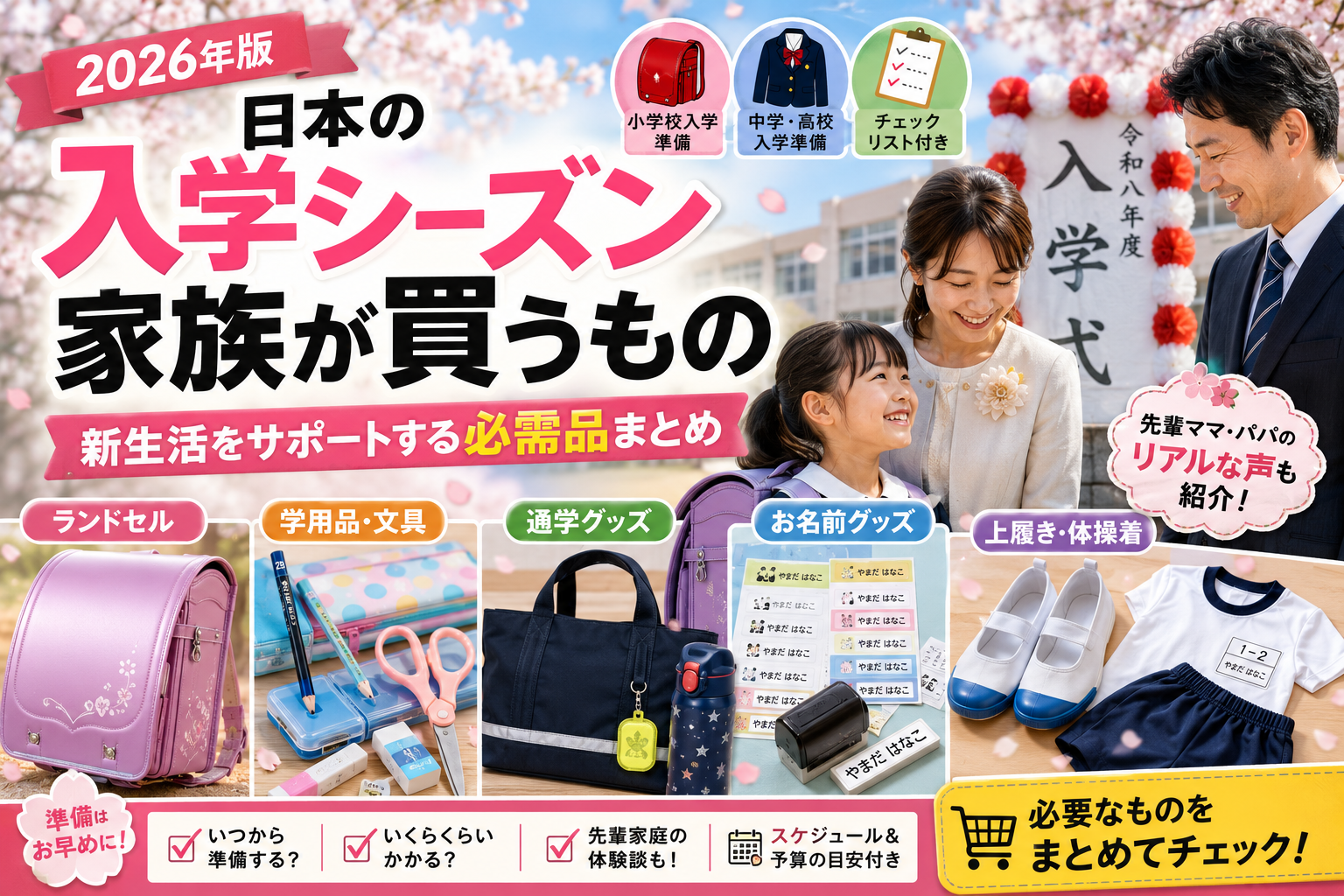
Japan’s school year runs from April 1 to March 31. For an elementary school this is set in law: Article 59 of the Enforcement Regulations of the School Education Act. Elementary school lasts six years (School Education Act, Article 32). So the big purchase for a new first-grader, the randoseru school backpack, is bought for a six-year school career that begins in April. This page sets out the school calendar for each type of school from the law texts, what foreign families should know from the Ministry of Education, and what the randoseru industry association’s 2026 buyer survey shows about cost and timing.
When the school year runs, by type of school
| School | School year | Legal basis |
|---|---|---|
| Elementary school (6 years) | April 1 – March 31 | Enforcement Regulations of the School Education Act, Art. 59; School Education Act, Art. 32 (six years) |
| Junior high school | April 1 – March 31 (Art. 59 applied) | Enforcement Regulations, Art. 79 |
| High school | April 1 – March 31 (Art. 59 applied). Part-time courses longer than three years may end their final year on September 30 | Enforcement Regulations, Art. 104 |
| University | Start and end set by each university’s president; students may be admitted and graduate mid-year by term | Enforcement Regulations, Art. 163 |
So for schools up to high school, the year ends on March 31 and the new year starts on April 1. University calendars are set by each university.
What foreign families should know
- No legal obligation, but free admission: the Ministry of Education (MEXT) states that parents of foreign children are not under Japan’s school-attendance obligation. If they wish to enrol their child in a public elementary or junior high school, the child is accepted free of charge on the same basis as Japanese children.
- School guidance from the city: MEXT says boards of education should send foreign families a school-entry guide based on resident registration information. If you are registered as a resident and have a school-age child, look out for it, or contact your local board of education.
- International schools: MEXT notes that most international schools are recognised as “miscellaneous schools” (各種学校) under the School Education Act, or are unaccredited. Only some are recognised as regular schools. For a child with Japanese nationality, attending an international school that is not a regular school does not fulfil the legal attendance obligation.
What families paid for a randoseru (2026 survey)
The Randoseru Industry Association (ランドセル工業会) surveyed 1,500 people aged 20–69 who bought a new randoseru for a child starting elementary school in April 2026:
| Price band | Share of buyers |
|---|---|
| Up to ¥24,999 | 6.3% |
| ¥25,000–¥39,999 | 8.6% |
| ¥40,000–¥54,999 | 14.2% |
| ¥55,000–¥64,999 | 18.1% |
| ¥65,000 or more | 46.0% |
| Not sure | 6.8% |
The average purchase price was ¥62,034, more than ¥1,200 higher than in the previous year’s survey. Nearly half of buyers chose a bag of ¥65,000 or more.
When families shopped
The same survey shows families start looking long before the April start:
- The most common month to start looking was April of the year before school entry (16.7%), followed by December of the year before that (14.9%).
If that pattern holds for a child starting school in April 2027, the most common time to start looking would be around April 2026, about a year ahead.
The entrance ceremony
For the entrance ceremony (入学式, nyūgakushiki) and school-specified items such as indoor shoes, follow the instructions your child’s school sends. Use the school’s list rather than a general one.
Japanese Best summary
- The school year starts on April 1 by law, and elementary school lasts six years.
- In the 2026 survey, a randoseru cost ¥62,034 on average, and 46% of buyers spent ¥65,000 or more.
- In the 2026 survey, the most common month to start looking was about a year before school entry, so families moving to Japan with a child close to school age may want to look early.
Sources
- Randoseru Industry Association — Randoseru purchase survey 2026 (published 2026-03-21)
- e-Gov — Enforcement Regulations of the School Education Act, Articles 59, 79, 104 and 163
- MEXT — School-entry procedures for foreign children (Q&A 13)
- MEXT — International schools and the attendance obligation (Q&A 11)
- e-Gov — School Education Act, Article 32
Related: Living in Yokohama (includes nursery waiting-list data)
Comments