Japanese Shichi-Go-San: What Families Buy and Do (2026)
June 28, 2026 | Family Life | Japanese Best
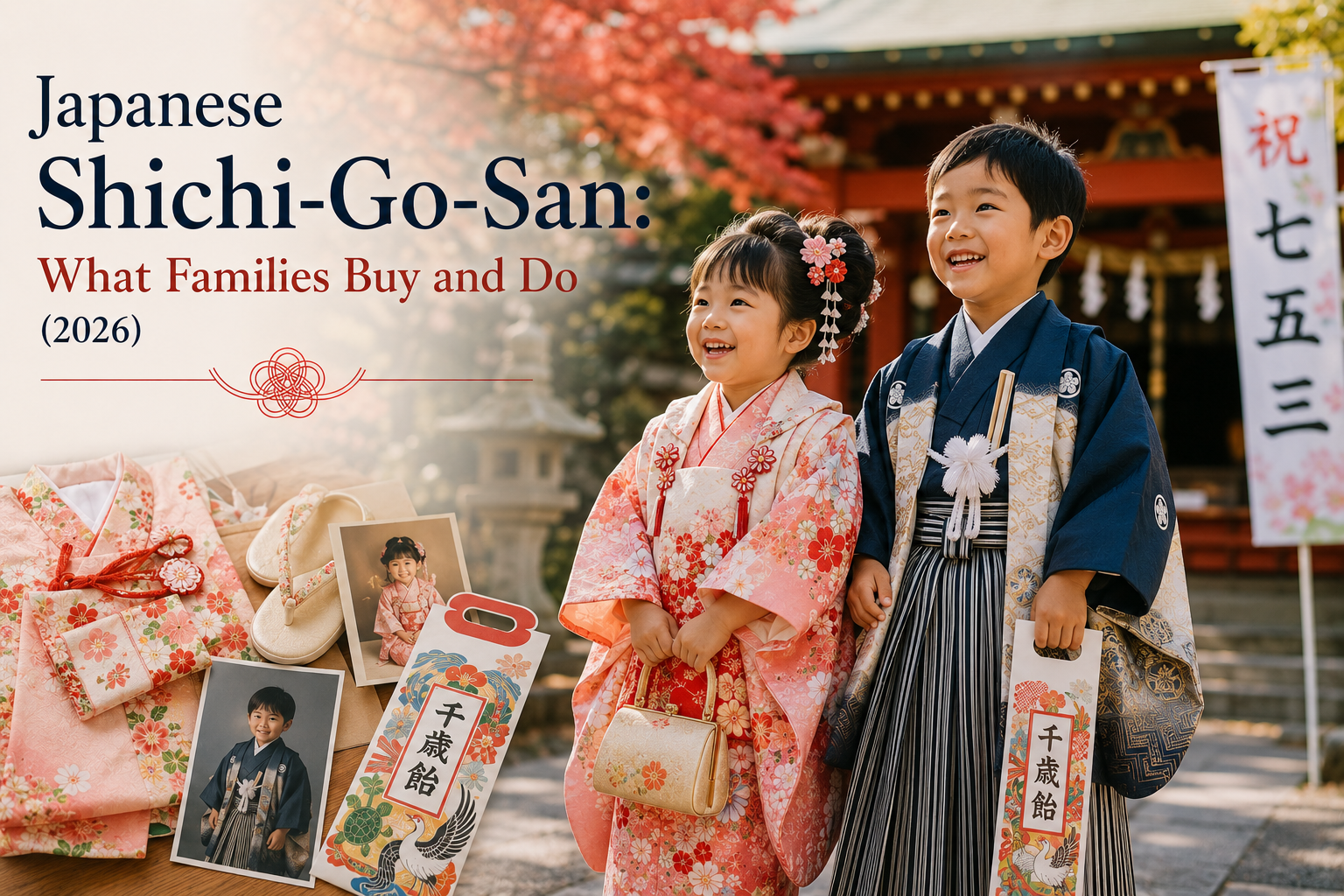
Picture this: a three-year-old in an elaborate silk kimono, standing perfectly still whilst a photographer arranges their hair. Nearby, their five-year-old sibling wears an equally ornate hakama and haori set. Their parents beam from the waiting area, holding stacks of printed photos and small gift bags they’ll distribute to relatives. This is Shichi-Go-San—a quintessentially Japanese milestone celebration that puzzles many outsiders but runs deep in family culture across the country.
For overseas readers, Shichi-Go-San (七五三, literally “seven-five-three”) offers a window into how Japanese families mark childhood passages with ritual, beauty, and togetherness. Unlike Western birthday parties focused on cake and games, this celebration emphasises gratitude, tradition, and formal attire. It’s a fascinating blend of Shinto spirituality and modern family life that reveals what Japanese parents prioritise: respect for tradition, investment in their children’s appearance and confidence, and the importance of extended family connections.
Quick Summary
- Shichi-Go-San celebrates children at ages three, five, and seven on 15 November each year
- Families dress children in traditional kimono or hakama, visit local shrines, and take professional photographs
- Celebrations typically cost between ¥50,000–¥200,000 per child, depending on clothing and photography choices
- The tradition blends Shinto religious practice with contemporary family customs
- Japanese parents view this as a key milestone for showing gratitude for their child’s healthy growth
The Basics: What Most Japanese Families Do
Shichi-Go-San falls on 15 November each year. Families with children reaching ages three, five (traditionally boys only, though this is changing), or seven (traditionally girls only) participate. The core ritual involves three steps: purchasing or renting traditional clothing, visiting a local shrine for a blessing ceremony, and having professional photographs taken.
The clothing is paramount. Three-year-olds typically wear a kimono with an obi (sash), whilst five-year-old boys don hakama (divided skirts) and haori jackets over kimono. Seven-year-old girls wear more elaborate kimono with longer sleeves and adult-style obi. Many families rent these garments from specialist shops like Aeon or department stores rather than buying—rental typically costs ¥8,000–¥25,000. Photography sessions, often booked months in advance at studios like Studio Mario or Fujifilm, run ¥15,000–¥50,000. A shrine blessing ceremony, offered at major temples nationwide, costs around ¥5,000–¥10,000.
The entire experience emphasises visual presentation and formality. Parents dress formally too, often in business suits or reserved kimono. The celebration is about presenting the child’s growth to family and community, not entertaining the child.
A Typical Week in Shichi-Go-San Season
Mid-November sees Japanese families in coordinated chaos. The first week typically involves confirming shrine appointments and picking up rented clothing. Mothers spend time practising how to dress their children properly—securing kimono knots and hakama pleats requires skill. Children often resist wearing such restrictive garments, so parents brief them on expectations.
By the second week, most families visit their local shrine between 10 a.m. and 4 p.m., when queues are shorter on weekdays. The ceremony takes about 30 minutes. Priests offer blessings whilst children stand silently, parents photograph every moment, and siblings watch from the sidelines. Many families pop into nearby restaurants afterwards for celebratory meals.
Photography sessions happen throughout the month—studios deliberately extend sessions beyond 15 November to manage demand. Families often schedule these separately from shrine visits, giving children time to rest between formal events. Grandparents frequently attend shrine visits or receive priority viewing of professional photos. By month’s end, families prepare thank-you gifts for relatives and teachers who supported their child’s growth.
What This Looks Like in a Real Tokyo Home
In central Tokyo, a typical Shichi-Go-San unfolds like this: the Tanaka family has a five-year-old son and decides to celebrate at their neighbourhood shrine in Shibuya. In late October, his mother visits a rental shop in Omotesando and selects a navy-blue hakama set with family crests (¥12,000 rental). His father books a photography session at a nearby studio for ¥30,000, choosing a package with outdoor garden shots plus studio portraits.
On 12 November, the family visits the studio. Their son sits uncomfortably in full costume whilst a patient photographer takes 40 shots across two hours. His younger sister plays with toys in the waiting area. Two weeks later, they collect digital files and a printed album.
On 15 November itself, they dress quickly at home (a grandmother helps with the hakama knot), drive to Meiji Shrine in Shibuya, and join dozens of other families in the queuing area. The blessing ceremony lasts 20 minutes. Afterwards, they grab lunch at a nearby soba restaurant in their formal clothes, then return home. Relatives receive photo prints in the post within weeks.
The entire celebration costs approximately ¥55,000–¥75,000 and occupies maybe five hours of actual family time, yet it’s discussed and prepared for over two months.
How It Differs From Other Countries
Unlike Western birthday parties emphasising entertainment and peer interaction, Shichi-Go-San focuses on formal acknowledgment and gratitude. There’s no birthday cake, games, or party favours. The child isn’t the centre of attention in a celebratory sense—rather, they’re presented formally to family and community as proof of healthy growth.
The religious element differs significantly from secular Western celebrations. Shinto shrine visits aren’t optional cultural additions; they’re the heart of the tradition. However, most Japanese families aren’t particularly religious and approach this as cultural participation rather than spiritual commitment.
Costume matters profoundly. Japanese parents invest substantially in traditional dress and professional photography. By contrast, many Western families might spend equivalent money on party venues or entertainment. This reflects differing cultural values: Japan emphasises presentation, respect for tradition, and creating memorable imagery, whilst Western approaches often prioritise fun and peer socialisation.
The intergenerational aspect is also stronger. Grandparents play active roles, and extended family receive updates through photos. It’s a family-wide acknowledgment, not merely a nuclear family event.
Frequently Asked Questions
When exactly is Shichi-Go-San?
It’s always 15 November, though families often celebrate on nearby weekends for convenience.
Can girls celebrate at five, or only at seven?
Traditionally only at three and seven, but modern families increasingly celebrate daughters at five too. Gender traditions are softening.
Is this celebration expensive?
Moderately, yes. Expect ¥50,000–¥200,000 depending on choices. Renting rather than buying clothes saves significantly.
Do all Japanese families do this?
Most do—it’s mainstream rather than niche. Participation rates in urban areas exceed 80%.
Can we celebrate Shichi-Go-San outside Japan?
Yes, Japanese communities abroad often organise group celebrations, though shrine visits aren’t possible. Some families travel to Japan specifically for this.
Shichi-Go-San reveals something essential about contemporary Japanese family life: respect for tradition coexists with modern pragmatism, visual presentation matters deeply, and childhood milestones deserve formal, beautiful recognition. For overseas families curious about Japan, witnessing or participating in Shichi-Go-San offers genuine insight into how Japanese culture operates—not as museum piece, but as living practice woven into everyday family rhythms.
Seen in Everyday Life in Tokyo
A Real-Life Note from Japan
What I Often See in Japanese Stores
Is it worth buying Japanese family life over cheaper alternatives?
For most use cases, yes — if you plan to use the product daily or for many years. Japanese family life tend to have a longer useful lifespan, which often makes the total cost of ownership lower than a cheaper alternative replaced every 2–3 years. That said, always match the product to your actual needs.
How long do Japanese family life typically last?
With proper care, quality Japanese family life are designed for 10 years or more of daily use. This is not incidental — it reflects what Japanese domestic consumers expect.
Where can I buy authentic Japanese family life online?
The safest options are Amazon (from the brand’s official store or well-reviewed sellers), direct brand websites, or authorised international retailers. Avoid unverified marketplace listings for high-value items.
Shop Japanese Products
If you’re inspired by what Japanese families use in this area, you can find a wide range of authentic Japanese products on Amazon:
Shop Related Japanese Products on Amazon
More From Japanese Best
Disclosure: As an Amazon Associate, Japanese Best earns from qualifying purchases. This does not affect our recommendations. We only feature products we genuinely believe are worth your consideration.
Editorial Disclaimer
The views, opinions, and recommendations in this article are the author’s own and reflect personal experience living in Japan. They do not constitute professional, financial, or purchasing advice of any kind.
Product availability, pricing, and specifications are subject to change without notice. Japanese Best makes no warranties — express or implied — regarding the accuracy or completeness of this content, and accepts no liability for any decisions made based on it. Always verify details directly with the retailer or manufacturer before purchasing.

コメント