Best Japanese Insulated Bottle for the Office (2026)
June 28, 2026 | Products | Japanese Best
- Best Overall: Zojirushi SM-SHE60AG Stainless Mug
- Best Value: Tiger MMZ-A502 Stainless Bottle
- Best Premium: Thermos JNL-504 Stainless Bottle
Japanese Insulated Bottles: The Perfect Office Companion
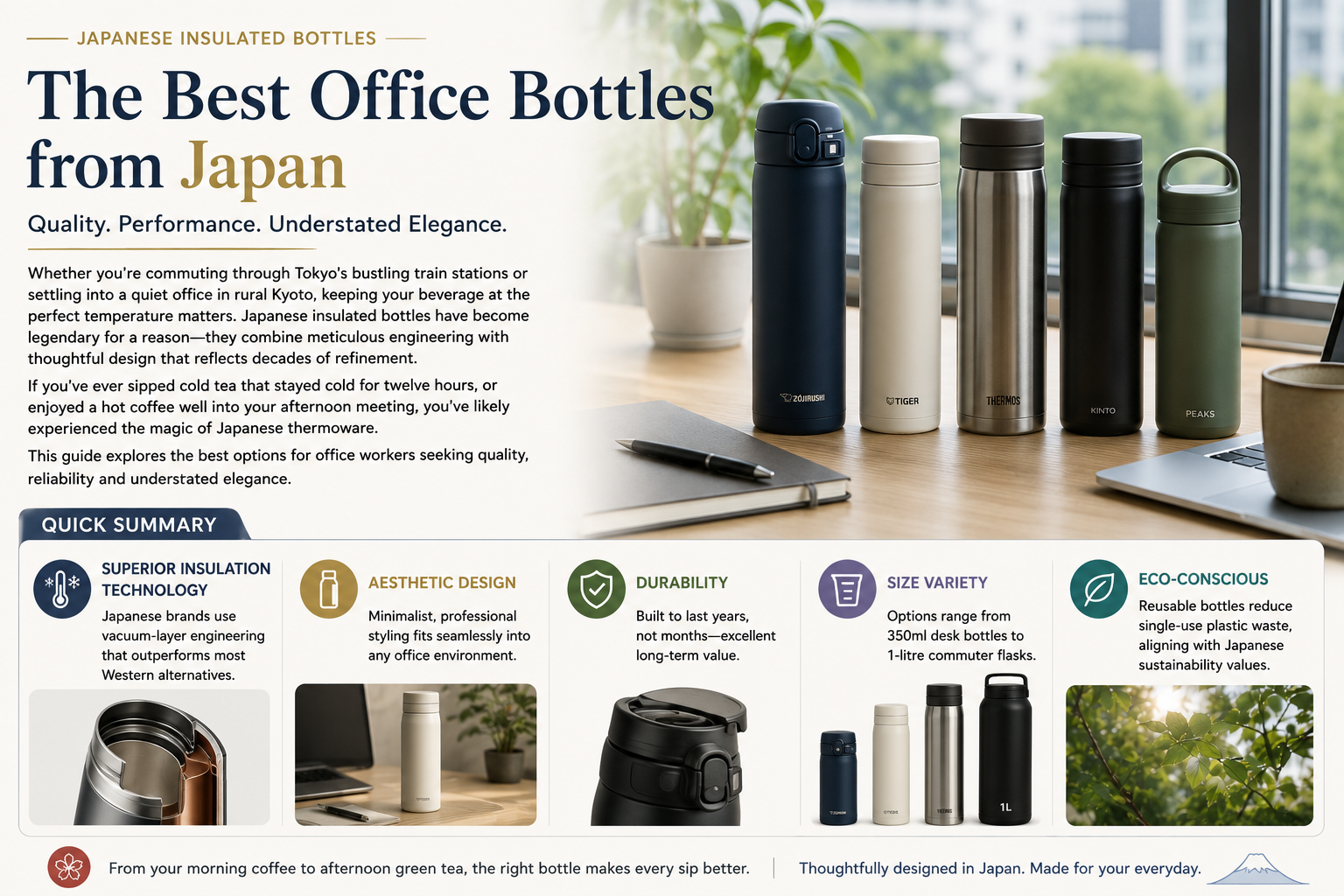
Whether you’re commuting through Tokyo’s bustling train stations or settling into a quiet office in rural Kyoto, keeping your beverage at the perfect temperature matters. Japanese insulated bottles have become legendary for a reason—they combine meticulous engineering with thoughtful design that reflects decades of refinement. If you’ve ever sipped cold tea that stayed cold for twelve hours, or enjoyed a hot coffee well into your afternoon meeting, you’ve likely experienced the magic of Japanese thermoware. This guide explores the best options for office workers seeking quality, reliability and understated elegance.
Quick Summary
- Superior insulation technology: Japanese brands use vacuum-layer engineering that outperforms most Western alternatives
- Aesthetic design: Minimalist, professional styling fits seamlessly into any office environment
- Durability: Built to last years, not months—excellent long-term value
- Size variety: Options range from 350ml desk bottles to 1-litre commuter flasks
- Eco-conscious: Reusable bottles reduce single-use plastic waste, aligning with Japanese sustainability values
🛒 Shop Recommended Products
Quick Comparison Table
| Brand | Capacity | Insulation | Best For | Price Range |
|---|---|---|---|---|
| Zojirushi | 480–750ml | 24+ hours (hot/cold) | All-day office use | ¥3,000–¥5,500 |
| Thermos (Japanese) | 400–600ml | 12+ hours (cold) | Daily commuters | ¥2,500–¥4,000 |
| Tiger | 500–800ml | 24 hours (hot) | Winter office workers | ¥3,500–¥6,000 |
| Aladdin | 350–600ml | 12+ hours | Minimalists | ¥2,800–¥4,500 |
Why Japanese Products Stand Out
Japan’s approach to insulated bottles stems from a culture obsessed with perfection and longevity. Rather than chasing trendy features, Japanese manufacturers invest in core technology—the vacuum-seal layers that actually keep drinks at temperature. This philosophy emerged partly from necessity: Japan’s extreme seasons (scorching summers and freezing winters) demand reliable thermoware.
Walk into any Japanese convenience store and you’ll notice bottles displayed with precise specifications: “保温性能12時間” (12-hour heat retention). This transparency, combined with rigorous testing standards, means Japanese brands deliver on their promises. Companies like Zojirushi and Tiger have perfected their craft over generations, refining designs incrementally rather than reinventing them yearly. The attention extends to materials—stainless steel that resists staining, silicone grips that don’t crack after months of use, and lids engineered to seal perfectly without leaking into your work bag.
Top Picks — Detailed Reviews
Zojirushi SM-KHE Stainless Steel Bottle
The Zojirushi remains Japan’s gold standard, dominating office desks from Osaka to Sapporo. Its 480ml capacity strikes the perfect balance—large enough for a full morning’s hydration, compact enough for any desk drawer. The double-stainless construction keeps cold drinks genuinely cold for 24 hours. What truly sets it apart is the ultra-reliable flip-top lid; it never leaks, even when tossed into a packed rucksack during rush-hour commutes.
The design philosophy here is ruthlessly minimal—no unnecessary colours or metallic finishes. Available in muted blacks, greys and whites, the bottle complements rather than dominates your workspace. Japanese office workers appreciate that it looks professional enough to take into client meetings. At approximately ¥4,200, it represents excellent long-term value; many owners report using the same bottle for 5+ years.
Tiger MMJ-A048 Thermal Bottle
Tiger’s offering excels for those prioritising hot-drink retention during Japan’s long, cold winters. The 480ml capacity provides serious heat-holding performance—your morning coffee genuinely stays hot through your lunch break. The wide mouth makes refilling easier than many competitors, and the stainless steel exterior feels premium without appearing ostentatious.
Tiger bottles are engineered for professionals who spend hours in poorly heated offices (still common in older Japanese buildings). The lid incorporates a clever steam-release mechanism that prevents the annoying “rush of hot air” when opening. At around ¥5,200, it’s positioned in the mid-premium range, but the build quality justifies the investment. The bottle’s slightly curved ergonomic design fits naturally into hand and cup holder alike.
Aladdin Hydro Flask Collab Collection
Aladdin brings affordability without sacrificing quality. This Japanese brand focuses on straightforward functionality—excellent insulation, reliable construction, approachable pricing. Their 350ml compact model (roughly ¥2,800) appeals to minimalist office workers who don’t want a heavy bottle consuming desk space. The smaller size actually suits many Japanese office environments where desk space remains precious.
What distinguishes Aladdin is the attention to everyday usability. The powder-coat finish resists fingerprints (crucial in humid Tokyo summers), and the flat-bottomed design prevents annoying rolling when set on desks. Colour options lean tasteful rather than flashy—soft earth tones designed to age gracefully. It’s the bottle you’ll forget you’re carrying until you take a sip and remember why Japanese engineering matters.
What Japanese Buyers Look For
Japanese office workers prioritise several factors when selecting insulated bottles. Quietness tops the list—nobody wants a bottle that sloshes audibly during meetings. Japanese brands engineer wider bases and strategic baffle systems to minimise water movement. Reliability of seals matters intensely; a leaking bottle represents not just inconvenience but embarrassment in the context-conscious Japanese workplace.
Aesthetic restraint is paramount. The concept of “引き算の美学” (subtraction aesthetics) means less is more. Rather than loudly branding their bottles, Japanese manufacturers often use small, discreet logos. Durability across years—not months—reflects the Japanese value of “もったいない” (not wasting). Many office workers inherit their parents’ bottles or keep the same one for a decade.
Finally, hygiene considerations drive design choices. Removable, washable components come standard on Japanese bottles. The ability to thoroughly clean every internal surface reflects Japanese standards of cleanliness, especially important in shared office kitchens.
Buying Guide
Size selection: For desk-based office work, 400–500ml proves ideal. It fits standard car cup holders, doesn’t dominate your workspace, yet holds sufficient volume for a full morning. If you commute via public transport in busy urban areas, a slimmer 350ml model reduces shoulder strain.
Material preference: Stainless steel dominates professional settings. Glass interiors avoid any metallic aftertaste but add weight and fragility risks. Plastic exteriors reduce weight but feel less premium—most serious office workers prefer metal throughout.
Lid type: Flip-top lids offer convenience for frequent drinkers; screw-top designs seal more reliably for commuters. Consider your specific office workflow before deciding.
Insulation duration: Japanese brands accurately specify how long beverages maintain temperature. If you drink throughout the day, 12-hour retention suffices. For morning-to-evening retention (particularly in winter), seek 24-hour ratings.
Budget allocation: Japanese insulated bottles range from ¥2,500 to ¥7,000. The sweet spot sits around ¥4,000—sufficient for genuinely excellent engineering without luxury pricing. Spending significantly more buys aesthetics and brand heritage rather than functional improvements.
FAQ
How long genuinely do Japanese bottles keep drinks hot?
Zojirushi and Tiger models perform exactly as rated. A 480ml bottle filled with boiling water at 7am typically maintains drinkable temperatures (50°C+) through the 6pm commute home.
Are Japanese brands worth the premium over budget alternatives?
Yes, particularly for daily office use. A ¥4,000 Japanese bottle outlasts three ¥1,000 alternatives, making the unit cost lower. The superior engineering also means fewer annoyances—genuinely zero leaks, reliable seals, better thermal performance.
Can I use these for hot tea specifically?
Absolutely. Japanese bottles are optimised for tea culture. Many Japanese professionals specifically choose insulated bottles to preserve delicate green tea flavours without reheating (which damages them).
Do the bottles develop odours or stains?
Quality stainless steel resists both. However, tea can gradually stain light-coloured interiors. Many Japanese users simply embrace this patina as evidence of the bottle’s long service life.
Which size works best for office meetings?
The 480ml size fits comfortably beside most office chairs, in conference room cup holders, and looks appropriately professional. Larger 750ml bottles feel excessive
Is it worth buying Japanese products over cheaper alternatives?
For most use cases, yes — if you plan to use the product daily or for many years. Japanese products tend to have a longer useful lifespan, which often makes the total cost of ownership lower than a cheaper alternative replaced every 2–3 years. That said, always match the product to your actual needs.
How long do Japanese products typically last?
With proper care, quality Japanese products are designed for 10 years or more of daily use. This is not incidental — it reflects what Japanese domestic consumers expect.
Where can I buy authentic Japanese products online?
The safest options are Amazon (from the brand’s official store or well-reviewed sellers), direct brand websites, or authorised international retailers. Avoid unverified marketplace listings for high-value items.
Quick Comparison
| Product | Best For | Key Features | Pros | Cons | Recommended For | Buy |
|---|---|---|---|---|---|---|
| Zojirushi SM-SHE60AG Stainless Mug | Best Overall | SlickSteel interior (no coating) · Spill-proof lid | Excellent insulation | Not ideal for carbonated drinks | Daily commuters who want reliable, durable coffee/ | → Buy |
| Tiger MMZ-A502 Stainless Bottle | Best Value | Super clean loop handle · Wide mouth opening | Wide mouth for ice | Wide mouth can be harder to drink from direct | Active users, hikers, and gym-goers who need a rug | → Buy |
| Thermos JNL-504 Stainless Bottle | Best Premium | Vacuum insulation · Ultra-light design | Very light | Basic lid is not spill-proof when tilted | People who want a lightweight, no-fuss bottle for | → Buy |
Seen in Everyday Life in Tokyo
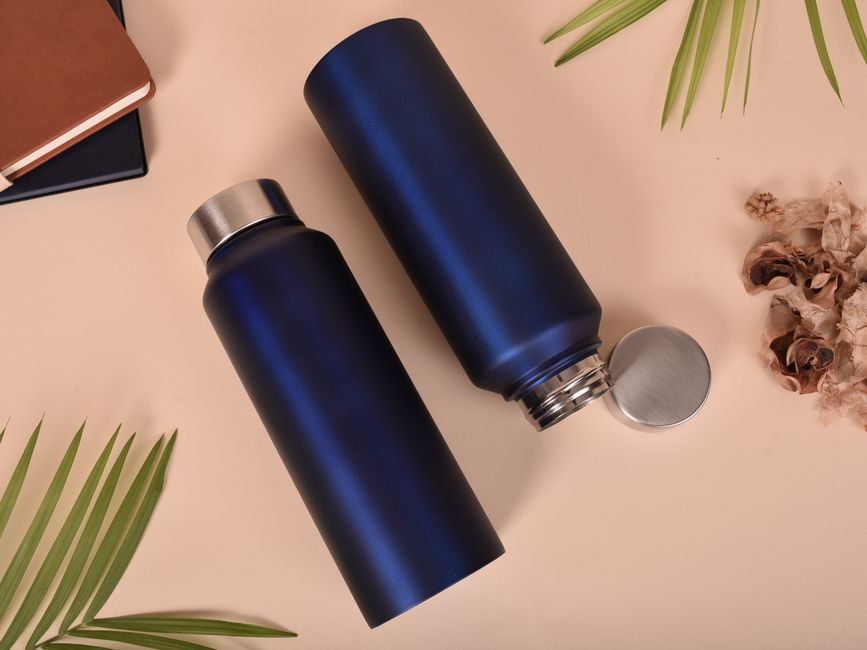
A Real-Life Note from Japan
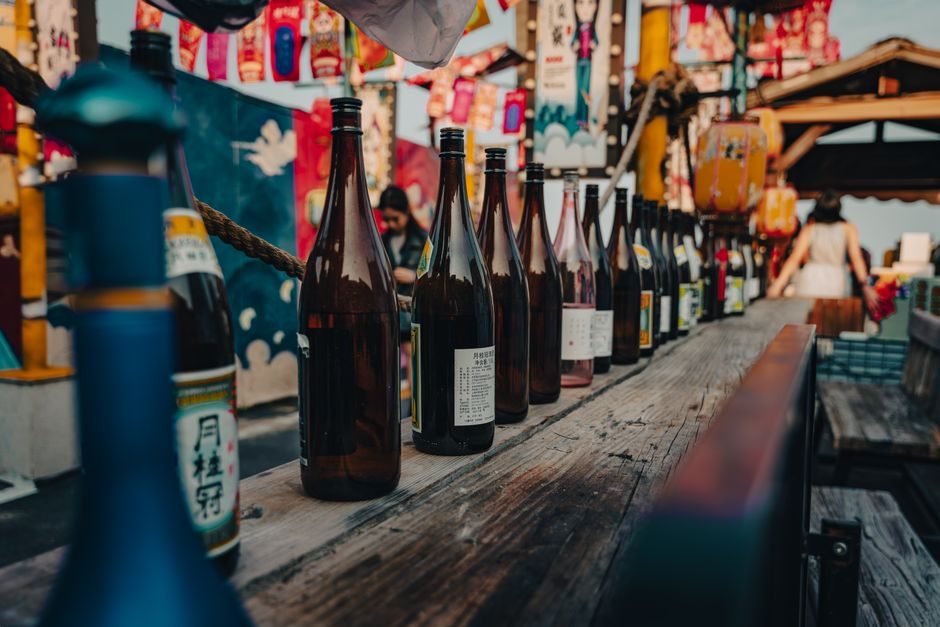
What I Often See in Japanese Stores
Recommended Japanese Products
The products below are directly relevant to this article and used by Japanese families.
| Product | Brand | Best For | Link |
|---|---|---|---|
| Zojirushi SM-SHE60AG Stainless Mug | Zojirushi | Daily commuters who want reliable, durable coffee/tea on the go | Zojirushi SM-SHE60AG Stainless Mug |
| Tiger MMZ-A502 Stainless Bottle | Tiger | Active users, hikers, and gym-goers who need a rugged easy-fill bottle | Tiger MMZ-A502 Stainless Bottle |
| Thermos JNL-504 Stainless Bottle | Thermos Japan | People who want a lightweight, no-fuss bottle for daily use | Thermos JNL-504 Stainless Bottle |
Zojirushi SM-SHE60AG Stainless Mug
Zojirushi’s most popular commuter mug — slim, spill-proof, and keeps drinks hot for 6 hours.
Best for: Daily commuters who want reliable, durable coffee/tea on the go
🛒 Zojirushi SM-SHE60AG Stainless Mug on Amazon
Tiger MMZ-A502 Stainless Bottle
Tiger’s wide-mouth design makes it easy to add ice and clean thoroughly.
Best for: Active users, hikers, and gym-goers who need a rugged easy-fill bottle
🛒 Tiger MMZ-A502 Stainless Bottle on Amazon
Thermos JNL-504 Stainless Bottle
The original thermos brand, now made in Japan with cutting-edge vacuum insulation.
Best for: People who want a lightweight, no-fuss bottle for daily use
🛒 Thermos JNL-504 Stainless Bottle on Amazon
More From Japanese Best
Disclosure: As an Amazon Associate, Japanese Best earns from qualifying purchases. This does not affect our recommendations. We only feature products we genuinely believe are worth your consideration.
Editorial Disclaimer
The views, opinions, and recommendations in this article are the author’s own and reflect personal experience living in Japan. They do not constitute professional, financial, or purchasing advice of any kind.
Product availability, pricing, and specifications are subject to change without notice. Japanese Best makes no warranties — express or implied — regarding the accuracy or completeness of this content, and accepts no liability for any decisions made based on it. Always verify details directly with the retailer or manufacturer before purchasing.
コメント