Best Japanese Hair Oil Treatments for Damaged Hair (2026)
June 28, 2026 | Products | Japanese Best
Japanese beauty culture has long prioritised hair health as a cornerstone of personal wellbeing. Walk through any drugstore in Tokyo or Osaka, and you’ll find entire shelves dedicated to hair oils and treatments, reflecting a philosophy that damaged hair isn’t something to simply mask—it’s something to repair from within. This approach has made Japanese hair oil treatments increasingly popular worldwide, with formulations that blend traditional botanical wisdom and modern cosmetic science in ways that feel both effective and luxurious.
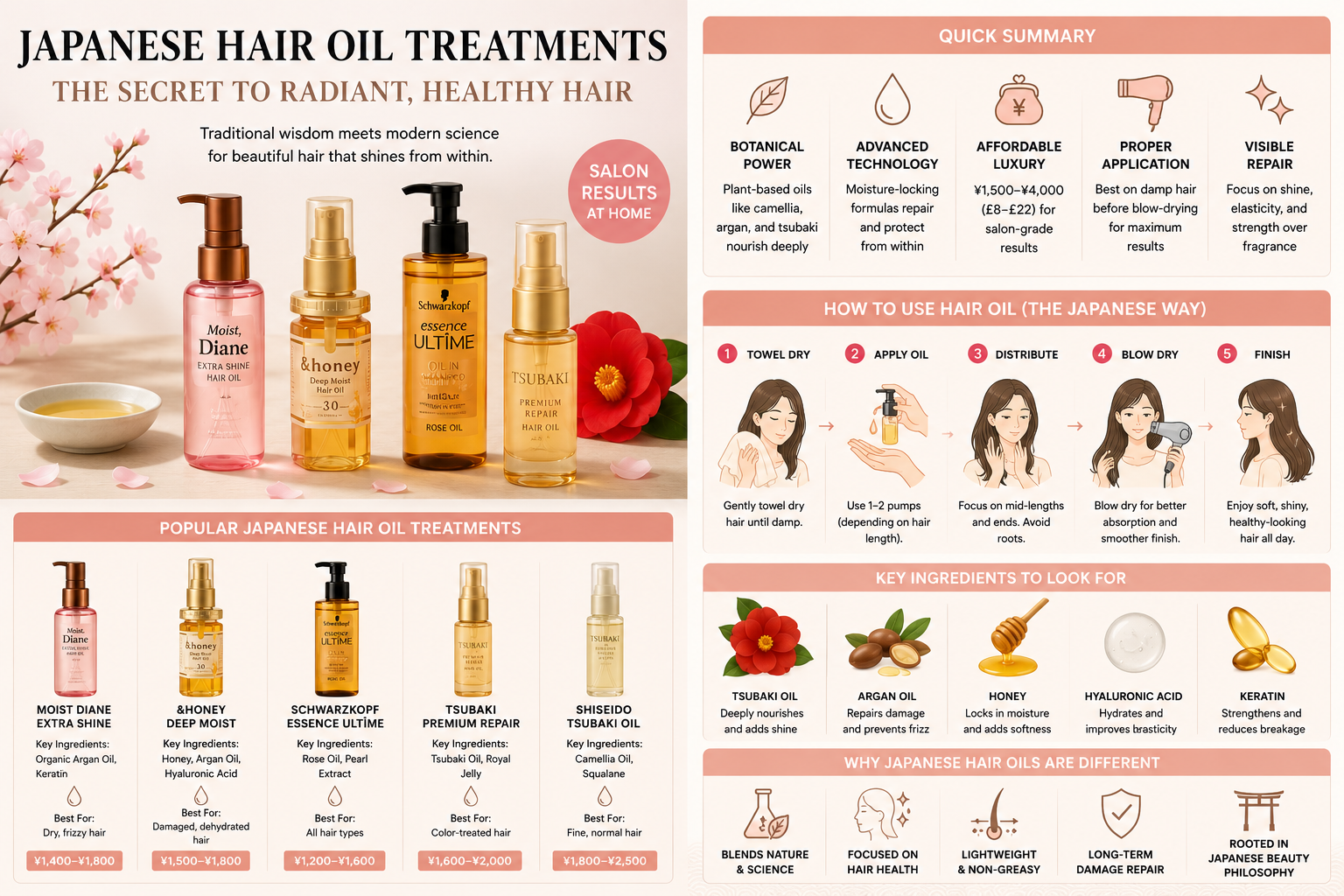
Quick Summary
- Japanese hair oils combine plant-based ingredients like camellia, argan, and tsubaki oil with advanced moisture-locking technology
- Most quality Japanese treatments cost between ¥1,500–¥4,000 (roughly £8–£22) and offer salon-grade results at home
- Key brands like Moist Diane, Schwarzkopf Essence Ultîme, and Shiseido dominate Japanese drugstores for affordability and accessibility
- Application methods matter: oils work best on damp hair before blow-drying for maximum penetration
- Japanese consumers prioritise visible repair over fragrance, seeking products that restore shine and elasticity to chemically treated hair
Quick Comparison Table
| Product | Type | Price Range | Best For |
|---|---|---|---|
| Moist Diane Oil | Lightweight oil | ¥1,500–¥2,000 | Daily use, fine hair |
| Shiseido Tsubaki Premium | Rich treatment | ¥2,500–¥3,500 | Severe damage, thick hair |
| Darshaan Argan Oil | Pure oil | ¥3,000–¥4,000 | Natural ingredients, all types |
| Three Essence Hair Oil | Botanical blend | ¥4,500–¥5,500 | Premium care, sensitive scalps |
Why Japanese Products Stand Out
Japanese hair care manufacturers have perfected the art of targeting specific damage profiles. Unlike generic “moisturising” treatments sold globally, Japanese brands categorise products by hair damage level, texture, and chemical history—reflecting the reality that Japanese consumers often bleach, perm, or straighten their hair regularly.
The cultural emphasis on otsukaresama (acknowledging the hard work your body does) extends to hair care. Products aren’t viewed as vanity; they’re viewed as essential maintenance for hair that’s been through styling stress. This mindset has driven innovation. Japanese laboratories have spent decades refining how oils penetrate the hair cuticle without leaving residue, resulting in formulations that feel lighter but work deeper than Western equivalents.
Additionally, Japanese brands rarely use silicones as their primary conditioning agent. Instead, they favour plant oils—camellia from Kyushu, argan from Morocco (but processed in Japan with rigorous quality control), and yuzu extract—paired with collagen and keratin that actually bond to damaged sections rather than simply coating them.
Top Picks — Detailed Reviews
Moist Diane Oil Treatment
Available in virtually every convenience store across Japan, Moist Diane represents the accessible end of the market without sacrificing efficacy. The lightweight formulation uses a blend of argan, camellia, and rosehip oils that absorb within minutes, leaving no greasy residue. Priced around ¥1,800, it’s the product Japanese students and young professionals reach for when their hair needs urgent rescue. The scent is subtle—almost unnoticeable—because the brand prioritises function over fragrance marketing.
Shiseido Tsubaki Premium Repair
Shiseido’s premium line honours Japan’s centuries-old tradition of tsubaki (camellia) oil use in geisha culture. This treatment is thicker and richer, designed for severely damaged hair or thick, curly textures. At around ¥3,200, it represents mid-range luxury. The formula includes camellia oil from Izu Peninsula and pearl extract, creating a noticeable shine boost within one week of consistent use. Japanese beauty enthusiasts often recommend this for post-bleaching recovery.
Three Essence Hair Oil
Positioned as a premium natural option, Three’s hair oil costs around ¥5,000 but attracts consumers willing to invest in botanical purity. Made in Japan using essential oils and plant extracts rather than synthetic fragrances, it appeals to those with sensitive scalps or environmental concerns. The bottle design—minimalist, refillable glass—reflects Japanese design philosophy of reducing waste.
What Japanese Buyers Look For
Japanese consumers evaluating hair treatments examine several specific criteria. First, menikaeri (visible improvement)—results should be noticeable within one to two weeks. Second, karuさ (lightness)—the treatment shouldn’t weigh hair down or require excessive washing to remove. Third, ingredient transparency: Japanese pharmacies display detailed ingredient lists, and customers read them carefully.
Price isn’t the primary driver; instead, buyers compare cost-per-use over several months. A ¥4,000 bottle lasting three months seems reasonable if results are consistent. Seasonal shifts matter too—in humid summer months, Japanese consumers prefer lighter oils; in winter, richer treatments gain popularity.
Many Japanese buyers also consider whether the product suits their specific damage type: chemical straightening (common in Japan) requires different oils than colour damage or heat damage. This specificity is why Japanese brands create detailed product categorisation systems.
Buying Guide
When selecting a Japanese hair oil treatment, start by assessing your primary damage concern. If your hair has been chemically treated (straightened, permed, or bleached), begin with a mid-range option like Moist Diane or Shiseido Tsubaki to establish what works before investing in premium brands.
Application technique significantly impacts results. Distribute oil through damp (not soaking wet) hair, focusing on mid-lengths and ends. Leave for five to ten minutes before blow-drying—the heat helps oil penetrate the cuticle. Use sparingly: a 10-pence-coin-sized amount for shoulder-length hair. Too much creates greasiness; too little delivers insufficient nourishment.
Purchase from Japanese drugstores, supermarkets, or online retailers like Rakuten. Prices in Japan are typically 15–25% lower than international markup costs. If buying internationally, expect additional shipping fees; purchasing in Japan (or requesting items be sent from Japanese warehouses) remains most economical.
FAQ
Can I use Japanese hair oil daily?
Yes, but sparingly. Daily application works best with lightweight formulas like Moist Diane. Richer treatments suit twice-weekly routines.
Will oil make my hair greasy?
Not if applied correctly to damp hair before drying. Most modern Japanese oils absorb fully when heat-dried.
How long does a bottle last?
A 100ml bottle typically lasts two to three months with regular use (two to three times weekly).
Are Japanese oils suitable for fine hair?
Absolutely. Many Japanese brands specifically formulate lightweight oils for fine textures—they’re engineered to add shine without weight.
Japanese hair oil treatments represent a philosophy that damaged hair deserves targeted, science-backed repair rather than cosmetic covering. Whether you choose an affordable drugstore staple or invest in a premium botanical blend, the emphasis remains consistent: visible restoration, lightweight feel, and respect for what your hair has endured. The best choice depends on your specific damage profile, budget, and whether you prefer minimalist formulations or enriched blends—but any quality Japanese option will outperform generic treatments through sheer ingredient thoughtfulness and formulation precision.
Is it worth buying Japanese products over cheaper alternatives?
For most use cases, yes — if you plan to use the product daily or for many years. Japanese products tend to have a longer useful lifespan, which often makes the total cost of ownership lower than a cheaper alternative replaced every 2–3 years. That said, always match the product to your actual needs.
How long do Japanese products typically last?
With proper care, quality Japanese products are designed for 10 years or more of daily use. This is not incidental — it reflects what Japanese domestic consumers expect.
Where can I buy authentic Japanese products online?
The safest options are Amazon (from the brand’s official store or well-reviewed sellers), direct brand websites, or authorised international retailers. Avoid unverified marketplace listings for high-value items.
Seen in Everyday Life in Tokyo
A Real-Life Note from Japan
What I Often See in Japanese Stores
More From Japanese Best
Disclosure: As an Amazon Associate, Japanese Best earns from qualifying purchases. This does not affect our recommendations. We only feature products we genuinely believe are worth your consideration.
Editorial Disclaimer
The views, opinions, and recommendations in this article are the author’s own and reflect personal experience living in Japan. They do not constitute professional, financial, or purchasing advice of any kind.
Product availability, pricing, and specifications are subject to change without notice. Japanese Best makes no warranties — express or implied — regarding the accuracy or completeness of this content, and accepts no liability for any decisions made based on it. Always verify details directly with the retailer or manufacturer before purchasing.
コメント