Japanese Tanabata: How Families Celebrate (2026)
June 28, 2026 | Family Life | Japanese Best
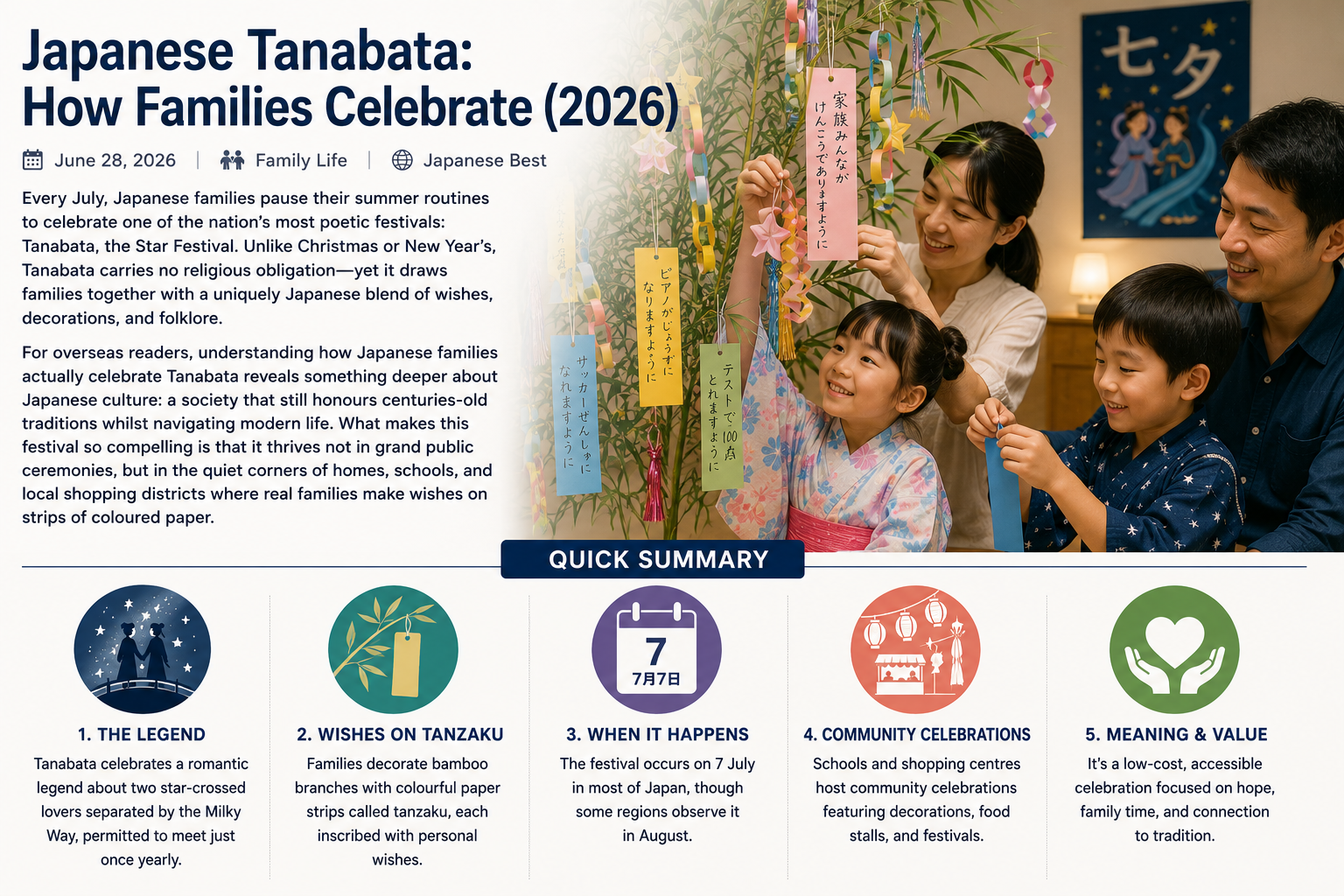
Every July, Japanese families pause their summer routines to celebrate one of the nation’s most poetic festivals: Tanabata, the Star Festival. Unlike Christmas or New Year’s, Tanabata carries no religious obligation—yet it draws families together with a uniquely Japanese blend of wishes, decorations, and folklore. For overseas readers, understanding how Japanese families actually celebrate Tanabata reveals something deeper about Japanese culture: a society that still honours centuries-old traditions whilst navigating modern life. What makes this festival so compelling is that it thrives not in grand public ceremonies, but in the quiet corners of homes, schools, and local shopping districts where real families make wishes on strips of coloured paper. Here’s how japanese tanabata is actually celebrated at home.
Quick Summary
- Tanabata celebrates a romantic legend about two star-crossed lovers separated by the Milky Way, permitted to meet just once yearly
- Families decorate bamboo branches with colourful paper strips called tanzaku, each inscribed with personal wishes
- The festival occurs on 7 July in most of Japan, though some regions observe it in August
- Schools and shopping centres host community celebrations featuring decorations, food stalls, and festivals
- It’s a low-cost, accessible celebration focused on hope, family time, and connection to tradition
The Basics: How Japanese Tanabata Is Celebrated
Tanabata’s foundation is simple yet elegant. The festival centres on hanging tanzaku—small rectangular papers in red, blue, yellow, green, and purple—from bamboo branches. Each family member writes a wish or goal on their tanzaku, then ties it to the bamboo. The tradition stems from a Chinese legend of two star-crossed lovers: Orihime, a weaver princess, and Hikoboshi, a cowherd. Separated by the Milky Way, they’re permitted to meet only once yearly on the seventh day of the seventh month. Japanese families mirror this reunion by gathering to celebrate love, hope, and the pursuit of dreams. For more on the legend itself, see Wikipedia’s entry on Tanabata.
The bamboo itself holds significance. It’s believed to carry wishes skyward, and families typically dispose of their decorated branches by floating them in rivers—a ritual called nagashi-bashō—symbolising the release of wishes into the universe. This practice still occurs in rural areas, though urban families often simply discard the branches after the festival week. Many families purchase small bamboo saplings from supermarkets, though crafty households fashion them from branches gathered during neighbourhood walks.
A Typical Week in July: How It Unfolds
In a typical Japanese household, Tanabata preparation begins around late June. Parents purchase tanzaku packets and bamboo from local supermarkets—a set of decorative papers and small bamboo costs roughly ¥300–¥800. On 5 or 6 July, the family gathers in the living room or kitchen. Parents help younger children write wishes in hiragana, whilst older children compose more elaborate aspirations. Wishes range from practical (passing exams, getting a job) to whimsical (learning to play guitar, becoming stronger).
Throughout 6–7 July, families keep their decorated bamboo on display, often in entryway alcoves called tokonoma or near windows. Colleagues discuss their wishes at work; schoolchildren decorate their classrooms with larger communal bamboo installations. On the evening of 7 July, many families eat specific Tanabata foods: sōmen (thin noodles symbolising Orihime’s silk threads), edamame, and seasonal vegetables. By 8 July, most household decorations come down, marking the festival’s end. Some families photograph their bamboo before disposal, creating memories they’ll revisit annually.
What This Looks Like in a Real Tokyo Home
Consider the Tanaka family in Shibuya Ward, Tokyo. On a Saturday afternoon in early July, Yuki (the mother) purchases a small potted bamboo from Tokyu Hands department store whilst her husband Kenji works. Their children, Hana (7) and Taro (11), wait at home. When Yuki returns, the family spreads tanzaku packets across their dining table. Hana writes “I want to be brave,” whilst Taro writes “I want to score well in maths.” Kenji, playfully, writes “More time with family.”
They tie the papers to the bamboo using thin strings, creating a small installation on their balcony overlooking Shibuya’s busy streets. For three days, neighbours walking past glimpse their wishes. On the morning of 8 July, Kenji carefully removes the papers—Hana insists on keeping hers—and composts the bamboo. The family photographs their efforts and shares the image in a family WhatsApp group. This modest ritual, replicated across millions of Tokyo homes, transforms a crowded urban landscape into a temporary constellation of hopes and dreams.
How Tanabata Differs From Other Countries’ Traditions
Unlike Christmas in Western countries, Tanabata carries no commercial pressure. There are no mandatory gift-buying expectations or family obligations rooted in religion. Instead, it’s a secular, introspective celebration focused on personal aspiration. Where some cultures celebrate communal abundance, Tanabata emphasises individual dreams and their connection to cosmic forces—uniquely Japanese in its blend of Confucian self-improvement and romantic sentiment borrowed from Chinese folklore.
The festival’s scale differs markedly. Whilst Western summer holidays emphasise travel and consumption, Tanabata thrives in simplicity: paper, bamboo, and words. Japanese families rarely spend more than ¥1,000 per household. Finally, Tanabata’s flexibility allows regional variation—some areas celebrate on 7 July, others on 8 August, reflecting pre-Meiji calendar differences. This regional diversity means Japan’s Tanabata celebrations remain deeply local and family-centred rather than standardised. If you’re curious about the full range of Tanabata decorations and traditions available, you can find similar items on Amazon.
FAQ
When exactly is Tanabata?
Most of Japan celebrates on 7 July, though Okinawa, parts of Hokkaido, and some rural regions observe it on 8 August, following the lunar calendar.
Do I need to be Japanese to participate?
No. Many international families living in Japan participate enthusiastically. Schools often welcome all students to join classroom decorations.
What if I can’t find bamboo?
Supermarkets, department stores, and home improvement shops stock bamboo from late June. Alternatively, branches from any tree work—the symbolism matters more than botanical accuracy.
Is there a specific wish format?
No. Wishes can be in any language and range from practical goals to poetic aspirations. Children often write in hiragana or simple kanji.
Tanabata embodies what makes Japanese family life distinctive: the marriage of ancient tradition with modern domesticity, communal celebration expressed through intimate family moments, and a cultural belief that hopes matter—whether written on paper or whispered to the stars. For overseas readers, witnessing how Japanese families honour this festival reveals a culture that values continuity, reflection, and the quiet magic of shared ritual.
Seen in Everyday Life in Tokyo
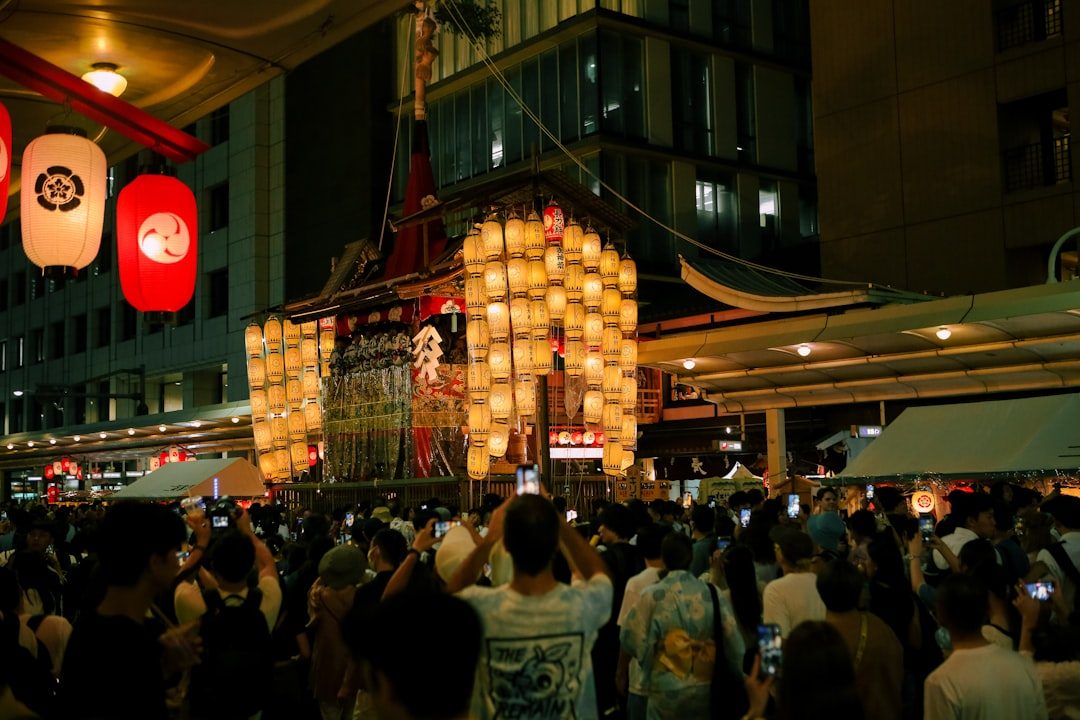
A Real-Life Note from Japan
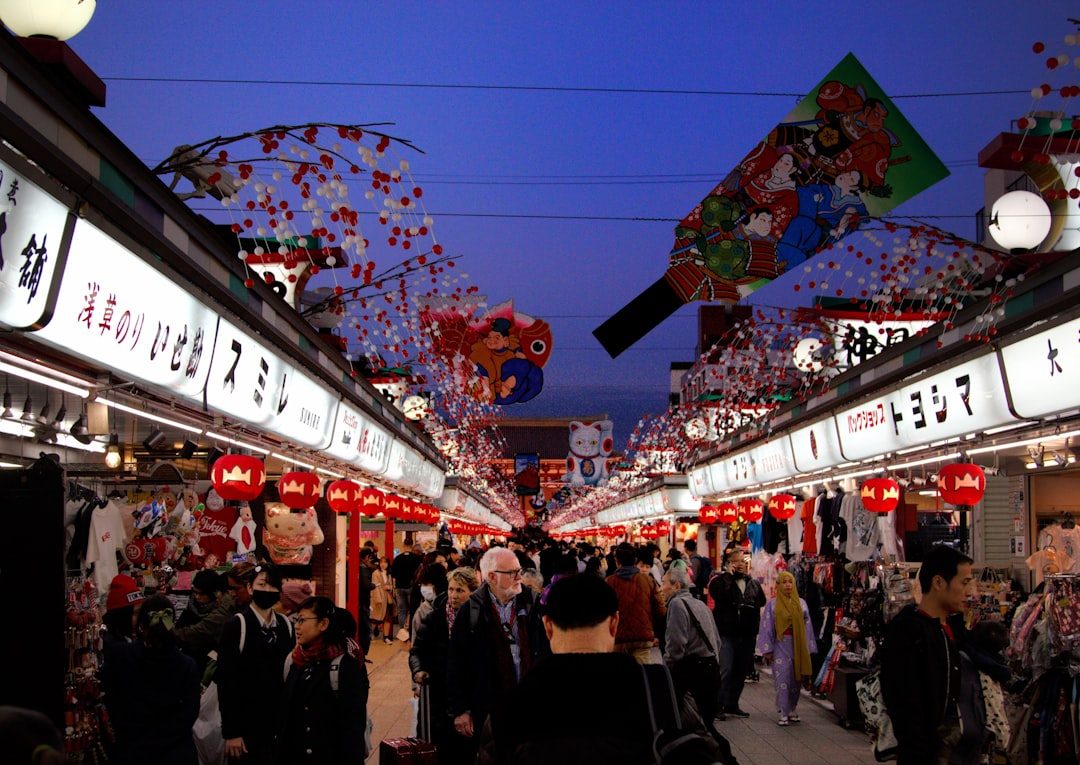
What I Often See in Japanese Stores
Shop Japanese Products
If you’re inspired by what Japanese families use in this area, you can find a wide range of authentic Japanese products on Amazon:
🛒 Shop Related Japanese Products on Amazon
More From Japanese Best
Disclosure: As an Amazon Associate, Japanese Best earns from qualifying purchases. This does not affect our recommendations. We only feature products we genuinely believe are worth your consideration.
Editorial Disclaimer
The views, opinions, and recommendations in this article are the author’s own and reflect personal experience living in Japan. They do not constitute professional, financial, or purchasing advice of any kind.
Product availability, pricing, and specifications are subject to change without notice. Japanese Best makes no warranties — express or implied — regarding the accuracy or completeness of this content, and accepts no liability for any decisions made based on it. Always verify details directly with the retailer or manufacturer before purchasing.
コメント