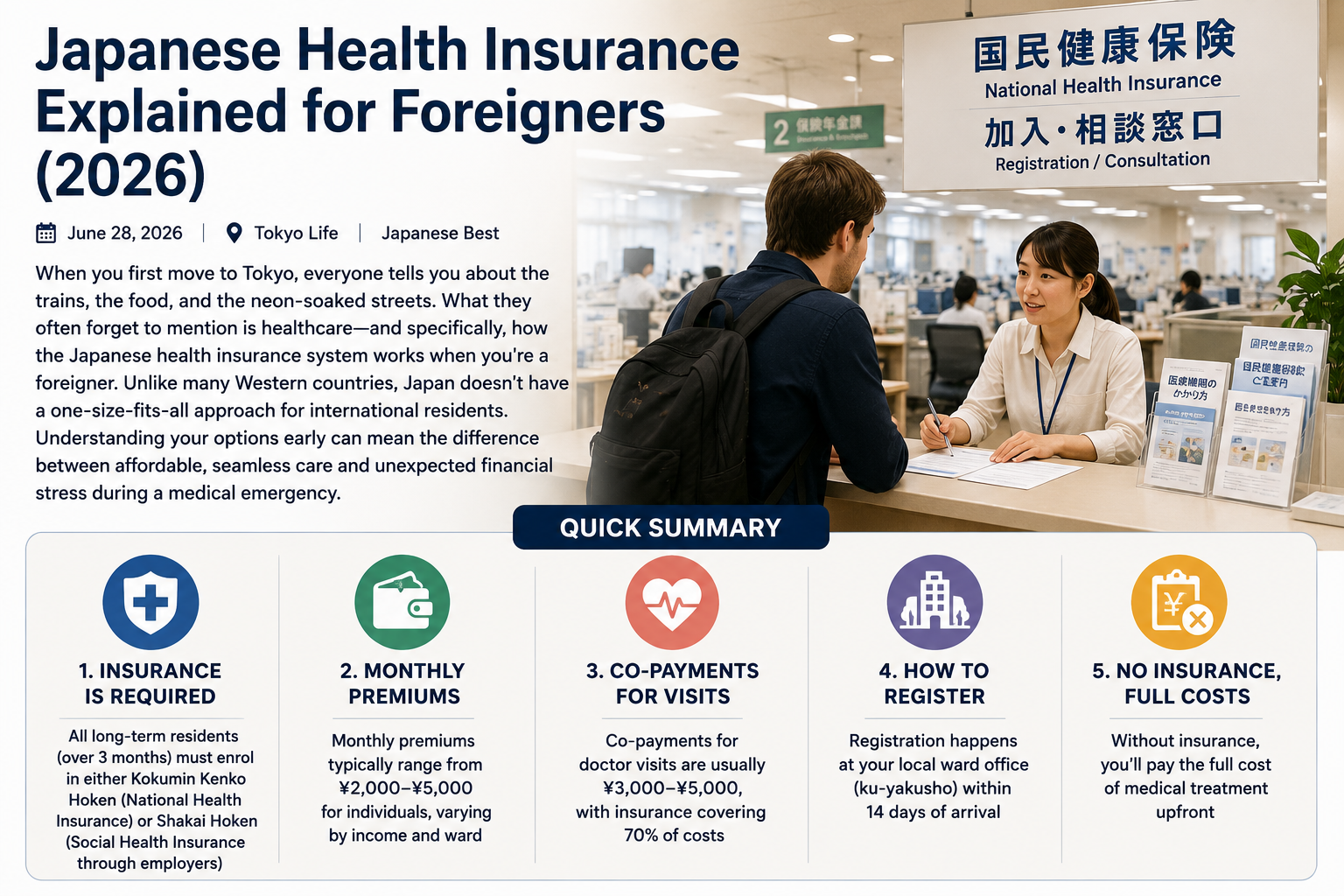
Japanese Health Insurance Explained for Foreigners (2026)
June 28, 2026 | Tokyo Life | Japanese Best
When you first move to Tokyo, everyone tells you about the trains, the food, and the neon-soaked streets. What they often forget to mention is healthcare—and specifically, how the Japanese health insurance system works when you’re a foreigner. Unlike many Western countries, Japan doesn’t have a one-size-fits-all approach for international residents. Understanding your japanese health insurance options early can mean the difference between affordable, seamless care and unexpected financial stress during a medical emergency.
Quick Summary
- All long-term residents (over 3 months) must enrol in either Kokumin Kenko Hoken (National Health Insurance) or Shakai Hoken (Social Health Insurance through employers)
- Monthly premiums typically range from ¥2,000–¥5,000 for individuals, varying by income and ward
- Co-payments for doctor visits are usually ¥3,000–¥5,000, with insurance covering 70% of costs
- Registration happens at your local ward office (ku-yakusho) within 14 days of arrival
- Without insurance, you’ll pay the full cost of medical treatment upfront
What Makes Japanese Health Insurance Different
Tokyo’s healthcare system is both remarkably efficient and refreshingly pragmatic. Unlike some countries that restrict healthcare access based on immigration status, Japan operates on the principle that everyone living here should have coverage. The government recognises that preventative care and accessible treatment benefit the entire community. For a broader overview, see Wikipedia’s entry on health care in Japan.
What sets Tokyo apart is the sheer density and quality of medical facilities. Within walking distance of most train stations, you’ll find clinics ranging from tiny neighbourhood practices to world-class university hospitals. Most doctors speak some English, especially in central wards like Minato and Shibuya, though fluency varies wildly. The system is paper-heavy and requires patience, but it’s remarkably affordable compared to private healthcare elsewhere.
What You’ll Actually Find and Experience
Walking into a Japanese clinic (shinryojo) for the first time is genuinely disorienting. You’ll encounter a waiting room filled with elderly residents, businesspeople between meetings, and mothers with small children—all sitting quietly, sometimes for an hour or more. Japanese healthcare culture emphasises patience and respect for the system.
When you’re called, you’ll hand over your insurance card and health record (if you have one). The receptionist will ask you to fill out a form describing your symptoms. Most clinics have no appointments; it’s first-come, first-served. A typical visit involves 5–10 minutes with a doctor, who may order blood work or X-rays at an attached laboratory. Prescriptions go to the pharmacy counter downstairs or at a nearby drugstore (yakkyoku).
The experience is impersonal but efficient. Doctors are less chatty than their Western counterparts; they listen, examine, diagnose, and prescribe. It’s clinical and pragmatic—which can feel cold if you’re used to more personal bedside manner.
The Details: Premiums, Co-payments, and Hours
National Health Insurance (Kokumin Kenko Hoken) costs roughly ¥2,000–¥4,500 monthly for a working-age adult, though this scales with your declared income. When you visit a doctor, you’ll pay 30% co-payment out of pocket, with insurance covering 70%. A standard consultation costs around ¥3,000–¥5,000 before insurance. Dental work, glasses, and certain treatments aren’t covered—you’ll pay full price.
Most neighbourhood clinics open from 9am–6pm on weekdays, often closed Wednesday afternoons. Larger hospitals run longer hours; emergency departments (kyukyu) operate 24/7. Weekend care is available but often more expensive. Tokyo’s ward offices (where you register) operate Monday–Friday, 8:30am–5:15pm.
If you’re employed, your company automatically registers you in Shakai Hoken (Social Health Insurance), which is typically better value. Employer and employee split the premium roughly equally. Unemployment or student status changes everything—plan ahead.
What Locals Think About It
Ask any Tokyo resident, and they’ll tell you the system is “shigoto” (complicated but works). Japanese people grumble about rising premiums and aging healthcare costs, but there’s genuine pride in universal access. Elderly locals often praise the affordability compared to their memories of pre-1960s Japan.
For immigrants, opinions are mixed. Long-term residents appreciate the coverage; short-term visitors frequently complain about the registration bureaucracy. The recurring frustration is the language barrier combined with the system’s fondness for paperwork. Many locals acknowledge this and are patient with foreigners navigating the process.
What genuinely impresses visitors is the hospital hygiene, punctuality, and lack of aggressive billing. No one expects enormous tips or upfront deposits. The system operates on trust.
Tips for Visitors and New Residents
Register immediately upon arrival—the 14-day window is strictly enforced. Visit your local ward office with your passport, residence certificate (juminhyo), and completed enrollment form. Bring a Japanese-speaking friend if possible; ward staff vary in English ability.
If you’re arriving for less than three months, purchase travel health insurance from your home country before departure. Once you’re registered for National Health Insurance, add a family member or spouse retroactively if they arrive later—backpay exists but is simpler to avoid.
Learn the Japanese names for your symptoms and carry a translation app. Clinics near major stations like Shinjuku, Shibuya, and Roppongi often have English-speaking staff, but neighbourhood clinics don’t. Keep all receipts and insurance documents; you may need them for tax deductions or if you return home.
For ongoing prescriptions or regular treatment, ask about regular patient status (teiki kanja). Some clinics offer discounts or streamlined visits for chronic conditions.
Frequently Asked Questions
Can I use my home country’s insurance? Not in Japan. You must register for local insurance if staying over three months. You can maintain supplementary private insurance from your home country, which some expats do.
What happens if I don’t register? You’re technically breaking the law and liable for back-premiums plus penalties. More practically, you’ll pay full price for medical care, which is surprisingly expensive without insurance.
Are prescription medications expensive? No. Japan keeps pharmaceutical prices low; antibiotics or blood pressure medication might cost ¥500–¥2,000 total. That’s often cheaper than co-pays in other countries.
Do I need to register every year? No, but you must update your residence information if you move wards. Your insurance continues as long as you renew your residence permit.
What if I need emergency care? Walk into any hospital emergency room. They’ll treat you first and discuss payment afterward. You’ll still need insurance documentation within a few days.
For those wanting to deepen their understanding of Japan’s broader healthcare culture, you can find on Amazon various guides to living in Japan that often include healthcare chapters.
Japan’s health insurance system embodies the country’s broader philosophy: practical, efficient, and designed for collective benefit rather than individual profit. It’s not perfect, and it requires patience to navigate—but for most residents, it’s a genuine source of reassurance. Understanding it early transforms your experience from anxiety to confidence, letting you focus on everything else that makes Tokyo extraordinary.
Seen in Everyday Life in Tokyo

A Real-Life Note from Japan

What I Often See in Japanese Stores
Shop Japanese Products
If you’re inspired by what Japanese families use in this area, you can find a wide range of authentic Japanese products on Amazon:
🛒 Shop Related Japanese Products on Amazon
More From Japanese Best
Disclosure: As an Amazon Associate, Japanese Best earns from qualifying purchases. This does not affect our recommendations. We only feature products we genuinely believe are worth your consideration.
Editorial Disclaimer
The views, opinions, and recommendations in this article are the author’s own and reflect personal experience living in Japan. They do not constitute professional, financial, or purchasing advice of any kind.
Product availability, pricing, and specifications are subject to change without notice. Japanese Best makes no warranties — express or implied — regarding the accuracy or completeness of this content, and accepts no liability for any decisions made based on it. Always verify details directly with the retailer or manufacturer before purchasing.
コメント