How to Find a Job in Japan as a Foreigner (2026)
June 28, 2026 | Work Life | Japanese Best
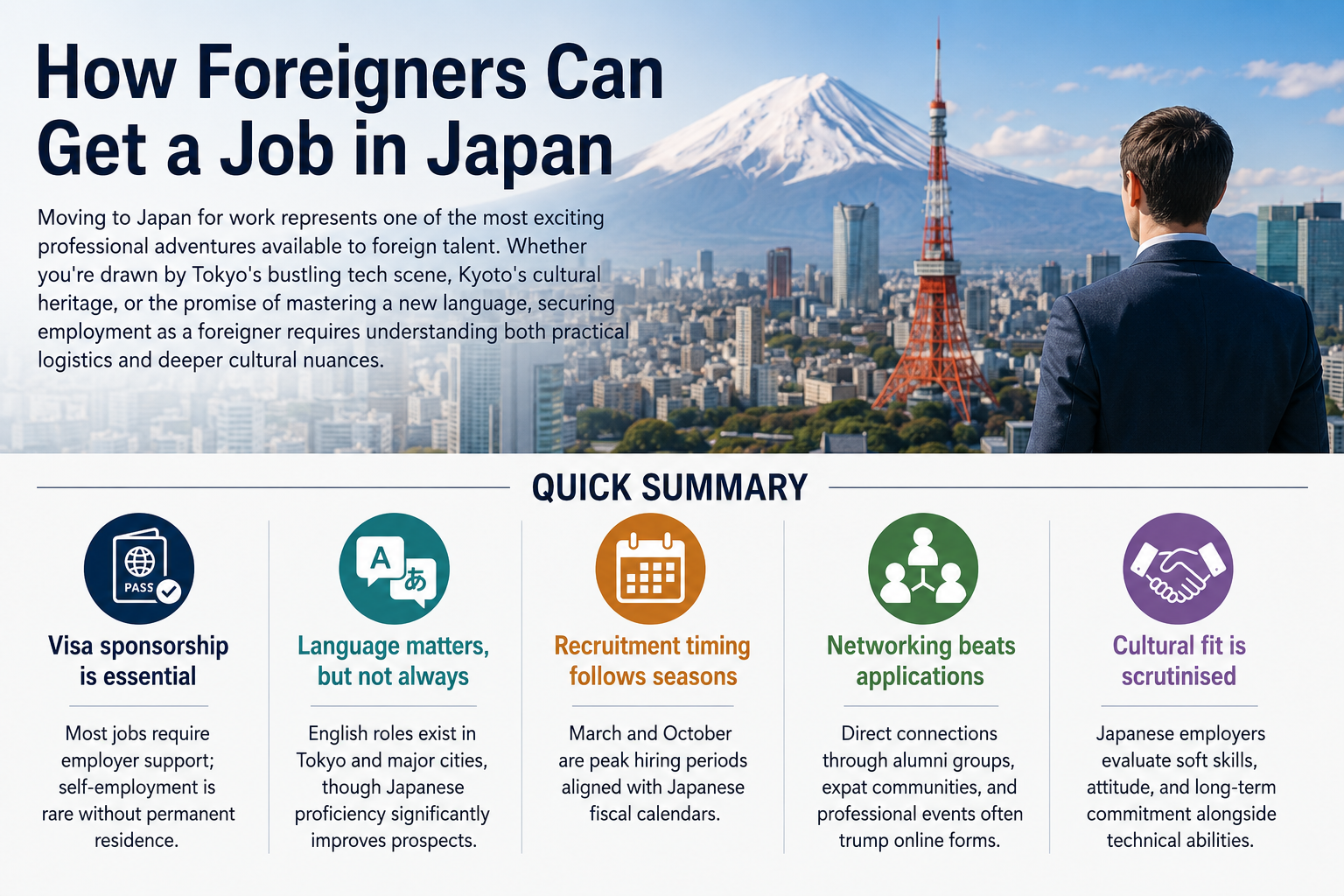
Moving to Japan for work represents one of the most exciting professional adventures available to foreign talent. Whether you’re drawn by Tokyo’s bustling tech scene, Kyoto’s cultural heritage, or the promise of mastering a new language, securing employment as a foreigner requires understanding both practical logistics and deeper cultural nuances. Japan’s job market has shifted considerably over the past decade, opening unprecedented opportunities for international professionals—yet success still depends on knowing where to look and how to present yourself authentically. Here’s how to find a job in Japan as a foreigner, based on what actually works.
Quick Summary
- Visa sponsorship is essential: Most jobs require employer support; self-employment is rare without permanent residence
- Language matters, but not always: English roles exist in Tokyo and major cities, though Japanese proficiency significantly improves prospects
- Recruitment timing follows seasons: March and October are peak hiring periods aligned with Japanese fiscal calendars
- Networking beats applications: Direct connections through alumni groups, expat communities, and professional events often trump online forms
- Cultural fit is scrutinised: Japanese employers evaluate soft skills, attitude, and long-term commitment alongside technical abilities
How Japanese Work Culture Shapes Every Job in Japan
Japanese employment operates on principles quite distinct from Western models. The concept of kaisha no tame ni—working for the company’s benefit rather than personal gain—remains embedded in many organisations, particularly large corporations. Loyalty and teamwork are valued over individual achievement, and decision-making typically involves consensus-building across departments rather than top-down directives.
Hierarchy plays a crucial role. Respect for seniority isn’t merely polite; it shapes daily interactions, meeting dynamics, and even dining arrangements. You’ll notice this in how colleagues address one another using titles (san, sama, or chan) rather than first names, even after years of working together. For foreign employees, this can feel formal initially, but it reflects professional respect rather than coldness.
Job titles themselves carry different weight. A “manager” in Japan often has less autonomy than the equivalent Western position, as they coordinate rather than command. Conversely, technical specialists may wield significant influence despite lacking managerial titles. Understanding these subtle distinctions helps you navigate career progression realistically. Most roles also require a formal work permit sponsored by the employer.
A Typical Japanese Work Day
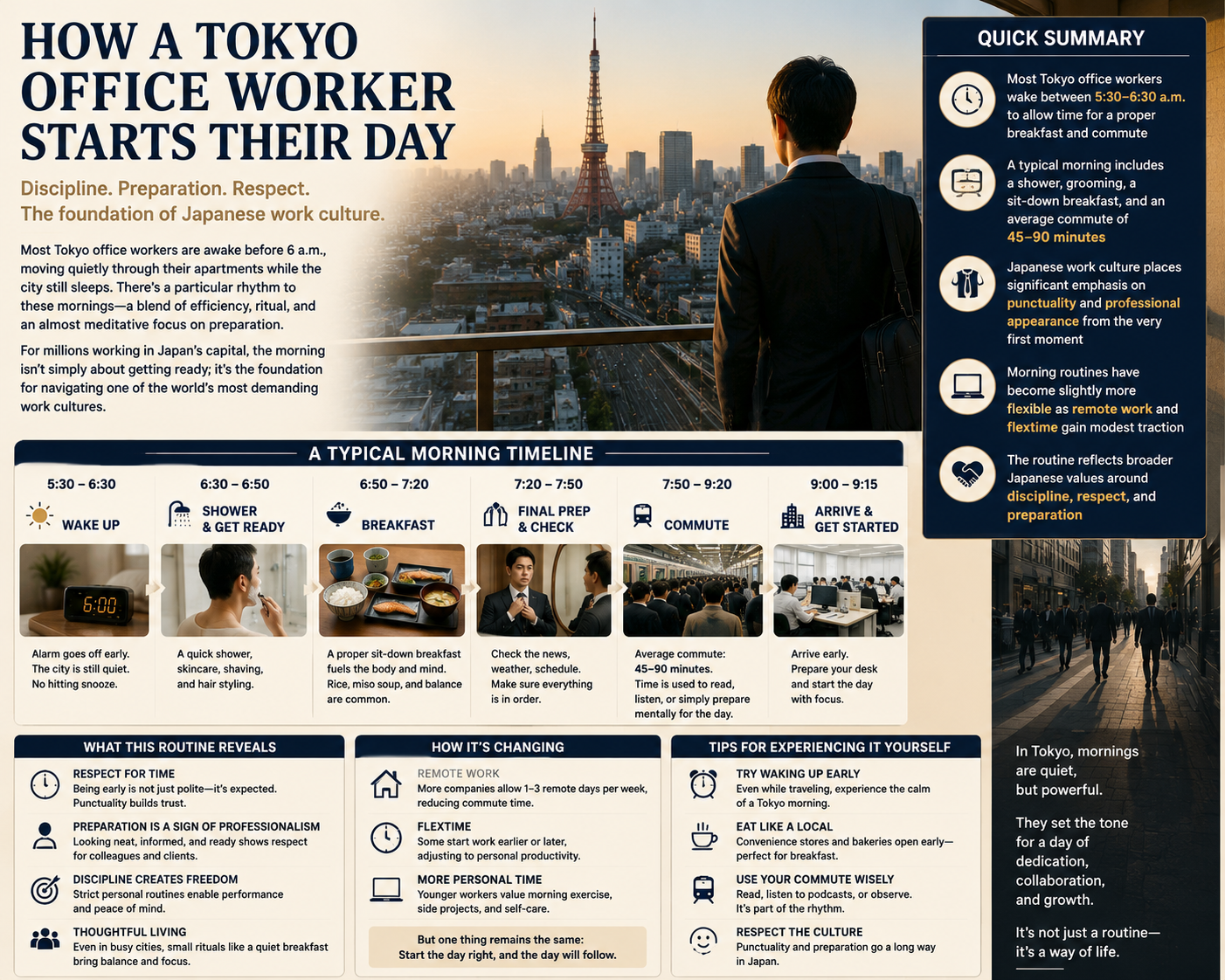
The stereotype of salarymen working until midnight contains kernels of truth, though modern Tokyo increasingly challenges this narrative. A typical office day begins around 8:30 or 9:00 a.m., with many workers arriving earlier to prepare their desks and greet colleagues.
Mornings often involve department meetings where daily priorities are discussed. Unlike Western stand-ups, these can extend quite long as managers address multiple agenda items. Mid-morning brings focused work, though interruptions are common—colleagues frequently approach desks directly rather than emailing. Around noon, many workers grab lunch from convenience stores (approximately ¥600–¥1,200) or eat at company cafeterias.
Afternoons typically include client meetings or collaborative projects. The crucial difference from Western workplaces: staying until your superior leaves is still expected in traditional companies, even if your work is completed. This stems from the concept of nenkoujoretsu (seniority-based advancement), where visible commitment matters. However, tech companies and startups increasingly embrace flexible departures. Evening often means nomikai (drinking with colleagues), which, whilst optional nominally, carries social weight for team bonding and relationship-building.
How This Compares to Other Countries
Japanese work culture sits distinctly apart from Anglo-American models. Where British or American firms emphasise individual accountability and measurable outputs, Japanese companies prioritise process and group harmony. A British employee praised for independent initiative might face subtle resistance in Japan for not consulting colleagues first.
Work-life balance perception differs markedly. Germany and Scandinavia legally enforce strict boundaries—workers leaving at 5:30 p.m. face no social stigma. Japan, despite recent karoshi (death from overwork) awareness, still normalises staying late as dedication. Yet paradoxically, Japanese workers often accomplish similar tasks in less calendar time through superior efficiency and long-term planning.
Compensation structures diverge too. Western salaries emphasise base pay with performance bonuses; Japanese packages include housing allowances, commuting subsidies, and annual bonuses tied to company performance rather than individual metrics. For a mid-level professional in Tokyo, expect annual salaries ranging from ¥3.5 million to ¥6 million depending on industry and experience.
How It’s Changing
Japan’s workplace is undergoing genuine transformation, particularly post-pandemic. Remote work, once virtually unknown, has gained acceptance. Companies like Rakuten and SoftBank have pioneered English-speaking workforces and flatter hierarchies. The government actively recruits foreign talent through initiatives like the High Qualification Professional visa, recognising demographic challenges.
Younger Japanese workers increasingly question lifetime employment assumptions. Career-switching, once career suicide, now carries less stigma. Startups and foreign companies operating in Japan set different expectations—departures at 6:00 p.m. are normal, and individual achievement is celebrated.
The push for diversity is real but uneven. Tokyo tech firms actively hire foreigners; regional companies remain hesitant. Women’s workplace participation is improving, though gender disparities persist compared to Western nations. For foreign job-seekers, this shifting landscape creates opportunity—employers increasingly view international hires as bringing fresh perspectives rather than cultural risk.
FAQ
Do I need to speak Japanese?
Not always, particularly for engineering, finance, or teaching roles in major cities. However, basic conversational ability (roughly JLPT N3 level) dramatically improves networking and integration. Managers especially benefit from Japanese fluency.
What visa do I need?
Most employees require a “work visa” (就労ビザ), sponsored by employers. Eligibility typically requires a university degree or specialised skills. Freelancers and entrepreneurs face stricter requirements.
Where should I look for jobs?
Major platforms include GaijinPot, LinkedIn Japan, and company websites directly. Networking through universities, expat meetups, and professional associations often yields better results than applications alone.
What’s the salary reality?
Salaries vary wildly. English teachers earn ¥2.5–3.5 million annually; software engineers in Tokyo ¥5–8 million; executives ¥8+ million. Cost of living in Tokyo (rent ¥100,000–¥200,000 monthly for decent apartments) should factor into negotiations.
How do I stand out?
Demonstrate commitment to Japan—language study, cultural understanding, and genuine interest in the company beyond compensation. Japanese employers invest heavily in training; they want people planning multi-year stays.
Finding work in Japan as a foreigner demands patience, cultural sensitivity, and strategic networking. The opportunity is undeniably real—Japan’s labour shortage and internationalisation agenda mean talented foreigners are increasingly welcomed. Success comes not from perfectly matching job descriptions on forms, but from understanding how Japanese workplaces function, showing genuine respect for local customs, and positioning yourself as someone committed to contributing meaningfully to your team’s harmony and success.
Seen in Everyday Life in Tokyo

A Real-Life Note from Japan

What I Often See in Japanese Stores

Shop Japanese Products
If you’re inspired by what Japanese families use in this area, you can find a wide range of authentic Japanese products on Amazon:
🛒 Shop Related Japanese Products on Amazon
More From Japanese Best
Disclosure: As an Amazon Associate, Japanese Best earns from qualifying purchases. This does not affect our recommendations. We only feature products we genuinely believe are worth your consideration.
Editorial Disclaimer
The views, opinions, and recommendations in this article are the author’s own and reflect personal experience living in Japan. They do not constitute professional, financial, or purchasing advice of any kind.
Product availability, pricing, and specifications are subject to change without notice. Japanese Best makes no warranties — express or implied — regarding the accuracy or completeness of this content, and accepts no liability for any decisions made based on it. Always verify details directly with the retailer or manufacturer before purchasing.
コメント