A Tokyo Office Worker’s Morning Routine (2026)
June 28, 2026 | Work Life | Japanese Best
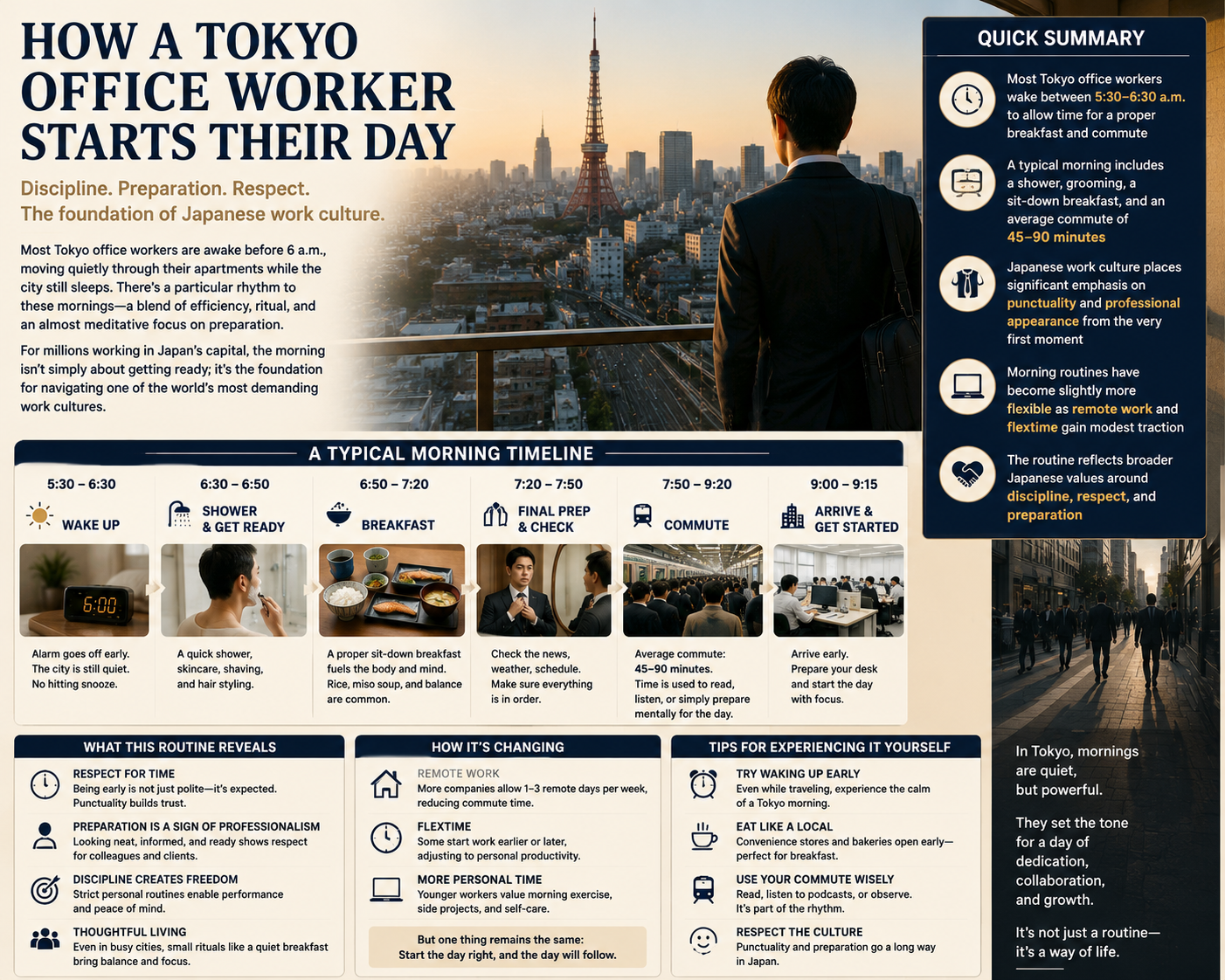
Most Tokyo office workers are awake before 6 a.m., moving quietly through their apartments while the city still sleeps. There’s a particular rhythm to these mornings—a blend of efficiency, ritual, and an almost meditative focus on preparation. For millions working in Japan’s capital, the morning isn’t simply about getting ready; it’s the foundation for navigating one of the world’s most demanding work cultures. Understanding how a Tokyo office worker starts their day reveals much about Japanese values: discipline, respect for time, and a commitment to appearing polished and prepared, no matter the personal cost. This is what that morning routine actually looks like, hour by hour.
Quick Summary
- Most Tokyo office workers wake between 5:30–6:30 a.m. to allow time for a proper breakfast and commute
- A typical morning includes a shower, grooming, a sit-down breakfast, and an average commute of 45–90 minutes
- Japanese work culture places significant emphasis on punctuality and professional appearance from the very first moment
- Morning routines have become slightly more flexible as remote work and flextime gain modest traction
- The routine reflects broader Japanese values around discipline, respect, and preparation
How Japanese Work Culture Works
Japanese work culture operates on principles that extend far beyond the office itself. Punctuality isn’t just important—it’s foundational. Being five minutes late is considered a serious breach, and most workers aim to arrive 10–15 minutes early. This expectation means the morning routine must be executed with precision.
The concept of shouganai (仕方がない), or “it cannot be helped,” shapes how workers approach their duties. Combined with gaman (我慢), the ability to endure hardship without complaint, these values mean that even on difficult mornings, workers maintain composure and follow their routine. Japanese companies also emphasise wa (harmony), which means appearing coordinated with colleagues through dress, demeanour, and punctual arrival.
Hierarchy matters tremendously. Junior staff often arrive earlier than senior colleagues to prepare meeting spaces and greet superiors, a habit rooted in the broader salaryman work culture. This practice, whilst shifting in progressive companies, still influences how many plan their mornings. The stakes feel real because they are: tardiness can damage your reputation for years.
A Typical Morning Routine, Hour by Hour
A Tokyo office worker’s alarm typically sounds between 5:30 and 6:30 a.m. The first action is often a quick shower—many Japanese homes feature shower rooms separate from bathing areas, allowing for efficient morning washing. This takes roughly 15 minutes.
Next comes grooming. Men typically spend 10–15 minutes on shaving and hair styling. Women often allocate 20–30 minutes for make-up and hair, though this varies widely. Appearance matters in Japanese offices; conservative dress codes still dominate, with dark suits and minimal jewellery being standard.
Breakfast is taken seriously. Rather than grabbing something quick, many workers sit down to a traditional Japanese breakfast: grilled fish, miso soup, rice, pickled vegetables, and nori seaweed. This might take 20–25 minutes. Some opt for toast and coffee, but the sit-down meal remains culturally valued. A convenience store breakfast (onigiri rice balls and canned coffee) costs around 500–800 yen (£3–5) and is increasingly common for those pressed for time.
The commute itself is a significant undertaking. Tokyo’s train system is punctual to the minute, but crowding during rush hour (7:30–9:00 a.m.) is notorious. Workers often read, study English, or simply zone out during their 45–90 minute journey, viewing it as dead time that simply must be endured.
Arrival at the office happens 10–15 minutes before the official start time (usually 9:00 a.m.). This buffer allows for settling in, checking emails, and greeting colleagues—particularly important for maintaining workplace harmony.
How This Compares to Other Countries
Tokyo morning routines differ notably from those in Western cities. British and American office workers, by comparison, often skip breakfast or eat whilst commuting. Tokyo workers treat breakfast as a ritual requiring a dedicated 20–30 minutes. This reflects broader cultural attitudes: Japanese culture views proper meals as non-negotiable, even under time pressure.
The commute itself is markedly different. Whilst London and New York workers also face long commutes, Tokyo’s train system is so reliable and crowded that it functions almost like a shared experience—millions moving in synchronised waves. Western commuters are far more likely to drive, experience variable travel times, and feel individual stress rather than collective rhythm.
Dress codes remain more formal in Tokyo offices than in many contemporary Western workplaces. Tech companies in San Francisco or London increasingly permit casual wear; in Tokyo, even progressive firms often maintain conservative standards. This means more grooming time built into morning routines across the board.
Arrival time expectations also differ sharply. In many Western offices, arriving exactly at start time is acceptable. In Tokyo, arriving 10–15 minutes early is standard practice. This isn’t written policy—it’s cultural expectation, which can feel even more binding than formal rules.
How It’s Changing
Post-pandemic shifts have introduced genuine change, though progress remains incremental. Remote work (リモートワーク, rimōto wāku) has expanded, particularly in IT and finance sectors. Workers doing hybrid arrangements can compress their morning routine on home days, sleeping 30–60 minutes longer and skipping the commute entirely.
Flextime arrangements, once virtually non-existent, now exist in perhaps 20–25% of major Tokyo companies. This has loosened the rigid 5:30 a.m. wake-up norm slightly, allowing some workers to start at 10:00 a.m. instead of 9:00 a.m.
Younger generations show more willingness to question the “arrive early” culture, though this remains controversial. Some companies have explicitly stated that arriving before start time won’t influence evaluations, yet many workers feel the pressure persists unofficially.
Convenience culture has also reshaped mornings. Automated breakfast delivery services, meal-prep apps, and quick grooming products have made it easier to maintain routines whilst reclaiming minutes of sleep. If you’re curious about practical items that support efficient morning routines, you can find on Amazon everything from Japanese grooming tools to travel-friendly breakfast options.
FAQ
Do all Tokyo workers wake this early?
No. Remote workers, shift workers, and those in creative industries often have more flexibility. However, traditional office culture remains dominant, affecting millions.
Is the long commute really necessary?
Tokyo property costs mean most workers live 30–60 minutes from central business districts. The commute reflects economic geography more than preference.
Can you be casual at work in Tokyo?
Increasingly, yes—but it varies by industry and company age. Established corporations remain formal; startups are more relaxed.
What happens if you’re late?
Consequences range from awkward apologies to formal reprimands, depending on frequency and company culture. Being late once is forgivable; being late regularly damages your reputation.
The Tokyo office worker’s morning is ultimately a window into a broader work culture built on discipline, respect, and collective expectation. Whilst globalisation and remote work are gradually softening rigid structures, the commitment to preparation and punctuality remains deeply embedded in how millions start their days. Understanding this routine illuminates not just how Japanese professionals work, but why they work this way—and what’s slowly beginning to change.
Seen in Everyday Life in Tokyo
A Real-Life Note from Japan
What I Often See in Japanese Stores
Shop Japanese Products
If you’re inspired by what Japanese families use in this area, you can find a wide range of authentic Japanese products on Amazon:
🛒 Shop Related Japanese Products on Amazon
More From Japanese Best
Disclosure: As an Amazon Associate, Japanese Best earns from qualifying purchases. This does not affect our recommendations. We only feature products we genuinely believe are worth your consideration.
Editorial Disclaimer
The views, opinions, and recommendations in this article are the author’s own and reflect personal experience living in Japan. They do not constitute professional, financial, or purchasing advice of any kind.
Product availability, pricing, and specifications are subject to change without notice. Japanese Best makes no warranties — express or implied — regarding the accuracy or completeness of this content, and accepts no liability for any decisions made based on it. Always verify details directly with the retailer or manufacturer before purchasing.
コメント