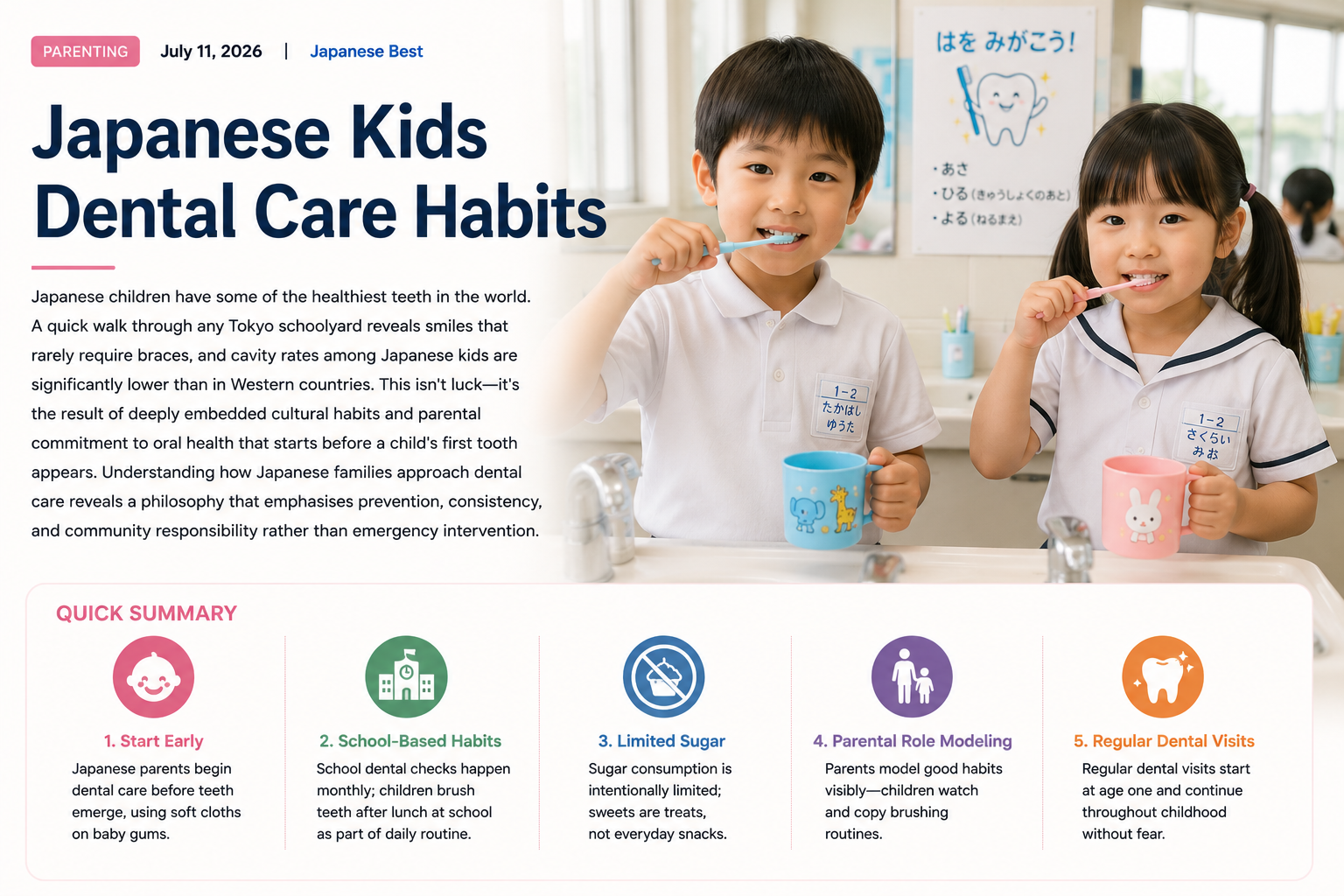
Japanese Kids Dental Care Habits
July 11, 2026 | Parenting | Japanese Best
Japanese children have some of the healthiest teeth in the world. A quick walk through any Tokyo schoolyard reveals smiles that rarely require braces, and cavity rates among Japanese kids are significantly lower than in Western countries. This isn’t luck—it’s the result of deeply embedded cultural habits and parental commitment to oral health that starts before a child’s first tooth appears. Understanding how Japanese families approach dental care reveals a philosophy that emphasises prevention, consistency, and community responsibility rather than emergency intervention.
Quick Summary
- Japanese parents begin dental care before teeth emerge, using soft cloths on baby gums
- School dental checks happen monthly; children brush teeth after lunch at school
- Sugar consumption is intentionally limited; sweets are treats, not everyday snacks
- Parents model good habits visibly—children watch and copy brushing routines
- Regular dental visits start at age one and continue throughout childhood without fear
🛒 Shop Recommended Products
How Japanese Parents Approach This
Japanese parenting culture treats dental health as a non-negotiable life skill, similar to table manners or politeness. Parents don’t frame brushing as a chore to negotiate but as a standard daily practice, like getting dressed. The concept of shitsuke (躾)—proper training and discipline—extends naturally to oral hygiene.
Many Japanese mothers begin gum care when babies are around three months old, using a soft cloth dipped in water to gently wipe gums twice daily. This normalises the sensation of something in the mouth and establishes routine before teeth even arrive. When the first tooth emerges, typically around six months, a soft infant toothbrush replaces the cloth. Fluoride toothpaste is introduced gradually, with parents using only a grain-sized amount for babies under two years.
Dental visits begin early—often at twelve months for a first check-up. Rather than waiting for problems, Japanese families view the dentist as a partner in prevention. Costs are subsidised by local government until age eighteen in most prefectures, reducing financial barriers to consistent care.
What Japanese Kids Experience
Japanese children grow up understanding that tooth brushing is as automatic as breathing. By age three or four, most can brush independently with parental supervision. The routine typically involves brushing after breakfast, after lunch (often at school), and before bed—three times daily as standard practice.
Snacking culture differs markedly from Western norms. While Japanese kids enjoy sweets, they’re positioned as occasional treats rather than everyday foods. A child might receive a small chocolate or biscuit on a special day, but not as a daily after-school ritual. Sugary drinks are similarly rare in households; water and unsweetened tea are the default beverages. Mothers often pack small portions of dried fruit or nuts rather than chocolate bars in lunchboxes.
Interdental cleaning starts around age six, when children develop the dexterity for floss or interdental brushes. Parents introduce these gradually, demonstrating on their own teeth first. The message is clear: brushing alone isn’t enough—spaces between teeth matter too.
At School vs At Home
Japanese schools function as extensions of dental health policy. Most elementary schools conduct monthly dental checks performed by a school dentist, with results sent home in a detailed report. Any issues—a cavity, misalignment, or plaque buildup—are flagged for parental follow-up.
Lunch routines reinforce habits. After eating in the school cafeteria, children rinse their mouths with water and brush their teeth if time permits. Many schools provide small individual toothbrushes kept in lockers for this purpose. This public commitment makes dental care a social norm, not a family secret.
At home, the environment supports consistency. Toothbrushes are stored visibly in bathrooms, often in attractive cases or holders. Some families use timers or sing songs to ensure children brush for the recommended two to three minutes. Electric toothbrushes are popular among older children, making the routine feel more engaging.
Parents model behaviour deliberately. A child watching their mother or father brush twice daily absorbs the message that this is simply what adults do.
Real-Life Examples from Tokyo
In Shibuya ward, a typical family routine looks like this: seven-year-old Yuki brushes after breakfast with her mother’s supervision, spending exactly two minutes on each section (top, bottom, sides). Her mother uses this time to brush her own teeth, demonstrating proper technique. At school in Minato, after lunch at 12:30, Yuki rinses her mouth and brushes with a small brush kept in her school locker. At home after dinner, she brushes again, sometimes with an electric toothbrush if her parents decide it’s needed.
Monthly school dental checks are treated seriously. When the dentist identifies slight plaque buildup, Yuki’s parents book a follow-up appointment at a local clinic near Roppongi within two weeks. The dentist reinforces flossing technique, and her mother buys dental floss with a citrus flavour that makes the routine more appealing.
Sweets appear rarely. On her birthday, Yuki might receive a small piece of cake after lunch (immediately followed by rinsing), not before bed. Halloween and Christmas see modest amounts of chocolate, never unlimited quantities. Her lunchbox typically contains rice, vegetables, grilled fish, and occasionally a small portion of fruit—deliberately designed to minimise cavity risk.
How This Compares to Western Parenting
Western parents often approach dental care reactively, scheduling dentist visits when problems appear. Japanese parents reverse this—prevention is the priority. Western children frequently consume sugary snacks daily, with parents treating sweets as rewards or comfort items. Japanese culture positions sweets differently: as luxuries to be savoured occasionally, not emotional regulation tools.
Brushing frequency differs too. Many Western children brush once or twice daily; Japanese kids brush three times as standard. School-based dental programmes in the West are less comprehensive than Japan’s monthly check-ups and supervised lunch-time brushing.
Perhaps most significantly, Japanese parenting frames dental care as a social responsibility and self-discipline skill, not merely hygiene. A child who doesn’t brush is seen as lacking shitsuke, bringing slight shame to the family. This cultural weight encourages compliance without constant negotiation.
FAQ
At what age should I start brushing my child’s teeth?
Begin gum care from three to four months old with a soft, damp cloth. Start brushing once the first tooth appears, typically around six months.
Is three times daily brushing necessary?
Japanese dentists recommend it because it coincides with meals and prevents acid attacks on teeth. If three times isn’t feasible, after breakfast and before bed are essential minimums.
Should I use fluoride toothpaste for babies?
Yes, but in tiny amounts—a rice grain for under-twos, a pea-sized amount for ages two to five. Fluoride strengthens enamel significantly.
How do I encourage my child to brush without battles?
Make it a family routine where you brush simultaneously. Use attractive toothbrush holders, timers, or songs. Never frame it as optional—it’s simply what we do.
When should dental visits begin?
Japanese practice recommends the first visit around twelve months, then every six months for preventive checks.
Japanese children’s excellent dental health stems not from superior genetics but from consistent, culturally supported habits established young. By adopting even portions of this approach—three daily brushing sessions, limited sugar, early dental visits, and parental modelling—you can significantly improve your child’s oral health and establish lifelong patterns that serve them into adulthood.
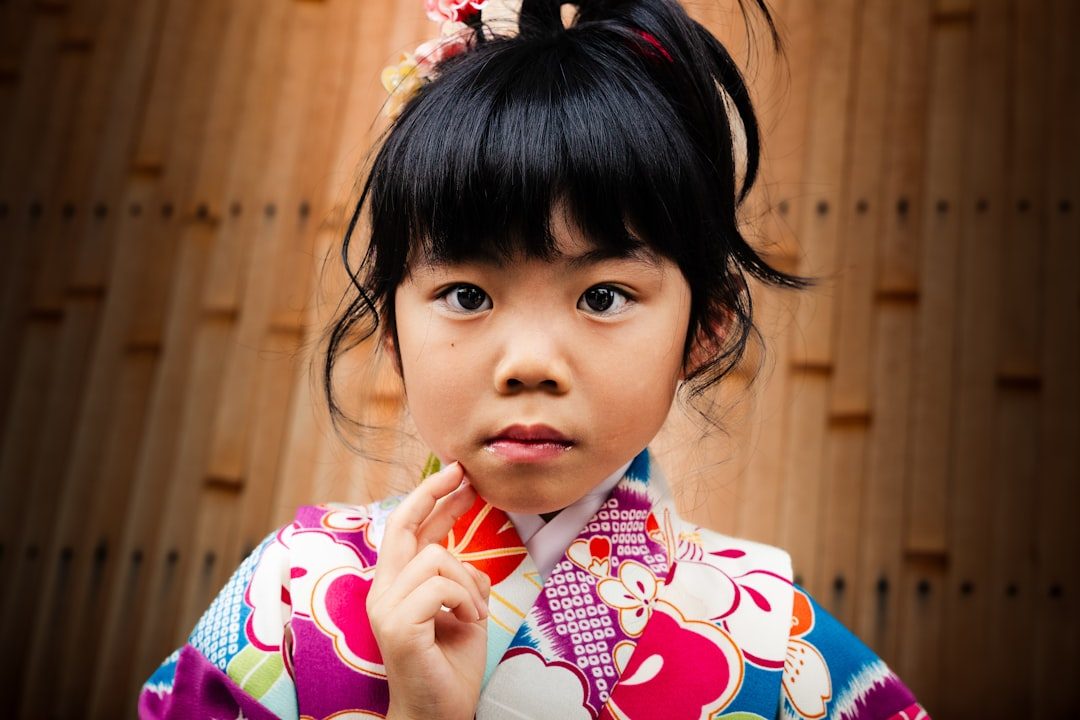
Seen in Everyday Life in Tokyo
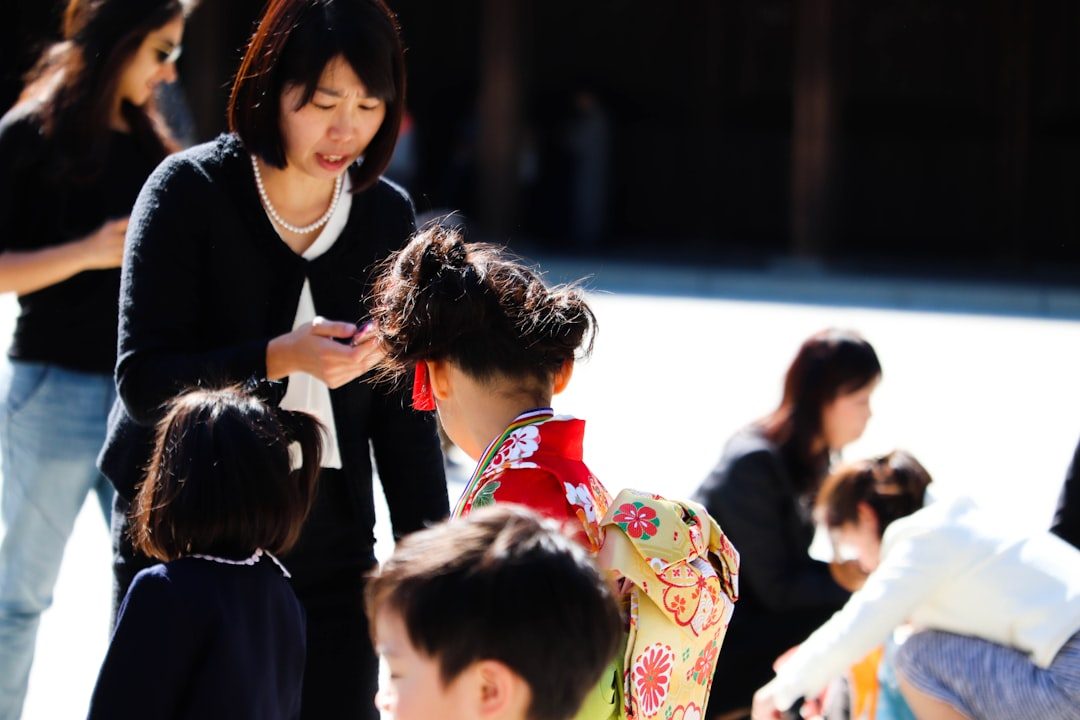
A Real-Life Note from Japan
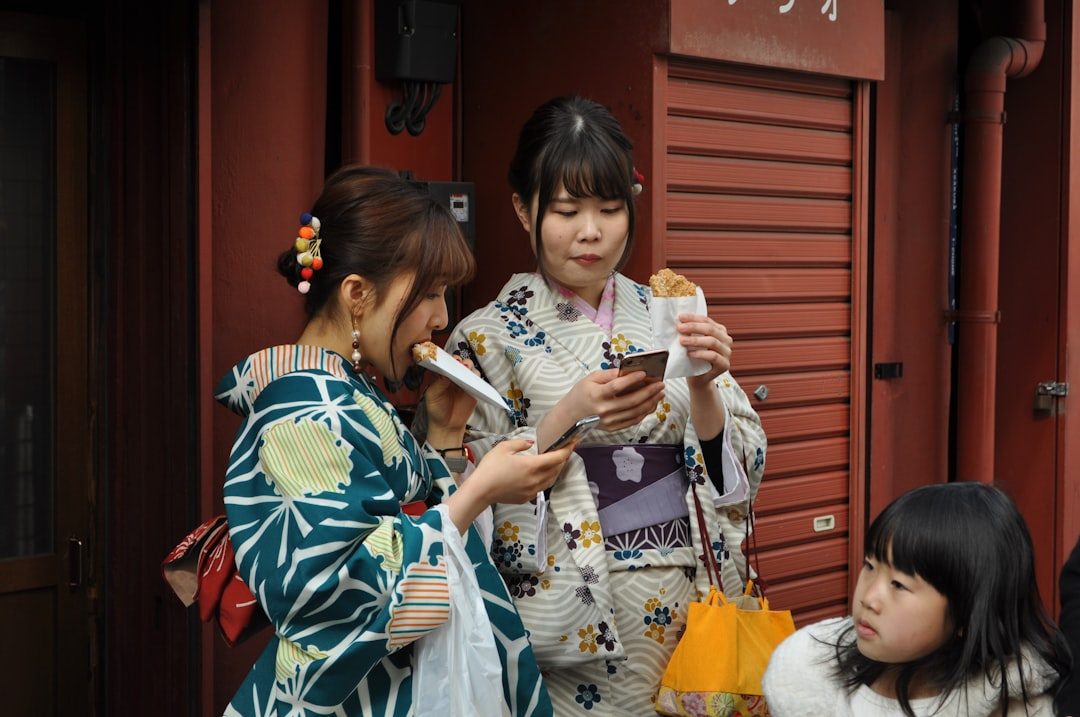
What I Often See in Japanese Stores
Recommended Japanese Products
The products below are directly relevant to this article and used by Japanese families.
| Product | Brand | Best For | Link |
|---|---|---|---|
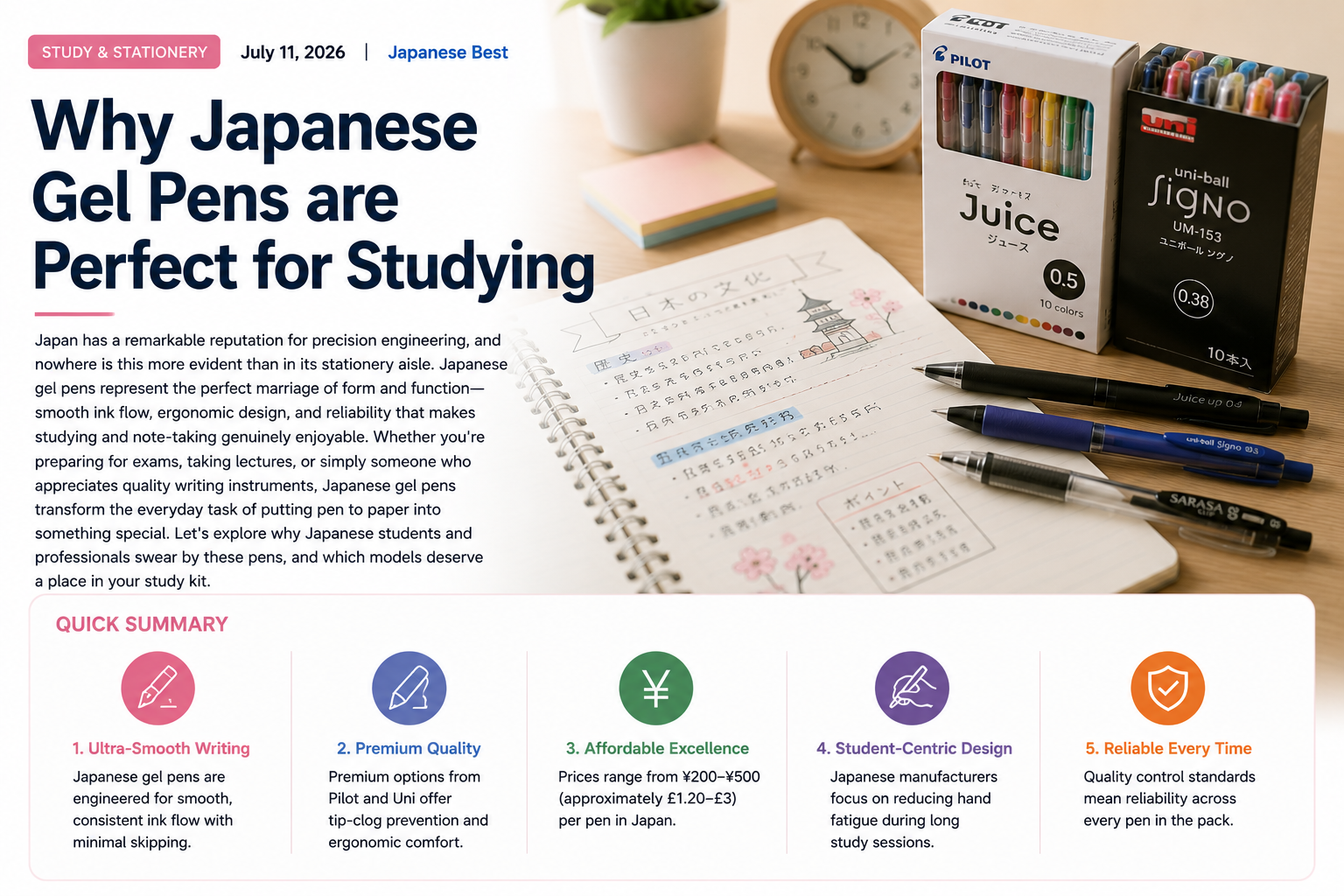
| Pilot FriXion Clicker 0.5mm | Pilot | Students, planners, and anyone who needs flexibility to correct mistakes | Pilot FriXion Clicker 0.5mm |
| Zebra Sarasa Clip 0.5mm | Zebra | Students and office workers who write quickly and need fast-drying ink | Zebra Sarasa Clip 0.5mm |
| Zojirushi Stainless Lunch Jar (Bento Box) | Zojirushi | Office workers and students who want hot lunches without needing a microwave | Zojirushi Stainless Lunch Jar (Bento Box) |
Pilot FriXion Clicker 0.5mm
The world’s bestselling erasable pen — writes like a smooth gel but rubs out cleanly with heat.
Best for: Students, planners, and anyone who needs flexibility to correct mistakes
🛒 Pilot FriXion Clicker 0.5mm on Amazon
Zebra Sarasa Clip 0.5mm
Japan’s favourite everyday gel pen — fast-drying, smooth, and available in gorgeous colours.
Best for: Students and office workers who write quickly and need fast-drying ink
🛒 Zebra Sarasa Clip 0.5mm on Amazon
Zojirushi Stainless Lunch Jar (Bento Box)
Japan’s most reliable insulated bento jar — keeps lunch hot for hours without a microwave.
Best for: Office workers and students who want hot lunches without needing a microwave
🛒 Zojirushi Stainless Lunch Jar (Bento Box) on Amazon
More From Japanese Best
- What Japanese Families Eat for Dinner
- What to Buy at Daiso: A Practical Guide
Disclosure: As an Amazon Associate, Japanese Best earns from qualifying purchases. This does not affect our recommendations. We only feature products we genuinely believe are worth your consideration.
Editorial Disclaimer
The views, opinions, and recommendations in this article are the author’s own and reflect personal experience living in Japan. They do not constitute professional, financial, or purchasing advice of any kind.
Product availability, pricing, and specifications are subject to change without notice. Japanese Best makes no warranties — express or implied — regarding the accuracy or completeness of this content, and accepts no liability for any decisions made based on it. Always verify details directly with the retailer or manufacturer before purchasing.
コメント