Japanese Family Size: What It Looks Like in 2025
June 20, 2026 | Family Life | Japanese Best
Japan’s birth rate has hit a new low, and family structures are shifting in ways that fascinate—and sometimes perplex—outsiders looking in. If you’ve ever wondered what a Japanese household actually looks like in 2025, or how many children most families have, you’re not alone. Understanding Japanese family size trends reveals something deeper about modern life in Japan: the pressures, choices, and values that shape decisions about parenthood, work, and home life across the country.
The Basics: What Most Japanese Families Do
The average Japanese household now comprises 2.3 people, and the typical family with children has just 1.4 kids. This represents a dramatic shift from the post-war era, when three or four children were common. Today, single-child families are increasingly the norm, particularly in metropolitan areas like Tokyo, Osaka, and Kyoto.
The reasons are straightforward yet interconnected. Childcare costs in Japan are substantial—nursery fees in central Tokyo range from ¥60,000 to ¥120,000 monthly. University education demands significant savings; a private university degree costs roughly ¥2–4 million. Many women, particularly those in professional roles, face the difficult choice between career advancement and motherhood, as workplace culture rarely accommodates flexible arrangements. Additionally, housing in major cities is cramped and expensive, making larger families logistically challenging. The Japanese government has introduced subsidies and tax breaks to encourage larger families, yet the trend toward smaller households continues.
A Typical Week in a Japanese Home
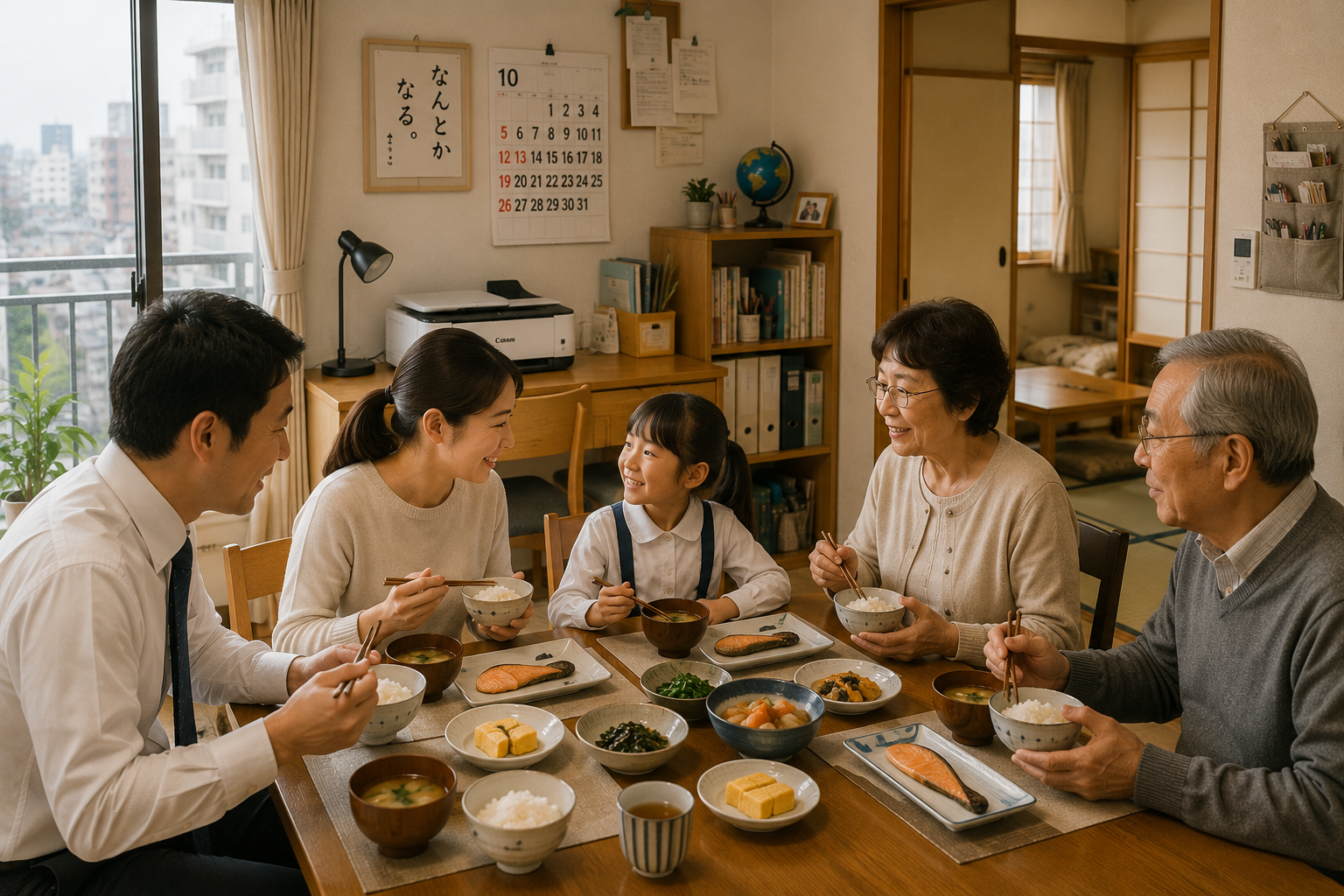
Monday through Friday looks remarkably structured for most Japanese families. A parent—often the mother, though increasingly both partners work—wakes around 6:30 AM to prepare breakfast, usually a traditional spread of rice, miso soup, grilled fish, and pickled vegetables. School-age children leave by 7:45 AM for nearby public schools.
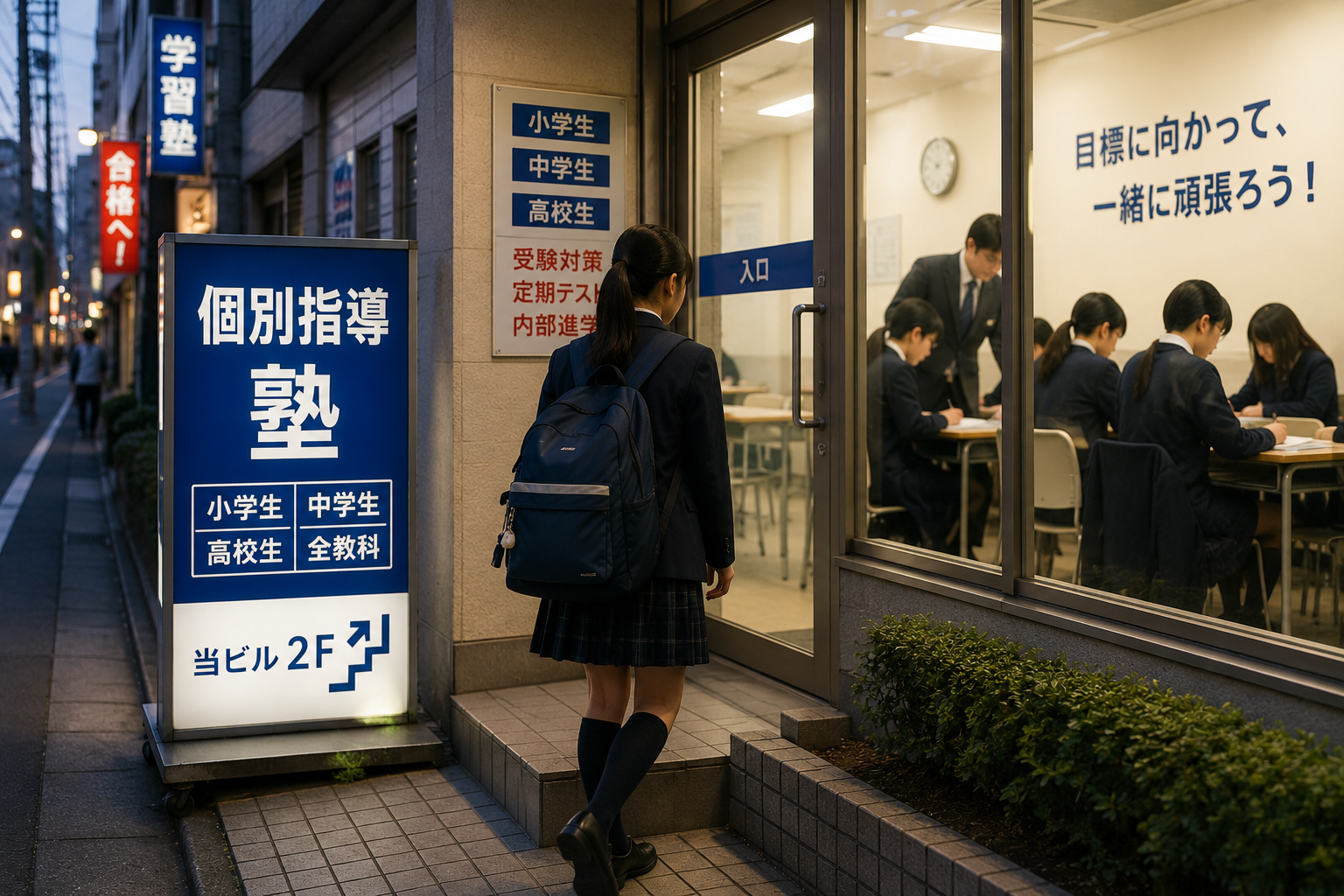
Working parents commute into city centres via train (roughly 30–60 minutes in Tokyo). Younger children attend yōchien (kindergarten) or hoikuen (nursery) until 5 or 6 PM. The evening involves homework supervision, dinner preparation, and bedtime routines by 9 PM. Weekends shift the rhythm: Saturday often includes juku (cram school) sessions for children preparing for entrance exams—a deeply embedded cultural practice. Sunday becomes family time, perhaps visiting a shrine, shopping at a local shopping mall, or gathering with extended family. Evenings are quieter, with families watching television together or children pursuing hobbies.
What This Looks Like in a Real Tokyo Home
Picture a three-generation household in Setagaya ward, central Tokyo: grandparents, parents, and one child sharing a 80-square-metre apartment. Space is precious. The child sleeps in a small bedroom; parents occupy an adjoining tatami room; grandparents have a separate space. A shared living room serves as study area, dining space, and relaxation zone. One desk stays reserved for handling school documents, insurance forms, and home office paperwork, since order matters when space is limited and resources must be efficient.
Mornings are choreographed: the grandmother prepares breakfast whilst the mother packs lunch boxes (bentos). The child attends a local public school within walking distance. After school, the child attends piano lessons (¥8,000–¥15,000 monthly) twice weekly. Dinner is eaten together around 6:30 PM—a non-negotiable family ritual. Weekends might include visits to relatives in nearby prefectures or outings to parks. This household represents a modern Japanese reality: multigenerational living driven partly by economic necessity, partly by cultural preference for family interdependence.
How It Differs From Other Countries
British and American families typically average 1.6–1.7 children, similar to Japan’s figures, yet the context differs markedly. Japanese family planning is far more economically constrained. A British family earning £50,000 faces different childcare mathematics than a Tokyo family earning ¥6 million annually. Secondly, Japanese work culture remains rigid; flexible working arrangements are rarer than in the UK or Australia. Extended family involvement is also more pronounced in Japan—grandparents frequently live nearby or in-home, providing childcare and emotional support in ways less common in Western nuclear families.
Furthermore, Japanese culture emphasises educational investment heavily. The prevalence of juku (cram schools) and entrance exam preparation consumes time and money in ways unfamiliar to most Western families. Finally, housing norms differ: small apartments are standard rather than exceptional, normalising compact family living.
Practical Takeaways
If you’re moving to Japan or interested in family life here, recognise that smaller families are the reality, not an exception. Plan finances accordingly—childcare and education costs are substantial. Understand that multi-generational households are common and deeply valued. Expect that work-life balance remains challenging, particularly for mothers, despite government initiatives. Learn that community and extended family provide essential support systems. Accept that your living space will likely be smaller than you’re accustomed to, requiring efficient organisation and prioritisation.
FAQ
What’s the average number of children in a Japanese family?
Approximately 1.4 children per family, with single-child families increasingly common in urban areas.
Why are Japanese families getting smaller?
High childcare costs, expensive education, rigid workplace culture, limited housing space, and women’s career priorities all contribute.
Do three-generation households exist?
Yes, particularly in Tokyo and other major cities, driven by economic and cultural factors.
Is the government doing anything to reverse declining family size?
Yes—subsidised childcare, tax benefits, and parental leave policies exist, but remain insufficient to reverse broader trends.
Ultimately, Japanese family size in 2025 reflects pragmatic choices within specific economic and cultural contexts. Understanding these dynamics offers insight not just into Japanese society, but into how modern life reshapes family structures globally. For those considering life in Japan, recognising these realities helps set realistic expectations and deeper cultural appreciation.
Is it worth buying Japanese family life over cheaper alternatives?
For most use cases, yes — if you plan to use the product daily or for many years. Japanese family life tend to have a longer useful lifespan, which often makes the total cost of ownership lower than a cheaper alternative replaced every 2–3 years. That said, always match the product to your actual needs.
How long do Japanese family life typically last?
With proper care, quality Japanese family life are designed for 10 years or more of daily use. This is not incidental — it reflects what Japanese domestic consumers expect.
Where can I buy authentic Japanese family life online?
The safest options are Amazon (from the brand’s official store or well-reviewed sellers), direct brand websites, or authorised international retailers. Avoid unverified marketplace listings for high-value items.
More From Japanese Best
The Japanese Perspective: What Buyers Here Actually Think
Japanese consumers approach products purchases with a depth of research and long-term mindset that differs from typical Western buying behaviour.
How Products Are Used in Japanese Daily Life
In Japan, products are considered essential household tools, not impulse buys. Families research extensively across Amazon.co.jp, Kakaku.com, and Rakuten before purchasing, and expect their chosen product to perform reliably for 10 years or more.
The concept of mottainai (もったいない — a deep reluctance to waste) shapes buying habits: Japanese consumers would rather spend more once and keep it than replace a cheaper item every few years.
What Japanese Reviews Consistently Mention
Based on patterns visible across Japanese consumer review platforms:
Most praised attributes:
– 耐久性 (taikyusei) — durability well beyond the advertised lifespan
– 使いやすさ (tsukaiやすさ) — intuitive daily use without consulting a manual
– お手入れのしやすさ — easy to clean and maintain in like-new condition
– コストパフォーマンス — total value over the product’s full lifespan
Common concerns in Japanese reviews:
– Premium models have a higher initial price (though most reviewers conclude it is justified)
– Instruction materials on some models may be Japanese-only; check before purchasing
– Verify voltage compatibility for products designed for Japan’s 100V electrical system
Why Japanese brand Resonate With Japanese Consumers
These brands have maintained consistent domestic approval ratings in Japan for years. Japanese users often describe them not as premium options but simply as the right choice for people who care about quality.
Products that rank highly in Japan’s domestic market have passed through a quality filter that few global products can match — Japanese consumers leave detailed negative reviews for underperforming products, so sustained high ratings mean something.
What This Means for International Buyers
For overseas buyers, the key insight is: buy once, buy right. The brands featured here are available internationally on Amazon. Buying through legitimate channels ensures the same product quality Japanese consumers rely on every day.
Many Japanese reviewers also note that products from these brands make excellent gifts — they are recognisable quality products that recipients immediately understand and appreciate.
Disclosure: As an Amazon Associate, Japanese Best earns from qualifying purchases. This does not affect our recommendations. We only feature products we genuinely believe are worth your consideration.
Editorial Disclaimer
The views, opinions, and recommendations in this article are the author’s own and reflect personal experience living in Japan. They do not constitute professional, financial, or purchasing advice of any kind.
Product availability, pricing, and specifications are subject to change without notice. Japanese Best makes no warranties — express or implied — regarding the accuracy or completeness of this content, and accepts no liability for any decisions made based on it. Always verify details directly with the retailer or manufacturer before purchasing.
コメント