Cherry Blossom Season in Japan: A Practical Guide
July 11, 2026 | Trends & News | Japanese Best
Every spring, Japan transforms into a fleeting wonderland of pink and white blossoms, drawing millions of visitors and igniting a national celebration. Cherry blossom season—sakura season—typically peaks from late March to early April, though timing varies by region. This isn’t merely a tourist spectacle; it’s a cultural anchor that shapes how Japanese families plan their year, how businesses market their products, and how the nation collectively pauses to appreciate beauty and impermanence. Understanding sakura season reveals something profound about Japanese values: the embrace of transience, community, and seasonal rhythm.
Quick Summary
- Cherry blossom season runs from late March to early April (varies by region; Tokyo peaks around 1–7 April)
- Japanese families celebrate with hanami picnics, work socials, and evening illuminations (yozakura)
- Peak season drives massive sales in beauty, home air quality, and stationery sectors
- The tradition reflects Japan’s cultural philosophy of finding meaning in fleeting moments
- Proper preparation—skincare, air quality management, and planning tools—enhances the experience
🛒 Shop Recommended Products
The Background
Japan’s cherry blossom obsession dates back over a thousand years, originating in the Nara period (710–794). What began as an aristocratic pastime has evolved into a democratic celebration embracing everyone from schoolchildren to office workers. The Japan Meteorological Corporation issues official sakura front forecasts each year, tracking the blossoms’ northward progression with almost meteorological precision. This year, Tokyo’s peak bloom is predicted around 1–7 April, whilst Kyoto may peak slightly earlier, around 29 March–4 April.
The phenomenon drives the Japanese calendar. New employees begin jobs just as blossoms arrive, symbolising fresh starts. University entrance ceremonies align with peak bloom. Families book holiday time months in advance. Department stores stock seasonal food and merchandise. Even property prices temporarily rise near famous cherry groves. The Japan National Tourism Organisation (JNTO) estimates that sakura season attracts over 2 million overseas visitors annually, generating billions in tourism revenue.
How Japanese Families Are Responding
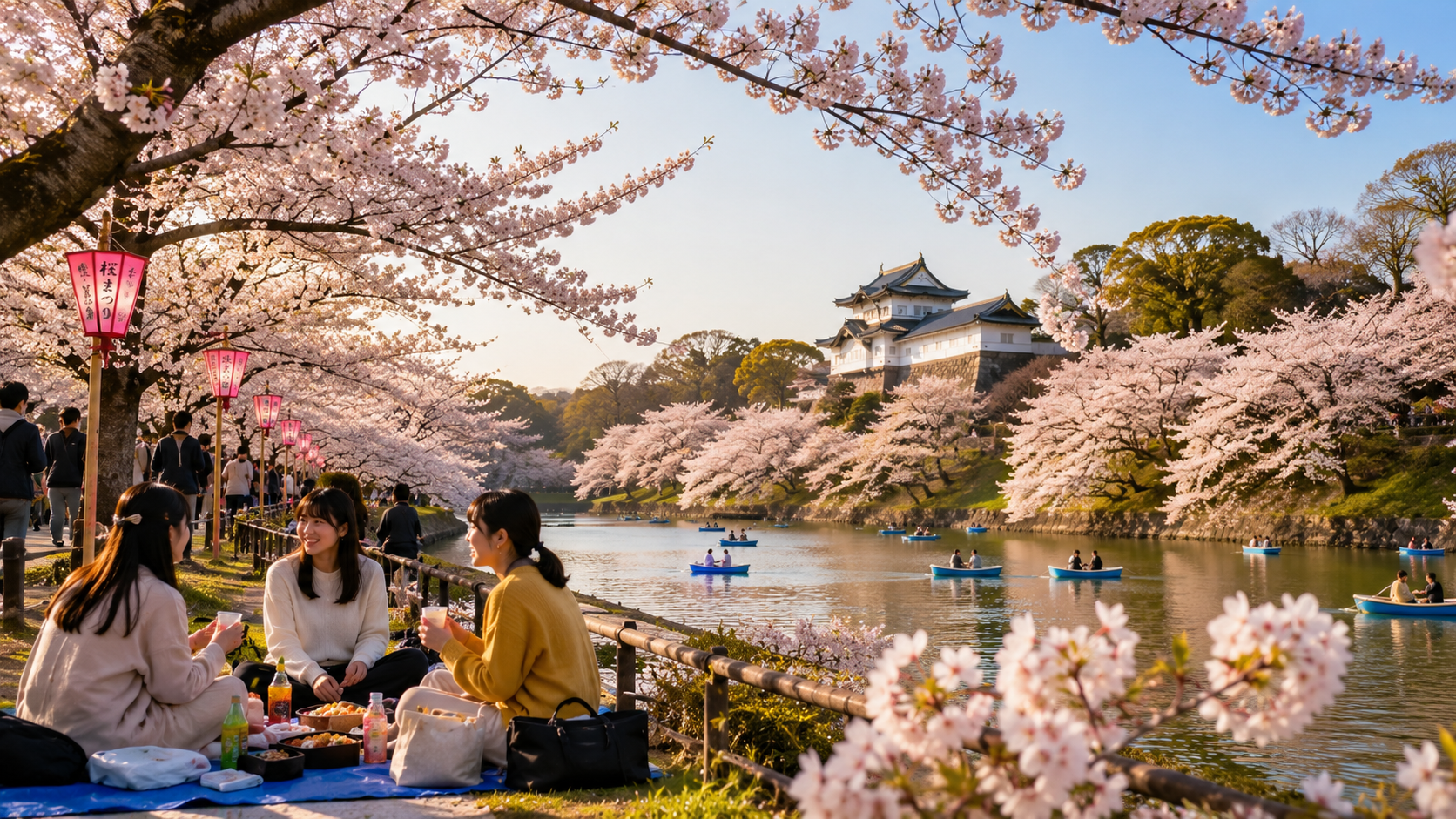
Hanami parties—outdoor celebrations beneath blooming trees—remain the season’s centrepiece. Families claim spots in parks like Ueno (Tokyo), Maruyama (Kyoto), and Osaka Castle Park by dawn or even the evening before. They spread blue tarps, unpack bento boxes, and settle in for hours of viewing, often lasting into evening yozakura (night blossom) sessions illuminated by lanterns.
Beyond picnics, the season shapes daily life profoundly. Office workers attend mandatory hanami parties organised by employers, strengthening workplace bonds. Schools host entrance ceremonies framed by blooming trees for symbolic impact. Wedding venues book cherry-view locations a year ahead. Mothers invest in new spring wardrobes and skincare routines, as cherry blossom season coincides with Japan’s dramatic seasonal temperature shifts and increased UV exposure. Many households install air filtration systems, as the pollen season can trigger severe allergies in susceptible individuals. This seasonal consciousness extends to careful planning—students use specialised organisers and erasable writing tools to manage their new schedules flexibly.
What Products and Services Are Popular Because of This
Sakura season drives three distinct product categories. First, food and beverages: convenience stores stock limited-edition sakura lattes, cakes, and sweets. Premium department stores sell hanami-themed bento boxes and sake bottles, often priced ¥2,000–¥8,000. Second, beauty and skincare: brands launch intensive hydration ranges to combat spring allergies and UV damage. Third, home and organisational products: air purifiers become essential household items, especially in urban areas, whilst planning tools help students and families manage their expanding schedules as spring brings new commitments.
The beauty sector sees particular momentum. Spring’s variable weather—warm days, cool nights, sudden pollen surges—stresses skin. Japanese women prioritise deep hydration and protection. The Hada Labo Gokujyun Hyaluronic Acid Lotion by Hada Labo (Rohto) exemplifies this seasonal need: it layers five types of hyaluronic acid, delivering intensive moisture during spring’s unpredictable conditions. Simultaneously, the Panasonic F-VXR70 nanoe X Air Purifier by Panasonic becomes a practical investment for families managing spring pollen and allergens.
Planning tools also surge in popularity as new academic and employment years begin. Students and professionals rely on erasable writing implements to manage flexible schedules. The Pilot FriXion Clicker 0.5mm by Pilot—Japan’s bestselling erasable pen—allows users to revise plans without wasteful corrections, embodying the adaptability spring demands.
What This Tells Us About Japan
Cherry blossom season illuminates core Japanese cultural values. First, the aesthetic philosophy of mono no aware (‘the pathos of things’)—finding profound beauty in transience. Blossoms last mere weeks; their brevity amplifies their value. This mirrors broader Japanese design principles: simplicity, seasonality, and impermanence as sources of meaning rather than sources of loss.
Second, sakura season reveals Japan’s relationship with nature and ritual. Whilst Western cultures might celebrate spring abstractly, Japan marks it through precise forecasts, collective gathering, and hierarchical participation (emperors, office workers, families all observe the tradition). This synchronisation creates social cohesion.
Third, the season demonstrates Japan’s sophisticated consumer culture. Rather than passive observation, Japanese families actively prepare through targeted purchases—skincare, air quality management, planning tools—that enhance their seasonal experience. Products aren’t frivolous; they’re practical enablers of cultural participation.
FAQ
When exactly is cherry blossom season?
Peak bloom varies by region. Tokyo typically peaks 1–7 April; Kyoto 29 March–4 April; Hokkaido may not peak until late April. Check the Japan Meteorological Corporation’s forecast.
Do I need to visit Japan during peak bloom?
Whilst visually stunning, peak season brings crowds and higher prices. Consider visiting slightly after peak bloom for fewer crowds and equally beautiful (if slightly shorter-lived) viewing.
What causes spring allergies during sakura season?
Cherry pollen, cypress pollen, and other spring allergens peak simultaneously. Many Japanese experience kafunshou (hay fever); air purification becomes essential for sensitive individuals.
Is hanami season expensive?
Budget varies greatly. Park picnics cost ¥2,000–¥5,000 per family for food. Hotels near famous parks charge premium rates. However, viewing blossoms in local parks is completely free.
Can I participate in hanami celebrations without visiting Japan?
Many overseas Japanese communities host hanami festivals. Check local Japanese cultural centres or gardens.
Cherry blossom season encapsulates what makes Japan distinctive: the ability to transform a botanical phenomenon into a profound cultural experience. Whether you’re planning a pilgrimage to Japan’s most famous groves or simply understanding the seasonal rhythms shaping Japanese life, sakura season represents far more than pretty flowers. It’s a moment when an entire nation collectively pauses to acknowledge beauty, impermanence, and renewal—and prepares itself practically and emotionally for the year ahead. Approaching the season with proper skincare, clean air, and flexible planning tools transforms it from mere observation into genuine participation in Japanese seasonal consciousness.
Recommended Japanese Products
The products below are directly relevant to this article and used by Japanese families.
| Product | Brand | Best For | Link |
|---|---|---|---|
| Hada Labo Gokujyun Hyaluronic Acid Lotion | Hada Labo (Rohto) | Anyone who wants deep, lasting hydration without irritants | Hada Labo Gokujyun Hyaluronic Acid Lotion |
| Panasonic F-VXR70 nanoe X Air Purifier | Panasonic | Families concerned about allergens, pollen, and indoor air quality in Japanese cities | Panasonic F-VXR70 nanoe X Air Purifier |
| Pilot FriXion Clicker 0.5mm | Pilot | Students, planners, and anyone who needs flexibility to correct mistakes | Pilot FriXion Clicker 0.5mm |
Hada Labo Gokujyun Hyaluronic Acid Lotion
Japan’s bestselling toner — layers up to 5 types of hyaluronic acid for intense hydration.
Best for: Anyone who wants deep, lasting hydration without irritants
🛒 Hada Labo Gokujyun Hyaluronic Acid Lotion on Amazon
Panasonic F-VXR70 nanoe X Air Purifier
Panasonic’s top-of-line air purifier with nanoe X technology targets viruses and allergens.
Best for: Families concerned about allergens, pollen, and indoor air quality in Japanese cities
🛒 Panasonic F-VXR70 nanoe X Air Purifier on Amazon
Pilot FriXion Clicker 0.5mm
The world’s bestselling erasable pen — writes like a smooth gel but rubs out cleanly with heat.
Best for: Students, planners, and anyone who needs flexibility to correct mistakes
🛒 Pilot FriXion Clicker 0.5mm on Amazon
More From Japanese Best
- What Japanese Families Eat for Dinner
- What to Buy at Daiso: A Practical Guide
Disclosure: As an Amazon Associate, Japanese Best earns from qualifying purchases. This does not affect our recommendations. We only feature products we genuinely believe are worth your consideration.
Editorial Disclaimer
The views, opinions, and recommendations in this article are the author’s own and reflect personal experience living in Japan. They do not constitute professional, financial, or purchasing advice of any kind.
Product availability, pricing, and specifications are subject to change without notice. Japanese Best makes no warranties — express or implied — regarding the accuracy or completeness of this content, and accepts no liability for any decisions made based on it. Always verify details directly with the retailer or manufacturer before purchasing.
コメント