Japanese Ofuro: How Families Use the Bath
July 11, 2026 | Family Life | Japanese Best
Every evening in Japan, millions of families gather not around the dinner table, but in the bathroom. The ofuro—the Japanese bath—isn’t simply about getting clean; it’s a cherished ritual that shapes family time, relaxation, and even spiritual wellbeing. For overseas readers, understanding this daily practice offers a window into what makes Japanese family life so distinctly different from Western routines. The ofuro reveals priorities that run deep: togetherness, mindfulness, and the belief that bathing is medicine for both body and soul.
Quick Summary
- The ofuro is a deep soaking bath where families wash before entering, not in the water itself
- Hot water is shared among family members throughout the evening, typically between 40–42°C
- Bathing order traditionally follows hierarchy: guests first, then parents, then children
- The ritual takes 20–30 minutes per person and happens nearly every single day
- Ofuro culture reflects Japanese values of efficiency, family connection, and self-care
🛒 Shop Recommended Products
The Basics: What Most Japanese Families Do
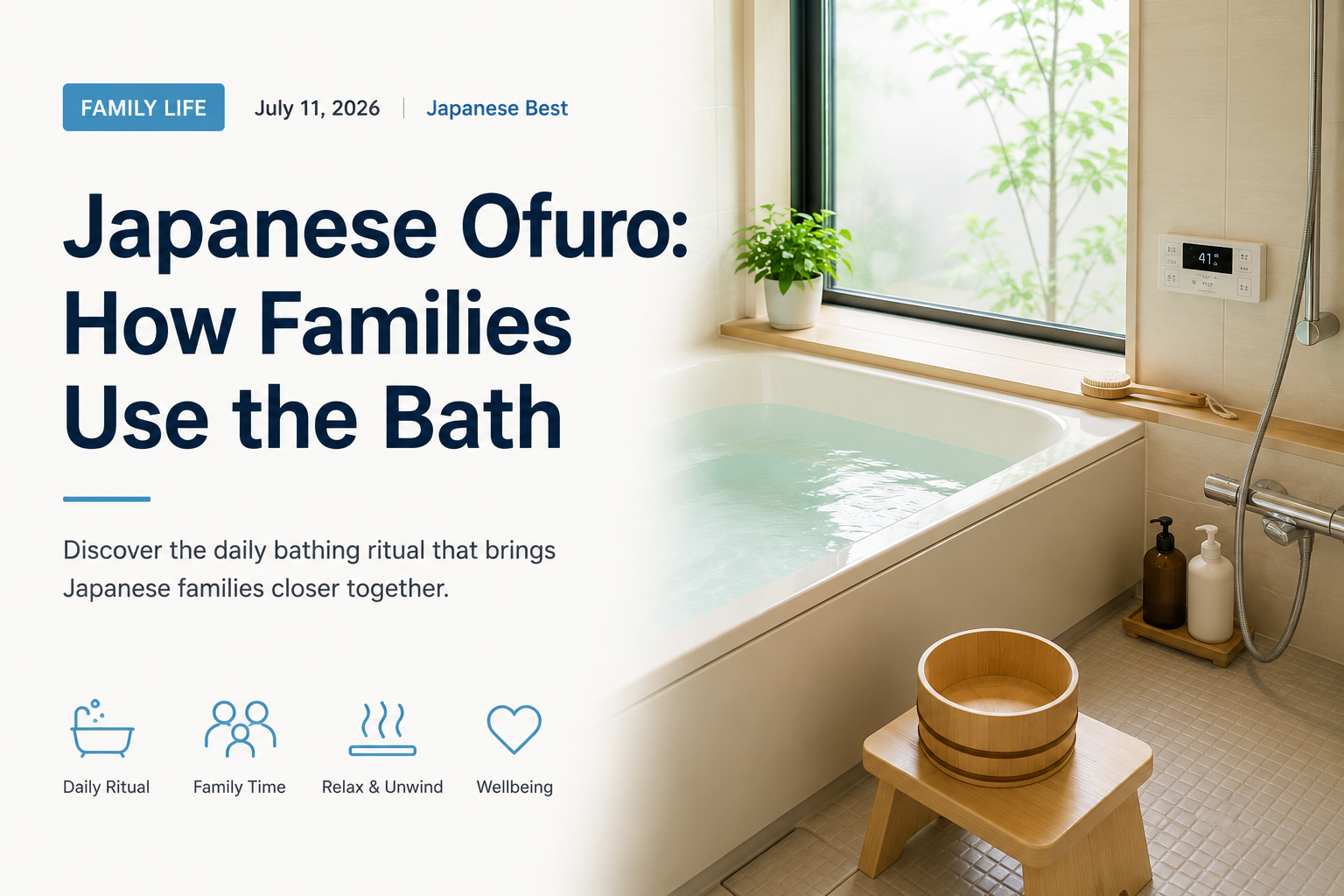
The Japanese bath operates on a principle foreign to most Western households: the ofuro is for soaking, not washing. Before entering the hot water, family members shower thoroughly at a small station within the bathroom, using a handheld showerhead and sitting on a low stool. Only once completely clean do they slip into the steaming tub to soak—sometimes for just five minutes, sometimes for twenty.
The water temperature hovers around 40–42°C (104–108°F), considerably hotter than typical Western baths. Families fill the tub once in the morning and often reuse the same water for the entire household in the evening, making it remarkably efficient. In winter, the ofuro becomes even more beloved; in summer, some families might skip it for a quick shower. Modern homes often include a button on the toilet or kitchen that reheats the water, a small luxury that reflects how integral this ritual is to Japanese daily life.
A Typical Week in a Japanese Home
Monday to Friday typically follow the same pattern. A parent arrives home around 6 or 7 p.m., kicks off shoes, and heads straight to the bathroom to prepare the ofuro. By 7:30 p.m., the first family member—often a child with school the next day—soaks for ten minutes while others prepare dinner. As one person finishes, another enters. The water remains hot throughout, passed from person to person like a baton in a relay.
Weekends shift the timing slightly; families might bathe earlier or linger longer. During rainy season (tsuyu) in June, the ofuro becomes almost medicinal—a way to ease the dampness and chill from outside. Winter brings the most ritualistic bathing; many Tokyo families consider the ofuro non-negotiable even in the busiest weeks. Guests are always invited to bathe first, a custom that dates back centuries and reflects deep respect for visitors.
What This Looks Like in a Real Tokyo Home
Imagine a typical apartment in Shibuya or Shinjuku: a modest 60-square-metre two-bedroom with a bathroom roughly 1.5 metres wide. The ofuro sits in the corner, a compact soaking tub roughly one metre long and 70 centimetres deep—snug but functional. Beside it, a small area with a drain in the floor and a low plastic stool serves as the washing station. Towel rails line the walls; a small shelf holds soap, shampoo, and perhaps a bottle of yuzu-scented bath salt from a ryokan stay.
At 7 p.m., a 10-year-old girl enters, showers quickly with practiced efficiency, then lowers herself into the 42°C water with a satisfied sigh. For eight minutes, she’s completely still—no phone, no distraction. Her mother waits outside, grading papers. When the child emerges, pink-cheeked and drowsy, her father enters. This quiet succession continues until bedtime. It’s ordinary, unremarkable to Japanese families, yet profoundly different from how most Western homes operate.
How It Differs From Other Countries
In Britain and America, bathing is typically a solo, occasional activity—something you do when you need to get clean or when you want to relax. The water drains after one person; running a second bath seems wasteful. In Japan, the ofuro inverts this logic: water conservation through sharing, combined with the belief that daily soaking is essential health practice.
Germany and Scandinavia share Britain’s shower-focused culture, whilst in South Korea and parts of China, public bathhouses (jjimjilbangs and bathhouses respectively) serve a similar social function—but Japanese homes keep the ritual private and family-centred. France’s luxe bathing culture emphasizes aesthetics and pampering; Japan’s emphasises discipline, efficiency, and collective participation. This difference reveals something fundamental: where Western bathing is indulgent and individual, the Japanese ofuro is practical and communal.
The Philosophy Behind the Ritual
The ofuro connects to Shinto beliefs about water’s purifying power and Buddhist concepts of cleansing the spirit alongside the body. In traditional inn culture (ryokans), bathing before dinner is still mandatory—it’s considered disrespectful to enter communal spaces unwashed. This same ethos carries into homes. The ofuro isn’t luxury; it’s necessity.
For busy Tokyo families juggling demanding jobs and school schedules, the ofuro offers something increasingly rare: enforced stillness. During those ten minutes of soaking, work emails fade, homework stress temporarily lifts. Parents often describe it as meditation. Children learn early that this time is sacred—a moment of silence before sleep. When planning your day, consider how you might build in similar moments of genuine rest; even a five-minute soak can reset your nervous system.
FAQ
Can I experience an ofuro outside Japan?
Yes—many Japanese-owned ryokans and onsen in Europe and North America offer authentic ofuro experiences. Alternatively, invest in a small soaking tub or deep Japanese bath (available online) and replicate the ritual at home.
Is the shared water hygenic?
Completely. The high temperature (40–42°C) and the fact that everyone showers first make shared water perfectly safe. Japanese families have done this for centuries without issue.
What if I don’t have time for a daily bath?
Even twice weekly soaking brings benefits. The key is consistency and presence, not duration.
Can I add anything to the water?
Many families add yuzu citrus, bath salts, or herbs—especially in winter. Avoid bubble baths or oils that might stain the tub.
Is there an age when children stop bathing with parents?
Typically around age six or seven, though this varies by family. Modesty grows naturally, and children gradually transition to bathing separately.
The ofuro isn’t exotic or complicated—it’s simply how Japanese families have chosen to mark time, build connection, and care for themselves. For visitors and those curious about Japan from afar, it’s a perfect entry point into understanding what drives Japanese culture: the marriage of practicality with profound respect for everyday moments. Start small: run a hot bath this week, shower first, then soak for ten minutes without your phone. You’ll understand instantly why millions of Japanese families consider this the best part of their day.
Recommended Japanese Products
The products below are directly relevant to this article and used by Japanese families.
| Product | Brand | Best For | Link |
|---|---|---|---|
| Pilot FriXion Clicker 0.5mm | Pilot | Students, planners, and anyone who needs flexibility to correct mistakes | Pilot FriXion Clicker 0.5mm |
| Zebra Sarasa Clip 0.5mm | Zebra | Students and office workers who write quickly and need fast-drying ink | Zebra Sarasa Clip 0.5mm |
| Zojirushi SM-SHE60AG Stainless Mug | Zojirushi | Daily commuters who want reliable, durable coffee/tea on the go | Zojirushi SM-SHE60AG Stainless Mug |
Pilot FriXion Clicker 0.5mm
The world’s bestselling erasable pen — writes like a smooth gel but rubs out cleanly with heat.
Best for: Students, planners, and anyone who needs flexibility to correct mistakes
🛒 Pilot FriXion Clicker 0.5mm on Amazon
Zebra Sarasa Clip 0.5mm
Japan’s favourite everyday gel pen — fast-drying, smooth, and available in gorgeous colours.
Best for: Students and office workers who write quickly and need fast-drying ink
🛒 Zebra Sarasa Clip 0.5mm on Amazon
Zojirushi SM-SHE60AG Stainless Mug
Zojirushi’s most popular commuter mug — slim, spill-proof, and keeps drinks hot for 6 hours.
Best for: Daily commuters who want reliable, durable coffee/tea on the go
🛒 Zojirushi SM-SHE60AG Stainless Mug on Amazon
More From Japanese Best
- Cost of Living in Tokyo in 2025: A Real Breakdown
- What Japanese Families Eat Every Week
Disclosure: As an Amazon Associate, Japanese Best earns from qualifying purchases. This does not affect our recommendations. We only feature products we genuinely believe are worth your consideration.
Editorial Disclaimer
The views, opinions, and recommendations in this article are the author’s own and reflect personal experience living in Japan. They do not constitute professional, financial, or purchasing advice of any kind.
Product availability, pricing, and specifications are subject to change without notice. Japanese Best makes no warranties — express or implied — regarding the accuracy or completeness of this content, and accepts no liability for any decisions made based on it. Always verify details directly with the retailer or manufacturer before purchasing.
コメント