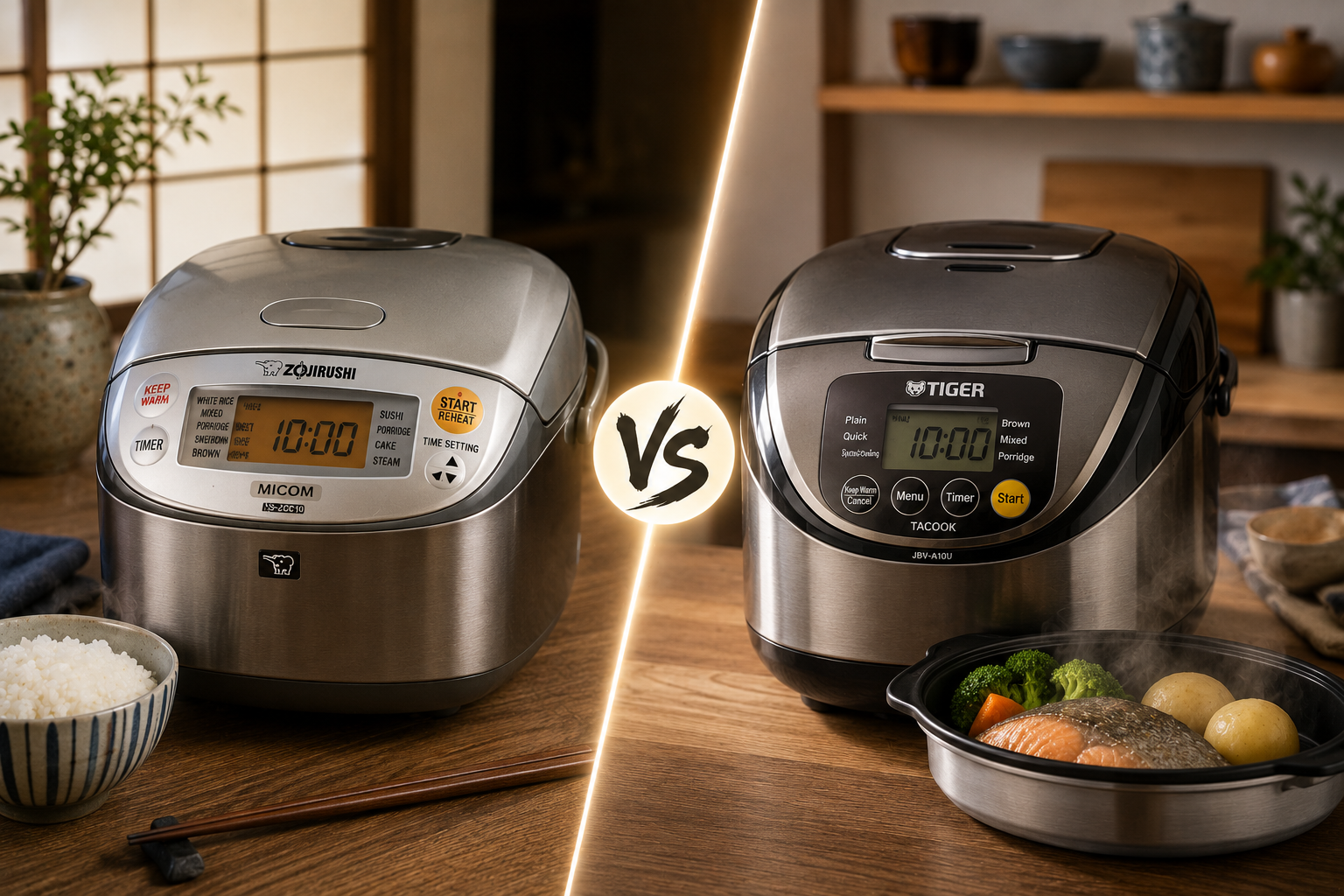
Zojirushi vs Tiger Rice Cooker (2026)
Published on June 13, 2026 | Japanese Best
Introduction
Choosing between two excellent Japanese brands is genuinely difficult — both are serious about quality, both have loyal followings, and neither is a bad choice. This guide breaks down the real differences so you can decide which is right for your specific situation.
A Note from Tokyo: In my experience shopping at places like Yodobashi Camera and Loft in Tokyo, Japanese rice cookers are not a luxury purchase — they’re the everyday baseline. Japanese households simply expect this level of quality, which means manufacturers have no room to cut corners.
Specs at a Glance
| Feature | Zojirushi | Tiger |
|---|---|---|
| Product | Zojirushi NS-ZCC10 | Tiger JBV-A10U |
| Technology | Micom (microcomputer) heating with Fuzzy logic | Micom with simultaneous steam cooking |
| Best For | Families who want reliable, consistently great ric | Busy households who want to cook a complete meal i |
| Made In | Japan | Japan |
Option 1: Zojirushi — Zojirushi NS-ZCC10
A beloved micom rice cooker with Neuro Fuzzy logic for consistently fluffy rice.
Technology: Micom (microcomputer) heating with Fuzzy logic
Key Features:
– Neuro Fuzzy logic technology
– Multiple cooking menus
– Extended keep-warm
– Retractable power cord
– Detachable inner lid
Strengths:
– ✅ Consistent results
– ✅ Easy to clean
– ✅ Compact
Limitations:
– ⚠️ Not induction heating
– ⚠️ Inner pot coating can wear over years
One of Zojirushi’s most popular models for everyday family use in Japan
Option 2: Tiger — Tiger JBV-A10U
Cook rice and a side dish simultaneously with Tiger’s clever Tacook sync-cooking plate.
Technology: Micom with simultaneous steam cooking
Key Features:
– Tacook sync-cooking plate
– Micom control
– Steam cooking function
– Stainless exterior
– Non-stick inner pot
Strengths:
– ✅ Cook two things at once
– ✅ Easy to use
– ✅ Good build quality
Limitations:
– ⚠️ Tacook plate limits some cooking styles
– ⚠️ Not IH
Tiger and Zojirushi are the two dominant premium rice cooker brands in Japan
Head-to-Head Comparison
| Dimension | Zojirushi | Tiger |
|---|---|---|
| Technology | Micom (microcomputer) heating with Fuzzy logic | Micom with simultaneous steam cooking |
| Best For | Families who want reliable, consistently grea | Busy households who want to cook a complete m |
| Made In | Japan | Japan |
Performance: Both perform well in everyday use. Zojirushi’s advantage lies in neuro fuzzy logic technology. Tiger leads in tacook sync-cooking plate.
Build Quality: Both brands are serious about durability. Japanese consumers expect products to last — and both companies have reputations to protect in their domestic market.
Value: Neither is a budget option. Compare current Amazon pricing for the most accurate picture, as prices vary by region and timing.
What Japanese Buyers Look For
Japanese consumers approach purchasing rice cookers differently from many Western buyers.
Here are the patterns I’ve observed in Tokyo households and through Japanese consumer reports:
Durability over initial cost: Japanese buyers frequently choose a more expensive option upfront if it means the product will last 10 years rather than 3. The concept of mono no aware — appreciation for enduring things — extends to everyday objects.
Brand trust built over generations: Brands like Tiger, Zojirushi have earned trust through decades of consistent quality. Japanese buyers are often loyal to a single brand and purchase the next generation without comparison shopping.
Quiet, functional design: Flashy aesthetics are less important than clean lines and intuitive use. Products that look modest but function flawlessly are valued.
After-sales support: In Japan, manufacturers offer repair services for many products — not just replacement. This shapes buying decisions toward brands with strong domestic service networks.
Japanese buyers often praise products in this category for their durability and ease of use. For the most current buyer sentiment, we recommend checking Amazon reviews filtered to verified purchases.
Which One Should You Buy?
Choose Zojirushi if: Families who want reliable, consistently great rice without spending on IH
Choose Tiger if: Busy households who want to cook a complete meal in one appliance
Both are genuinely good products. The decision usually comes down to your specific use case and which features matter most to your daily routine.
Frequently Asked Questions
Are Japanese Rice Cookers worth the higher price?
For many buyers, yes. Japanese Rice Cookers are generally built to last significantly longer than budget alternatives, and the better-designed ones are noticeably more pleasant to use daily. That said, not every Japanese product justifies a premium — use this guide to identify which ones do.
Can I buy Japanese Rice Cookers outside Japan?
Yes — many Japanese brands sell internationally through Amazon and authorised retailers. Check that the voltage is compatible with your country and that international warranty coverage is included.
What Japanese brands are most trusted for Rice Cookers?
Brand trust varies by category, but consistent names include: Tiger, Zojirushi. All have strong domestic reputations built over decades.
Are these products available on Amazon?
Most of the products in this guide are available on Amazon in the US, UK, and select other markets. We’ve included direct Amazon search links for each product.
Conclusion
Both brands represent the best of Japanese manufacturing — and the right choice depends entirely on your priorities.
Compare Zojirushi NS-ZCC10 and Tiger JBV-A10U on Amazon to check current pricing and availability before deciding.
Last updated: June 2026
Related Guides
As an Amazon Associate, we may earn from qualifying purchases. This does not affect our recommendations.
Disclosure: As an Amazon Associate, Japanese Best earns from qualifying purchases. This does not affect our recommendations. We only feature products we genuinely believe are worth your consideration.
Editorial Disclaimer
The views, opinions, and recommendations in this article are the author’s own and reflect personal experience living in Japan. They do not constitute professional, financial, or purchasing advice of any kind.
Product availability, pricing, and specifications are subject to change without notice. Japanese Best makes no warranties — express or implied — regarding the accuracy or completeness of this content, and accepts no liability for any decisions made based on it. Always verify details directly with the retailer or manufacturer before purchasing.
コメント