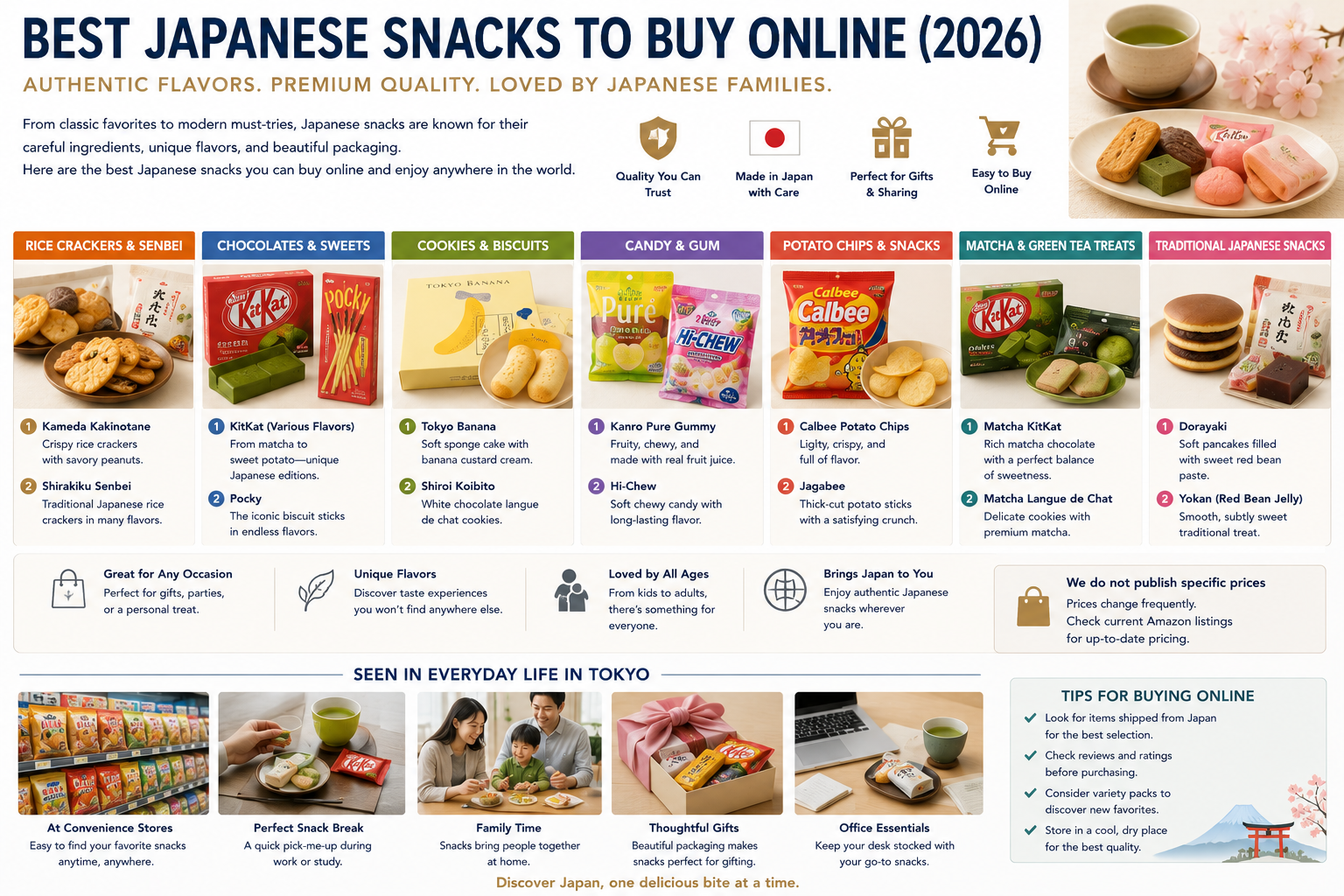
Best Japanese Snacks to Buy Online (2026)
July 09, 2026 | Food | Japanese Best
When you bite into a perfectly crafted Japanese snack, you’re tasting centuries of culinary refinement. From the delicate balance of salty and sweet in a miso-butter cracker to the umami depth of seaweed crisps, Japanese snacking isn’t just about convenience—it’s an art form. Whether you’re exploring authentic eating habits from Tokyo to Osaka, or simply seeking flavour-packed treats that deliver quality over quantity, Japanese snacks offer something genuinely different from what you’ll find in most Western supermarkets. The beauty lies not just in taste, but in how Japanese food culture values mindfulness, seasonality, and ingredient integrity. This guide will help you discover the finest Japanese snacks available online and understand what makes them so special.
Quick Summary
- Japanese snacks emphasise natural flavours, quality ingredients, and portion control—reflecting core values of Japanese food culture
- Best options range from traditional crackers and rice cakes to premium dried seafood and matcha-infused treats
- Online shopping makes it easy to access regional specialties from Hokkaido to Kyushu without leaving home
- Japanese consumers prioritise freshness, packaging that preserves quality, and transparent ingredient lists
- Price points vary from budget-friendly everyday snacks (¥200–500) to premium gift-worthy options (¥2,000+)
Quick Comparison Table
| Snack Type | Flavour Profile | Price Range | Best For |
|---|---|---|---|
| Rice crackers | Savoury, umami-rich | ¥300–800 | Office snacking, gifts |
| Matcha treats | Earthy, mild bitterness | ¥400–1,500 | Afternoon tea, dessert lovers |
| Seaweed crisps | Salty, briny | ¥250–600 | Light snacking, health-conscious |
| Miso-butter snacks | Salty-sweet balance | ¥500–1,200 | Flavour adventurers |
| Dried fruit & nuts | Natural sweetness | ¥600–1,500 | Active snackers, travelers |
Why Japanese Products Stand Out
Japanese snack manufacturers operate under a philosophy that less is more. Quality ingredients trump novelty, and traditional production methods matter as much as innovation. Unlike mass-produced Western snacks laden with artificial additives, Japanese makers focus on clean labels and authentic taste.
This comes from Japan’s deeply embedded food culture, where even convenience store snacks are treated seriously. Companies invest in sourcing—whether that’s salt from Okinawa’s mineral-rich waters, seaweed harvested at peak season from Hokkaido, or glutinous rice from specific prefectures known for superior texture. Portion sizes tend to be smaller but more satisfying because flavours are concentrated and intentional.
Additionally, Japanese packaging prioritises freshness and presentation. Vacuum sealing, desiccant packets, and individual wrapping aren’t just marketing—they’re functional choices that preserve quality during shipping. This attention to detail means snacks arriving at your door taste as intended, not stale or compromised. For food lovers, this represents exceptional value.
Top Picks — Detailed Reviews
Traditional Rice Crackers (Senbei)
Rice crackers remain Japan’s quintessential snack. The best versions use short-grain Japanese rice, pressed and grilled over charcoal or in traditional ovens. The texture should shatter cleanly on your tongue, releasing subtle toasted notes without greasiness. Look for varieties seasoned with nori (seaweed), sesame, or light soy glaze. These pair beautifully with tea or as a light office snack. Expect to pay ¥400–800 for quality artisan crackers from established makers.
Matcha-Infused Treats
Matcha’s popularity has exploded globally, but authentic Japanese versions—especially from Uji in Kyoto—offer genuine earthiness and sophistication. Premium matcha snacks might include layered biscuits, chocolate-covered wafers, or delicate matcha salt fudge. The colour should be vibrant green, not dull or brownish. Quality matcha snacks work wonderfully as gifts or afternoon indulgences, though they tend toward the pricier end (¥800–2,000).
Seaweed Crisps & Snacks
Japan’s coastlines yield extraordinary seaweed varieties, each with distinct flavour profiles. Aonori (green seaweed) offers grassy minerality, while nori brings deeper umami. Modern Japanese snack makers combine these with sesame, salt, and occasionally chilli for contemporary appeal. These are exceptionally low-calorie, nutrient-dense options perfect for health-conscious snacking. Expect ¥300–700 for premium varieties.
Miso & Butter Combinations
One of Japan’s most addictive flavour combinations is miso’s salty depth paired with butter’s richness. Specialist crackers and biscuits featuring this pairing—sometimes with additions like nuts or dried fruit—have become trendy even in Japan’s urban centres. These work brilliantly as gifts or fancy snacking at around ¥600–1,200 per package.
What Japanese Buyers Look For
In Japan, snack shoppers scrutinise several factors that overseas buyers should also consider:
Ingredient transparency. Japanese consumers want to know exactly what they’re eating. Packaging lists every ingredient, often with origins noted (particularly for salt, seaweed, and protein sources). This reflects cultural values around food safety and respect for ingredients.
Seasonal offerings. Japan’s snack market shifts dramatically with seasons. Spring brings sakura-flavoured treats, autumn features chestnut and sweet potato, winter offers warming ginger and yuzu. Buying seasonally often means fresher products and more interesting flavours.
Regional specialties. Each prefecture has signature snacks. Hokkaido excels at dairy-based treats, Kyoto at matcha products, Okinawa at brown sugar specialties. Japanese buyers actively seek regional products, especially when travelling.
Packaging and presentation. Beyond aesthetics, Japanese consumers value practical packaging that protects quality and often repurpose attractive boxes for storage or gifting. This is why Japanese snack packaging typically costs more but lasts.
Buying Guide
Where to Shop: Major online retailers stock imported Japanese snacks, but Japanese-specific e-commerce platforms often offer fresher stock and better prices. Amazon Japan (with international shipping) and specialist Japanese food importers are reliable.
Shipping Considerations: Lightweight snacks are ideal for international shipping. Avoid items prone to melting or crushing. Budget 2–4 weeks for delivery and expect slightly higher prices to cover import duties and logistics.
Freshness Indicators: Check production dates, not just expiration. Japanese snacks stay fresh 6–12 months from production, but fresher is always better. Buy from retailers with clear inventory rotation.
Quantity Sweet Spot: Single or twin packs (¥300–600) let you try products before committing. Bulk buys work for established favourites but risk waste if you dislike them.
Storage: Most Japanese snacks store well in cool, dry conditions. Opened packages should be resealed or transferred to airtight containers.
When selecting specific products, consider the Kameda Seika rice crackers, which represent classic Japanese snacking, or the Morinaga Hi-Chew for chewy texture enthusiasts. For a premium option, the Meiji Almond Chocolate combines roasted nuts with smooth chocolate in true Japanese style.
For matcha lovers, the Encha Ceremonial Grade Matcha Powder offers authentic Uji quality you can use in multiple applications beyond snacking. Those seeking umami-rich options should explore the Ajinomoto Hondashi Dashi Stock, which elevates savoury snack experiences when used creatively.
FAQ
Are Japanese snacks healthier than Western snacks?
Not inherently, but they’re often less processed and use cleaner ingredients. Portion sizes tend smaller, encouraging moderation.
What’s the difference between senbei and arare?
Senbei are thin, crispy rice crackers, whilst arare are thicker, chewier varieties often with peanuts or seeds embedded.
How long do Japanese snacks last once opened?
Most last 1–2 weeks if resealed properly, though they’re best consumed within days for optimal crispness.
Can I find vegan or allergy-friendly options?
Increasingly, yes. Always check ingredient lists carefully, as many traditional snacks contain fish-based seasonings or dairy.
What’s a good starter snack for newcomers?
Mild soy-seasoned rice crackers or plain seaweed crisps are the safest entry point — familiar enough in flavour, distinctly Japanese in character, and widely available.
Is it worth buying Japanese food over cheaper alternatives?
For most use cases, yes — if you plan to use the product daily or for many years. Japanese food tend to have a longer useful lifespan, which often makes the total cost of ownership lower than a cheaper alternative replaced every 2–3 years. That said, always match the product to your actual needs.
How long do Japanese food typically last?
With proper care, quality Japanese food are designed for 10 years or more of daily use. This is not incidental — it reflects what Japanese domestic consumers expect.
Where can I buy authentic Japanese food online?
The safest options are Amazon (from the brand’s official store or well-reviewed sellers), direct brand websites, or authorised international retailers. Avoid unverified marketplace listings for high-value items.
More From Japanese Best
Disclosure: As an Amazon Associate, Japanese Best earns from qualifying purchases. This does not affect our recommendations. We only feature products we genuinely believe are worth your consideration.
Editorial Disclaimer
The views, opinions, and recommendations in this article are the author’s own and reflect personal experience living in Japan. They do not constitute professional, financial, or purchasing advice of any kind.
Product availability, pricing, and specifications are subject to change without notice. Japanese Best makes no warranties — express or implied — regarding the accuracy or completeness of this content, and accepts no liability for any decisions made based on it. Always verify details directly with the retailer or manufacturer before purchasing.
コメント