Supermarkets in Tokyo: Which One Do Families Use? (2026)
June 28, 2026 | Tokyo Life | Japanese Best
Tokyo’s supermarkets are nothing like the sprawling hypermarkets of Western cities. Instead, the city offers a fascinating ecosystem of neighbourhood chains, convenience stores, and specialty grocers that reflect how Japanese families actually shop. Each chain has its own personality, price point, and loyal following—and understanding these differences reveals much about Tokyo life itself.
Quick Summary
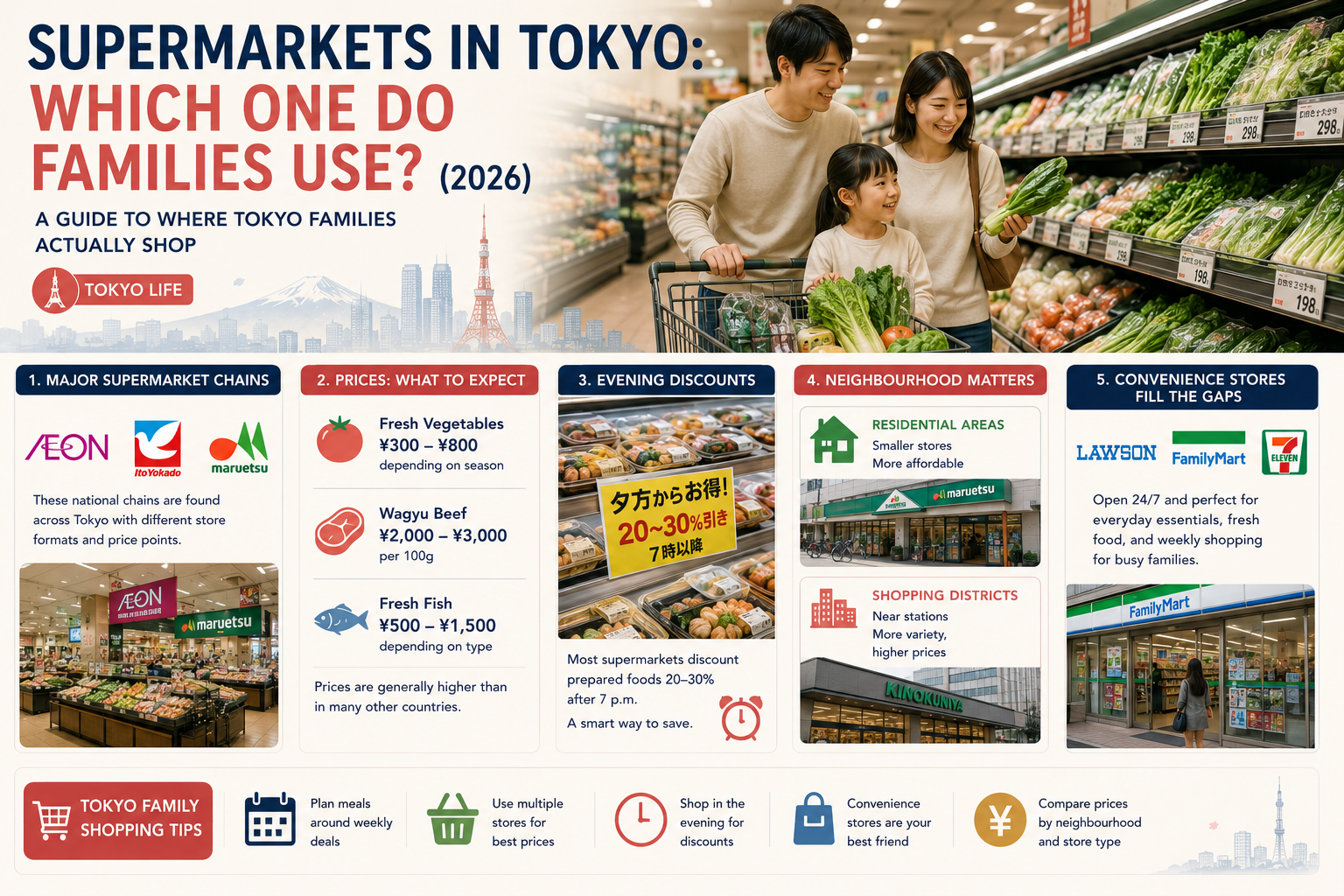
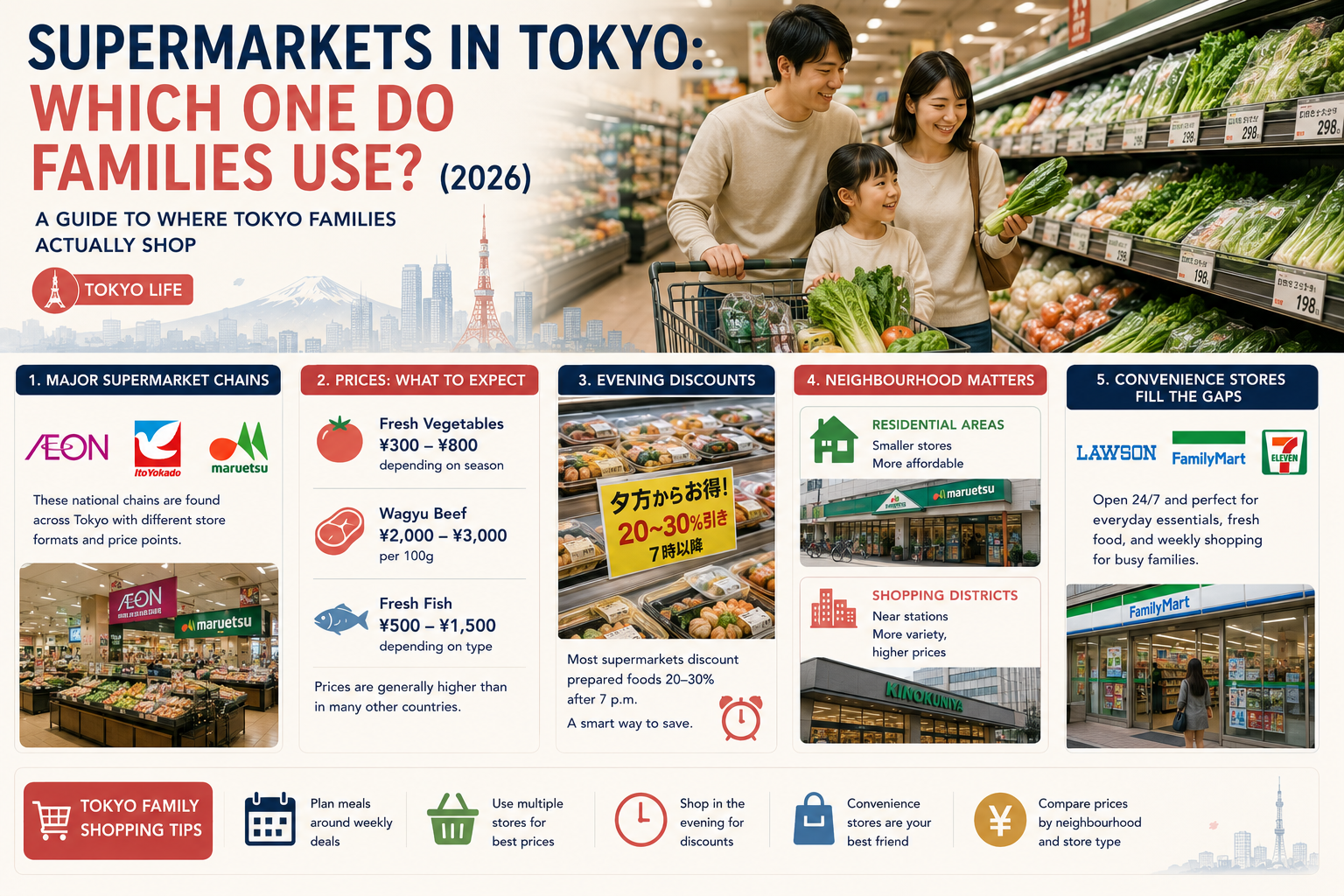
- National chains dominate: Aeon, Ito-Yokado, and Maruetsu serve most Tokyo families, with prices varying by location and store format
- Prices are higher than you’d expect: Fresh vegetables cost ¥300–800 depending on season; premium wagyu beef reaches ¥2,000–3,000 per 100g
- Evening discounts are real: Most chains reduce prices 20–30% on prepared foods after 7 p.m., a lifeline for budget-conscious residents
- Neighbourhood matters: Residential areas have smaller, cheaper stores; shopping districts near stations are pricier
- Convenience stores fill gaps: 24-hour chains like Lawson and FamilyMart aren’t just for emergencies—many residents buy weekly groceries there
What Makes Tokyo Supermarkets Different
Tokyo’s retail landscape reflects space constraints and efficient logistics. Most stores are vertical rather than sprawling, cramming remarkable variety into compact footprints. A typical three-storey Aeon might have bakery, sushi counter, butcher, and fishmonger all within 5,000 square metres—something you’d need a massive out-of-town warehouse to replicate elsewhere.
Seasonal rotation is pronounced. Spring brings fresh bamboo shoots and sakura-flavoured everything; autumn floods shelves with chestnuts and sweet potato products. Prepared foods dominate; Tokyo families often buy bentos and side dishes rather than cooking from scratch. Quality standards are exceptionally high—bruised fruit is rare, and expiration dates are scrupulously enforced. Staff helpfulness is legendary; cashiers will help elderly customers pack bags, and store managers know regular customers by name.
The Main Players: Where Tokyo Families Actually Shop
Aeon remains Japan’s largest retailer, with massive locations in Ikebukuro, Shinjuku, and suburban hubs like Akabane. Prices are moderate, selection is encyclopaedic, and loyalty card discounts (5–10% on certain days) make it popular with families. Expect queues on weekends.
Ito-Yokado operates mid-range stores across central and western Tokyo, beloved for consistent quality and fresh produce. Their own-brand items offer excellent value. Many locations include a Starbucks, making them community gathering points.
Maruetsu dominates residential neighbourhoods with smaller, neighbourhood-focused stores. Prices are competitive, and their prepared foods section is exceptional—locals swear by their sashimi platters.
SuperValu and Peacock Supermarket serve specific areas; Peacock is particularly popular in upscale districts like Minato and Shibuya, offering premium imports and organic produce.
Costco (two Tokyo locations: Fukutsu and Tamagawa) attracts bulk buyers willing to pay membership fees (¥4,400 annually). Japanese families use it strategically for non-perishables and frozen goods, then supplement with neighbourhood stores for fresh items.
Prices and Practical Details
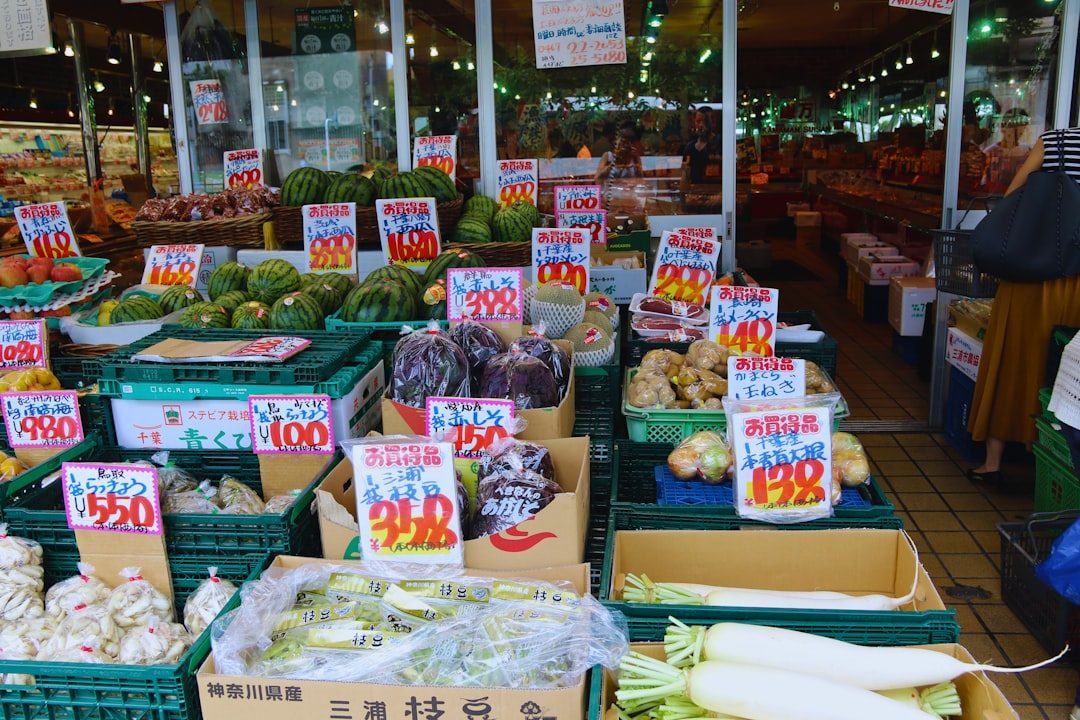
Fresh produce varies wildly by season and origin. Local daikon radish costs ¥80–150 year-round, but imported grapes can reach ¥800 for a small bunch. Seasonal vegetables like kabocha squash drop to ¥200 in autumn but cost ¥400 in winter.
Protein prices reflect quality obsession. Chicken breast runs ¥180–250 per 100g; premium wagyu from branded herds costs ¥2,500–3,000 per 100g. Seafood is fresher and cheaper near fishing areas—Tokyo Bay tuna is reasonably priced, whilst Australian beef is considered budget-friendly.
Store hours vary dramatically. Suburban Aeon locations often close at 10 p.m.; central Shinjuku branches stay open until midnight. Neighbourhood stores typically close by 9 p.m. Evening discounts (20–30% off prepared foods after 7 p.m.) are standard practice—savvy residents time shopping for dinner deals.
Parking is precious. Suburban megastores offer free parking; central locations charge ¥200–400 per hour, making public transport the norm for most shoppers.
What Locals Really Think
Ask Tokyoites about supermarkets, and you’ll hear passionate opinions. Families with children favour Aeon for reliability and toy sections; working parents praise convenience stores for speed and consistent quality. Elderly residents prefer smaller, quieter Maruetsu locations where staff recognise them.
Quality consciousness dominates conversations. Many locals inspect produce meticulously, reject imperfect items, and trust established chains over discounters. The “evening discount culture” is genuinely beloved—it’s not just economical, it’s social; regulars time visits to catch prepared food markdowns together.
Interestingly, few Tokyo families shop exclusively at one store. Most maintain a portfolio: Costco for bulk staples, Aeon for variety, neighbourhood stores for fresh items and convenience. This multi-store approach reflects both pragmatism and the city’s excellent logistics.
Tips for Visitors and Newcomers
Arrive early (8–9 a.m.) for best produce selection; by evening, popular items are depleted. Bring your own bags—many stores charge ¥5–10 per plastic bag. Learn key phrases: “kore wa dore no kuni desu ka?” (where is this from?) helps identify origin, which influences both price and freshness expectations.
Download store loyalty apps. Aeon’s AEON card and Ito-Yokado’s membership yield genuine savings (¥300–500 per month for regular shoppers). Convenience stores aren’t just backup options; many newcomers find FamilyMart and Lawson perfectly adequate for weekly shopping, despite slightly higher prices.
Don’t skip the basement food halls in major department stores—Mitsukoshi, Takashimaya, and Isetan have exceptional prepared foods, though prices are premium. They’re revelatory for understanding Tokyo’s food culture.
FAQ
Are supermarkets cheaper than convenience stores?
Generally yes, but the difference is smaller than overseas. Convenience stores mark up 15–20%; supermarkets are 10–15% cheaper on average. For emergency items, the convenience factor often wins.
What’s the best supermarket for budget shopping?
Maruetsu and SuperValu offer competitive pricing. Aldi has entered Tokyo (limited locations), targeting price-conscious shoppers. Costco saves money on bulk items only.
Can you return items?
Yes, with receipt and within stated timeframes (usually 7 days for food). Staff are obliging, though returns culture is less aggressive than in Western countries.
Shopping in Tokyo reveals layers of Japanese culture—attention to quality, respect for seasonality, and the balance between efficiency and community. Whether you’re a visitor grabbing an onigiri at 11 p.m. or a newcomer establishing shopping routines, Tokyo’s supermarkets offer both practical sustenance and a genuine window into local life. The variety, freshness, and care evident in these spaces isn’t accidental; it reflects how seriously Tokyo takes feeding itself well.
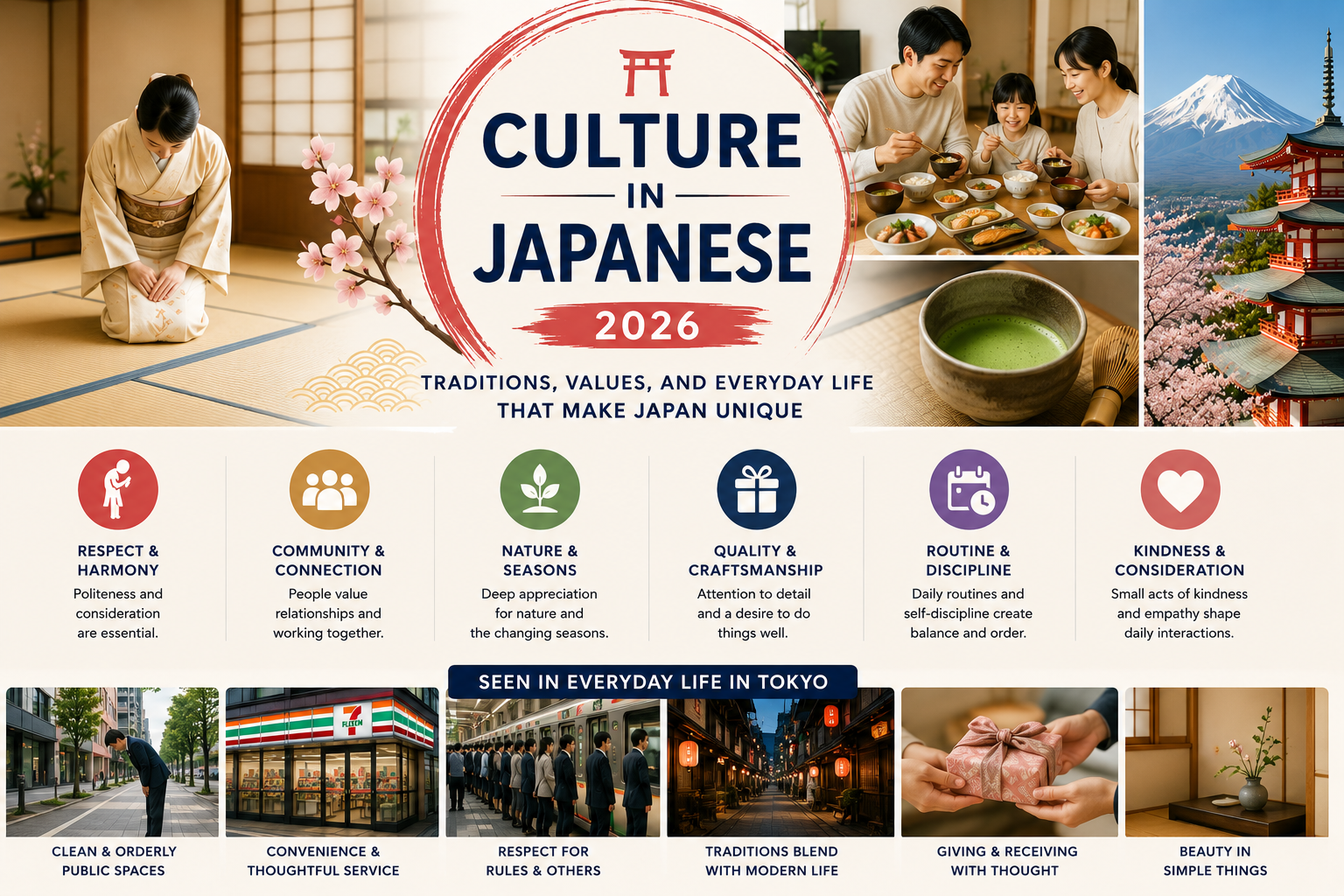
Seen in Everyday Life in Tokyo
A Real-Life Note from Japan
What I Often See in Japanese Stores
Is it worth buying Japanese tokyo life over cheaper alternatives?
For most use cases, yes — if you plan to use the product daily or for many years. Japanese tokyo life tend to have a longer useful lifespan, which often makes the total cost of ownership lower than a cheaper alternative replaced every 2–3 years. That said, always match the product to your actual needs.
How long do Japanese tokyo life typically last?
With proper care, quality Japanese tokyo life are designed for 10 years or more of daily use. This is not incidental — it reflects what Japanese domestic consumers expect.
Where can I buy authentic Japanese tokyo life online?
The safest options are Amazon (from the brand’s official store or well-reviewed sellers), direct brand websites, or authorised international retailers. Avoid unverified marketplace listings for high-value items.
Shop Japanese Products
If you’re inspired by what Japanese families use in this area, you can find a wide range of authentic Japanese products on Amazon:
Shop Related Japanese Products on Amazon
More From Japanese Best
Disclosure: As an Amazon Associate, Japanese Best earns from qualifying purchases. This does not affect our recommendations. We only feature products we genuinely believe are worth your consideration.
Editorial Disclaimer
The views, opinions, and recommendations in this article are the author’s own and reflect personal experience living in Japan. They do not constitute professional, financial, or purchasing advice of any kind.
Product availability, pricing, and specifications are subject to change without notice. Japanese Best makes no warranties — express or implied — regarding the accuracy or completeness of this content, and accepts no liability for any decisions made based on it. Always verify details directly with the retailer or manufacturer before purchasing.
コメント