Best Ryokan Experiences for First-Time Visitors (2026)
June 28, 2026 | Travel Japan | Japanese Best
Stepping into a traditional Japanese ryokan for the first time is like entering another era. The wooden beams creak softly beneath your feet, the air smells of hinoki wood and tea, and a kimono-clad attendant greets you with a bow. For many travellers, a ryokan stay becomes the highlight of their Japan journey—yet the experience can feel mysterious if you’re unsure what to expect. This guide will demystify ryokan culture and help you choose the perfect one for your first visit.
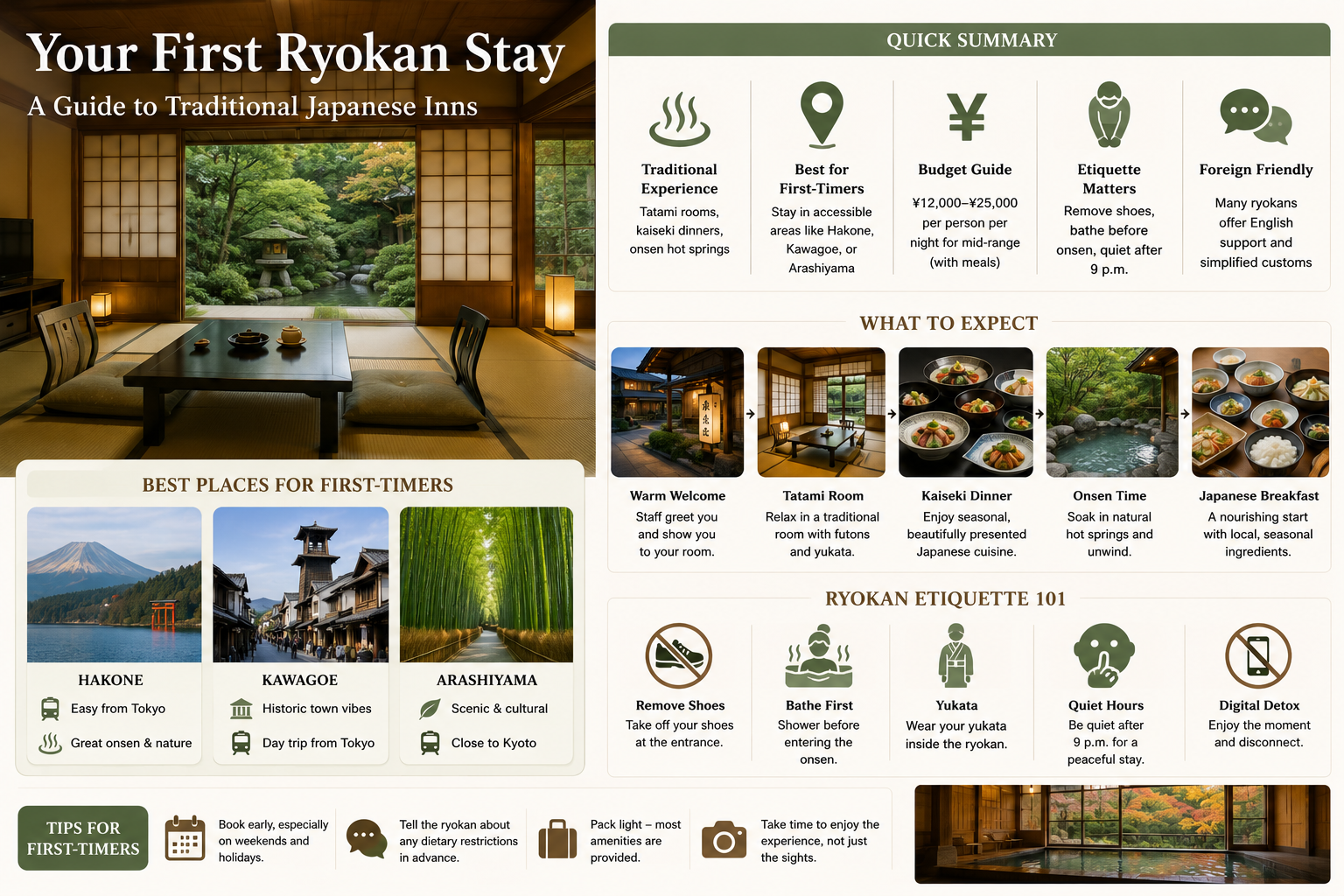
Quick Summary
- Ryokans are traditional Japanese inns featuring tatami rooms, kaiseki dinners, and communal hot springs (onsen)
- First-timers should choose ryokans in accessible locations like Hakone, Kawagoe, or Arashiyama rather than remote mountain areas
- Budget ¥12,000–¥25,000 per person per night for a quality mid-range ryokan with meals included
- Etiquette matters: remove shoes upon entry, bathe before the onsen, and respect quiet hours after 9 p.m.
- Many ryokans now offer English-language support and simplified customs for international guests
🛒 Shop Recommended Products
What to Expect
A ryokan is far more than a hotel—it’s an immersive cultural experience rooted in Japanese hospitality philosophy, or omotenashi. Upon arrival, staff will guide you through a gentle orientation. You’ll be shown to your room, typically a zashiki with tatami mat flooring, a low table, and futon bedding (usually prepared by staff whilst you dine). The toilet and bath are often shared facilities, though premium ryokans offer private onsen.
The heart of any ryokan experience is kaiseki—an elaborate multi-course dinner showcasing seasonal ingredients. Breakfast follows a similar pattern: grilled fish, miso soup, pickled vegetables, rice, and a soft-boiled egg. Meals are either served in your room or in a communal dining hall. The onsen (hot spring bath) is sacred space; bathing suits are never worn, and you’ll shower thoroughly before soaking. Many ryokans provide yukata robes and toiletries, simplifying your packing considerably.
Staff interactions follow traditional protocols. Your nakai (room attendant) will handle your futon, tidy your room, and attend to requests without intrusion. Tipping is neither expected nor appropriate—your bill covers all services.
Practical Tips
Before booking, confirm English language support. Whilst many ryokans now employ English-speaking staff or provide translated menus, this varies significantly. Call ahead or use booking sites like Relux or Rakuten Travel, which filter by language capabilities.
Pack minimally—most ryokans supply yukata, slippers, and basic toiletries. If you require specific medications or Western toiletries, bring them. Respect quiet hours (typically after 21:00) and keep noise low; traditional walls are thin.
When bathing, observe onsen etiquette: shower completely before entering the bath, use the provided baskets for your clothes, and never drain or alter water temperature. If you’re uncomfortable with communal bathing, book a ryokan with a private onsen in your room.
Reserve well ahead, especially for popular destinations. Spring and autumn are peak seasons; booking 2–3 months early is wise. Many ryokans offer online booking in English; confirm cancellation policies, as some charge heavily for last-minute cancellations.
Where to Go / What to Do
Hakone (Kanagawa Prefecture) is ideal for first-timers. Just 90 minutes from Tokyo, it offers stunning views of Mount Fuji and numerous ryokans ranging from ¥12,000–¥40,000 per person. Try Hakone Ginyu, a highly-rated mid-range option with private onsen and excellent kaiseki.
Kawagoe (also near Tokyo) provides a more affordable introduction. Its historic townscape and proximity to the capital make it accessible. Ryokans here average ¥10,000–¥18,000 per person.
Arashiyama, Kyoto is more atmospheric but pricier (¥18,000–¥35,000+). The bamboo groves and temple proximity justify the cost. Book Arashiyama Yoshimura for an upmarket first experience.
For budget-conscious travellers, Atami (coastal Shizuoka) offers excellent value: ¥8,000–¥15,000 per person with equally authentic experiences.
Avoid ultra-remote mountain ryokans for your first stay—accessibility and language support matter more than rustic authenticity.
Budget and Planning
A typical night costs ¥12,000–¥25,000 per person (roughly £70–£150), including two meals. Premium ryokans exceed ¥30,000. This may seem expensive, but meals alone would cost ¥4,000–¥6,000 if purchased separately, and onsen access is included.
Book 2–3 months ahead for peak seasons (cherry blossom season in March–April, autumn foliage in November). Off-season visits (January, July–August) offer discounts of 20–30%.
Most ryokans accept credit cards and online payment. Some require bank transfers; check when booking. Children under 12 often receive 30–50% discounts; infants under 3 may stay free.
Related Products
If you’re planning extended travel across Japan after your ryokan experience, the Sony WH-1000XM5 noise-cancelling headphones are brilliant for long train journeys between destinations. Their exceptional noise isolation lets you rest between experiences without disturbing fellow passengers—particularly important on Japan’s crowded railways.
FAQ
Do I need to speak Japanese to enjoy a ryokan?
No. Whilst basic courtesy phrases are appreciated (“arigatou gozaimasu” — thank you; “itadakimasu” before meals), English-friendly ryokans have multilingual staff and pictorial guides.
What if I’m vegetarian or have allergies?
Inform the ryokan when booking. Most accommodate dietary restrictions with advance notice.
Can I visit an onsen without staying overnight?
Yes. Day-use onsen visits cost ¥1,000–¥2,500 at many ryokans, though availability varies.
Is it rude to decline dinner?
Meals are usually included and pre-prepared. Declining isn’t ideal, but informing staff beforehand allows alternatives.
A ryokan stay transforms how you understand Japan. The ritualistic meals, the soaking in natural hot water, and the genuine kindness of your hosts reveal a Japan most tourists miss. Even first-timers quickly feel at home in these timeless spaces.
Seen in Everyday Life in Tokyo
A Real-Life Note from Japan
What I Often See in Japanese Stores
Is it worth buying Japanese travel japan over cheaper alternatives?
For most use cases, yes — if you plan to use the product daily or for many years. Japanese travel japan tend to have a longer useful lifespan, which often makes the total cost of ownership lower than a cheaper alternative replaced every 2–3 years. That said, always match the product to your actual needs.
How long do Japanese travel japan typically last?
With proper care, quality Japanese travel japan are designed for 10 years or more of daily use. This is not incidental — it reflects what Japanese domestic consumers expect.
Where can I buy authentic Japanese travel japan online?
The safest options are Amazon (from the brand’s official store or well-reviewed sellers), direct brand websites, or authorised international retailers. Avoid unverified marketplace listings for high-value items.
Related Japanese Products
The products below came up naturally in the context of this article. We only recommend items that genuinely connect to the topic.
| Product | Brand | Best For | Amazon |
|---|---|---|---|
| Zojirushi SM-SHE60AG Stainless Mug | Zojirushi | Daily commuters who want reliable, durable coffee/tea on the go | Search on Amazon |
| Sony WH-1000XM5 | Sony | Frequent travellers, remote workers, and audiophiles who want the best ANC | Search on Amazon |
Zojirushi SM-SHE60AG Stainless Mug
Zojirushi’s most popular commuter mug — slim, spill-proof, and keeps drinks hot for 6 hours.
Best for: Daily commuters who want reliable, durable coffee/tea on the go
Sony WH-1000XM5
Sony’s flagship ANC headphones — industry-leading noise cancellation and exceptional sound.
Best for: Frequent travellers, remote workers, and audiophiles who want the best ANC
More From Japanese Best
Disclosure: As an Amazon Associate, Japanese Best earns from qualifying purchases. This does not affect our recommendations. We only feature products we genuinely believe are worth your consideration.
Editorial Disclaimer
The views, opinions, and recommendations in this article are the author’s own and reflect personal experience living in Japan. They do not constitute professional, financial, or purchasing advice of any kind.
Product availability, pricing, and specifications are subject to change without notice. Japanese Best makes no warranties — express or implied — regarding the accuracy or completeness of this content, and accepts no liability for any decisions made based on it. Always verify details directly with the retailer or manufacturer before purchasing.
コメント